Lecture 1. TCP/IP Overview and History презентация
Содержание
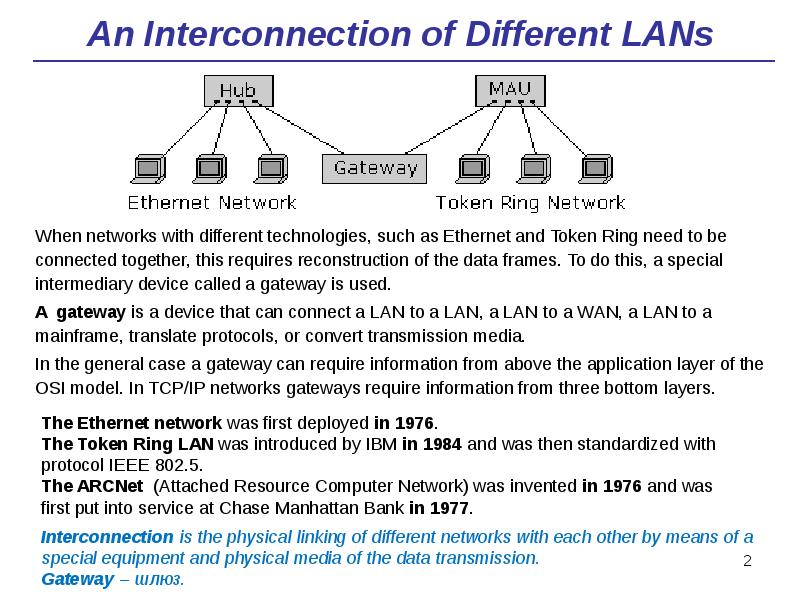
- 2. An Interconnection of Different LANs
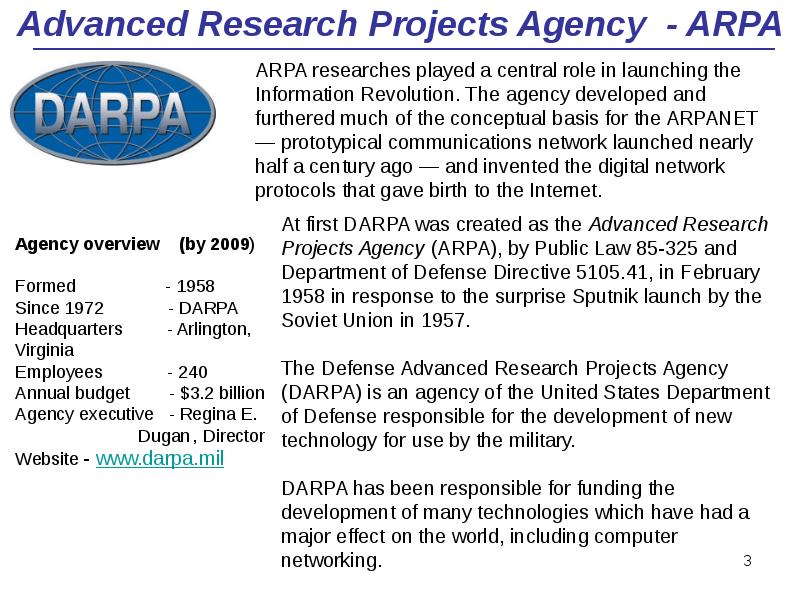
- 3. Advanced Research Projects Agency - ARPA
- 4. Information Processing Techniques Office (IPTO)
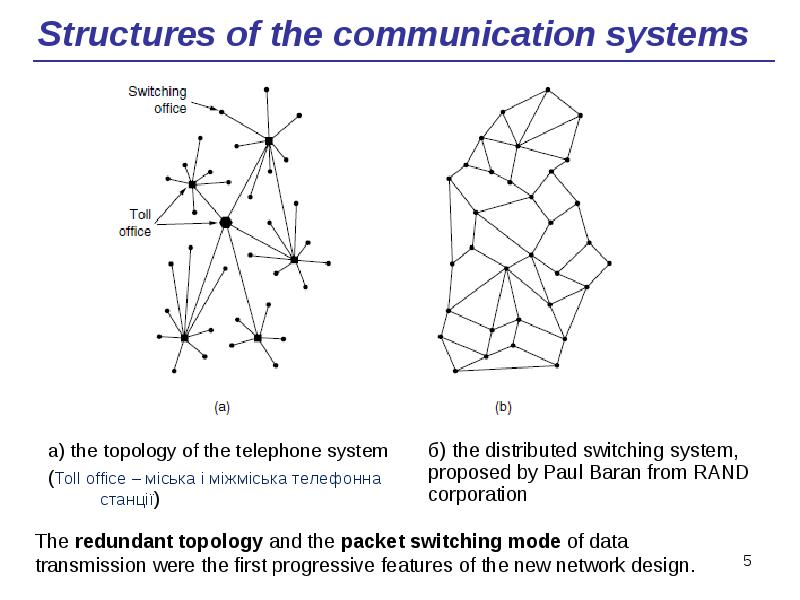
- 5. Structures of the communication systems а) the topology of the telephone
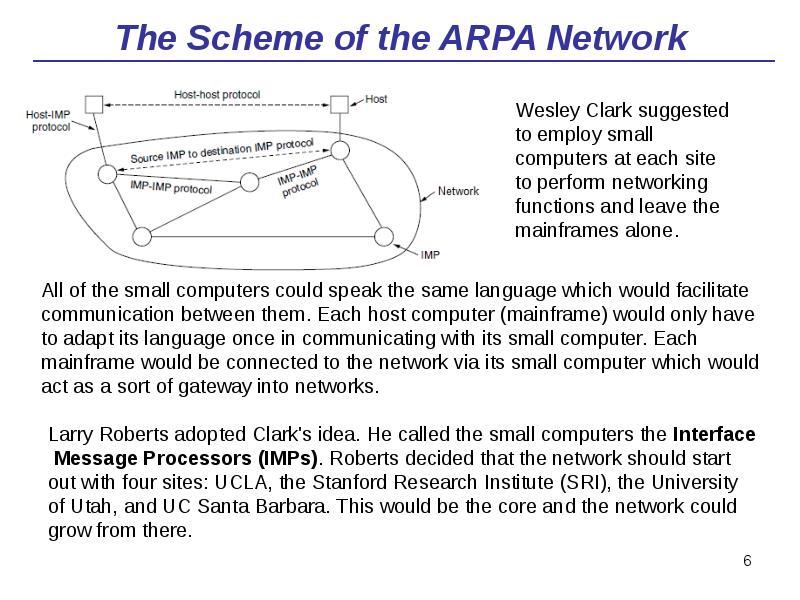
- 6. The Scheme of the ARPA Network
- 7. IMP - Interface Message Processor
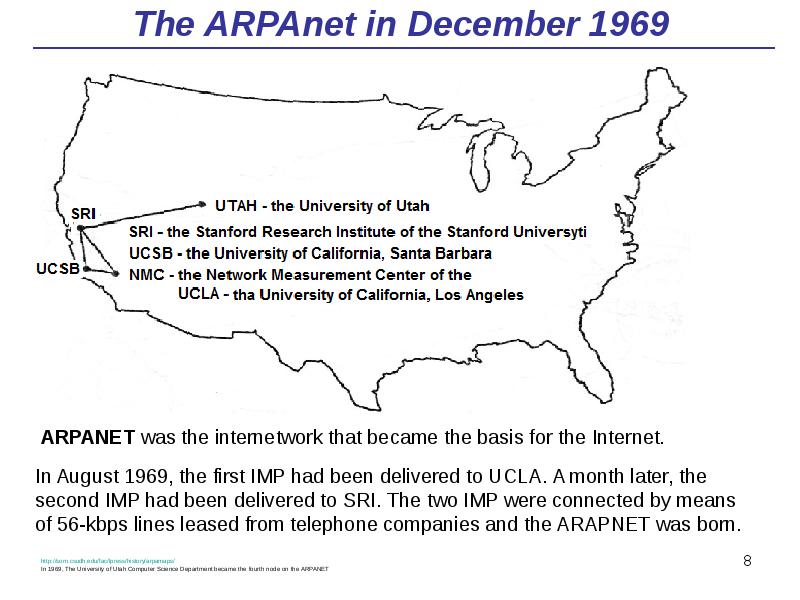
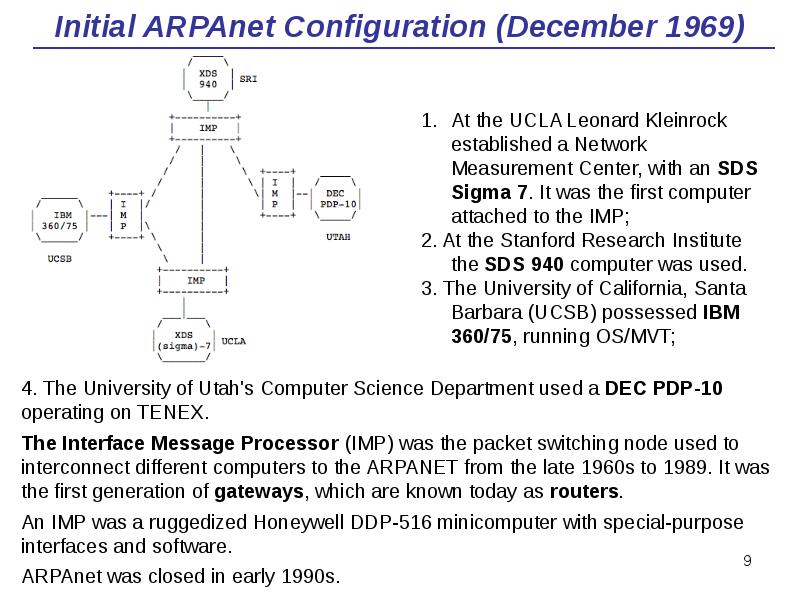
- 8. The ARPAnet in December 1969 http://som.csudh.edu/fac/lpress/history/arpamaps/ In 1969, The University of
- 9. Initial ARPAnet Configuration (December 1969)
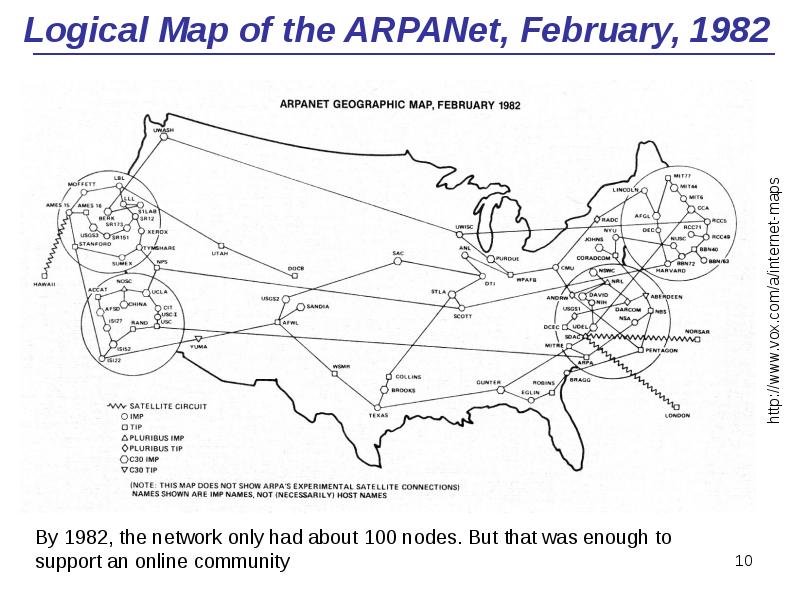
- 10. Logical Map of the ARPANet, February, 1982
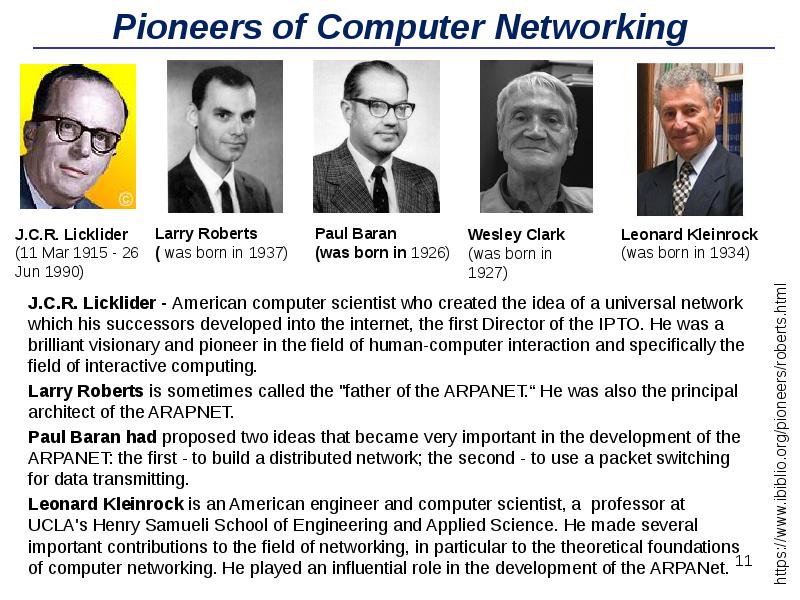
- 11. Pioneers of Computer Networking
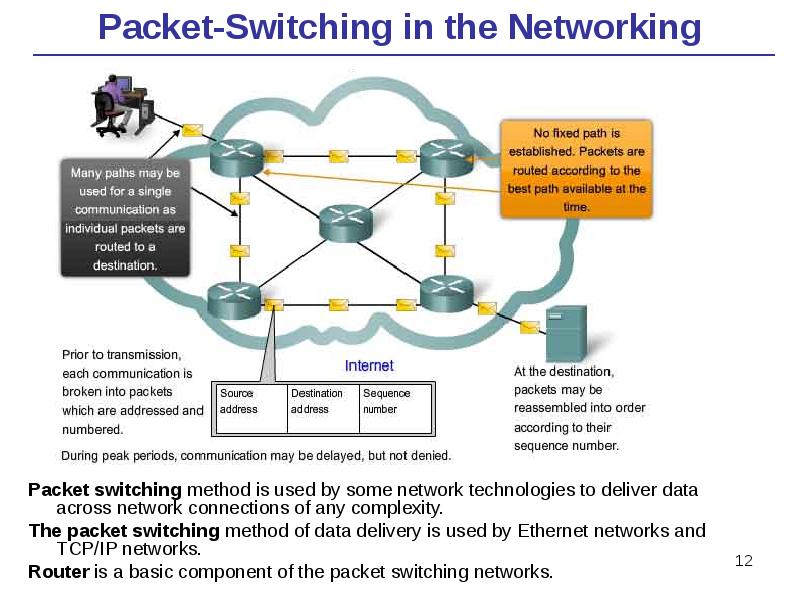
- 12. Packet-Switching in the Networking Packet switching method is used by some
- 13. Components of a Modern Complex Network
- 14. End Devices End devices are network devices that allow people
- 15. Intermediate Network Devices Examples of intermediate network devices are: Network Access
- 16. List of Functions of Intermediate Network Devices Processes running on the
- 17. Network Media On computer networks such media are used: metallic
- 18. Common Data Network Symbols (Pictograms)
- 19. Definition of some Network Concepts A communication is a process of
- 20. An internetwork and the Internet The Internet is the most well-known
- 21. Definition of the term “Protocol” In computer networking a protocol is
- 22. Protocol Stack or Protocol Suite A protocol stack is a set
- 23. Network Protocols Describe: the format or structure of the message
- 24. OSI Reference Model
- 25. TCP/IP Architectural Model TCP/IP architectural model describes components and functions of
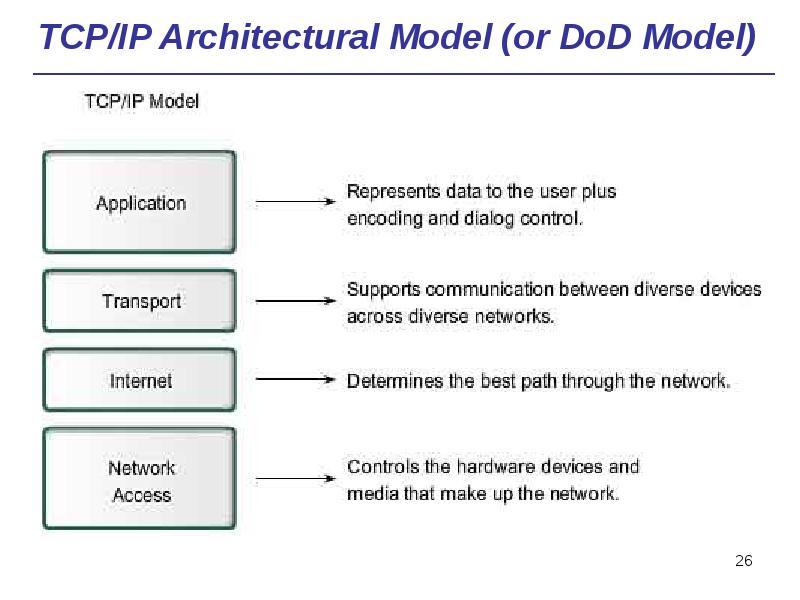
- 26. TCP/IP Architectural Model (or DoD Model)
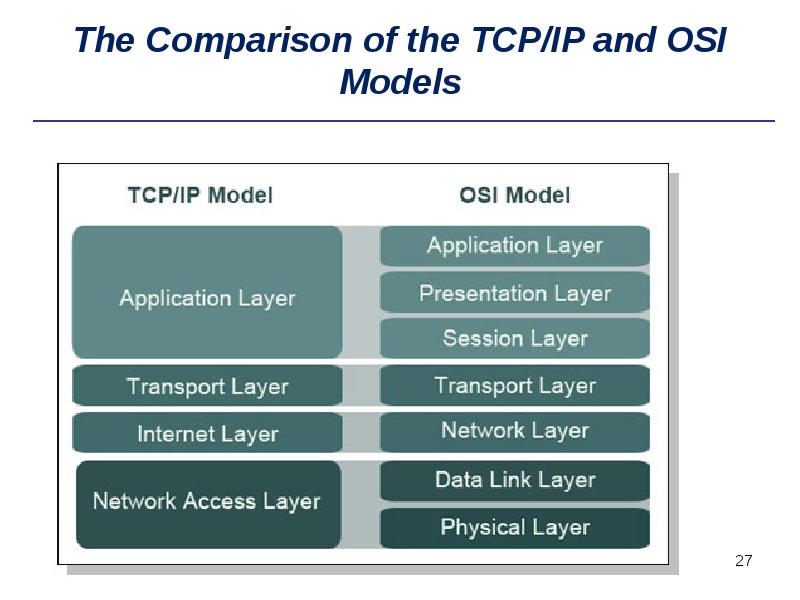
- 27. The Comparison of the TCP/IP and OSI Models
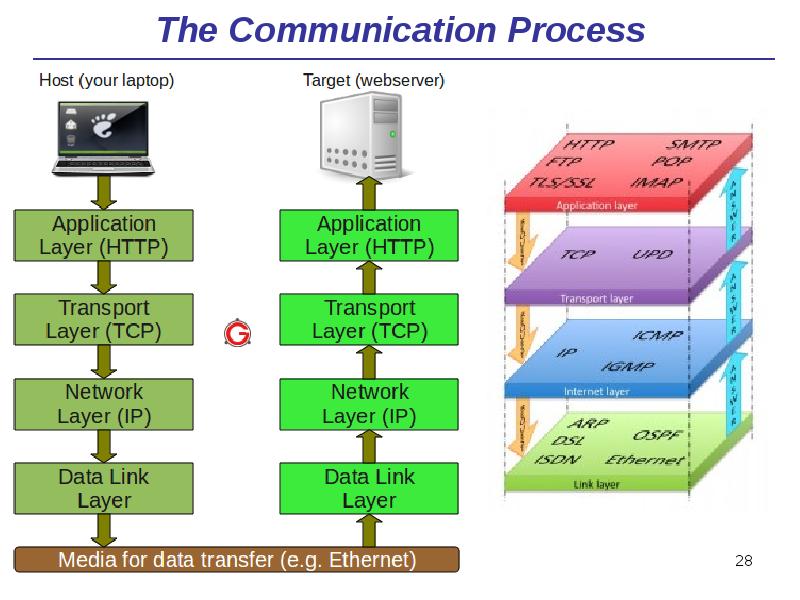
- 28. The Communication Process
- 29. The communication process The communication process in accordance with the TCP/IP
- 30. Types of data blocks of the TCP/IP model
- 31. Protocol Data Units and Encapsulation
- 32. Questions for self check What does the abbreviation ARPA mean? Tell
- 33. Скачать презентацию

Слайды и текст этой презентации
Слайд 1
Описание слайда:
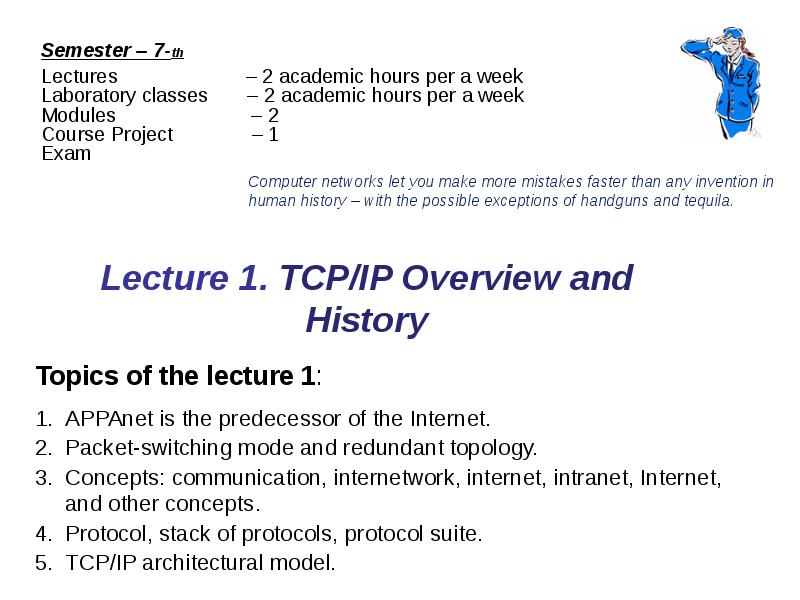
Lecture 1. TCP/IP Overview and History
Слайд 2
Описание слайда:
An Interconnection of Different LANs
Слайд 3
Описание слайда:
Advanced Research Projects Agency - ARPA
Слайд 4
Описание слайда:
Information Processing Techniques Office (IPTO)
Слайд 5
Описание слайда:
Structures of the communication systems
а) the topology of the telephone system
(Toll office – міська і міжміська телефонна станції)
Слайд 6
Описание слайда:
The Scheme of the ARPA Network
Слайд 7
Описание слайда:
IMP - Interface Message Processor
Слайд 8
Описание слайда:
The ARPAnet in December 1969
http://som.csudh.edu/fac/lpress/history/arpamaps/
In 1969, The University of Utah Computer Science Department became the fourth node on the ARPANET
Слайд 9
Описание слайда:
Initial ARPAnet Configuration (December 1969)
Слайд 10
Описание слайда:
Logical Map of the ARPANet, February, 1982
Слайд 11
Описание слайда:
Pioneers of Computer Networking
Слайд 12
Описание слайда:
Packet-Switching in the Networking
Packet switching method is used by some network technologies to deliver data across network connections of any complexity.
The packet switching method of data delivery is used by Ethernet networks and TCP/IP networks.
Router is a basic component of the packet switching networks.
Слайд 13
Описание слайда:
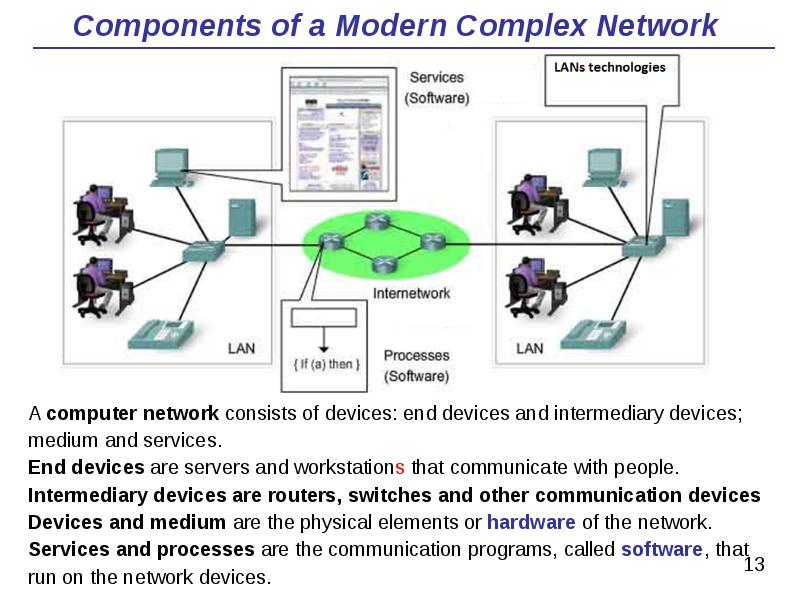
Components of a Modern Complex Network
Слайд 14
Описание слайда:
End Devices
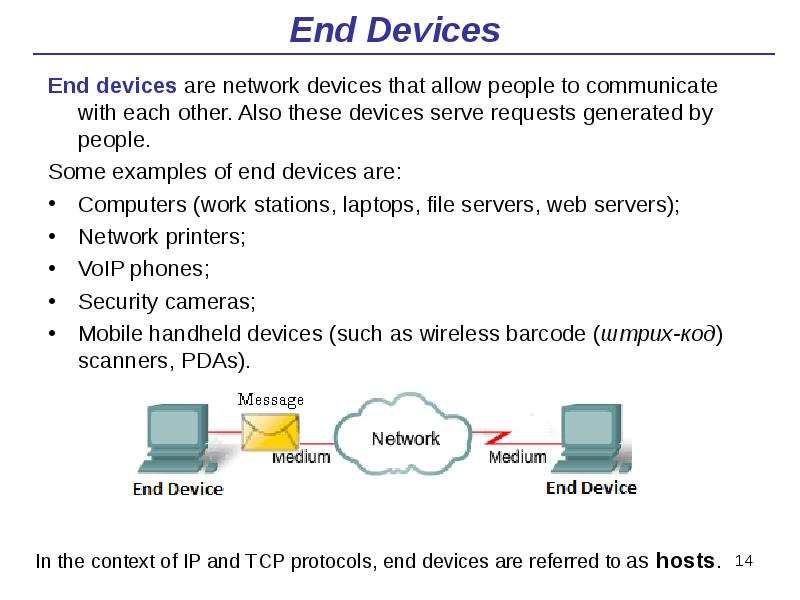
End devices are network devices that allow people to communicate with each other. Also these devices serve requests generated by people.
Some examples of end devices are:
Computers (work stations, laptops, file servers, web servers);
Network printers;
VoIP phones;
Security cameras;
Mobile handheld devices (such as wireless barcode (штрих-код) scanners, PDAs).
Слайд 15
Описание слайда:
Intermediate Network Devices
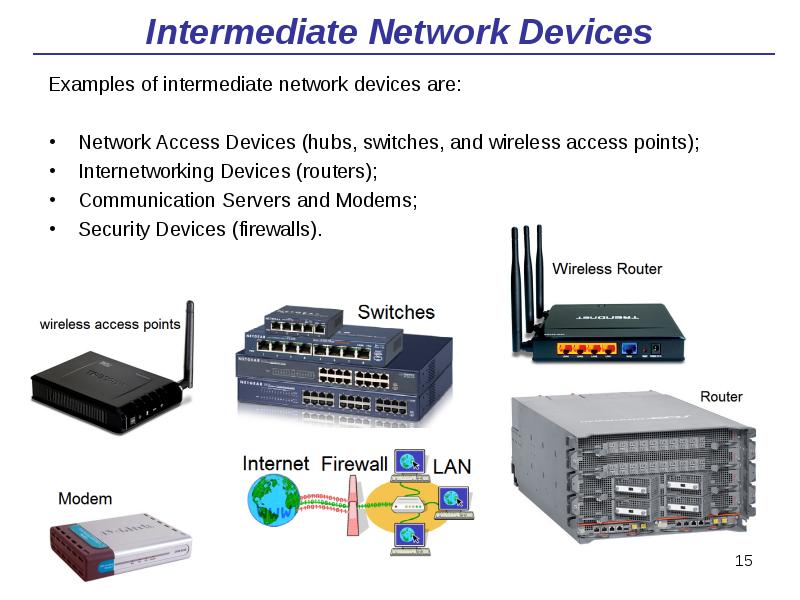
Examples of intermediate network devices are:
Network Access Devices (hubs, switches, and wireless access points);
Internetworking Devices (routers);
Communication Servers and Modems;
Security Devices (firewalls).
Слайд 16
Описание слайда:
List of Functions of Intermediate Network Devices
Processes running on the intermediary network devices perform such functions:
the regeneration and retransmission of data signals;
the maintaining information about what routes exist through the network and internetwork;
the notification of other devices about errors and communication failures;
sending data along alternate routes when there is a link failure;
classifying and sending messages according to QoS priorities;
the permission or denying the data flow based on security settings.
Слайд 17
Описание слайда:
Network Media
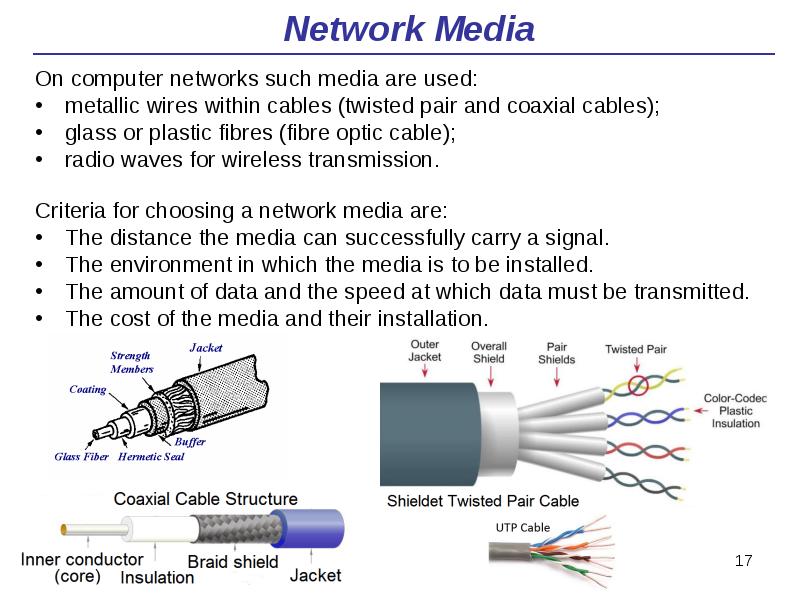
On computer networks such media are used:
metallic wires within cables (twisted pair and coaxial cables);
glass or plastic fibres (fibre optic cable);
radio waves for wireless transmission.
Criteria for choosing a network media are:
The distance the media can successfully carry a signal.
The environment in which the media is to be installed.
The amount of data and the speed at which data must be transmitted.
The cost of the media and their installation.
Слайд 18
Описание слайда:
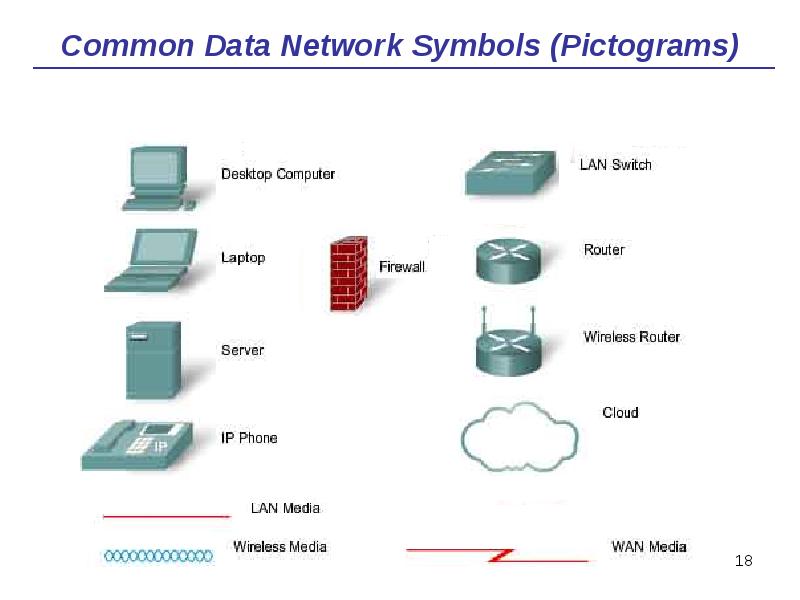
Common Data Network Symbols (Pictograms)
Слайд 19
Описание слайда:
Definition of some Network Concepts
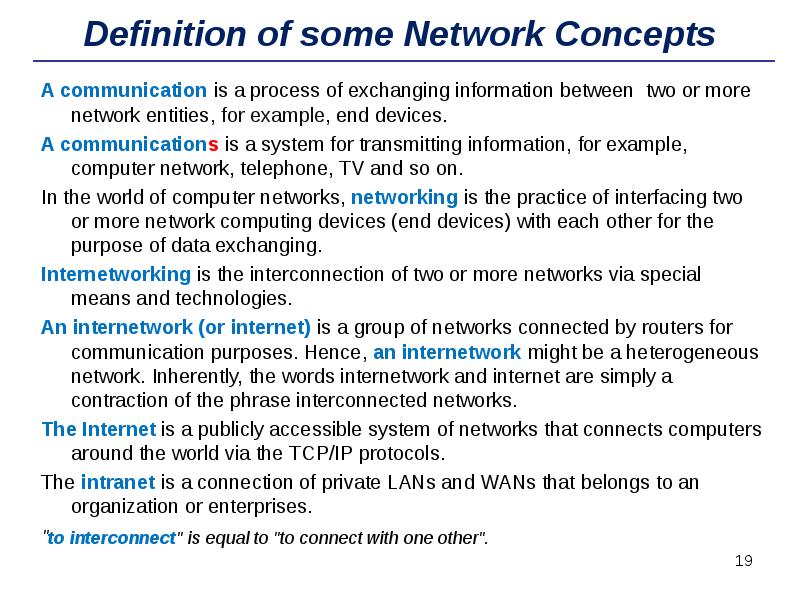
A communication is a process of exchanging information between two or more network entities, for example, end devices.
A communications is a system for transmitting information, for example, computer network, telephone, TV and so on.
In the world of computer networks, networking is the practice of interfacing two or more network computing devices (end devices) with each other for the purpose of data exchanging.
Internetworking is the interconnection of two or more networks via special means and technologies.
An internetwork (or internet) is a group of networks connected by routers for communication purposes. Hence, an internetwork might be a heterogeneous network. Inherently, the words internetwork and internet are simply a contraction of the phrase interconnected networks.
The Internet is a publicly accessible system of networks that connects computers around the world via the TCP/IP protocols.
The intranet is a connection of private LANs and WANs that belongs to an organization or enterprises.
"to interconnect" is equal to "to connect with one other".
Слайд 20
Описание слайда:
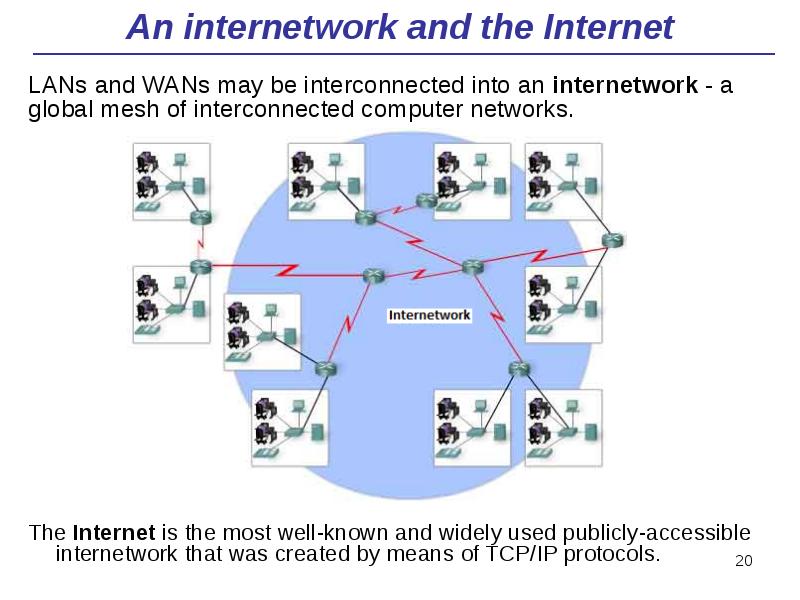
An internetwork and the Internet
The Internet is the most well-known and widely used publicly-accessible internetwork that was created by means of TCP/IP protocols.
Слайд 21
Описание слайда:
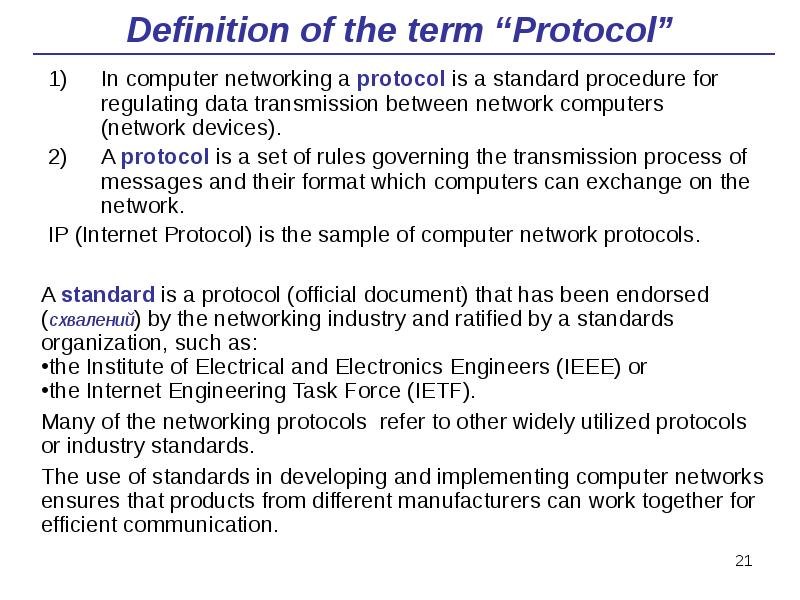
Definition of the term “Protocol”
In computer networking a protocol is a standard procedure for regulating data transmission between network computers (network devices).
A protocol is a set of rules governing the transmission process of messages and their format which computers can exchange on the network.
IP (Internet Protocol) is the sample of computer network protocols.
Слайд 22
Описание слайда:
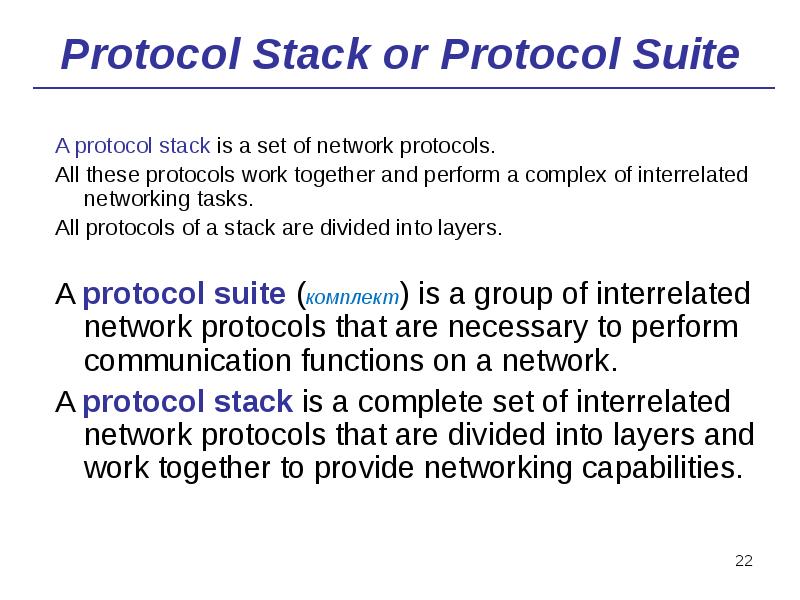
Protocol Stack or Protocol Suite
A protocol stack is a set of network protocols.
All these protocols work together and perform a complex of interrelated networking tasks.
All protocols of a stack are divided into layers.
A protocol suite (комплект) is a group of interrelated network protocols that are necessary to perform communication functions on a network.
A protocol stack is a complete set of interrelated network protocols that are divided into layers and work together to provide networking capabilities.
Слайд 23
Описание слайда:
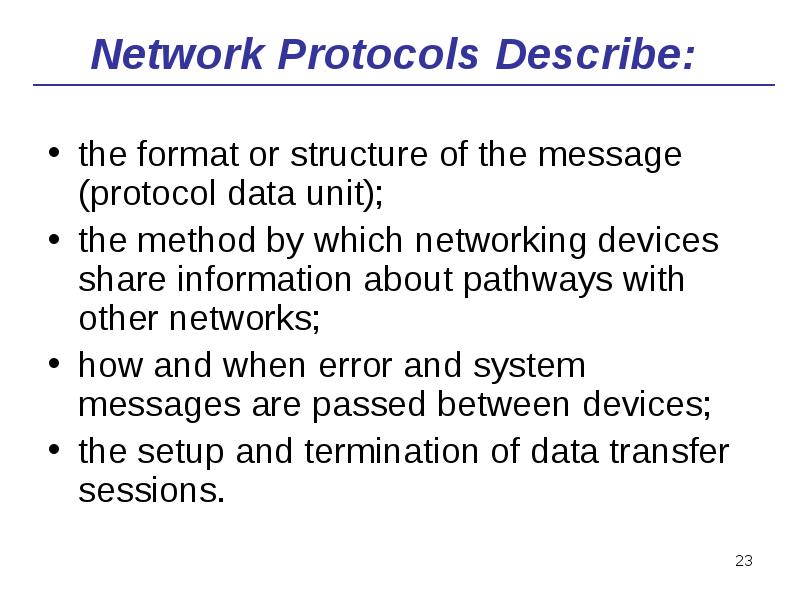
Network Protocols Describe:
the format or structure of the message (protocol data unit);
the method by which networking devices share information about pathways with other networks;
how and when error and system messages are passed between devices;
the setup and termination of data transfer sessions.
Слайд 24
Описание слайда:
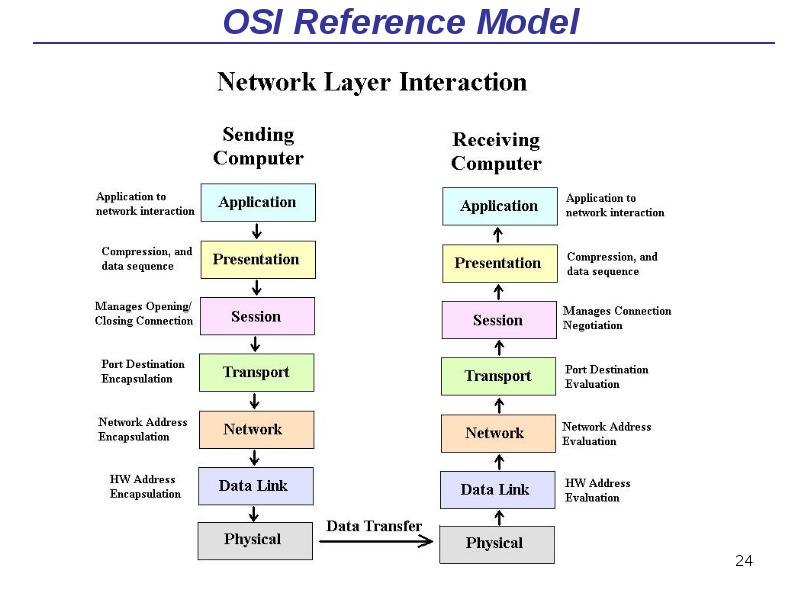
OSI Reference Model
Слайд 25
Описание слайда:
TCP/IP Architectural Model
TCP/IP architectural model describes components and functions of the TCP/IP protocol stack.
TCP and IP are two main protocols of the TCP/IP protocol stack.
This model is known by different names:
the TCP/IP architectural model;
the DARPA model (after the Defense Advanced Research Projects Agency - agency that was largely responsible for developing TCP/IP);
the DoD model (after the United States Department of Defence).
Слайд 26
Описание слайда:
TCP/IP Architectural Model (or DoD Model)
Слайд 27
Описание слайда:
The Comparison of the TCP/IP and OSI Models
Слайд 28
Описание слайда:
The Communication Process
Слайд 29
Описание слайда:
The communication process
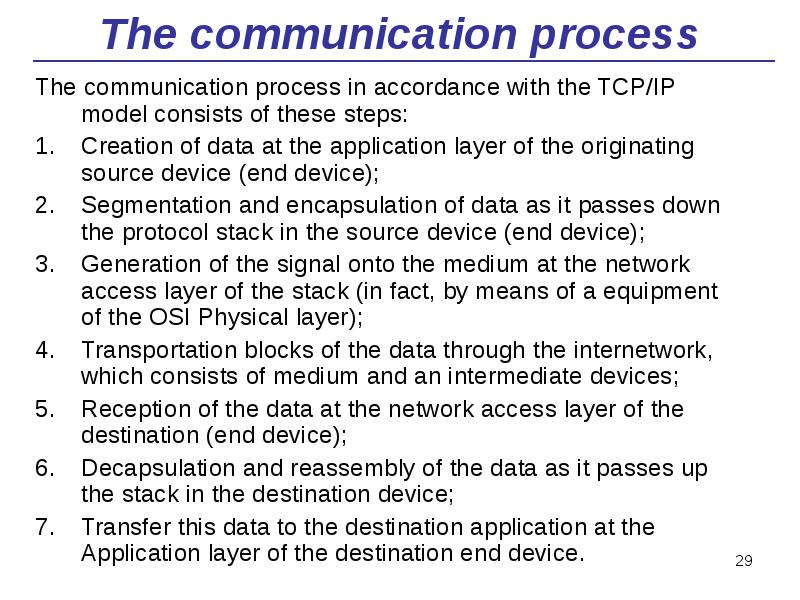
The communication process in accordance with the TCP/IP model consists of these steps:
Creation of data at the application layer of the originating source device (end device);
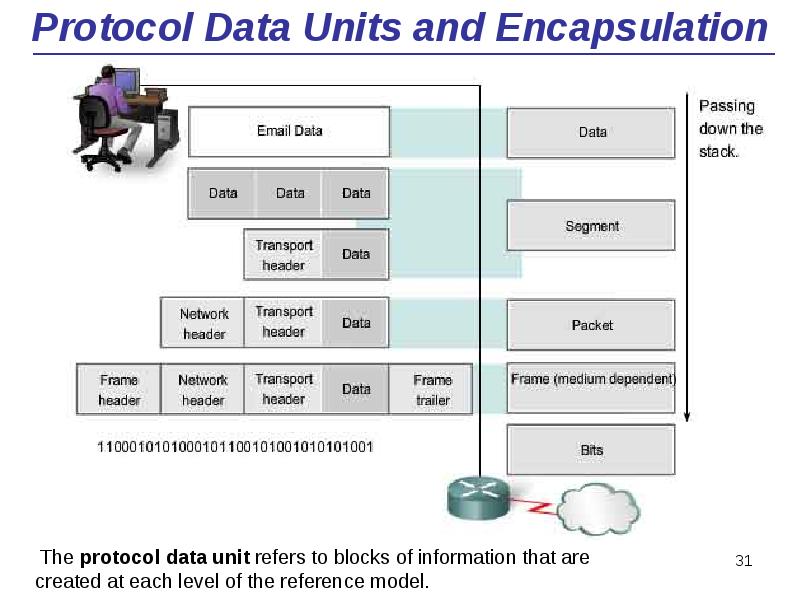
Segmentation and encapsulation of data as it passes down the protocol stack in the source device (end device);
Generation of the signal onto the medium at the network access layer of the stack (in fact, by means of a equipment of the OSI Physical layer);
Transportation blocks of the data through the internetwork, which consists of medium and an intermediate devices;
Reception of the data at the network access layer of the destination (end device);
Decapsulation and reassembly of the data as it passes up the stack in the destination device;
Transfer this data to the destination application at the Application layer of the destination end device.
Слайд 30
Описание слайда:
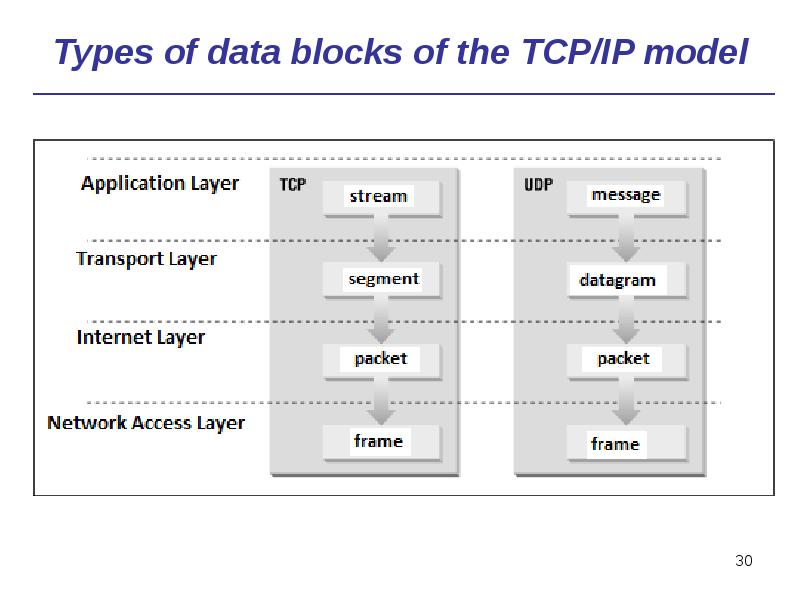
Types of data blocks of the TCP/IP model
Слайд 31
Описание слайда:
Protocol Data Units and Encapsulation
Слайд 32
Описание слайда:
Questions for self check
What does the abbreviation ARPA mean?
Tell about a role and purposes of ARPA.
Tell about a role and purposes of IPTO.
Describe the scheme of the ARPA Network.
What does the IMP stand for? What are the functions of IMP?
What topology is called redundant? Why is redundant topology used for large regional networks?
Explain the packet-switching mode?
Tell about an initial configuration of the ARPANet?
Name the main end network devices and explain briefly their role and designation.
Name the main intermediary network devices and explain briefly their role and designation.
What does the term ‘protocol’ mean in computer networking?
Describe the TCP/IP architectural model.
Скачать презентацию на тему Lecture 1. TCP/IP Overview and History можно ниже: