Biological Effects of Nitric Oxide and its Role in Cell Signaling презентация
Содержание
- 2. What is Nitric Oxide? First described in 1979 as a potent
- 3. Background Information Prior to 1990: An air pollutant Named “Molecule of
- 4. The structure and nature of Nitric Oxide Nitric oxide is a
- 5. NO: Unique messenger and play important role in following functions:
- 6. NOBEL PRIZE Dr. Robert Farchgott, an 82-year-old pharmacist at the University
- 7. NOBEL PRIZE In 1980, in a simple experiment with acetilcholine, he
- 8. NOBEL PRIZE 62-year-old pharmacologist Ferid Murad from the University of Texas
- 10. NO functions This was the first discovery that gas can act
- 11. Induction of biosynthesis
- 12. Intracellular signaling cascade Nitric oxide (II), a highly reactive free radical,
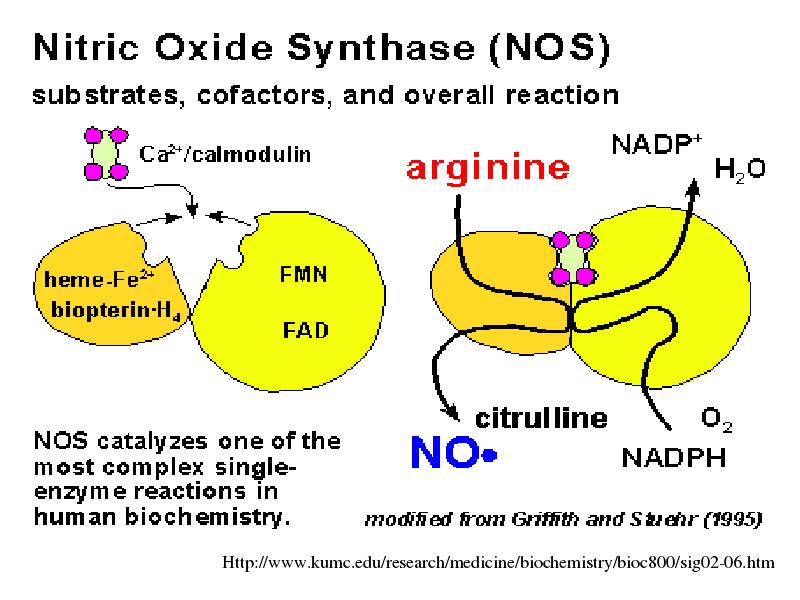
- 13. Synthesis of NO NO is synthesized by nitric oxide synthase (NOS)
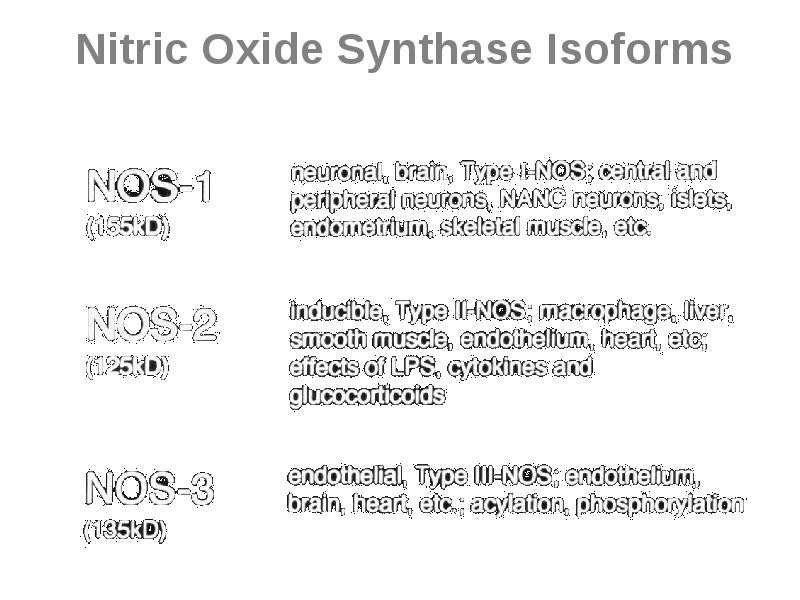
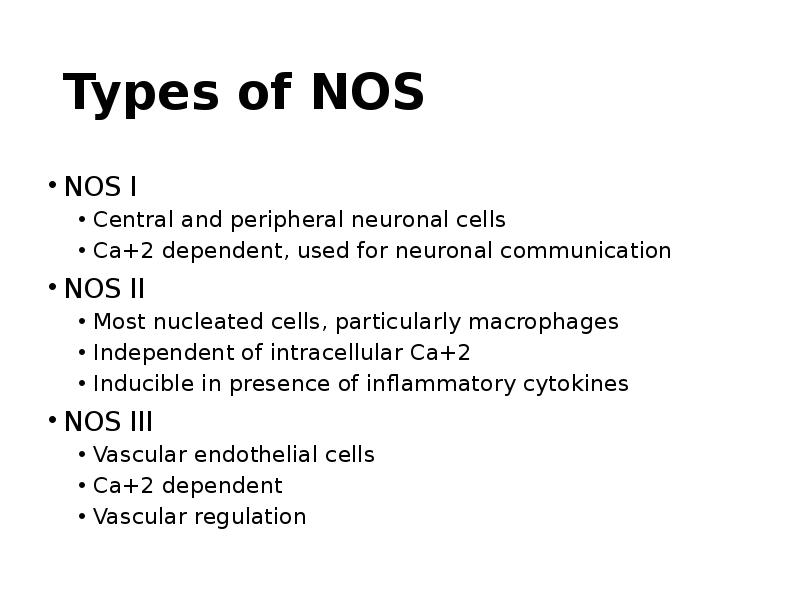
- 15. Types of NOS NOS I Central and peripheral neuronal cells Ca+2
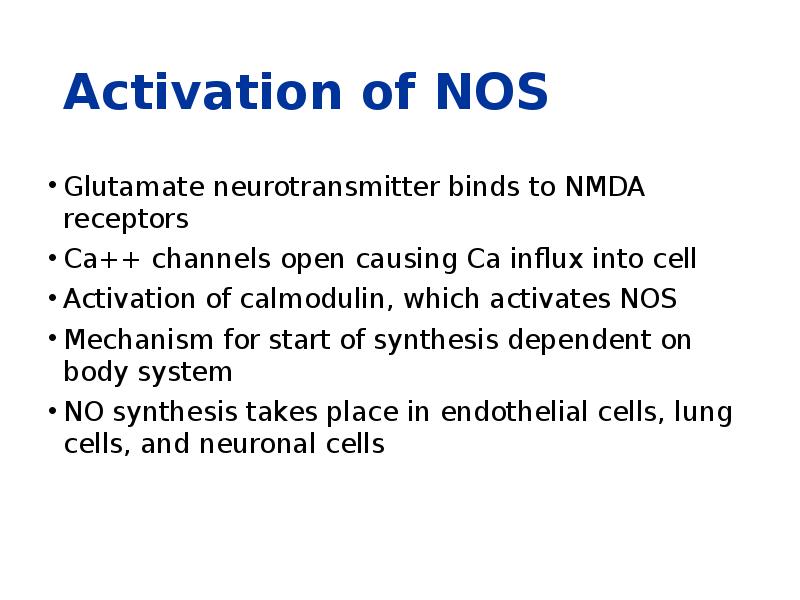
- 17. Activation of NOS Glutamate neurotransmitter binds to NMDA receptors Ca++ channels
- 19. Nitric oxide as a Signal Nitric oxide couples G protein-linked receptor
- 20. The role of NO in Nervous System It was found that
- 21. The role of NO in Cardio-Vascular System NO Regulates the relaxation
- 23. Nitric oxide signaling in cardiomyocytes
- 24. The role of NO in Immune System The activation of cells
- 25. Pecularity of NO A characteristic feature of NO is the ability
- 26. Peculiarity of NO.. At the same time, a superoxide accumulates in
- 27. Pecularity of NO.. Nitric oxide can initiate the formation of blood
- 33. Conclusion Conclusion NO is
- 34. Скачать презентацию
Слайды и текст этой презентации
Слайд 1
Описание слайда:
Biological Effects of Nitric Oxide and its Role in Cell Signaling
Слайд 2
Описание слайда:
What is Nitric Oxide?
First described in 1979 as a potent relaxant of peripheral vascular smooth muscle.
Used by the body as a signaling molecule.
Serves different functions depending on body system. i.e. neurotransmitter, vasodilator, bactericide.
Environmental Pollutant
First gas known to act as a biological messenger
Слайд 3
Описание слайда:
Background Information
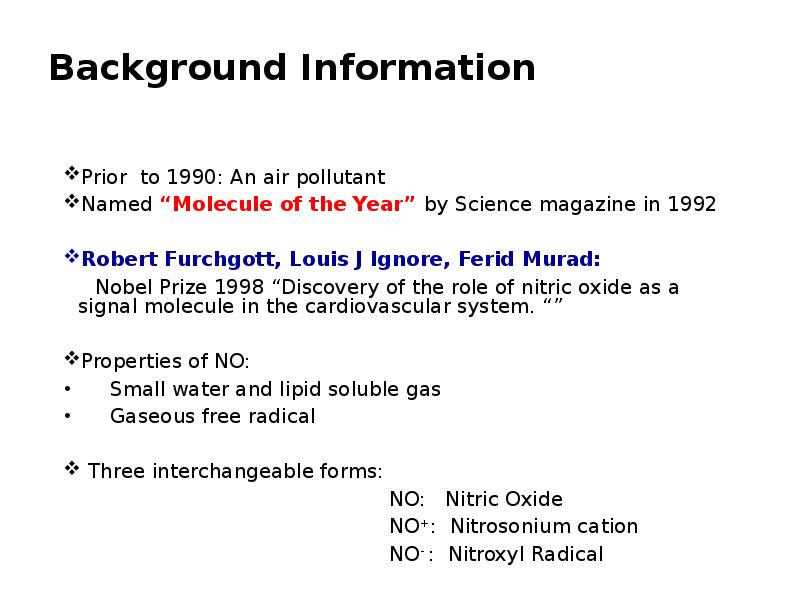
Prior to 1990: An air pollutant
Named “Molecule of the Year” by Science magazine in 1992
Robert Furchgott, Louis J Ignore, Ferid Murad:
Nobel Prize 1998 “Discovery of the role of nitric oxide as a signal molecule in the cardiovascular system. “”
Properties of NO:
Small water and lipid soluble gas
Gaseous free radical
Three interchangeable forms:
NO: Nitric Oxide
NO+: Nitrosonium cation
NO- : Nitroxyl Radical
Слайд 4
Описание слайда:
The structure and nature of Nitric Oxide
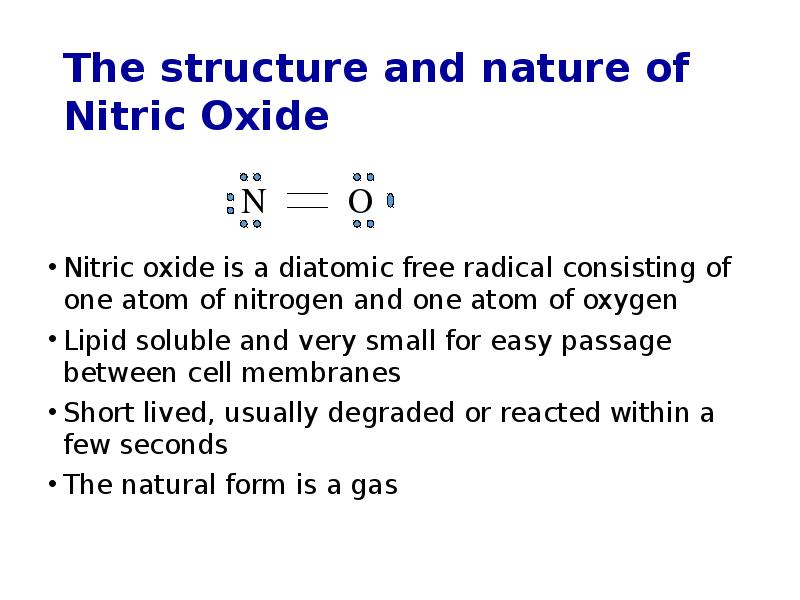
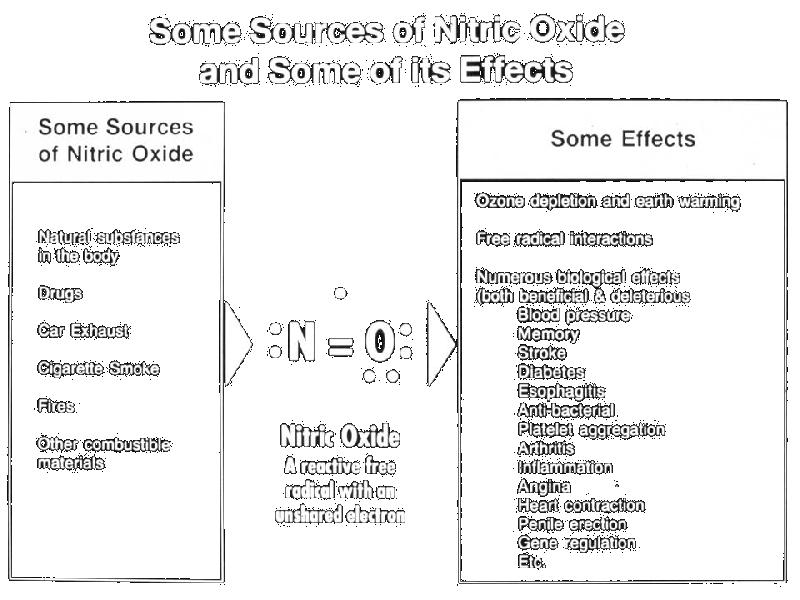
Nitric oxide is a diatomic free radical consisting of one atom of nitrogen and one atom of oxygen
Lipid soluble and very small for easy passage between cell membranes
Short lived, usually degraded or reacted within a few seconds
The natural form is a gas
Слайд 5
Описание слайда:
NO: Unique messenger and play important role in following functions:
Neuronal signaling
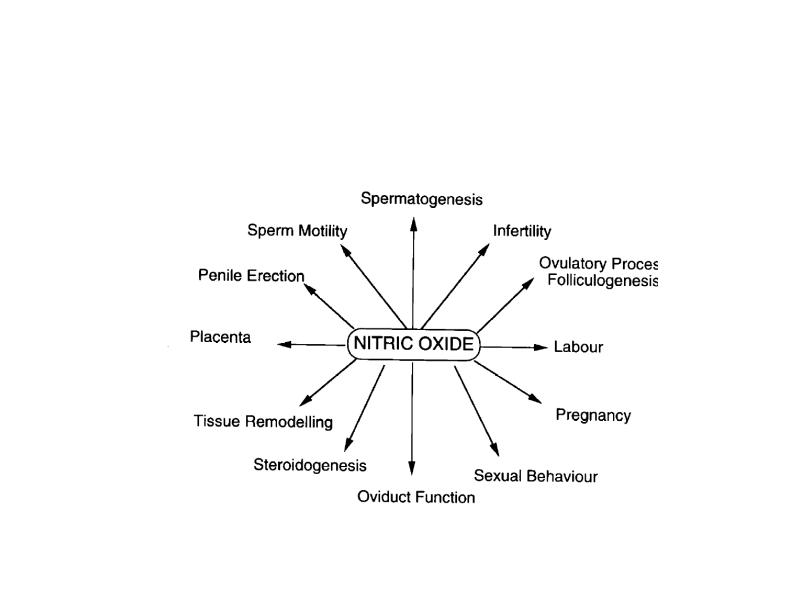
Penile erection
Cardiovascular homeostasis
Decompensation in atherogenesis
Слайд 6
Описание слайда:
NOBEL PRIZE
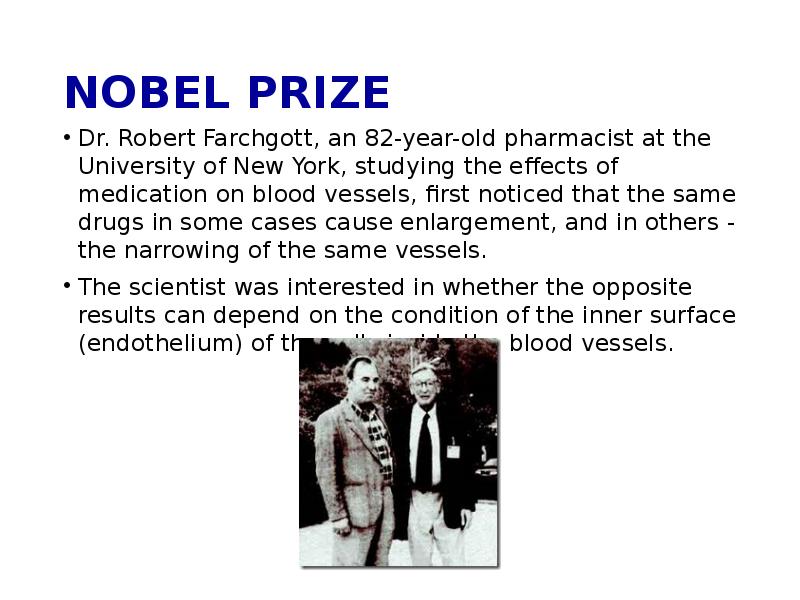
Dr. Robert Farchgott, an 82-year-old pharmacist at the University of New York, studying the effects of medication on blood vessels, first noticed that the same drugs in some cases cause enlargement, and in others - the narrowing of the same vessels.
The scientist was interested in whether the opposite results can depend on the condition of the inner surface (endothelium) of the cells inside the blood vessels.
Слайд 7
Описание слайда:
NOBEL PRIZE
In 1980, in a simple experiment with acetilcholine, he showed that this substance dilates the blood vessels in those cases when the wall of the vessels is not damaged.
R. Farchgotta concluded that intact endothelial cells produce an unknown signal hitherto relaxing the smooth musculature of the vessels.
This scientist called the molecule EDRF, which meant "endothelium-receiving-distributing factor." In search of an unknown signal molecule,
In search of an unknown signal molecule, independently of R. Farchgott, Dr. Louis Ignarro, a 57-year-old scientist from the University of California at Los Angeles (UCLA), took part. In search of the chemical nature of EDRF, L. Ignarro conducted a brilliant series of studies and in 1986 came to the conclusion that EDRF is identical to nitric oxide.
Слайд 8
Описание слайда:
NOBEL PRIZE
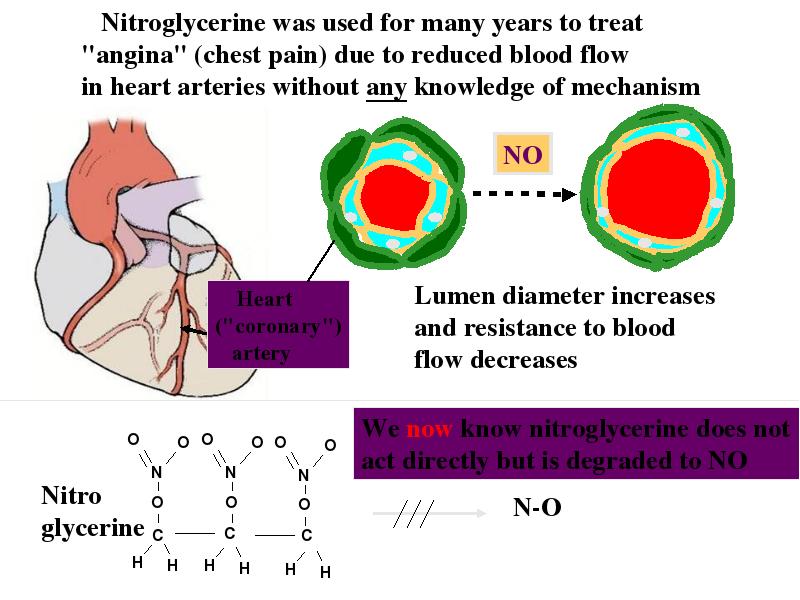
62-year-old pharmacologist Ferid Murad from the University of Texas Medical School in Houston analyzed the pharmacological effect of giving nitroglycerin and other related vasodilators.
In 1977, he established that these substances release nitric oxide, which expands the smooth muscle of cells.
The idea that gas can regulate the most important cellular functions, seized him, but at that time he did not have sufficient experimental justifications to confirm this idea.
Слайд 9
Описание слайда:
Слайд 10
Описание слайда:
NO functions
This was the first discovery that gas can act as a molecule signal in the body.
It turned out that nitric oxide protects the heart, stimulates the brain, kills bacteria, etc.
Further results confirmed that nitric oxide is a signal molecule, primarily for the cardiovascular system, as well as for a number of other functions, for example, as a signal molecule in Nervous system.
Слайд 11
Описание слайда:
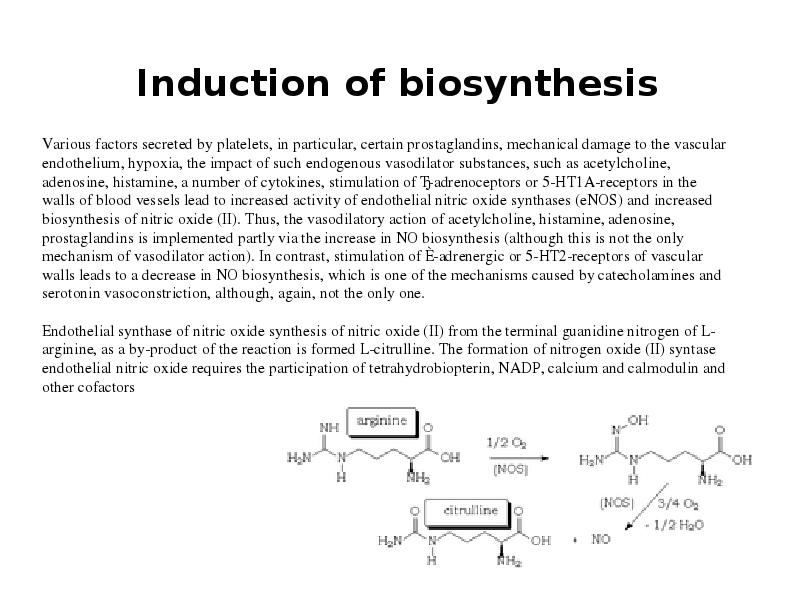
Induction of biosynthesis
Слайд 12
Описание слайда:
Intracellular signaling cascade
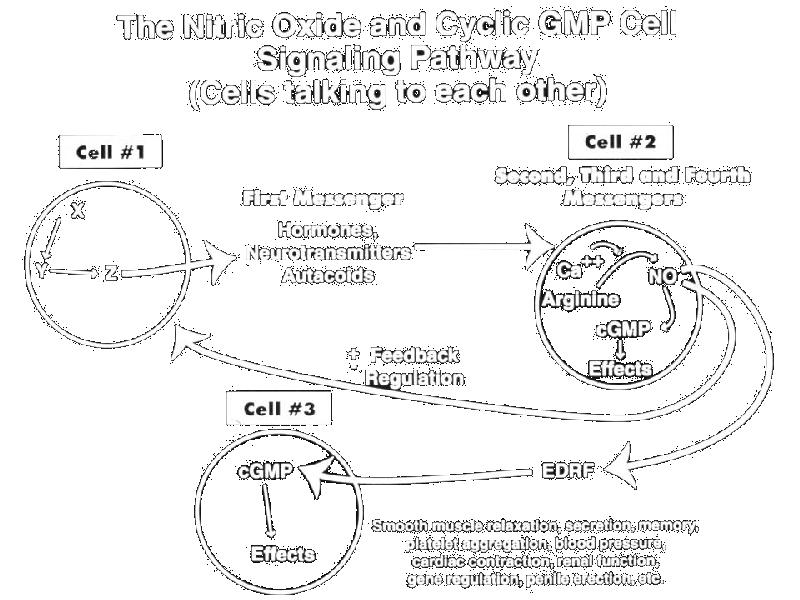
Nitric oxide (II), a highly reactive free radical, diffuses through the cell membrane of smooth muscle cells of blood vessels and interacts with the heme prosthetic group of soluble called guanylate cyclase, nitrospirae it and the resulting disconnection of the iron heme with a proximal leucine and configuration change of the enzyme, leading to its activation. Guanylate cyclase activation leads to increased formation in the secondary cell mediator cyclic GMP (cGMP) — (3’,5’-guanosine-monophosphate) from GTP (guanosine triphosphate). In addition, nitric oxide (II) is also nitrosonium group other important heme iron enzymes, in particular cytochromes and cytochromoxidase, which leads to inhibition of their activity, slowing the rate of oxidative metabolism in mitochondria and reduce oxygen consumption of the smooth muscle cell (which is important in hypoxia conditions).
Слайд 13
Описание слайда:
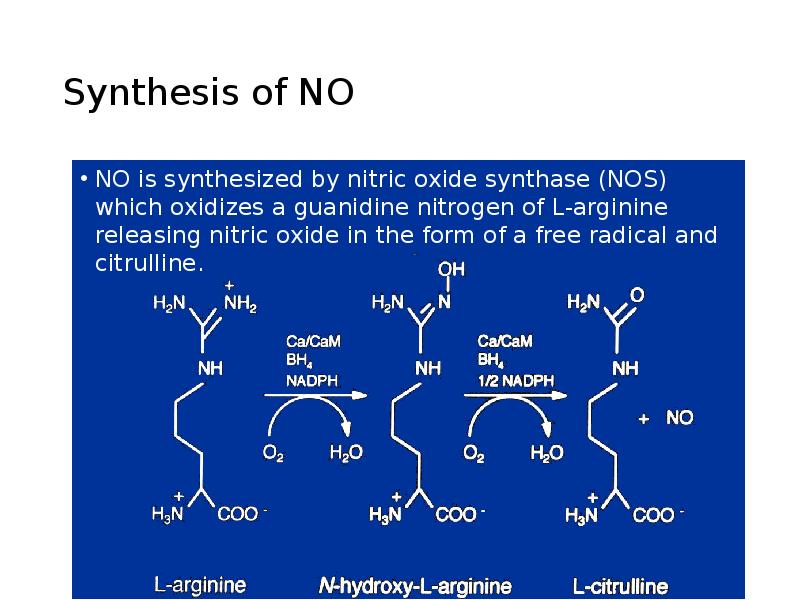
Synthesis of NO
NO is synthesized by nitric oxide synthase (NOS) which oxidizes a guanidine nitrogen of L-arginine releasing nitric oxide in the form of a free radical and citrulline.
Слайд 14
Описание слайда:
Слайд 15
Описание слайда:
Types of NOS
NOS I
Central and peripheral neuronal cells
Ca+2 dependent, used for neuronal communication
NOS II
Most nucleated cells, particularly macrophages
Independent of intracellular Ca+2
Inducible in presence of inflammatory cytokines
NOS III
Vascular endothelial cells
Ca+2 dependent
Vascular regulation
Слайд 16
Описание слайда:
Слайд 17
Описание слайда:
Activation of NOS
Glutamate neurotransmitter binds to NMDA receptors
Ca++ channels open causing Ca influx into cell
Activation of calmodulin, which activates NOS
Mechanism for start of synthesis dependent on body system
NO synthesis takes place in endothelial cells, lung cells, and neuronal cells
Слайд 18
Описание слайда:
Слайд 19
Описание слайда:
Nitric oxide as a Signal
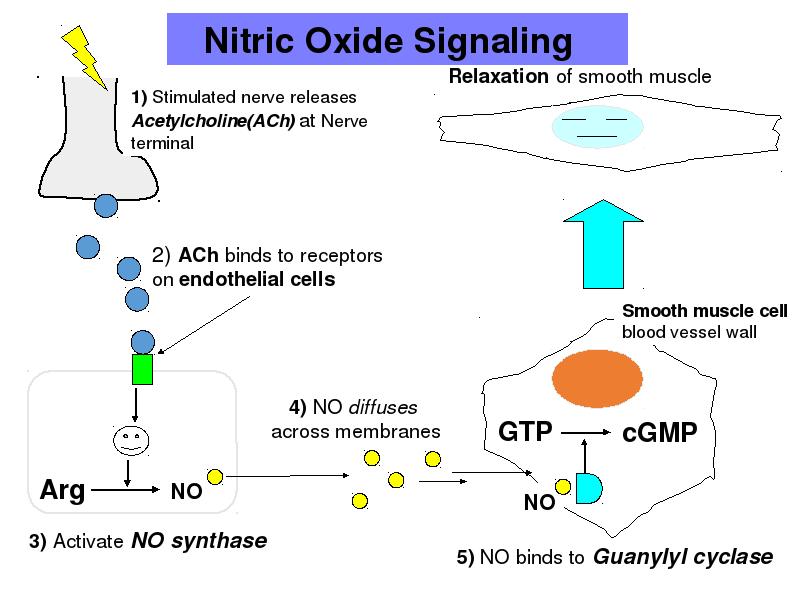
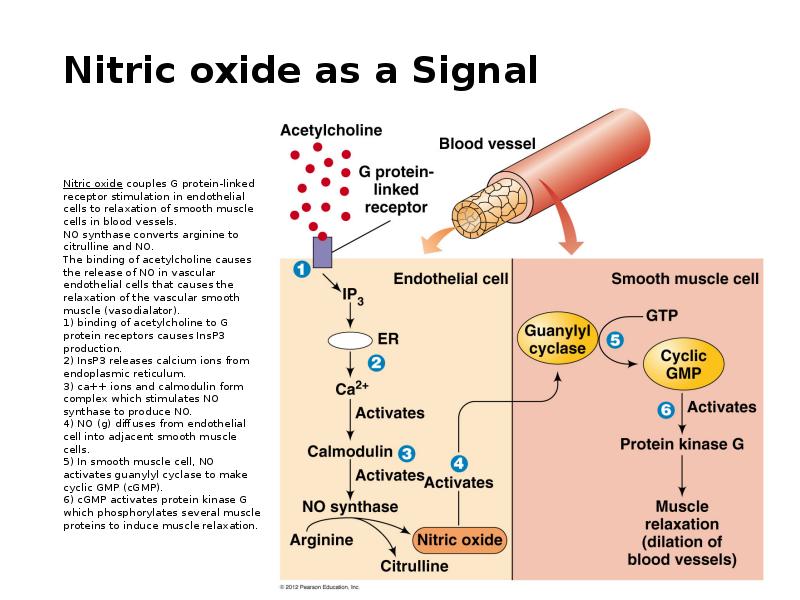
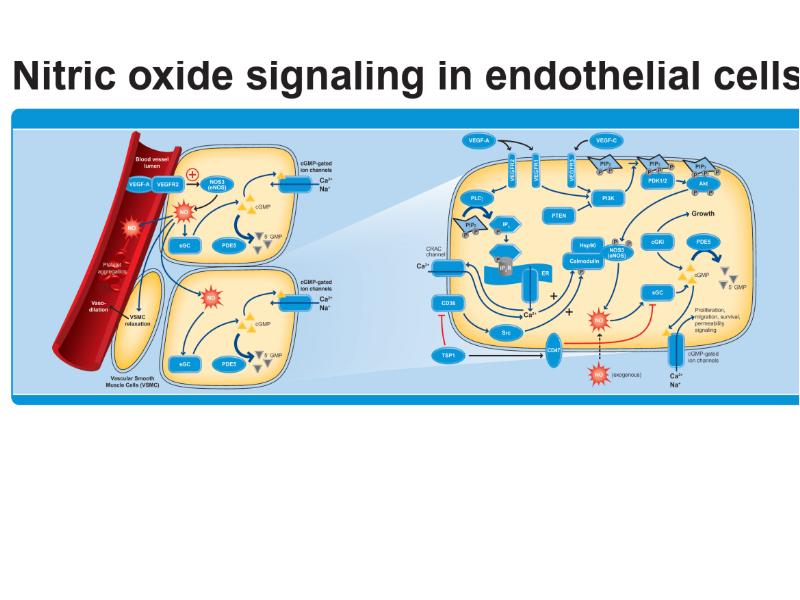
Nitric oxide couples G protein-linked receptor stimulation in endothelial cells to relaxation of smooth muscle cells in blood vessels.
NO synthase converts arginine to citrulline and NO.
The binding of acetylcholine causes the release of NO in vascular endothelial cells that causes the relaxation of the vascular smooth muscle (vasodialator).
1) binding of acetylcholine to G protein receptors causes InsP3 production.
2) InsP3 releases calcium ions from endoplasmic reticulum.
3) ca++ ions and calmodulin form complex which stimulates NO synthase to produce NO.
4) NO (g) diffuses from endothelial cell into adjacent smooth muscle cells.
5) In smooth muscle cell, NO activates guanylyl cyclase to make cyclic GMP (cGMP).
6) cGMP activates protein kinase G which phosphorylates several muscle proteins to induce muscle relaxation.
Слайд 20
Описание слайда:
The role of NO in Nervous System
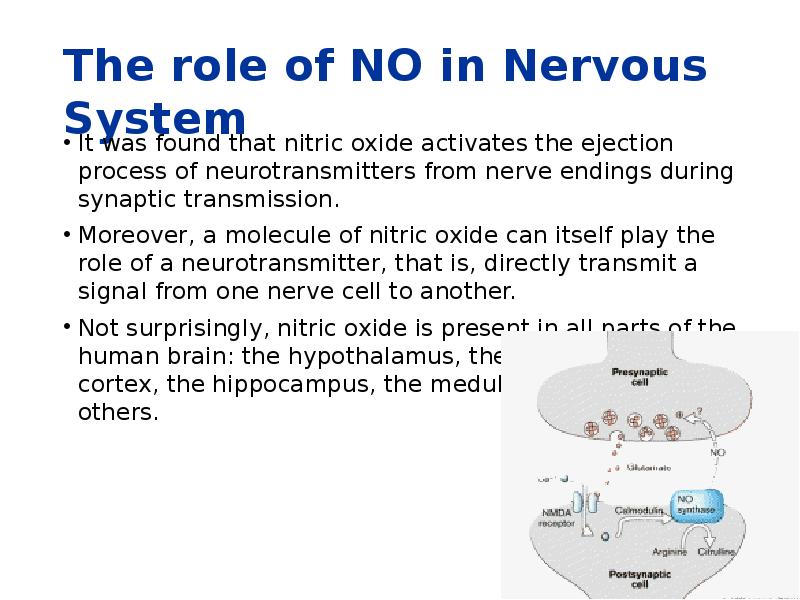
It was found that nitric oxide activates the ejection process of neurotransmitters from nerve endings during synaptic transmission.
Moreover, a molecule of nitric oxide can itself play the role of a neurotransmitter, that is, directly transmit a signal from one nerve cell to another.
Not surprisingly, nitric oxide is present in all parts of the human brain: the hypothalamus, the midbrain, the cortex, the hippocampus, the medulla oblongata, and others.
Слайд 21
Описание слайда:
The role of NO in Cardio-Vascular System
NO Regulates the relaxation of smooth muscle vessels and the synthesis of so-called "heat shock proteins" that "protect" the vessels in coronary heart disease.
Inhibits the aggregation (clumping) of platelets, affects the transfer of oxygen by erythrocytes, as well as reactions involving chemically active molecules (free radicals) in the blood.
Слайд 22
Описание слайда:
Слайд 23
Описание слайда:
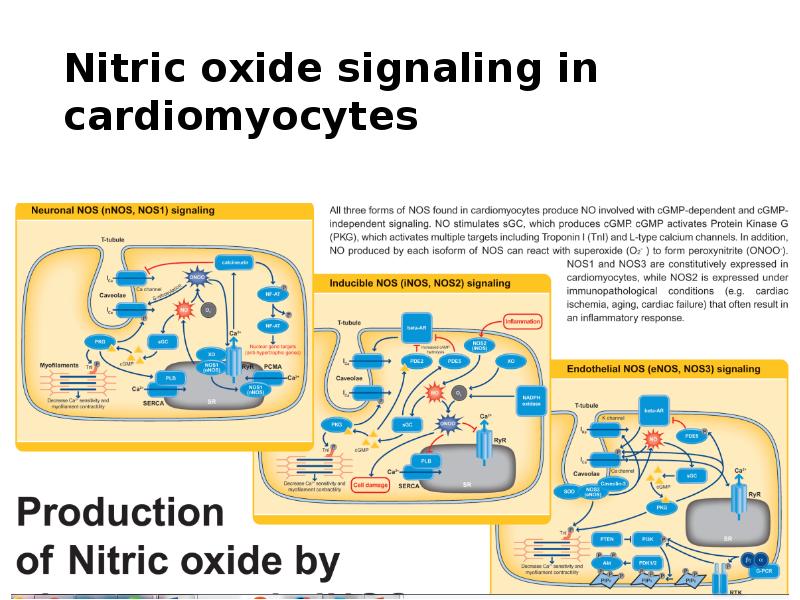
Nitric oxide signaling in cardiomyocytes
Слайд 24
Описание слайда:
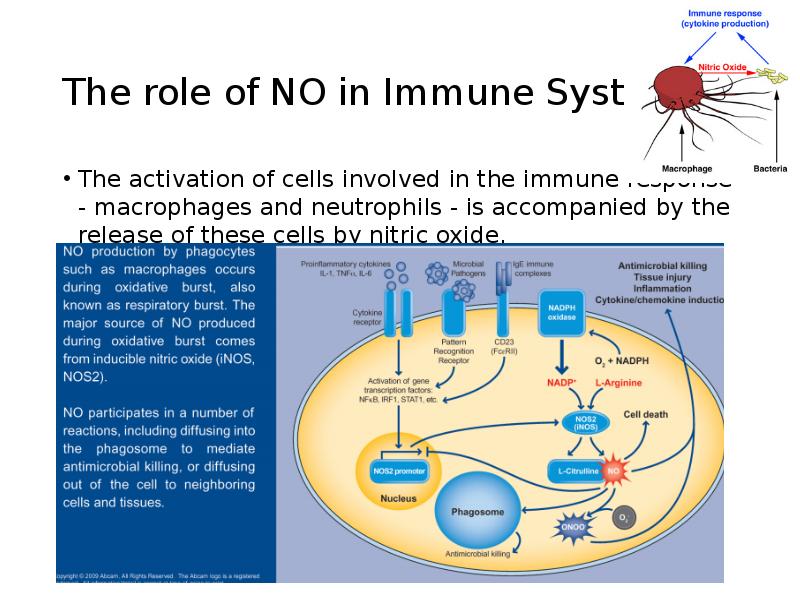
The role of NO in Immune System
The activation of cells involved in the immune response - macrophages and neutrophils - is accompanied by the release of these cells by nitric oxide.
Слайд 25
Описание слайда:
Pecularity of NO
A characteristic feature of NO is the ability to diffuse quickly through the membrane of the cell synthesizing it into the intercellular space (in less than 5 seconds) and easily (without the participation of the receptors) to penetrate into the target cells. Inside the cell, it activates certain enzymes and inhibits others, thus participating in the regulation of cellular functions.
In fact, nitrogen monoxide is a local tissue hormone.
NO plays a key role in suppressing the activity of bacterial and tumor cells by either blocking some of their iron-containing enzymes, or by damaging their cellular structures with nitric oxide or free radicals formed from nitric oxide.
Слайд 26
Описание слайда:
Peculiarity of NO..
At the same time, a superoxide accumulates in the inflammatory focus, which causes damage to the proteins and lipids of the cell membranes, which explains its cytotoxic effect on the target cell. Consequently, NO, accumulating excessively in a cell, can act in two ways: on the one hand, it causes DNA damage and, on the other hand, has a antiinflammatory effect.
Слайд 27
Описание слайда:
Pecularity of NO..
Nitric oxide can initiate the formation of blood vessels. In the case of myocardial infarction, nitric oxide plays a positive role, as it induces a new vascular growth, but in cancer, the same process causes the development of tumors, promoting the nutrition and growth of cancer cells.
On the other hand, as a result, the delivery of nitric oxide to tumor cells is improved. DNA damage due to NO is one of the reasons for the development of apoptosis (the programmed process of cellular "suicide", aimed at removing cells that have lost their functions).
In the experiments, there was deamination of deoxynucleosides, deoxynucleotides and undamaged DNA upon exposure to a solution saturated with NO.
This process is responsible for increasing the sensitivity of cells to alkylating agents and ionizing radiation, which is used in anticancer therapy.
Слайд 28
Описание слайда:
Слайд 29
Описание слайда:
Слайд 30
Описание слайда:
Слайд 31
Описание слайда:
Слайд 32
Описание слайда:
Слайд 33
Описание слайда:
Conclusion
Conclusion
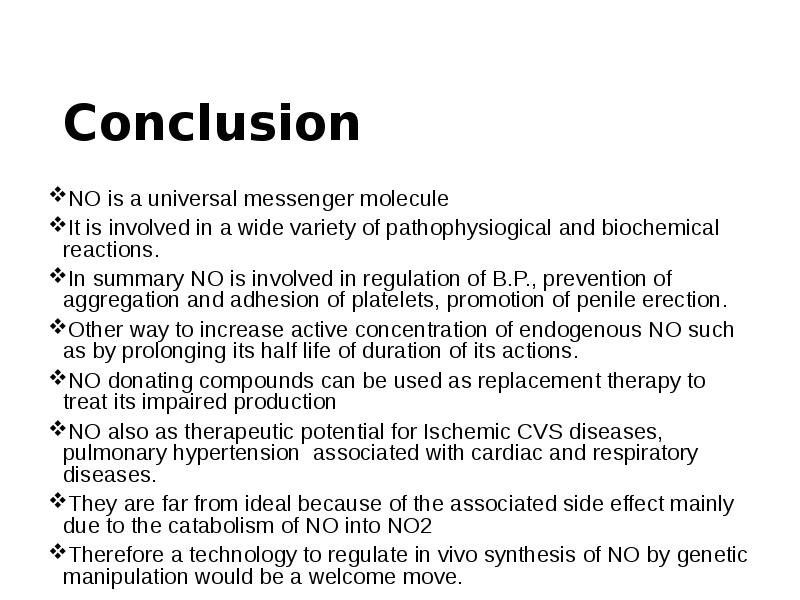
NO is a universal messenger molecule
It is involved in a wide variety of pathophysiogical and biochemical reactions.
In summary NO is involved in regulation of B.P., prevention of aggregation and adhesion of platelets, promotion of penile erection.
Other way to increase active concentration of endogenous NO such as by prolonging its half life of duration of its actions.
NO donating compounds can be used as replacement therapy to treat its impaired production
NO also as therapeutic potential for Ischemic CVS diseases, pulmonary hypertension associated with cardiac and respiratory diseases.
They are far from ideal because of the associated side effect mainly due to the catabolism of NO into NO2
Therefore a technology to regulate in vivo synthesis of NO by genetic manipulation would be a welcome move.
Скачать презентацию на тему Biological Effects of Nitric Oxide and its Role in Cell Signaling можно ниже: