Cameroon english презентация
Содержание
- 2. Cameroon English is an English dialect spoken predominantly in Cameroon, mostly learned as a second language. It
- 3. Phonological features The phonemes /ɔː/, /ʌ/ and /ɒ/ tend to merge to /ɔː/, making "cot", "caught" and "cut"
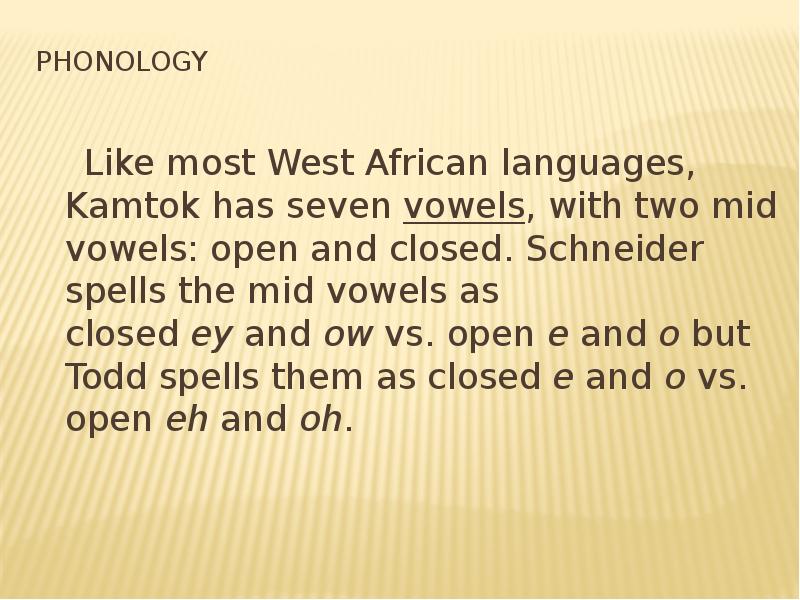
- 4. Phonology Like most West African languages, Kamtok has seven vowels,
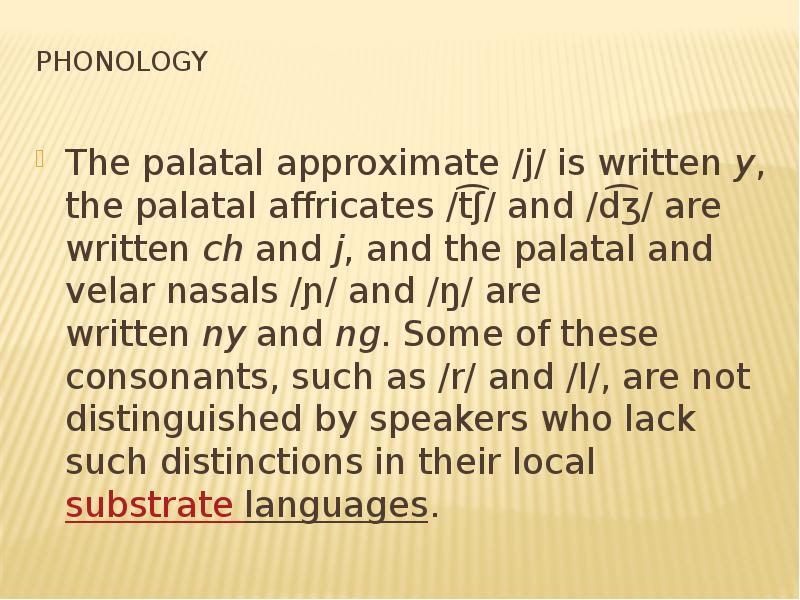
- 5. Phonology The palatal approximate /j/ is written y, the palatal affricates /t͡ʃ/ and /d͡ʒ/ are written ch and j, and
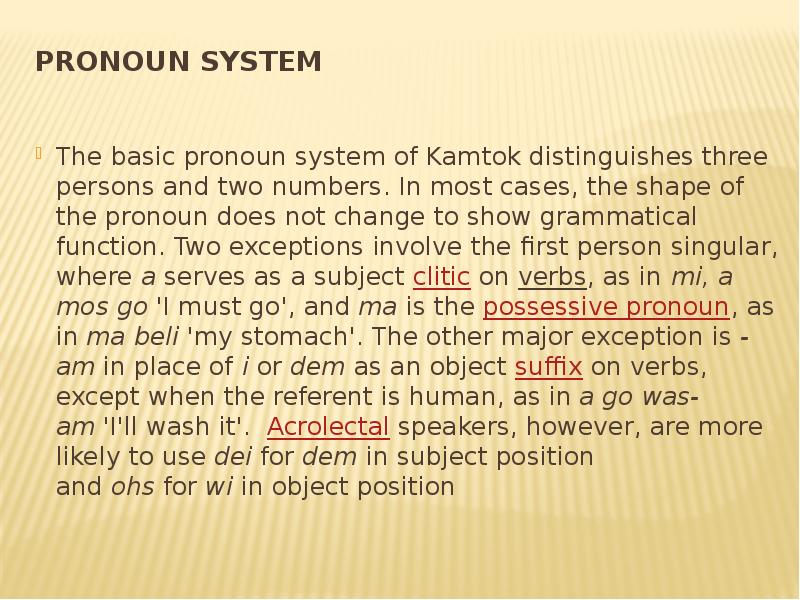
- 6. Pronoun system The basic pronoun system of Kamtok distinguishes three
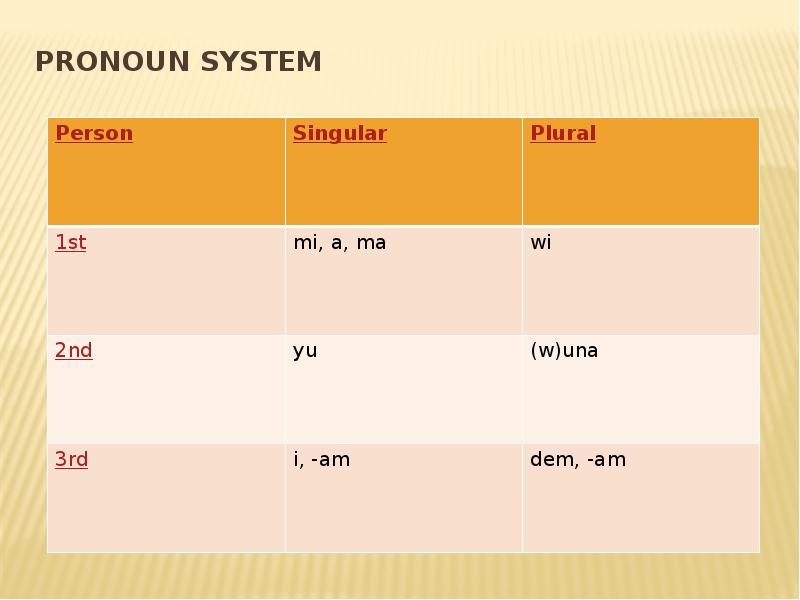
- 7. Pronoun system
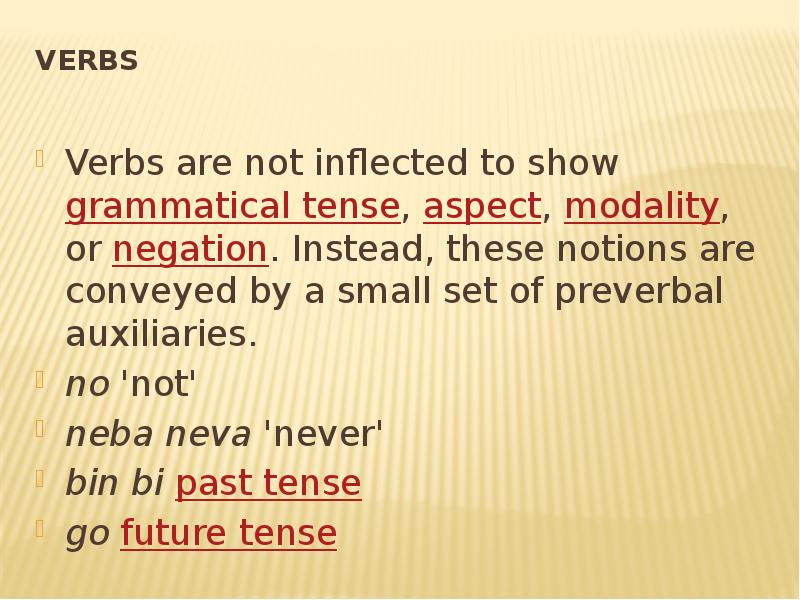
- 8. Verbs Verbs are not inflected to show grammatical tense, aspect, modality, or negation. Instead,
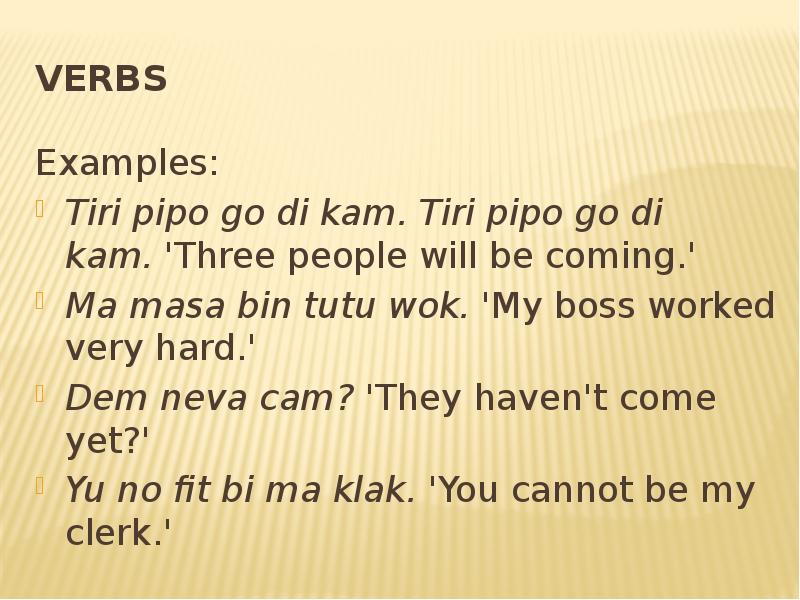
- 9. verbs Examples: Tiri pipo go di kam. Tiri pipo go di kam. 'Three
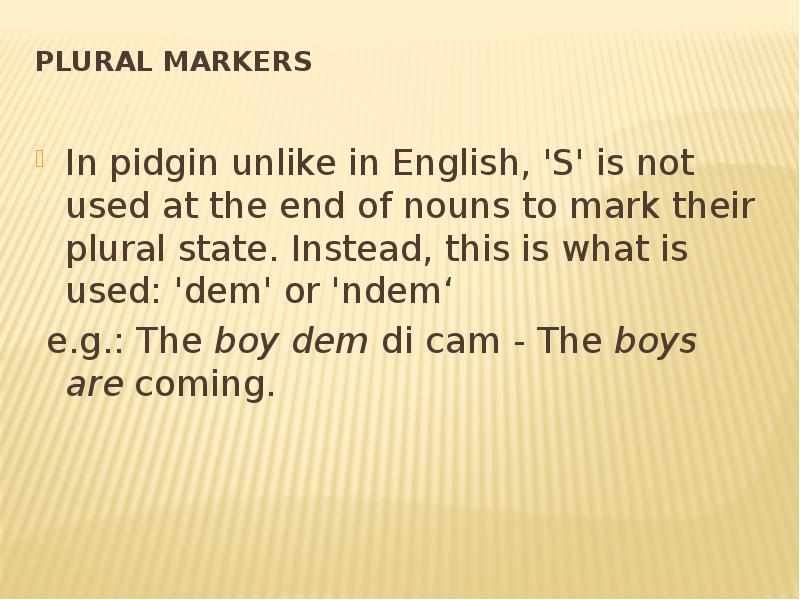
- 10. Plural markers In pidgin unlike in English, 'S' is not
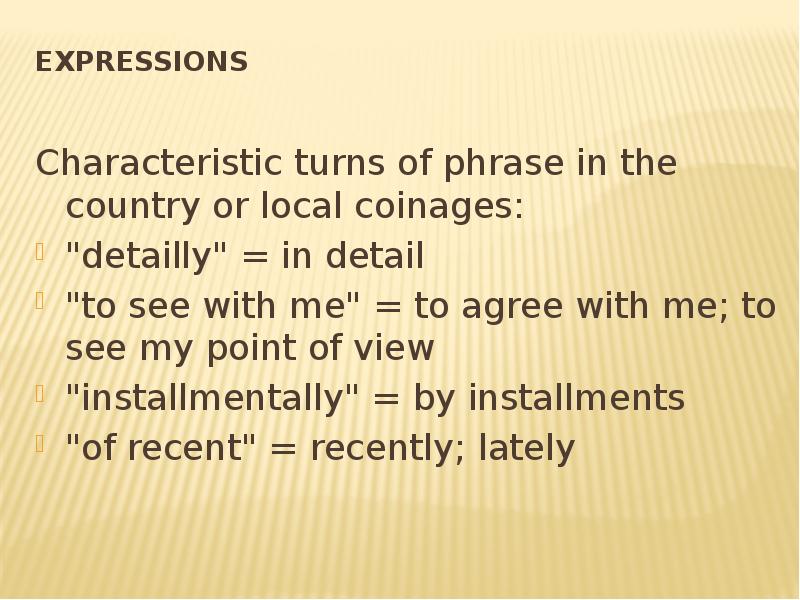
- 11. Expressions Characteristic turns of phrase in the country or local
- 12. See more https://www.youtube.com/watch?v=693SzBNpRPs https://www.youtube.com/watch?v=3aCxJD-OROY&list=PL7aY7m8NGmIYXM_op8Do4NevVdqetZgvK&index=67 (37-46 сек)
- 13. Скачать презентацию
Слайды и текст этой презентации
Слайд 1
Описание слайда:
Cameroon english
Слайд 2
Описание слайда:
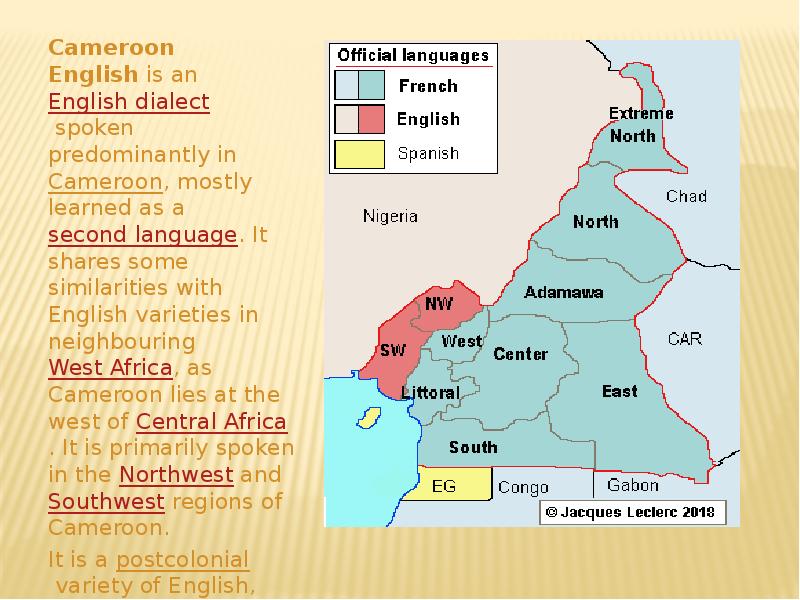
Cameroon English is an English dialect spoken predominantly in Cameroon, mostly learned as a second language. It shares some similarities with English varieties in neighbouring West Africa, as Cameroon lies at the west of Central Africa. It is primarily spoken in the Northwest and Southwest regions of Cameroon.
Cameroon English is an English dialect spoken predominantly in Cameroon, mostly learned as a second language. It shares some similarities with English varieties in neighbouring West Africa, as Cameroon lies at the west of Central Africa. It is primarily spoken in the Northwest and Southwest regions of Cameroon.
It is a postcolonial variety of English, long in use in the territory (Southern Cameroons, now split into Northwest and Southwest).
Слайд 3
Описание слайда:
Phonological features
The phonemes /ɔː/, /ʌ/ and /ɒ/ tend to merge to /ɔː/, making "cot", "caught" and "cut" homophones.[1] Similarly, "lock" and "luck" are pronounced alike. And "white-collar worker" sometimes becomes "white-colour worker" in Cameroon.
Слайд 4
Описание слайда:
Phonology
Like most West African languages, Kamtok has seven vowels, with two mid vowels: open and closed. Schneider spells the mid vowels as closed ey and ow vs. open e and o but Todd spells them as closed e and o vs. open eh and oh.
Слайд 5
Описание слайда:
Phonology
The palatal approximate /j/ is written y, the palatal affricates /t͡ʃ/ and /d͡ʒ/ are written ch and j, and the palatal and velar nasals /ɲ/ and /ŋ/ are written ny and ng. Some of these consonants, such as /r/ and /l/, are not distinguished by speakers who lack such distinctions in their local substrate languages.
Слайд 6
Описание слайда:
Pronoun system
The basic pronoun system of Kamtok distinguishes three persons and two numbers. In most cases, the shape of the pronoun does not change to show grammatical function. Two exceptions involve the first person singular, where a serves as a subject clitic on verbs, as in mi, a mos go 'I must go', and ma is the possessive pronoun, as in ma beli 'my stomach'. The other major exception is -am in place of i or dem as an object suffix on verbs, except when the referent is human, as in a go was-am 'I'll wash it'. Acrolectal speakers, however, are more likely to use dei for dem in subject position and ohs for wi in object position
Слайд 7
Описание слайда:
Pronoun system
Слайд 8
Описание слайда:
Verbs
Verbs are not inflected to show grammatical tense, aspect, modality, or negation. Instead, these notions are conveyed by a small set of preverbal auxiliaries.
no 'not'
neba neva 'never'
bin bi past tense
go future tense
Слайд 9
Описание слайда:
verbs
Examples:
Tiri pipo go di kam. Tiri pipo go di kam. 'Three people will be coming.'
Ma masa bin tutu wok. 'My boss worked very hard.'
Dem neva cam? 'They haven't come yet?'
Yu no fit bi ma klak. 'You cannot be my clerk.'
Слайд 10
Описание слайда:
Plural markers
In pidgin unlike in English, 'S' is not used at the end of nouns to mark their plural state. Instead, this is what is used: 'dem' or 'ndem‘
e.g.: The boy dem di cam - The boys are coming.
Слайд 11
Описание слайда:
Expressions
Characteristic turns of phrase in the country or local coinages:
"detailly" = in detail
"to see with me" = to agree with me; to see my point of view
"installmentally" = by installments
"of recent" = recently; lately
Слайд 12
Описание слайда:
See more
https://www.youtube.com/watch?v=693SzBNpRPs
https://www.youtube.com/watch?v=3aCxJD-OROY&list=PL7aY7m8NGmIYXM_op8Do4NevVdqetZgvK&index=67 (37-46 сек)
Скачать презентацию на тему Cameroon english можно ниже: