Defining and Configuring Neighbor Discovery презентация
Содержание
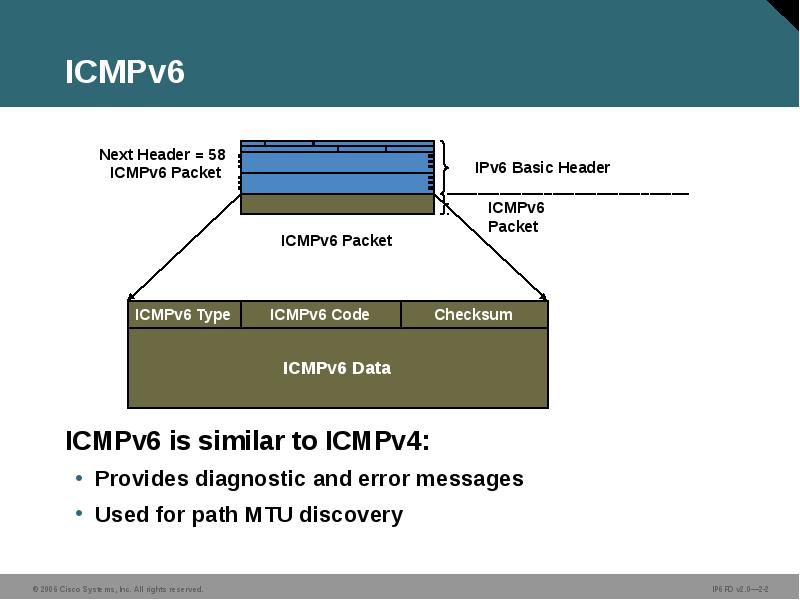
- 2. ICMPv6 ICMPv6 is similar to ICMPv4: Provides diagnostic and error messages
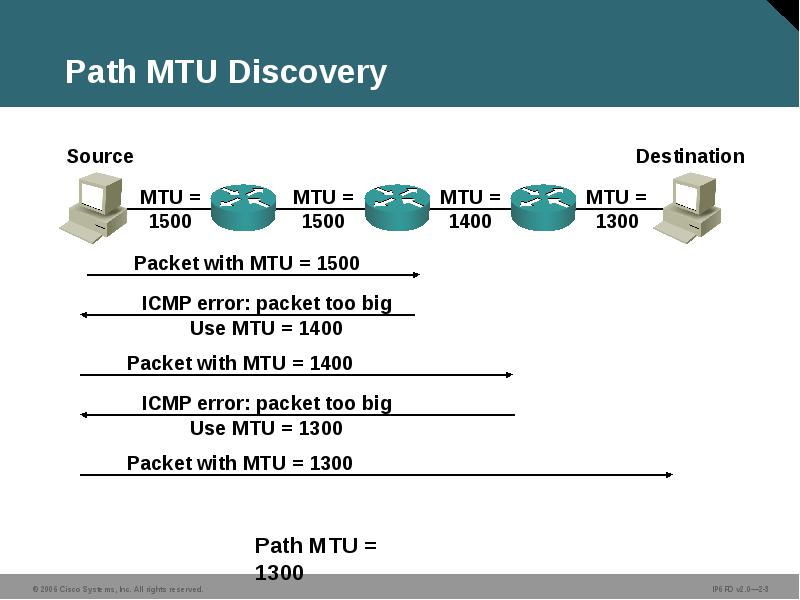
- 3. Path MTU Discovery
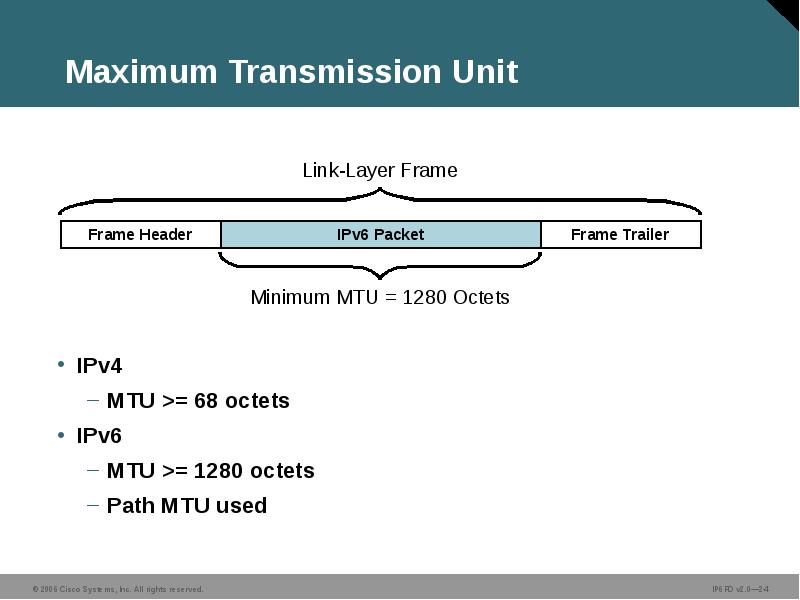
- 4. Maximum Transmission Unit IPv4 MTU >= 68 octets IPv6
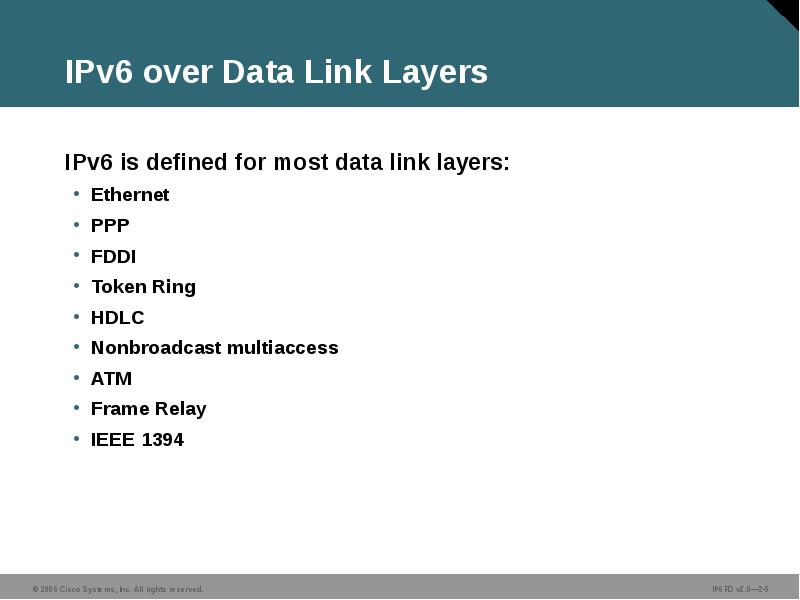
- 5. IPv6 over Data Link Layers IPv6 is defined for most data
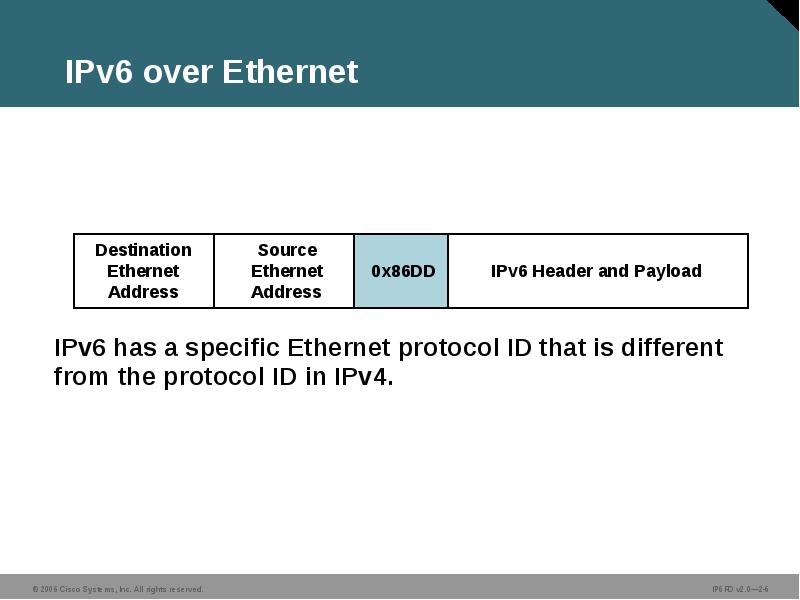
- 6. IPv6 over Ethernet IPv6 has a specific Ethernet protocol ID that
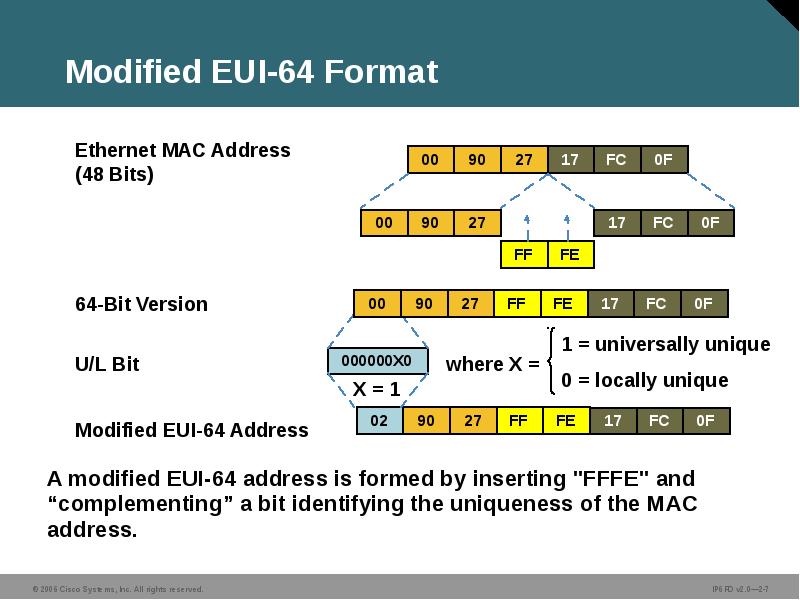
- 7. Modified EUI-64 Format A modified EUI-64 address is formed by inserting
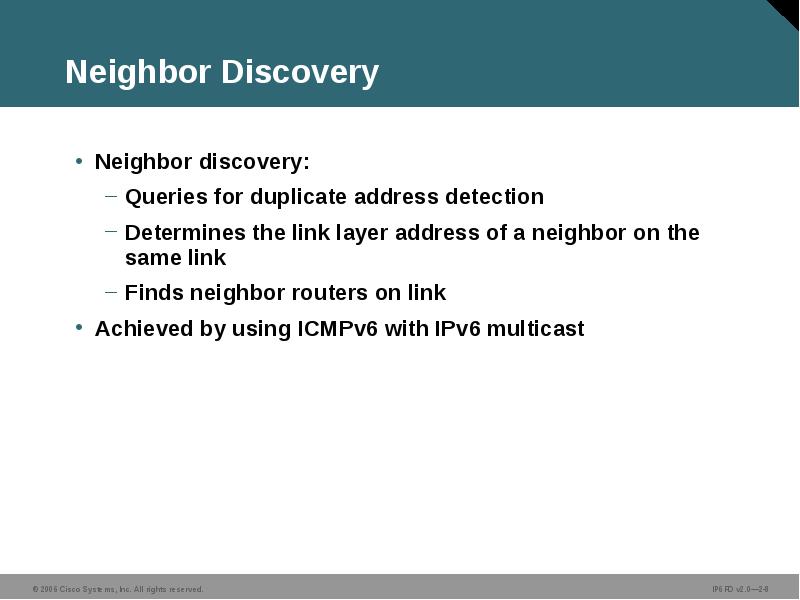
- 8. Neighbor Discovery Neighbor discovery: Queries for duplicate address detection Determines the
- 9. Solicited-Node Multicast Address Solicited-node address: Multicast address with a link-local scope
- 10. Multicast Mapping over Ethernet
- 11. Duplicate Address Detection DAD uses neighbor solicitation to verify the existence
- 12. Neighbor Discovery: Neighbor Solicitation
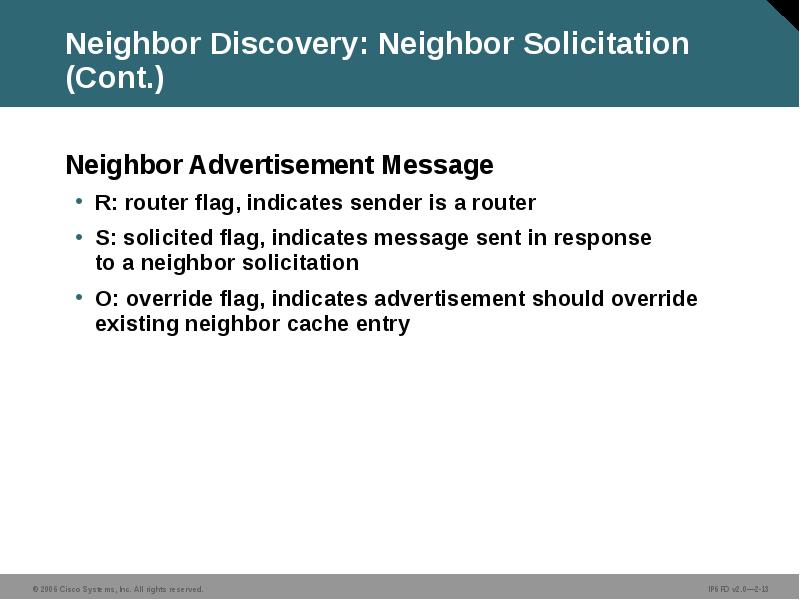
- 13. Neighbor Discovery: Neighbor Solicitation (Cont.) Neighbor Advertisement Message R: router flag,
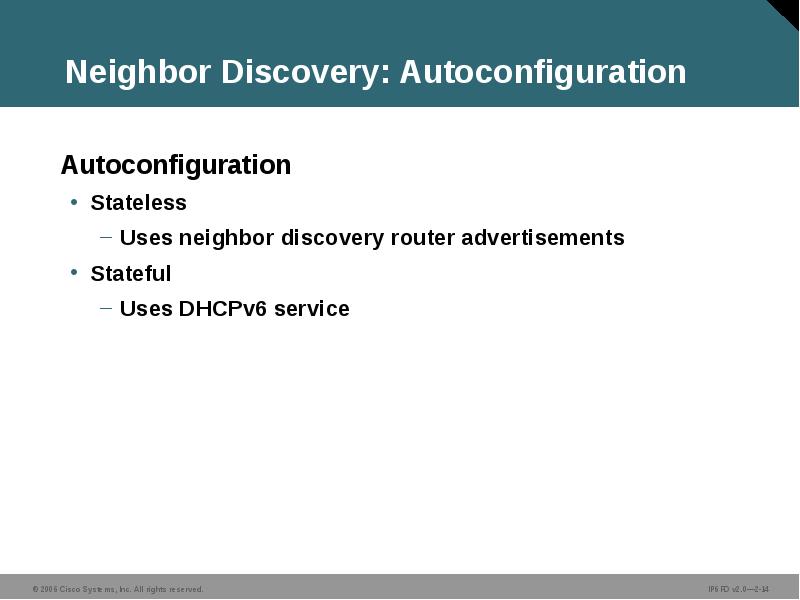
- 14. Neighbor Discovery: Autoconfiguration Autoconfiguration Stateless Uses neighbor discovery router advertisements Stateful
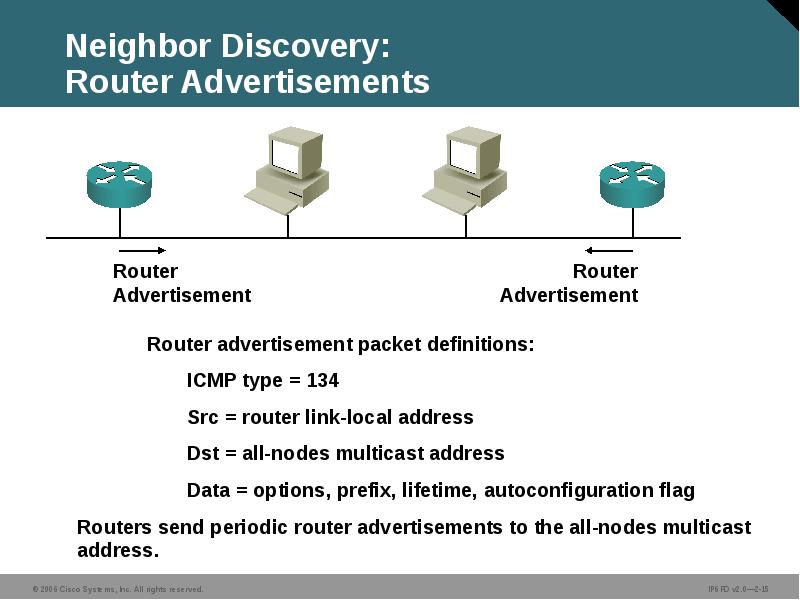
- 15. Neighbor Discovery: Router Advertisements Routers send periodic router advertisements to the
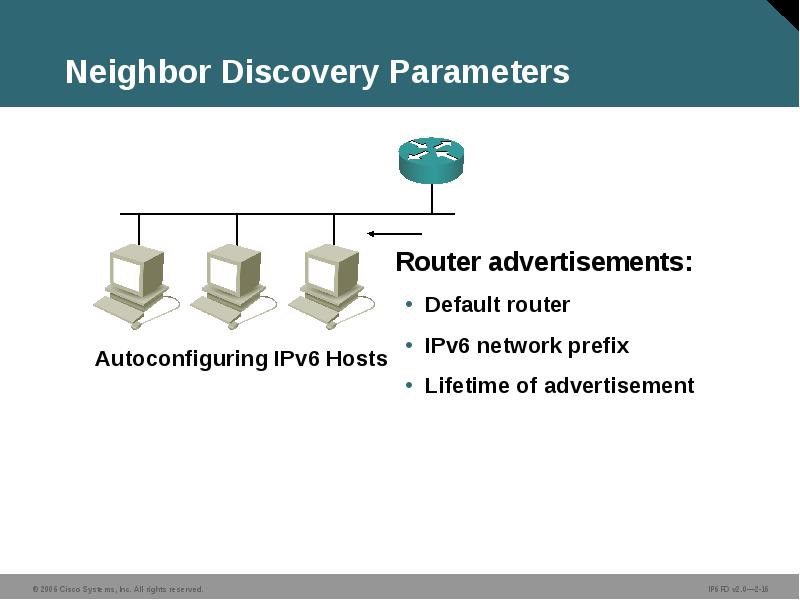
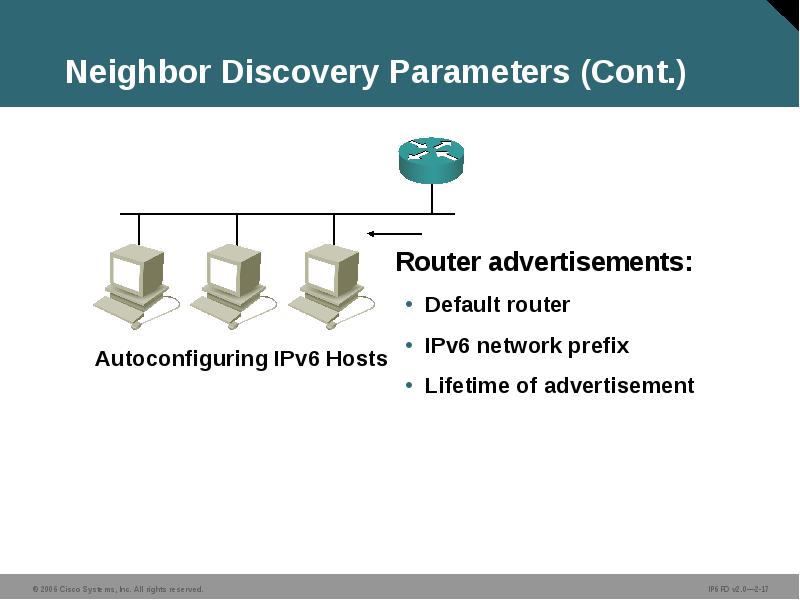
- 16. Neighbor Discovery Parameters
- 17. Neighbor Discovery Parameters (Cont.)
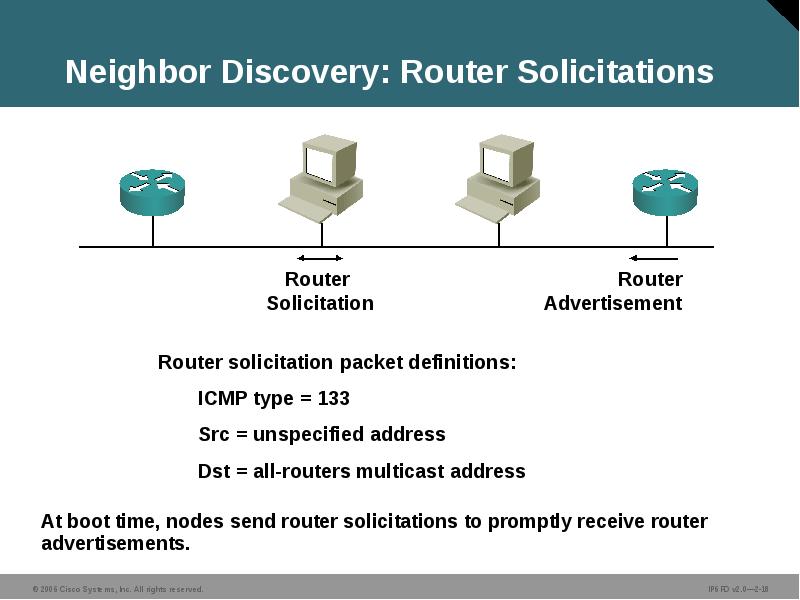
- 18. Neighbor Discovery: Router Solicitations At boot time, nodes send router solicitations
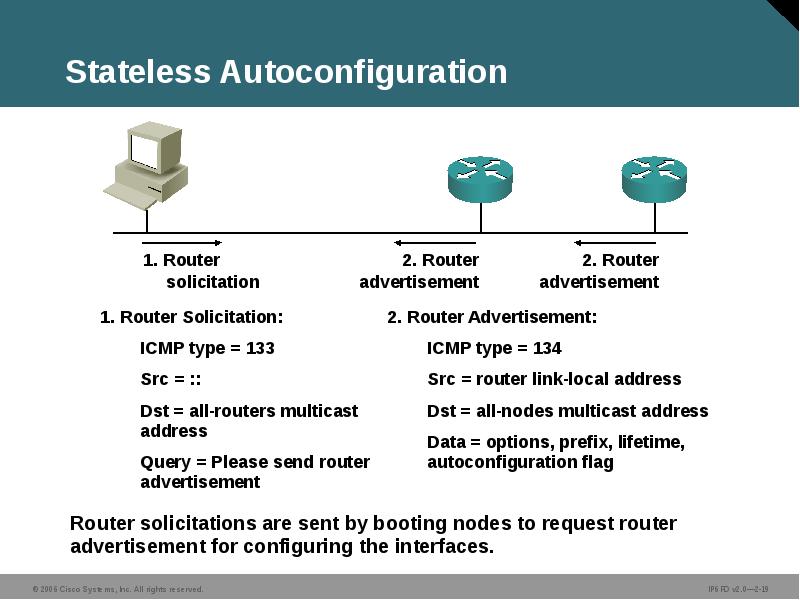
- 19. Stateless Autoconfiguration Router solicitations are sent by booting nodes to request
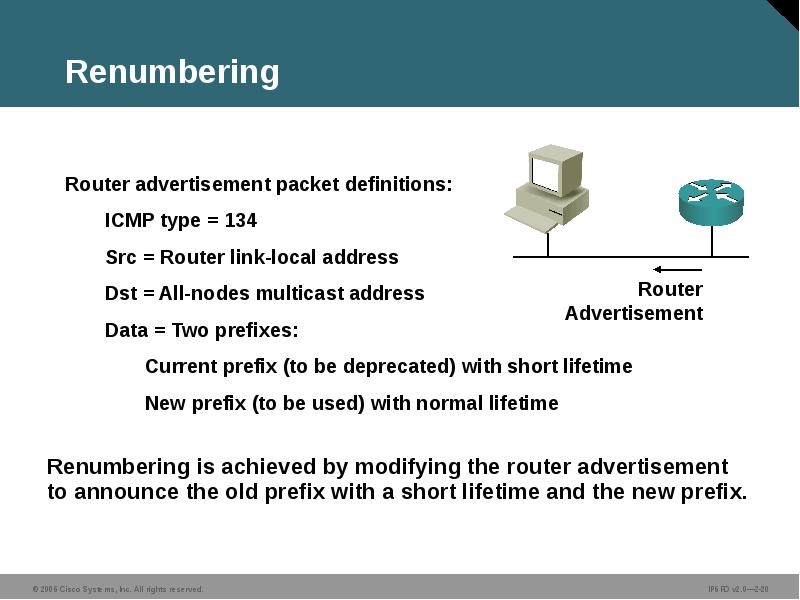
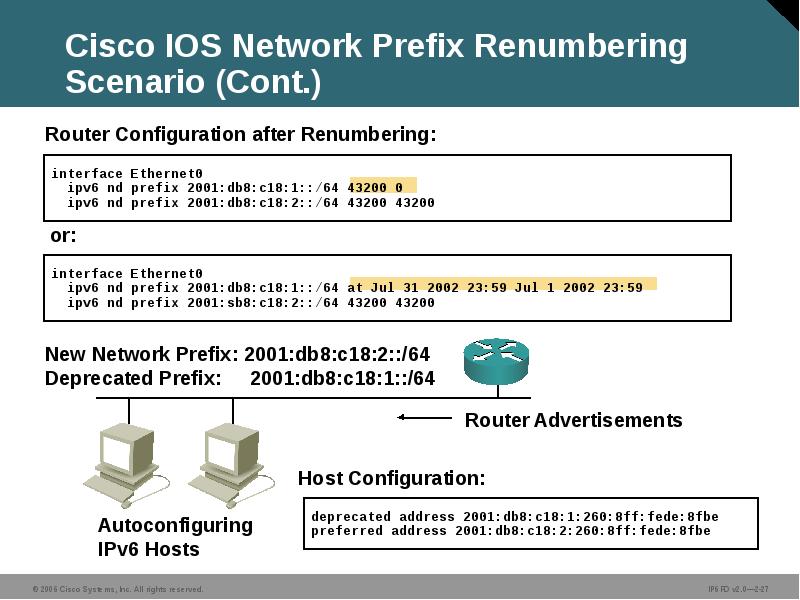
- 20. Renumbering Renumbering is achieved by modifying the router advertisement to announce
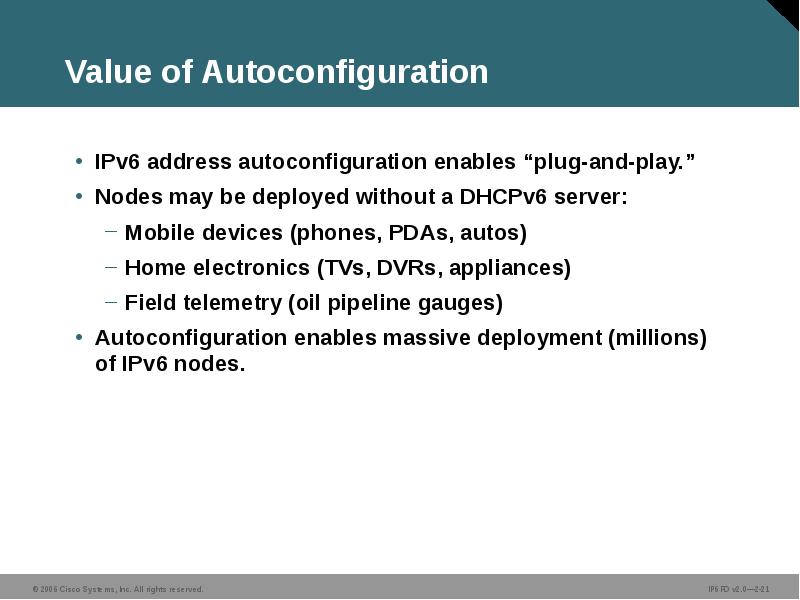
- 21. Value of Autoconfiguration IPv6 address autoconfiguration enables “plug-and-play.” Nodes may be
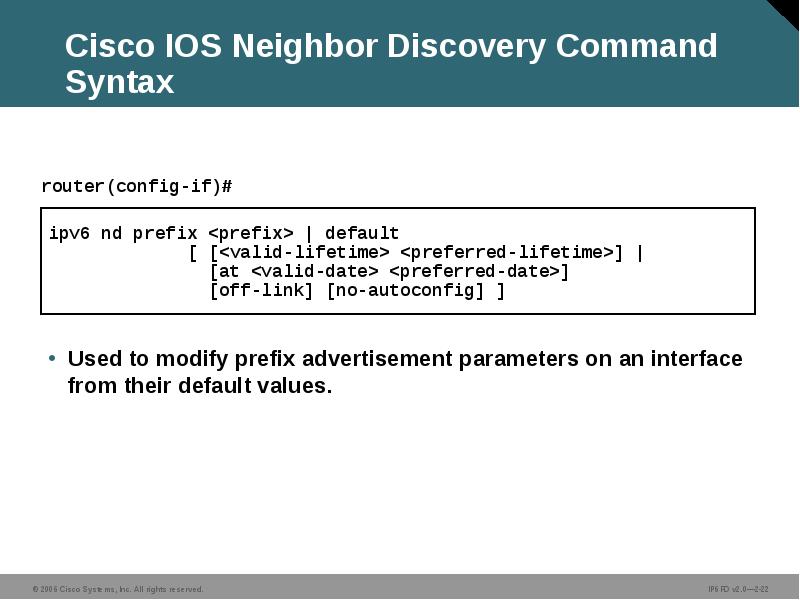
- 22. Cisco IOS Neighbor Discovery Command Syntax
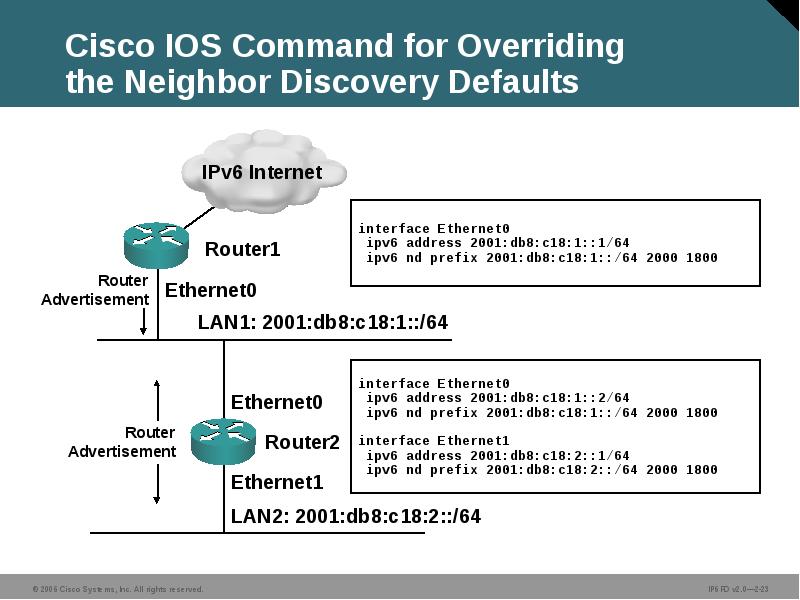
- 23. Cisco IOS Command for Overriding the Neighbor Discovery Defaults
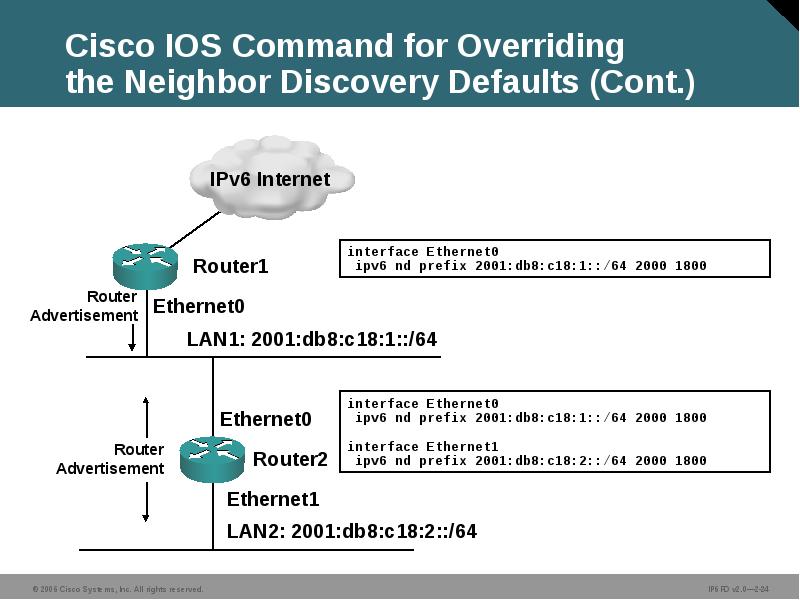
- 24. Cisco IOS Command for Overriding the Neighbor Discovery Defaults (Cont.)
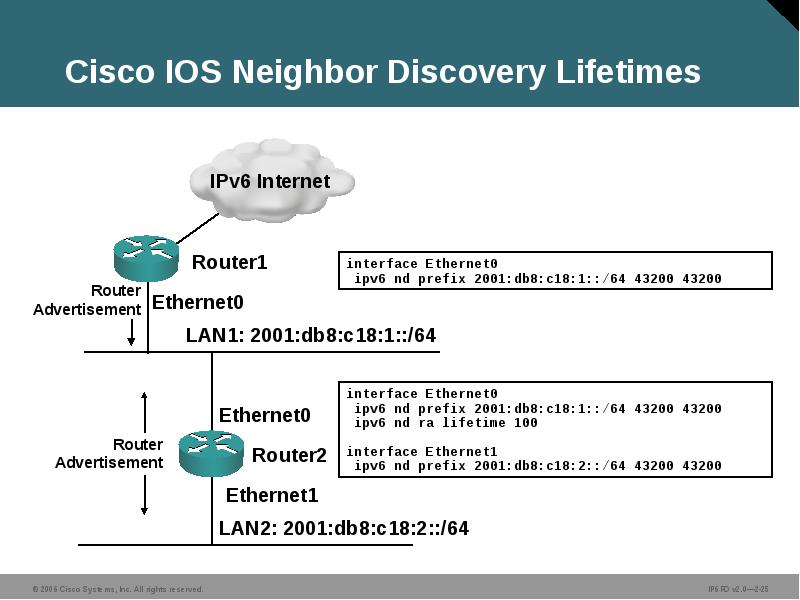
- 25. Cisco IOS Neighbor Discovery Lifetimes
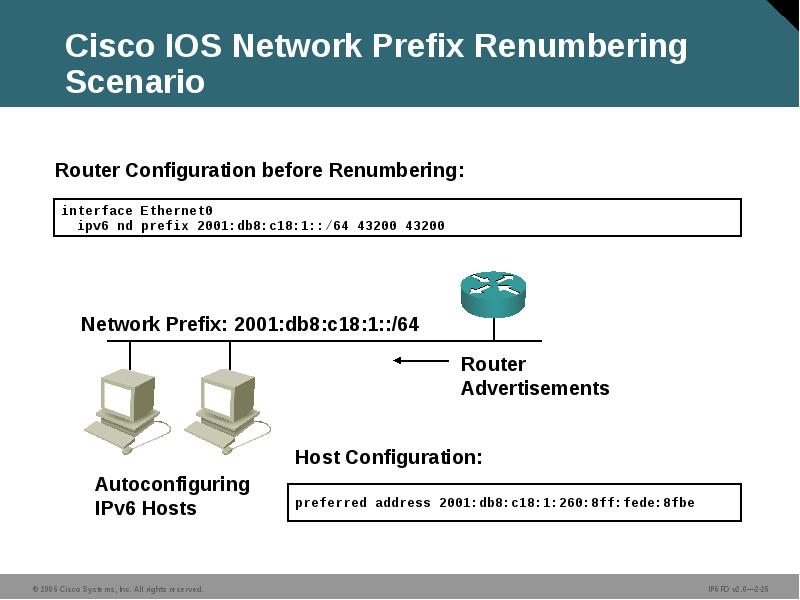
- 26. Cisco IOS Network Prefix Renumbering Scenario
- 27. Cisco IOS Network Prefix Renumbering Scenario (Cont.)
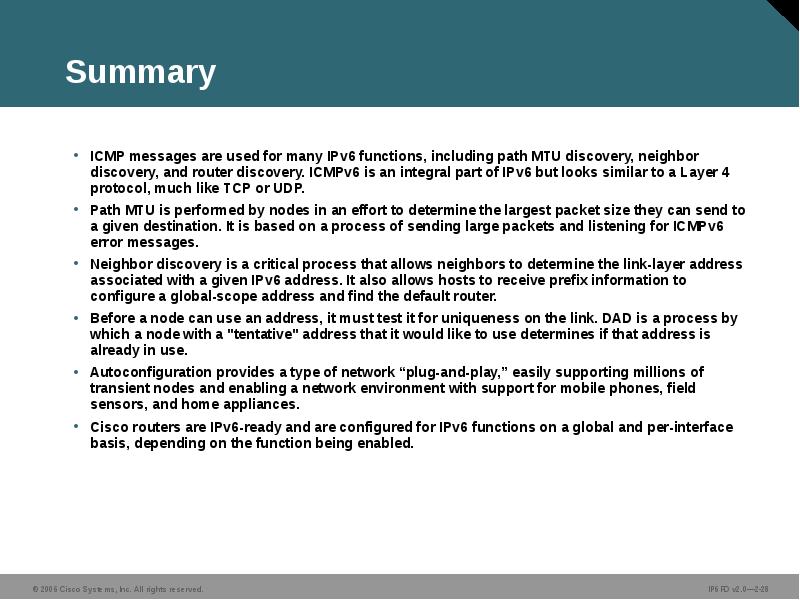
- 28. Summary ICMP messages are used for many IPv6 functions, including path
- 30. Скачать презентацию
Слайды и текст этой презентации
Слайд 1
Описание слайда:
IPv6 Operations
Defining and Configuring Neighbor Discovery
Слайд 2
Описание слайда:
ICMPv6
ICMPv6 is similar to ICMPv4:
Provides diagnostic and error messages
Used for path MTU discovery
Слайд 3
Описание слайда:
Path MTU Discovery
Слайд 4
Описание слайда:
Maximum Transmission Unit
IPv4
MTU >= 68 octets
IPv6
MTU >= 1280 octets
Path MTU used
Слайд 5
Описание слайда:
IPv6 over Data Link Layers
IPv6 is defined for most data link layers:
Ethernet
PPP
FDDI
Token Ring
HDLC
Nonbroadcast multiaccess
ATM
Frame Relay
IEEE 1394
Слайд 6
Описание слайда:
IPv6 over Ethernet
IPv6 has a specific Ethernet protocol ID that is different from the protocol ID in IPv4.
Слайд 7
Описание слайда:
Modified EUI-64 Format
A modified EUI-64 address is formed by inserting "FFFE" and “complementing” a bit identifying the uniqueness of the MAC address.
Слайд 8
Описание слайда:
Neighbor Discovery
Neighbor discovery:
Queries for duplicate address detection
Determines the link layer address of a neighbor on the same link
Finds neighbor routers on link
Achieved by using ICMPv6 with IPv6 multicast
Слайд 9
Описание слайда:
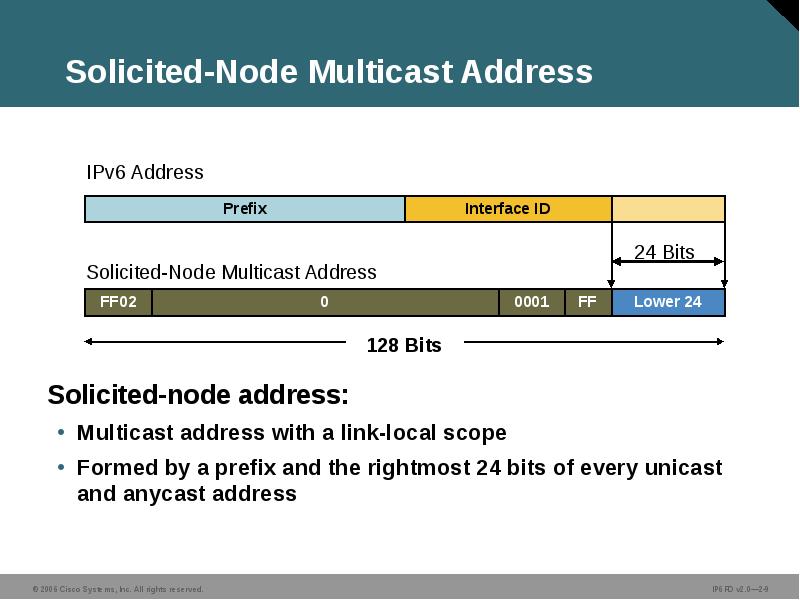
Solicited-Node Multicast Address
Solicited-node address:
Multicast address with a link-local scope
Formed by a prefix and the rightmost 24 bits of every unicast and anycast address
Слайд 10
Описание слайда:
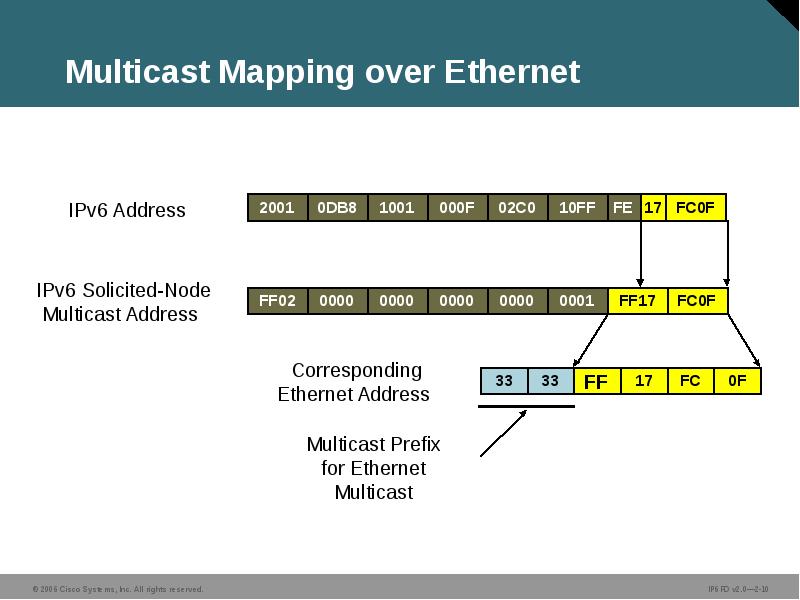
Multicast Mapping over Ethernet
Слайд 11
Описание слайда:
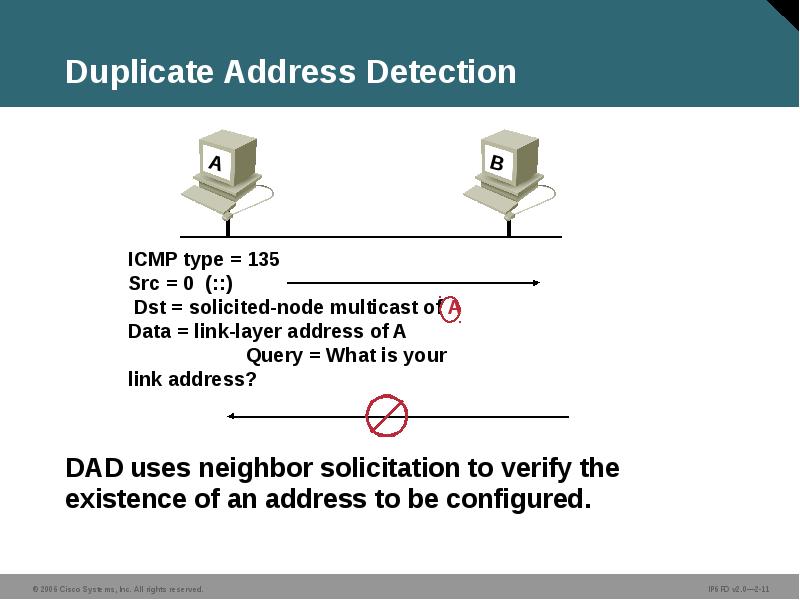
Duplicate Address Detection
DAD uses neighbor solicitation to verify the existence of an address to be configured.
Слайд 12
Описание слайда:
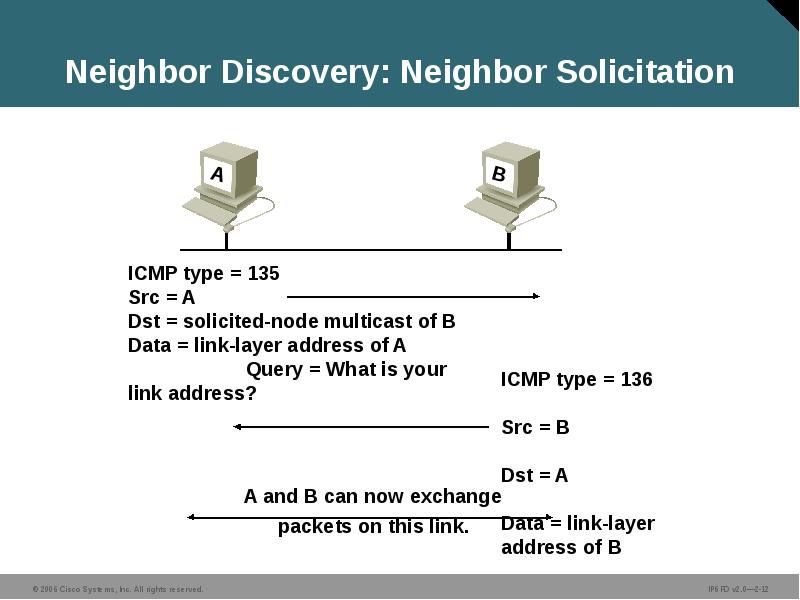
Neighbor Discovery: Neighbor Solicitation
Слайд 13
Описание слайда:
Neighbor Discovery: Neighbor Solicitation (Cont.)
Neighbor Advertisement Message
R: router flag, indicates sender is a router
S: solicited flag, indicates message sent in response
to a neighbor solicitation
O: override flag, indicates advertisement should override existing neighbor cache entry
Слайд 14
Описание слайда:
Neighbor Discovery: Autoconfiguration
Autoconfiguration
Stateless
Uses neighbor discovery router advertisements
Stateful
Uses DHCPv6 service
Слайд 15
Описание слайда:
Neighbor Discovery:
Router Advertisements
Routers send periodic router advertisements to the all-nodes multicast address.
Слайд 16
Описание слайда:
Neighbor Discovery Parameters
Слайд 17
Описание слайда:
Neighbor Discovery Parameters (Cont.)
Слайд 18
Описание слайда:
Neighbor Discovery: Router Solicitations
At boot time, nodes send router solicitations to promptly receive router advertisements.
Слайд 19
Описание слайда:
Stateless Autoconfiguration
Router solicitations are sent by booting nodes to request router advertisement for configuring the interfaces.
Слайд 20
Описание слайда:
Renumbering
Renumbering is achieved by modifying the router advertisement to announce the old prefix with a short lifetime and the new prefix.
Слайд 21
Описание слайда:
Value of Autoconfiguration
IPv6 address autoconfiguration enables “plug-and-play.”
Nodes may be deployed without a DHCPv6 server:
Mobile devices (phones, PDAs, autos)
Home electronics (TVs, DVRs, appliances)
Field telemetry (oil pipeline gauges)
Autoconfiguration enables massive deployment (millions)
of IPv6 nodes.
Слайд 22
Описание слайда:
Cisco IOS Neighbor Discovery Command Syntax
Слайд 23
Описание слайда:
Cisco IOS Command for Overriding
the Neighbor Discovery Defaults
Слайд 24
Описание слайда:
Cisco IOS Command for Overriding
the Neighbor Discovery Defaults (Cont.)
Слайд 25
Описание слайда:
Cisco IOS Neighbor Discovery Lifetimes
Слайд 26
Описание слайда:
Cisco IOS Network Prefix Renumbering Scenario
Слайд 27
Описание слайда:
Cisco IOS Network Prefix Renumbering Scenario (Cont.)
Слайд 28
Описание слайда:
Summary
ICMP messages are used for many IPv6 functions, including path MTU discovery, neighbor discovery, and router discovery. ICMPv6 is an integral part of IPv6 but looks similar to a Layer 4 protocol, much like TCP or UDP.
Path MTU is performed by nodes in an effort to determine the largest packet size they can send to a given destination. It is based on a process of sending large packets and listening for ICMPv6 error messages.
Neighbor discovery is a critical process that allows neighbors to determine the link-layer address associated with a given IPv6 address. It also allows hosts to receive prefix information to configure a global-scope address and find the default router.
Before a node can use an address, it must test it for uniqueness on the link. DAD is a process by which a node with a "tentative" address that it would like to use determines if that address is already in use.
Autoconfiguration provides a type of network “plug-and-play,” easily supporting millions of transient nodes and enabling a network environment with support for mobile phones, field sensors, and home appliances.
Cisco routers are IPv6-ready and are configured for IPv6 functions on a global and per-interface basis, depending on the function being enabled.
Слайд 29
Описание слайда:
Скачать презентацию на тему Defining and Configuring Neighbor Discovery можно ниже: