Fever of Unknown Origin презентация
Содержание
- 2. Objectives Definition and pathophysiology of fever FUO: classifications and etiology Diagnostic
- 3. Fever versus Hyperthermia Fever: resetting of the thermostatic set-point in the
- 4. Mechanisms of Hyperthermia and Associated Conditions 1. Excessive heat production: exertional
- 5. What is the normal human body temperature? A. 37.5° C B. 98.6° F
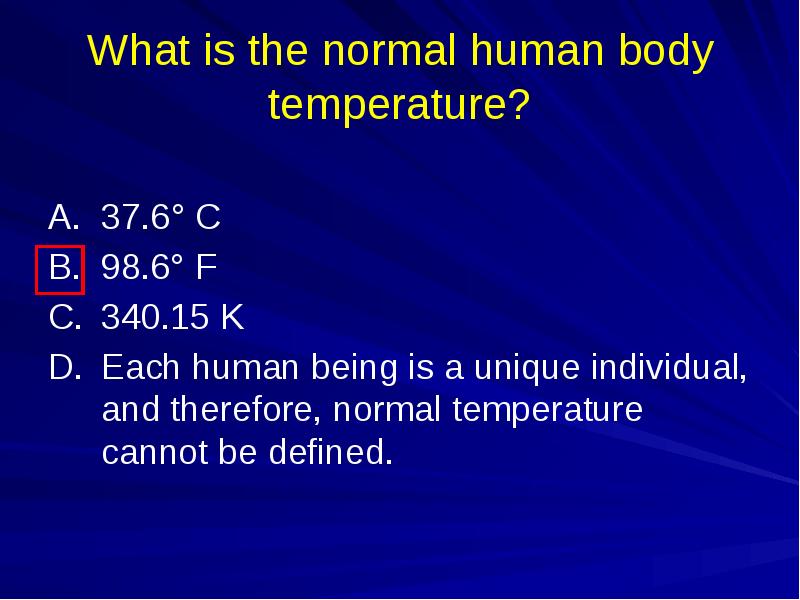
- 6. What is the normal human body temperature? A. 37.6° C B. 98.6° F
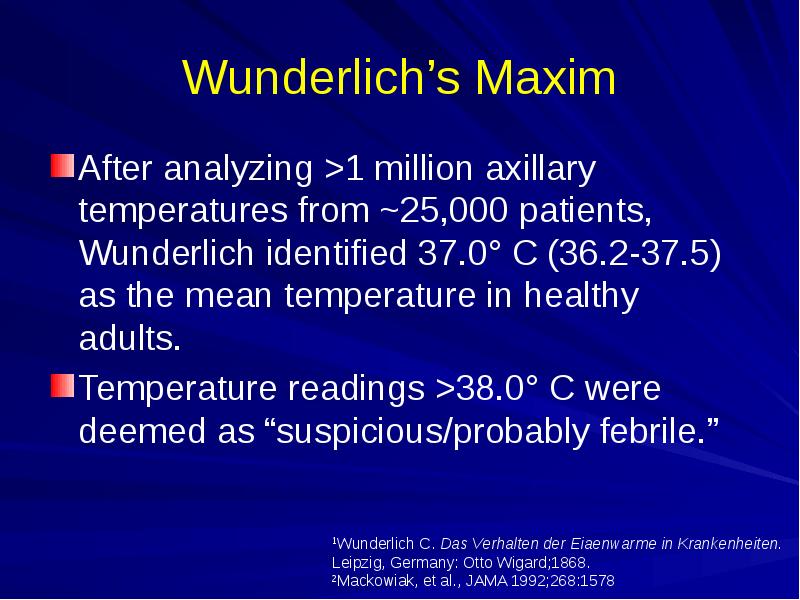
- 7. Wunderlich’s Maxim After analyzing >1 million axillary temperatures from ~25,000 patients,
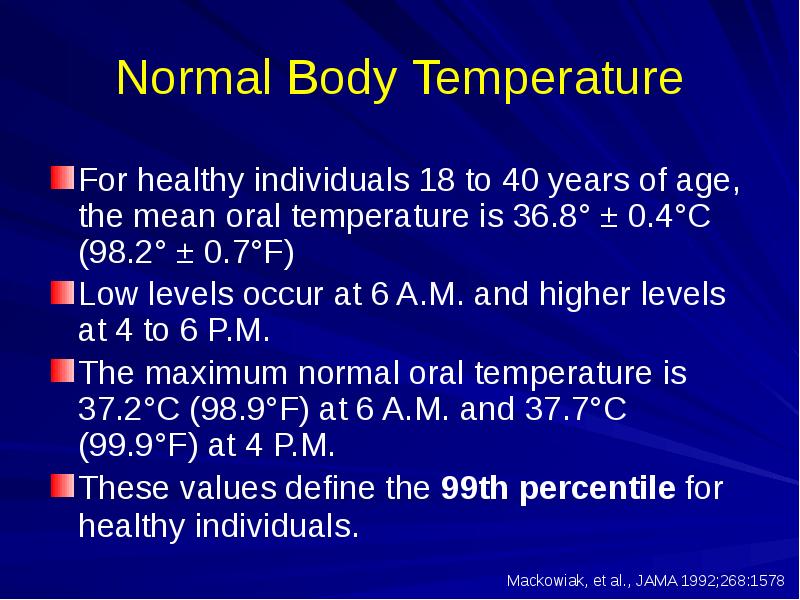
- 8. Normal Body Temperature For healthy individuals 18 to 40 years of
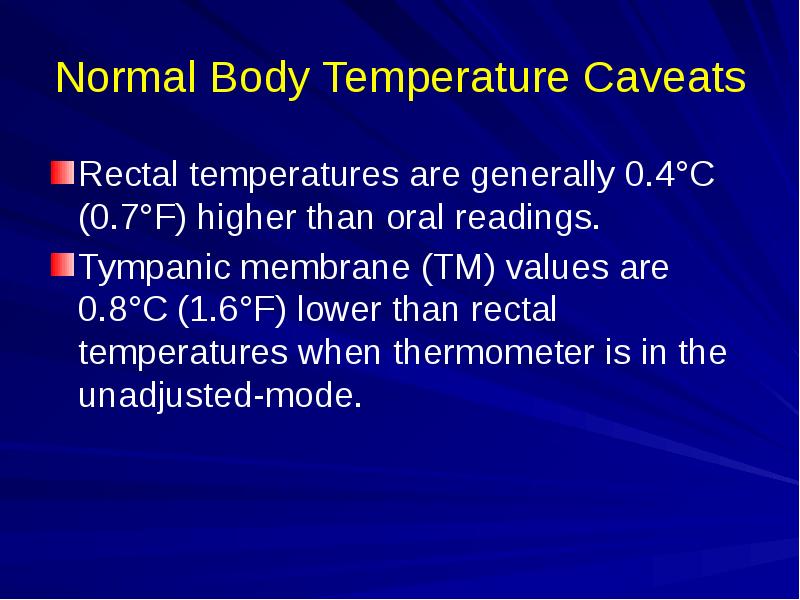
- 9. Normal Body Temperature Caveats Rectal temperatures are generally 0.4°C (0.7°F) higher
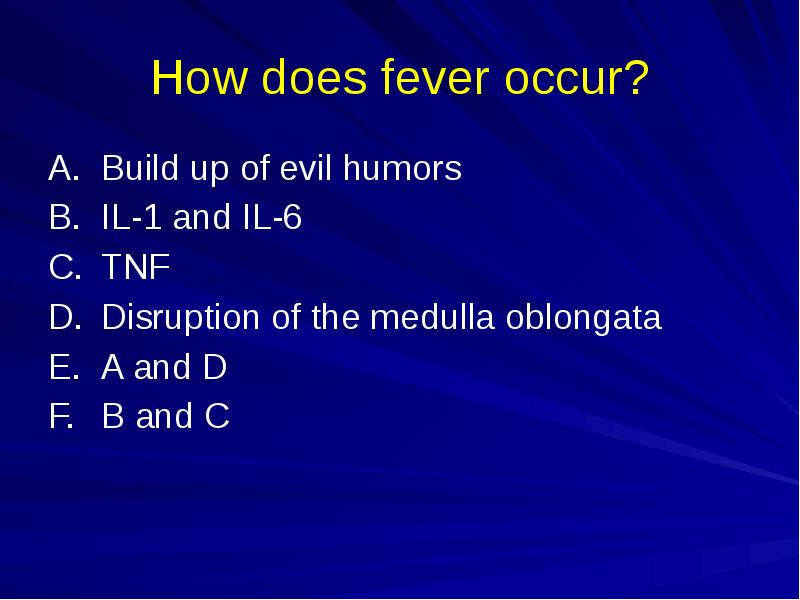
- 10. How does fever occur? A. Build up of evil humors B. IL-1 and
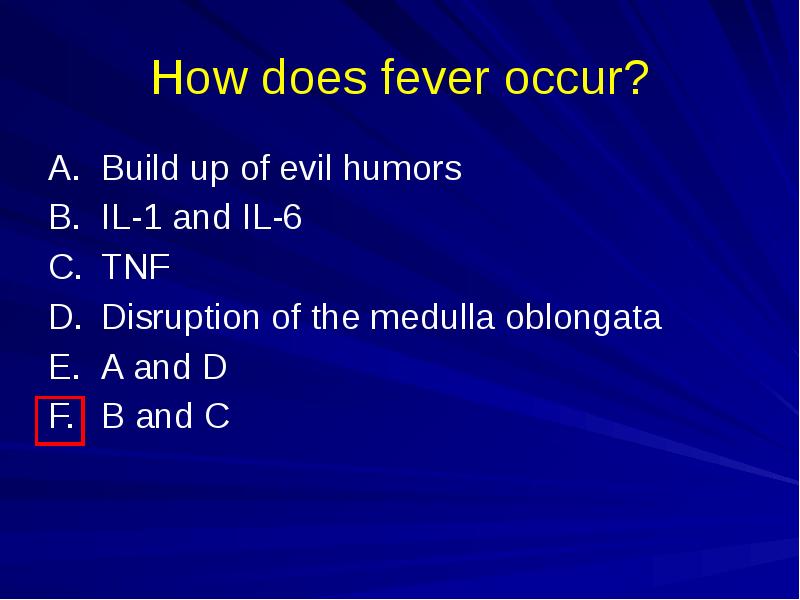
- 11. How does fever occur? A. Build up of evil humors B. IL-1 and
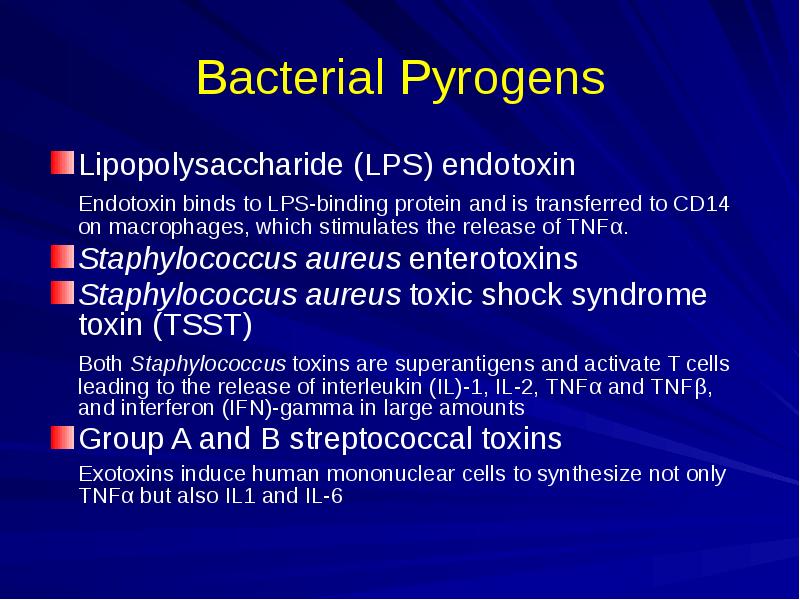
- 13. Bacterial Pyrogens Lipopolysaccharide (LPS) endotoxin Endotoxin binds to LPS-binding protein and
- 14. Fever of Unknown Origin (Historical Definition) Fever of at least 3
- 15. Historical Causes of FUO Hippocrates: excess of yellow bile Middle Ages:
- 17. Etiology of FUO Over a 40 Year Period
- 18. Infectious Causes of FUO Intraabdominal abscess (liver, splenic, psoas, etc) Appendicitis,
- 19. Infectious Causes of FUO Intraabdominal abscess (liver, splenic, psoas, etc) Appendicitis,
- 20. Infectious Causes of FUO Intraabdominal abscess (liver, splenic, psoas, etc) Appendicitis,
- 21. Infectious Causes of FUO Intraabdominal abscess (liver, splenic, psoas, etc) Appendicitis,
- 22. Infectious Causes of FUO Tuberculosis, Mycobacterium avium complex, syphilis, Q fever,
- 23. Collagen Vascular Diseases Adult Still’s disease, SLE Giant cell arteritis/polymyalgia rheumatica,
- 24. Malignancies Lymphoma Lymphoma Lymphoma Renal cell carcinoma Hepatocellular carcinoma
- 25. Miscellaneous Causes of FUO Complex partial status epilepticus, cerebrovascular accident, brain
- 26. Drug Fever No characteristic fever pattern was observed. Maximum temperatures ranged
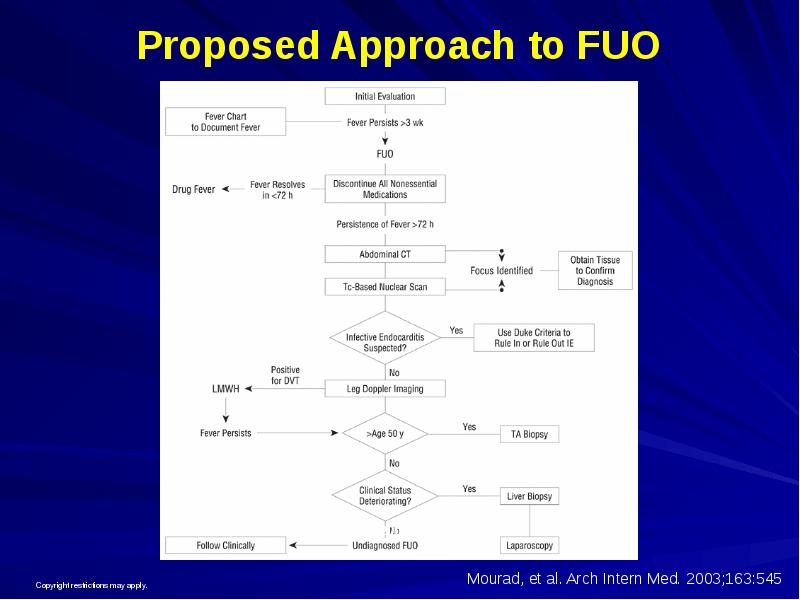
- 27. Minimal Initial Diagnostic Workup For FUO Comprehensive history Physical examination CBC
- 28. Liver Biopsy and Bone Marrow Biopsy Diagnostic yield of liver biopsy
- 29. Diagnostic Value of Naproxen 77 patients presenting with FUO were treated
- 32. Prognosis Prognosis is determined primarily by the underlying disease. Outcome is
- 33. Summary FUO is often a diagnostic dilemma Infections comprise ~30% of
- 34. Скачать презентацию
Слайды и текст этой презентации
Слайд 1
Описание слайда:
Fever of Unknown Origin
Bryan Youree
Vanderbilt University Medical Center
Слайд 2
Описание слайда:
Objectives
Definition and pathophysiology of fever
FUO: classifications and etiology
Diagnostic workup of FUO
Prognosis
Слайд 3
Описание слайда:
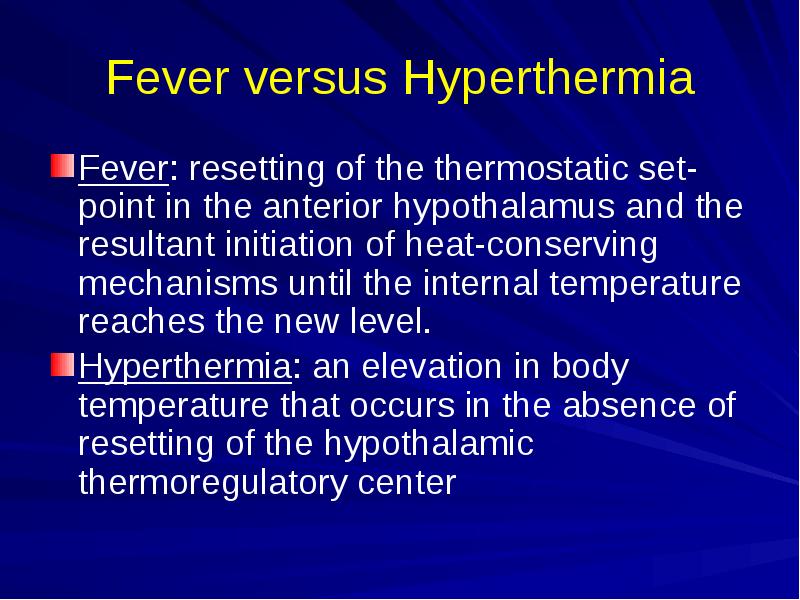
Fever versus Hyperthermia
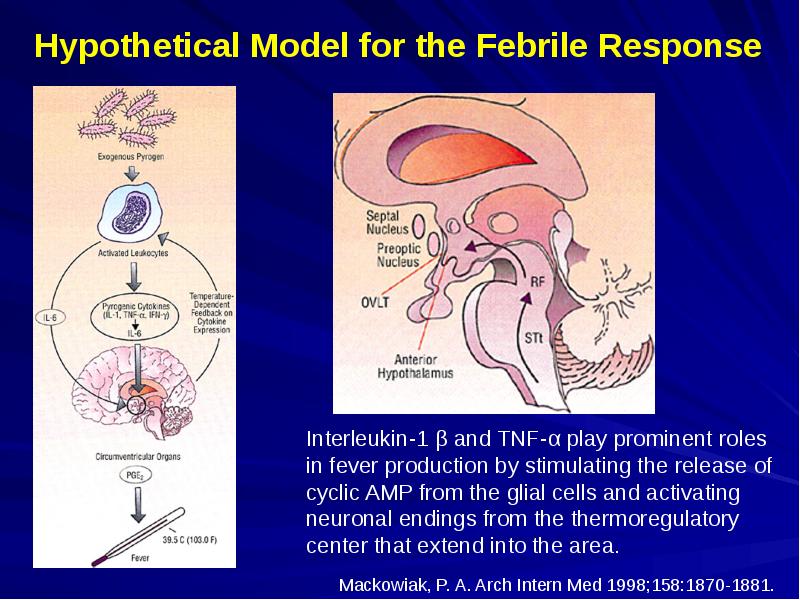
Fever: resetting of the thermostatic set-point in the anterior hypothalamus and the resultant initiation of heat-conserving mechanisms until the internal temperature reaches the new level.
Hyperthermia: an elevation in body temperature that occurs in the absence of resetting of the hypothalamic thermoregulatory center
Слайд 4
Описание слайда:
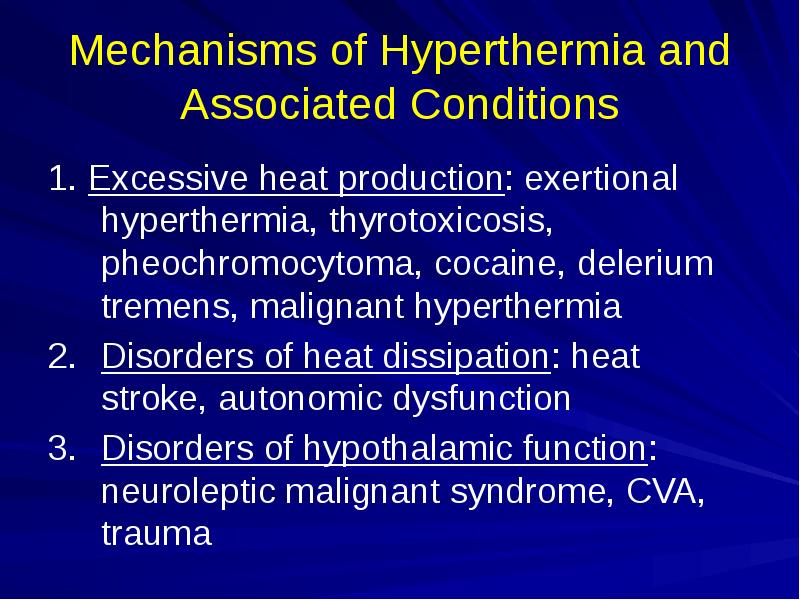
Mechanisms of Hyperthermia and Associated Conditions
1. Excessive heat production: exertional hyperthermia, thyrotoxicosis, pheochromocytoma, cocaine, delerium tremens, malignant hyperthermia
2. Disorders of heat dissipation: heat stroke, autonomic dysfunction
3. Disorders of hypothalamic function: neuroleptic malignant syndrome, CVA, trauma
Слайд 5
Описание слайда:
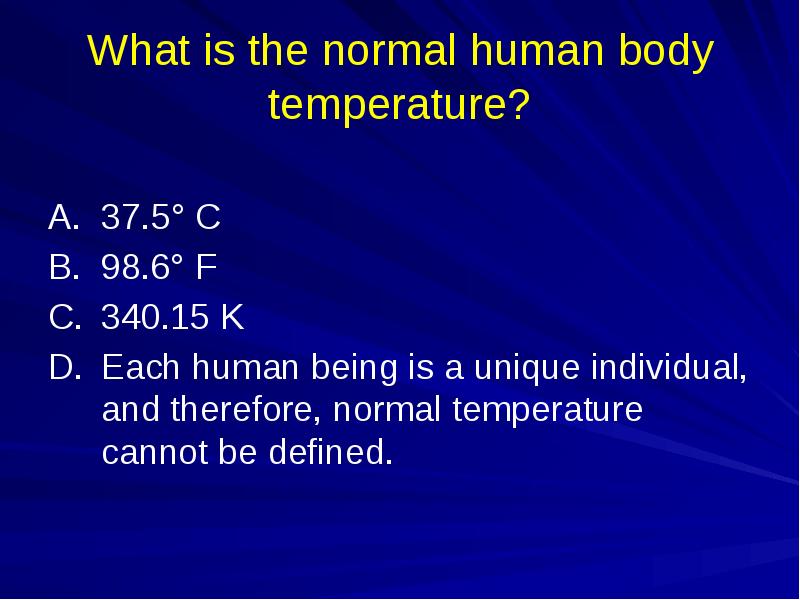
What is the normal human body temperature?
A. 37.5° C
B. 98.6° F
C. 340.15 K
D. Each human being is a unique individual, and therefore, normal temperature cannot be defined.
Слайд 6
Описание слайда:
What is the normal human body temperature?
A. 37.6° C
B. 98.6° F
C. 340.15 K
D. Each human being is a unique individual, and therefore, normal temperature cannot be defined.
Слайд 7
Описание слайда:
Wunderlich’s Maxim
After analyzing >1 million axillary temperatures from ~25,000 patients, Wunderlich identified 37.0° C (36.2-37.5) as the mean temperature in healthy adults.
Temperature readings >38.0° C were deemed as “suspicious/probably febrile.”
Слайд 8
Описание слайда:
Normal Body Temperature
For healthy individuals 18 to 40 years of age, the mean oral temperature is 36.8° ± 0.4°C (98.2° ± 0.7°F)
Low levels occur at 6 A.M. and higher levels at 4 to 6 P.M.
The maximum normal oral temperature is 37.2°C (98.9°F) at 6 A.M. and 37.7°C (99.9°F) at 4 P.M.
These values define the 99th percentile for healthy individuals.
Слайд 9
Описание слайда:
Normal Body Temperature Caveats
Rectal temperatures are generally 0.4°C (0.7°F) higher than oral readings.
Tympanic membrane (TM) values are 0.8°C (1.6°F) lower than rectal temperatures when thermometer is in the unadjusted-mode.
Слайд 10
Описание слайда:
How does fever occur?
A. Build up of evil humors
B. IL-1 and IL-6
C. TNF
D. Disruption of the medulla oblongata
E. A and D
F. B and C
Слайд 11
Описание слайда:
How does fever occur?
A. Build up of evil humors
B. IL-1 and IL-6
C. TNF
D. Disruption of the medulla oblongata
E. A and D
F. B and C
Слайд 12
Описание слайда:
Слайд 13
Описание слайда:
Bacterial Pyrogens
Lipopolysaccharide (LPS) endotoxin
Endotoxin binds to LPS-binding protein and is transferred to CD14 on macrophages, which stimulates the release of TNFα.
Staphylococcus aureus enterotoxins
Staphylococcus aureus toxic shock syndrome toxin (TSST)
Both Staphylococcus toxins are superantigens and activate T cells leading to the release of interleukin (IL)-1, IL-2, TNFα and TNFβ, and interferon (IFN)-gamma in large amounts
Group A and B streptococcal toxins
Exotoxins induce human mononuclear cells to synthesize not only TNFα but also IL1 and IL-6
Слайд 14
Описание слайда:
Fever of Unknown Origin
(Historical Definition)
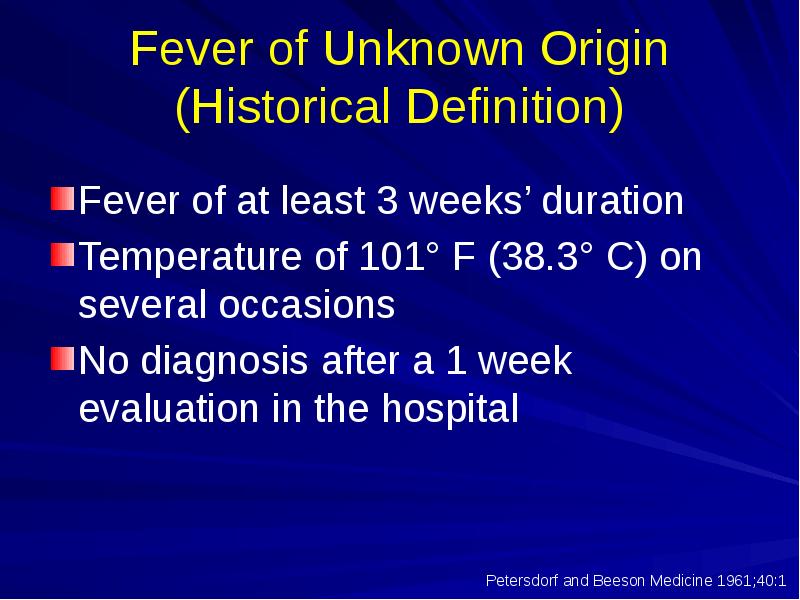
Fever of at least 3 weeks’ duration
Temperature of 101° F (38.3° C) on several occasions
No diagnosis after a 1 week evaluation in the hospital
Слайд 15
Описание слайда:
Historical Causes of FUO
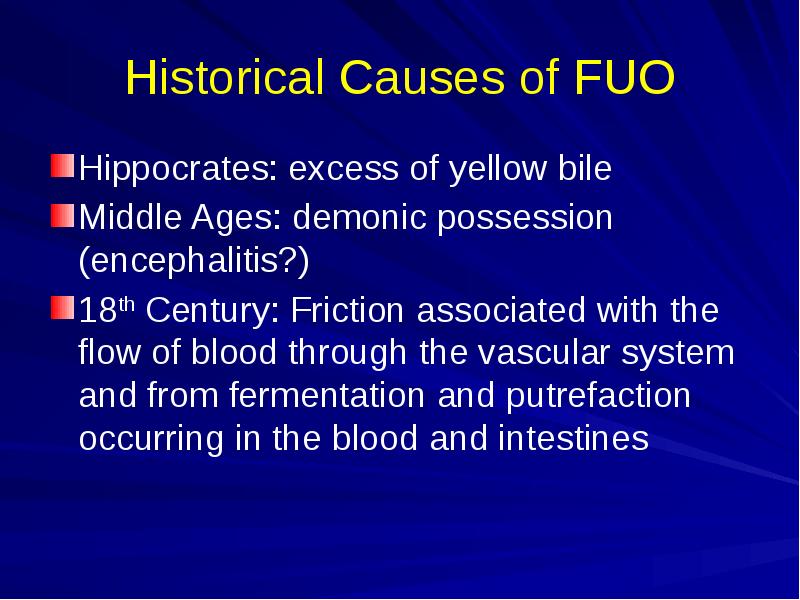
Hippocrates: excess of yellow bile
Middle Ages: demonic possession (encephalitis?)
18th Century: Friction associated with the flow of blood through the vascular system and from fermentation and putrefaction occurring in the blood and intestines
Слайд 16
Описание слайда:
Слайд 17
Описание слайда:
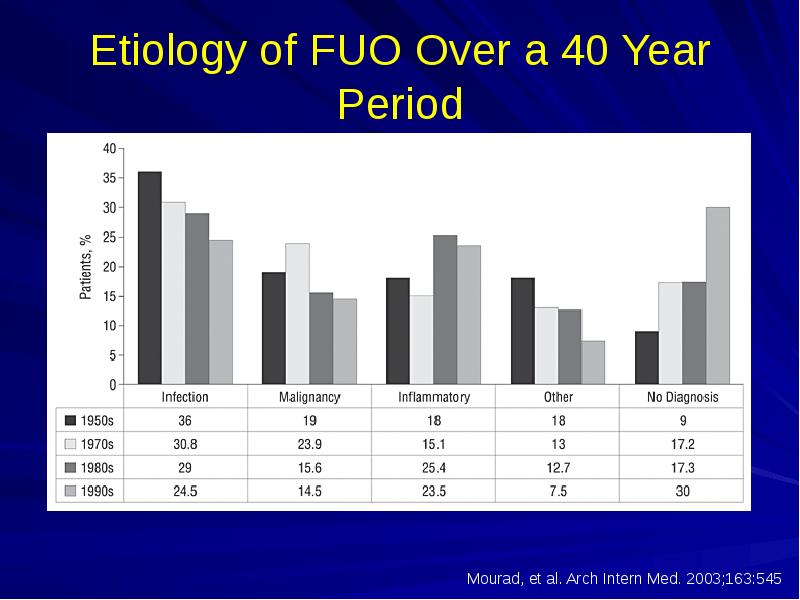
Etiology of FUO Over a 40 Year Period
Слайд 18
Описание слайда:
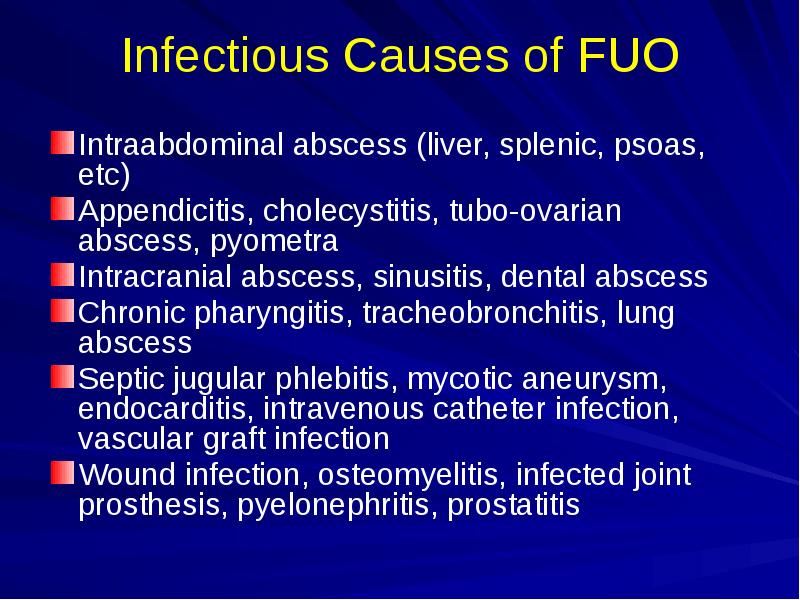
Infectious Causes of FUO
Intraabdominal abscess (liver, splenic, psoas, etc)
Appendicitis, cholecystitis, tubo-ovarian abscess, pyometra
Intracranial abscess, sinusitis, dental abscess
Chronic pharyngitis, tracheobronchitis, lung abscess
Septic jugular phlebitis, mycotic aneurysm, endocarditis, intravenous catheter infection, vascular graft infection
Wound infection, osteomyelitis, infected joint prosthesis, pyelonephritis, prostatitis
Слайд 19
Описание слайда:
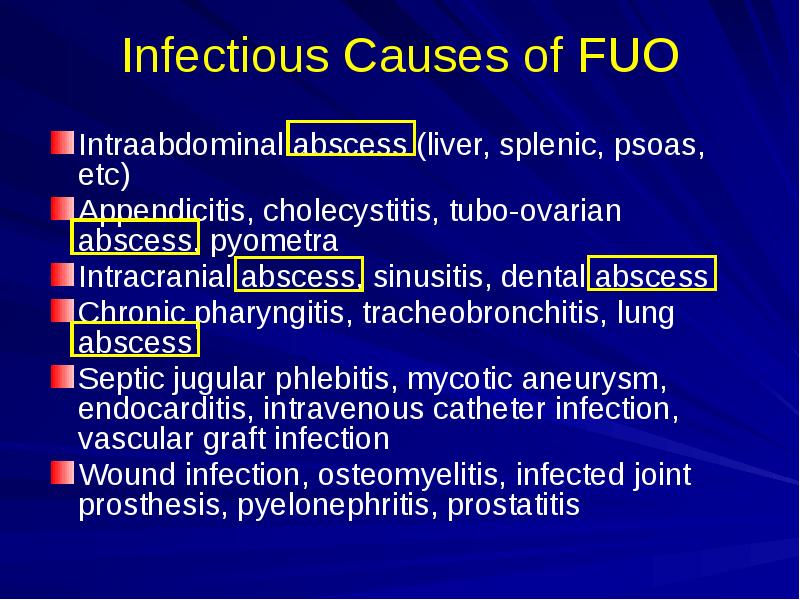
Infectious Causes of FUO
Intraabdominal abscess (liver, splenic, psoas, etc)
Appendicitis, cholecystitis, tubo-ovarian abscess, pyometra
Intracranial abscess, sinusitis, dental abscess
Chronic pharyngitis, tracheobronchitis, lung abscess
Septic jugular phlebitis, mycotic aneurysm, endocarditis, intravenous catheter infection, vascular graft infection
Wound infection, osteomyelitis, infected joint prosthesis, pyelonephritis, prostatitis
Слайд 20
Описание слайда:
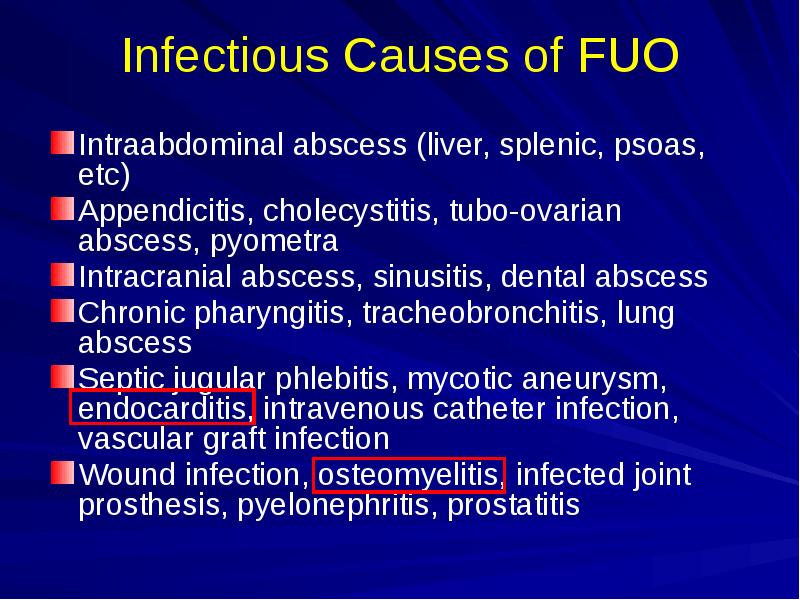
Infectious Causes of FUO
Intraabdominal abscess (liver, splenic, psoas, etc)
Appendicitis, cholecystitis, tubo-ovarian abscess, pyometra
Intracranial abscess, sinusitis, dental abscess
Chronic pharyngitis, tracheobronchitis, lung abscess
Septic jugular phlebitis, mycotic aneurysm, endocarditis, intravenous catheter infection, vascular graft infection
Wound infection, osteomyelitis, infected joint prosthesis, pyelonephritis, prostatitis
Слайд 21
Описание слайда:
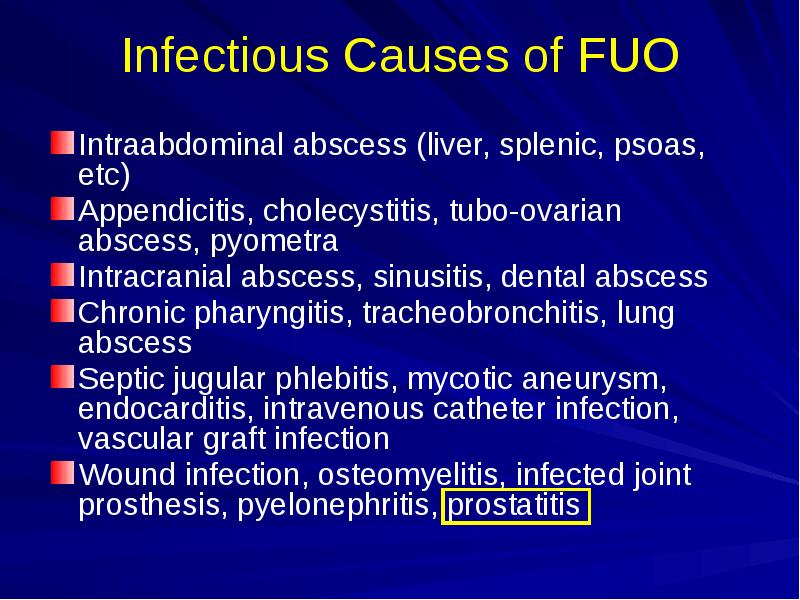
Infectious Causes of FUO
Intraabdominal abscess (liver, splenic, psoas, etc)
Appendicitis, cholecystitis, tubo-ovarian abscess, pyometra
Intracranial abscess, sinusitis, dental abscess
Chronic pharyngitis, tracheobronchitis, lung abscess
Septic jugular phlebitis, mycotic aneurysm, endocarditis, intravenous catheter infection, vascular graft infection
Wound infection, osteomyelitis, infected joint prosthesis, pyelonephritis, prostatitis
Слайд 22
Описание слайда:
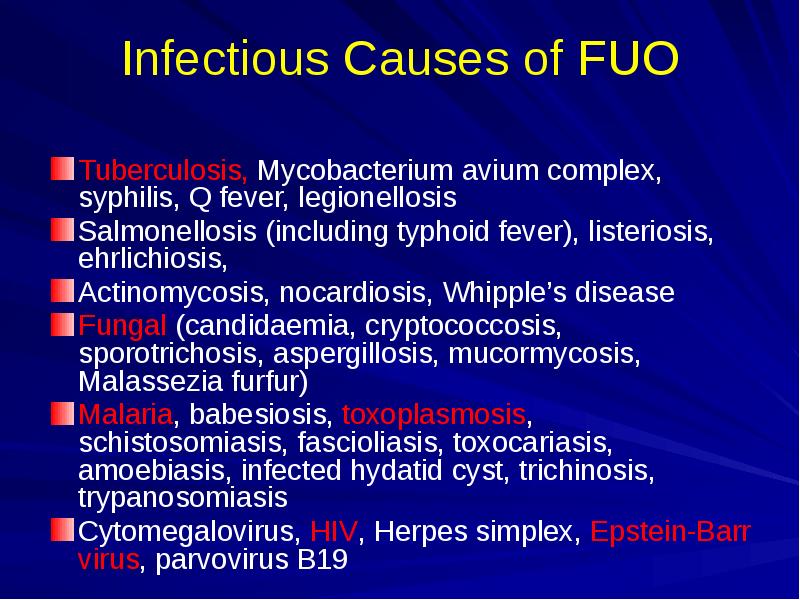
Infectious Causes of FUO
Tuberculosis, Mycobacterium avium complex, syphilis, Q fever, legionellosis
Salmonellosis (including typhoid fever), listeriosis, ehrlichiosis,
Actinomycosis, nocardiosis, Whipple’s disease
Fungal (candidaemia, cryptococcosis, sporotrichosis, aspergillosis, mucormycosis, Malassezia furfur)
Malaria, babesiosis, toxoplasmosis, schistosomiasis, fascioliasis, toxocariasis, amoebiasis, infected hydatid cyst, trichinosis, trypanosomiasis
Cytomegalovirus, HIV, Herpes simplex, Epstein-Barr virus, parvovirus B19
Слайд 23
Описание слайда:
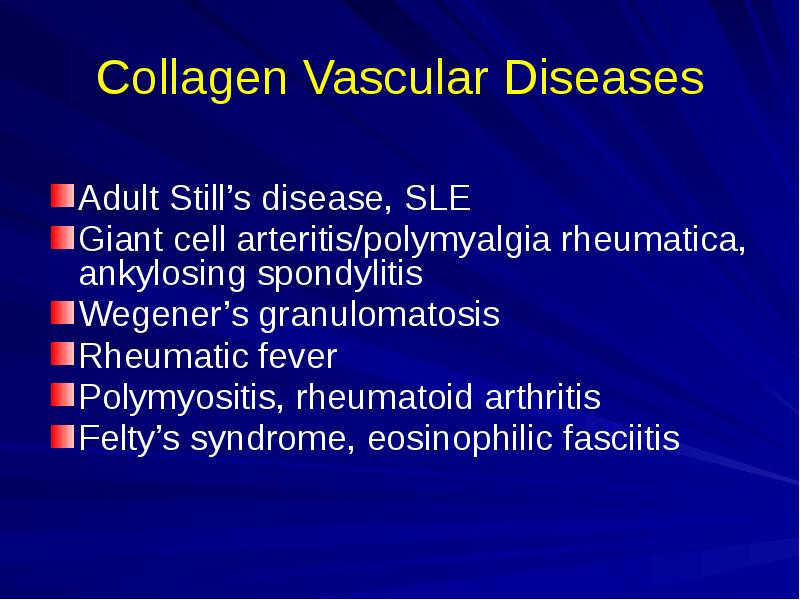
Collagen Vascular Diseases
Adult Still’s disease, SLE
Giant cell arteritis/polymyalgia rheumatica, ankylosing spondylitis
Wegener’s granulomatosis
Rheumatic fever
Polymyositis, rheumatoid arthritis
Felty’s syndrome, eosinophilic fasciitis
Слайд 24
Описание слайда:
Malignancies
Lymphoma
Lymphoma
Lymphoma
Renal cell carcinoma
Hepatocellular carcinoma
Слайд 25
Описание слайда:
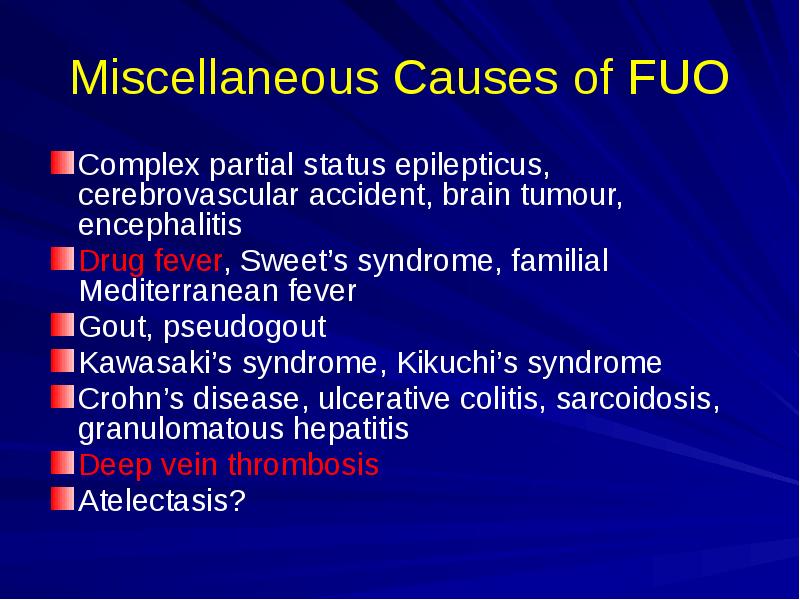
Miscellaneous Causes of FUO
Complex partial status epilepticus, cerebrovascular accident, brain tumour, encephalitis
Drug fever, Sweet’s syndrome, familial Mediterranean fever
Gout, pseudogout
Kawasaki’s syndrome, Kikuchi’s syndrome
Crohn’s disease, ulcerative colitis, sarcoidosis, granulomatous hepatitis
Deep vein thrombosis
Atelectasis?
Слайд 26
Описание слайда:
Drug Fever
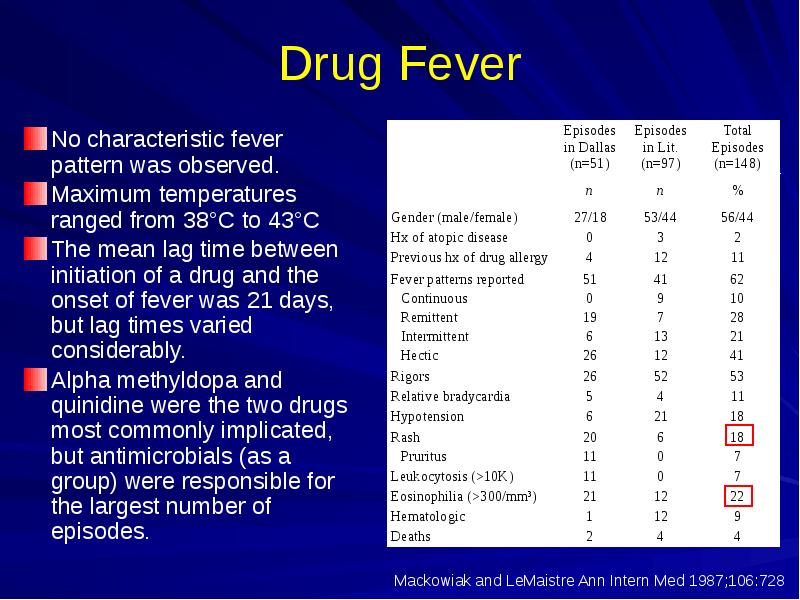
No characteristic fever pattern was observed.
Maximum temperatures ranged from 38°C to 43°C
The mean lag time between initiation of a drug and the onset of fever was 21 days, but lag times varied considerably.
Alpha methyldopa and quinidine were the two drugs most commonly implicated, but antimicrobials (as a group) were responsible for the largest number of episodes.
Слайд 27
Описание слайда:
Minimal Initial Diagnostic Workup For FUO
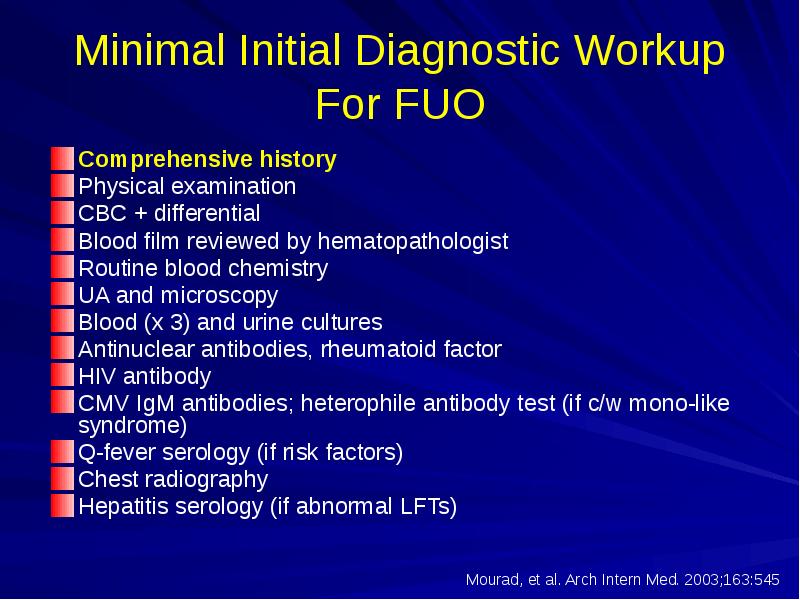
Comprehensive history
Physical examination
CBC + differential
Blood film reviewed by hematopathologist
Routine blood chemistry
UA and microscopy
Blood (x 3) and urine cultures
Antinuclear antibodies, rheumatoid factor
HIV antibody
CMV IgM antibodies; heterophile antibody test (if c/w mono-like syndrome)
Q-fever serology (if risk factors)
Chest radiography
Hepatitis serology (if abnormal LFTs)
Слайд 28
Описание слайда:
Liver Biopsy and Bone Marrow Biopsy
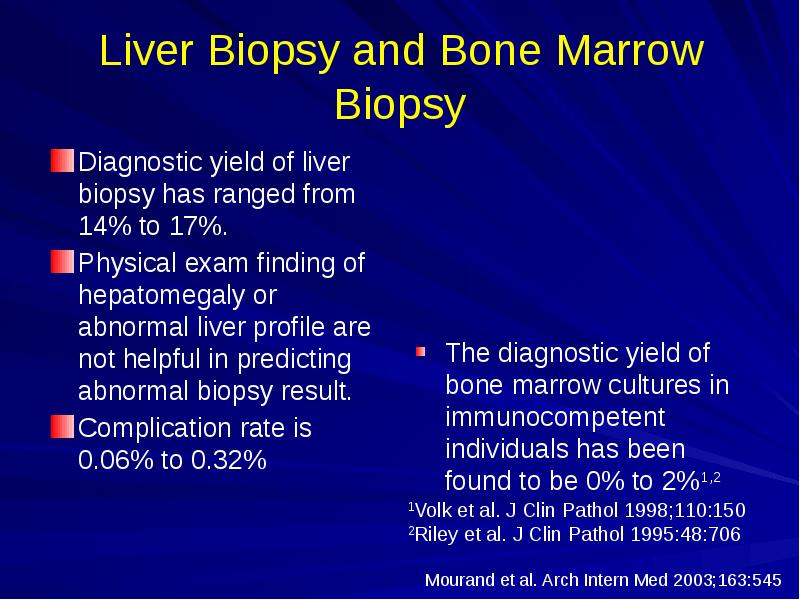
Diagnostic yield of liver biopsy has ranged from 14% to 17%.
Physical exam finding of hepatomegaly or abnormal liver profile are not helpful in predicting abnormal biopsy result.
Complication rate is 0.06% to 0.32%
Слайд 29
Описание слайда:
Diagnostic Value of Naproxen
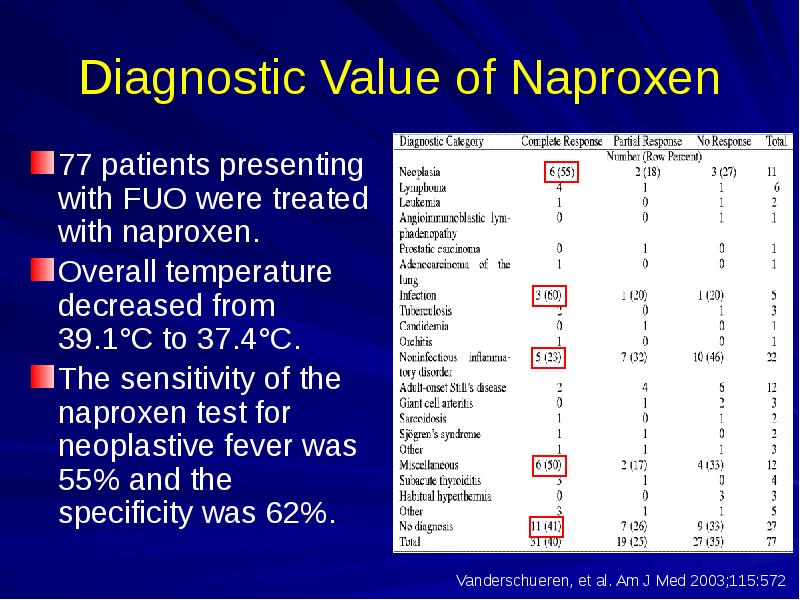
77 patients presenting with FUO were treated with naproxen.
Overall temperature decreased from 39.1°C to 37.4°C.
The sensitivity of the naproxen test for neoplastive fever was 55% and the specificity was 62%.
Слайд 30
Описание слайда:
Слайд 31
Описание слайда:
Слайд 32
Описание слайда:
Prognosis
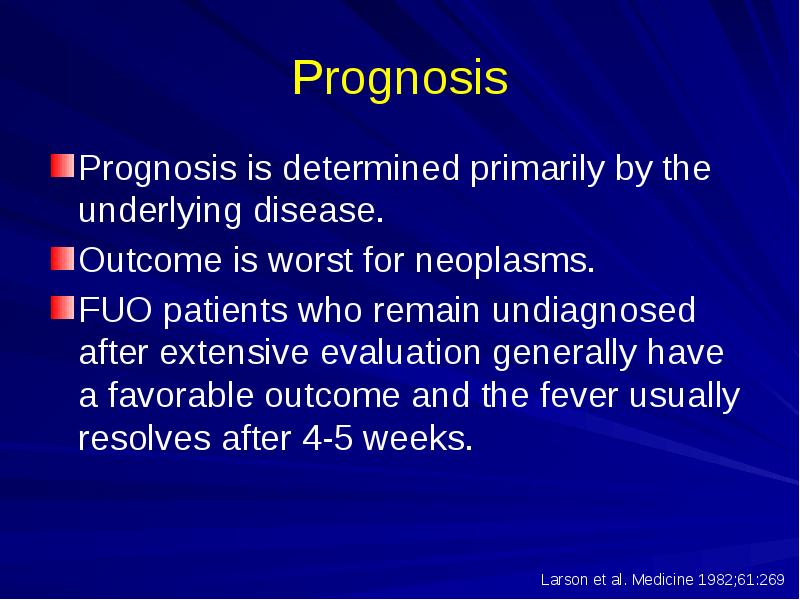
Prognosis is determined primarily by the underlying disease.
Outcome is worst for neoplasms.
FUO patients who remain undiagnosed after extensive evaluation generally have a favorable outcome and the fever usually resolves after 4-5 weeks.
Слайд 33
Описание слайда:
Summary
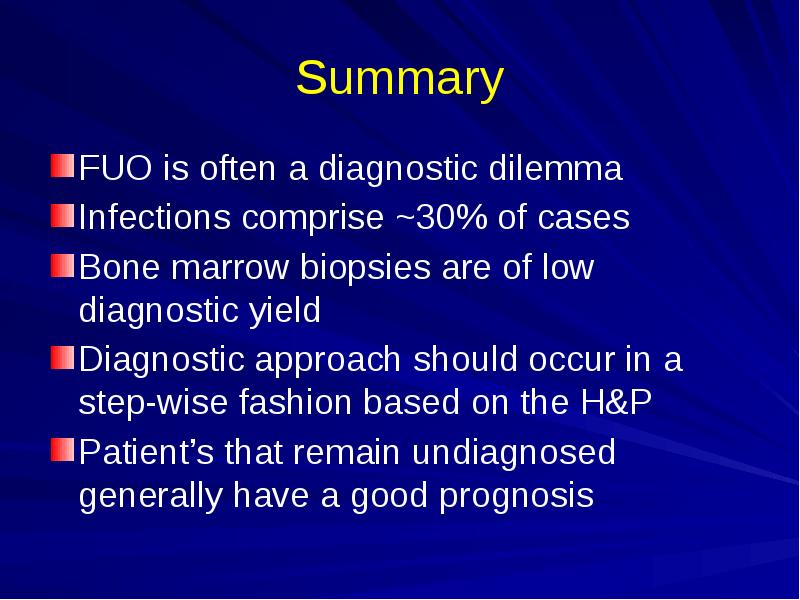
FUO is often a diagnostic dilemma
Infections comprise ~30% of cases
Bone marrow biopsies are of low diagnostic yield
Diagnostic approach should occur in a step-wise fashion based on the H&P
Patient’s that remain undiagnosed generally have a good prognosis
Скачать презентацию на тему Fever of Unknown Origin можно ниже: