Genome assembly with SPAdes презентация
Содержание
- 2. Introduction
- 3. Why to assemble?
- 4. Why to assemble? Sequencing data Billions of short reads Sequencing
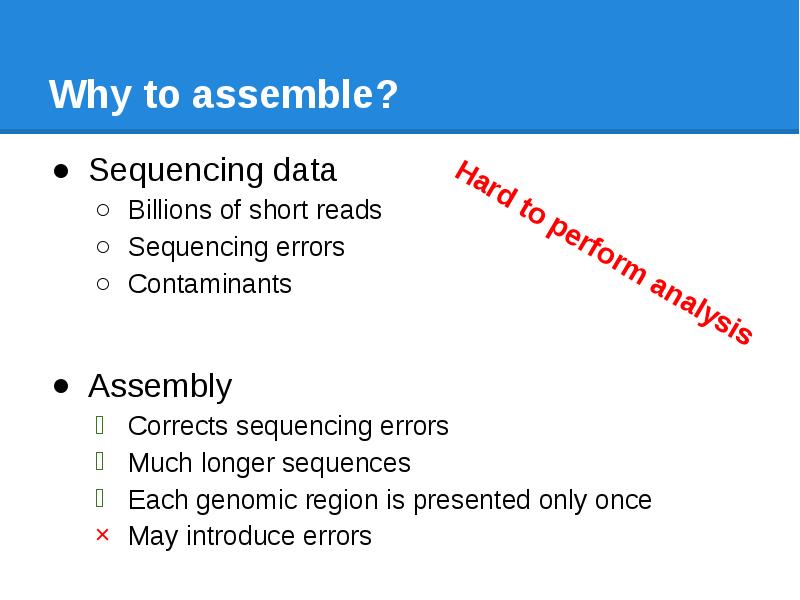
- 5. Why to assemble? Sequencing data Billions of short reads Sequencing
- 6. Assembly basics
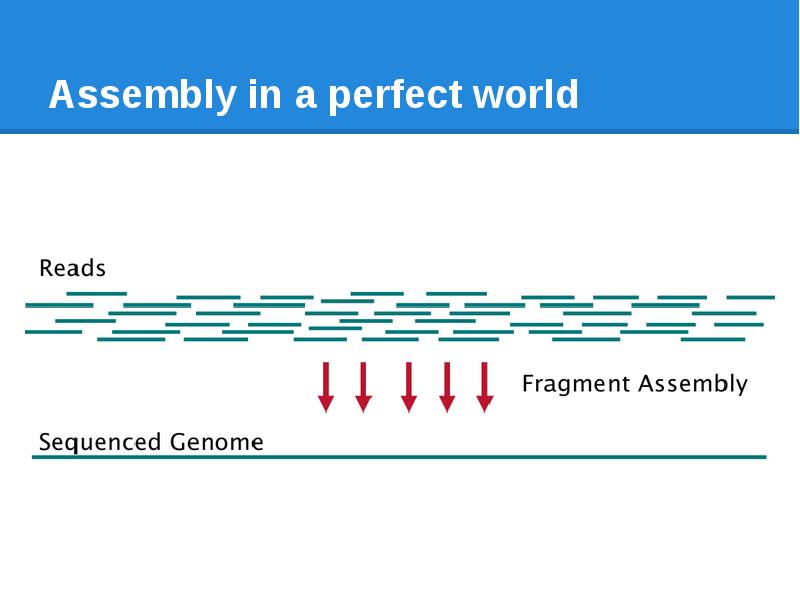
- 7. Assembly in a perfect world
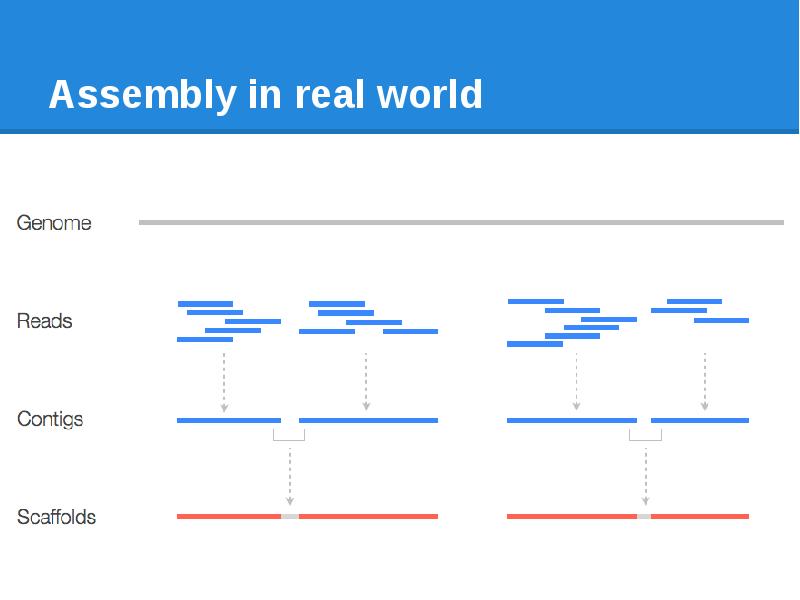
- 8. Assembly in real world
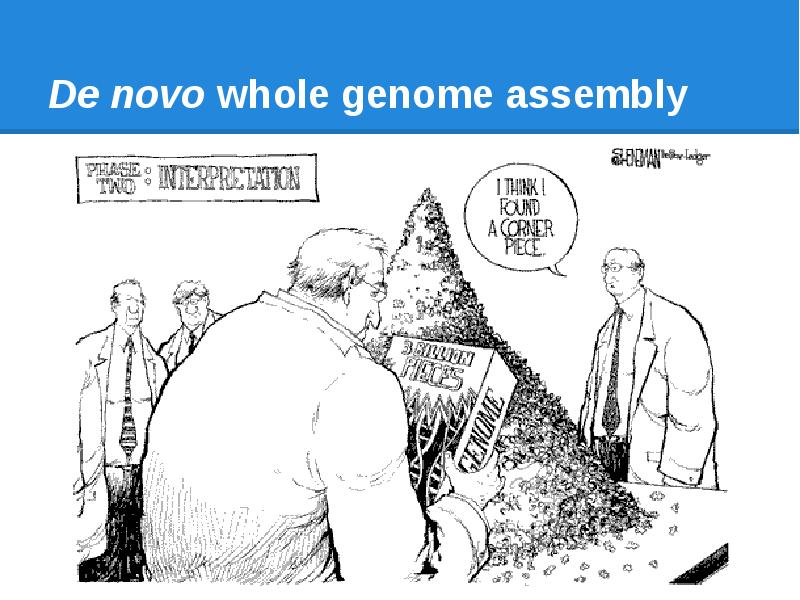
- 9. De novo whole genome assembly
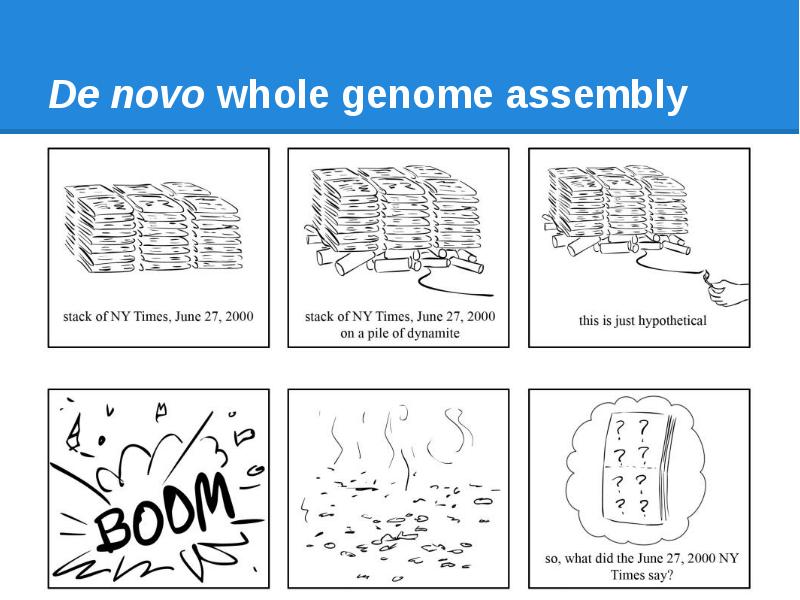
- 10. De novo whole genome assembly
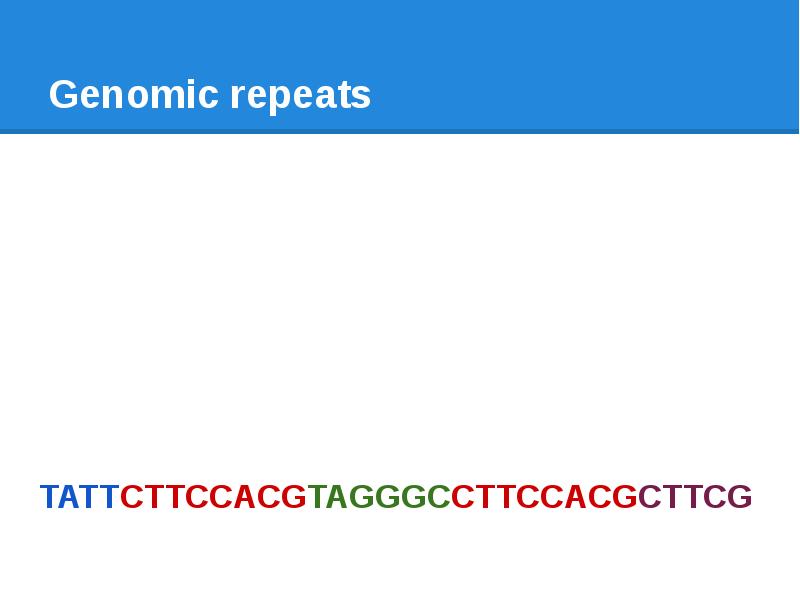
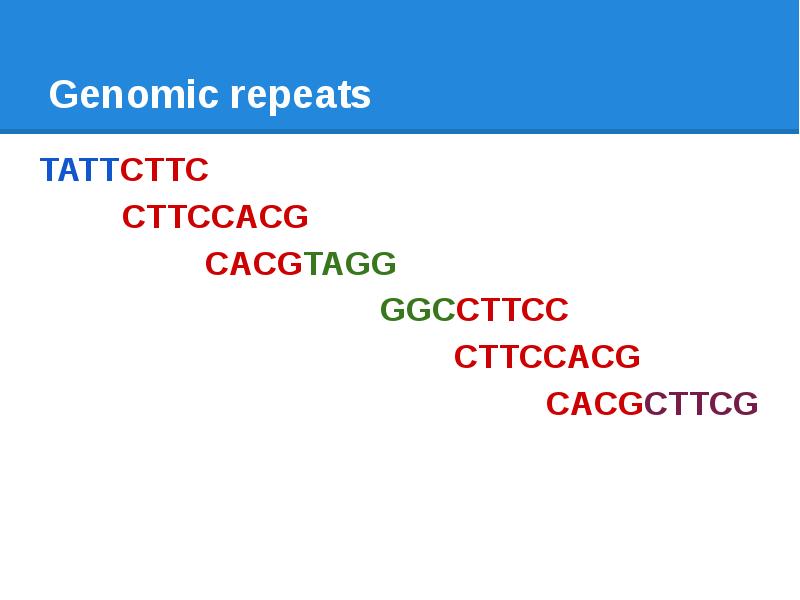
- 11. Genomic repeats TATTCTTCCACGTAGGGCCTTCCACGCTTCG
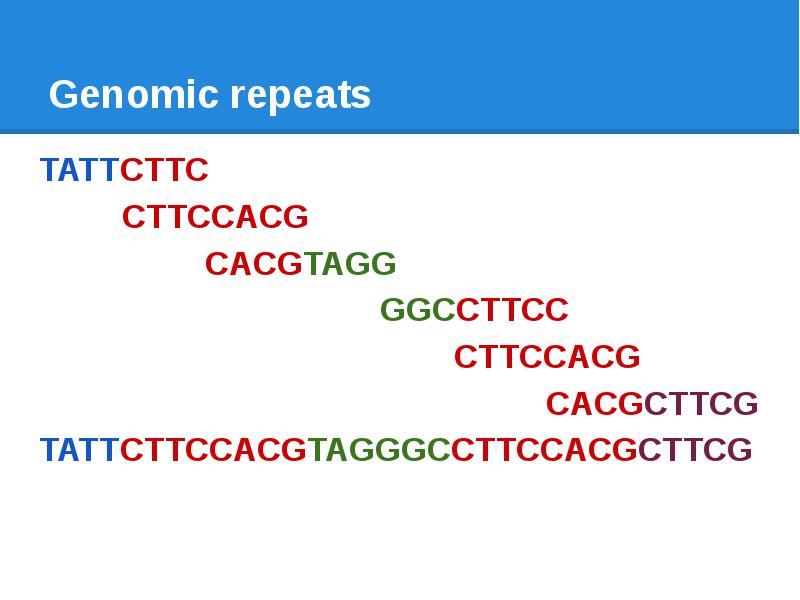
- 12. Genomic repeats TATTCTTC CTTCCACG CACGTAGG
- 13. Genomic repeats TATTCTTC CTTCCACG CACGTAGG
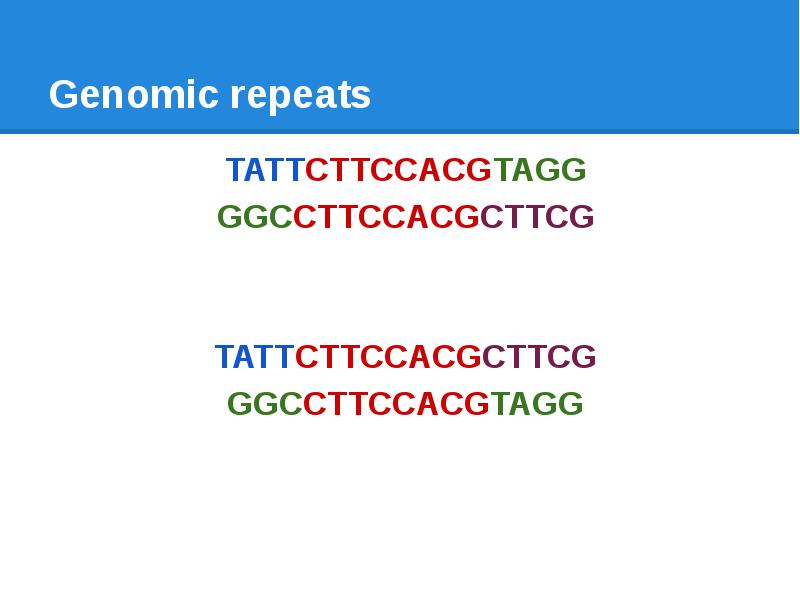
- 14. Genomic repeats TATTCTTCCACGTAGG GGCCTTCCACGCTTCG TATTCTTCCACGCTTCG GGCCTTCCACGTAGG
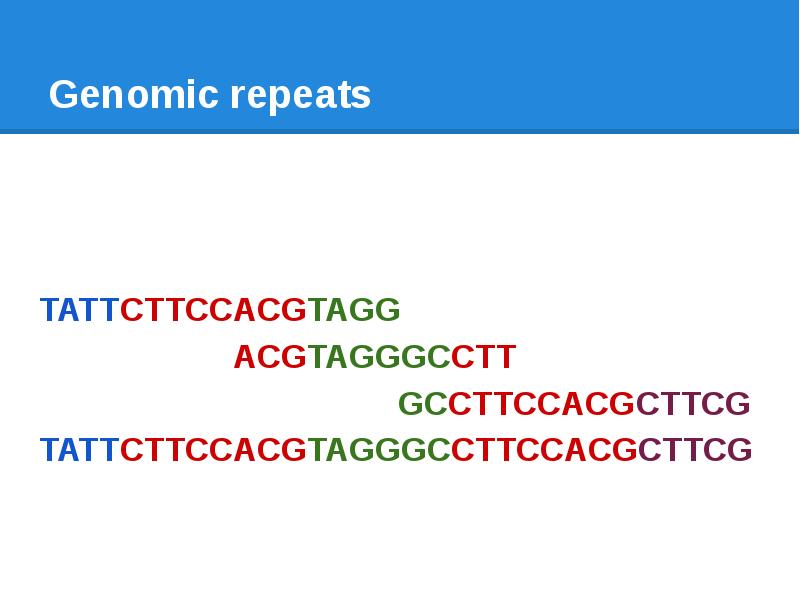
- 15. Genomic repeats TATTCTTCCACGTAGG
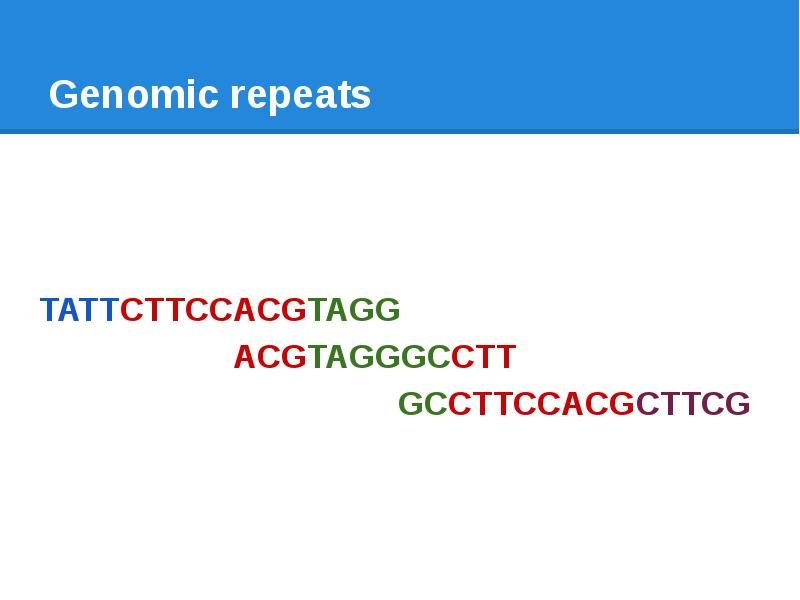
- 16. Genomic repeats TATTCTTCCACGTAGG
- 17. SPAdes assembler
- 18. SPAdes first steps spades.py
- 19. SPAdes first steps spades.py spades.py --help spades.py --test
- 20. SPAdes first steps spades.py spades.py --help spades.py --test -o <output_dir>
- 21. Input data formats FASTA: .fasta / .fa FASTQ: .fastq / .fq
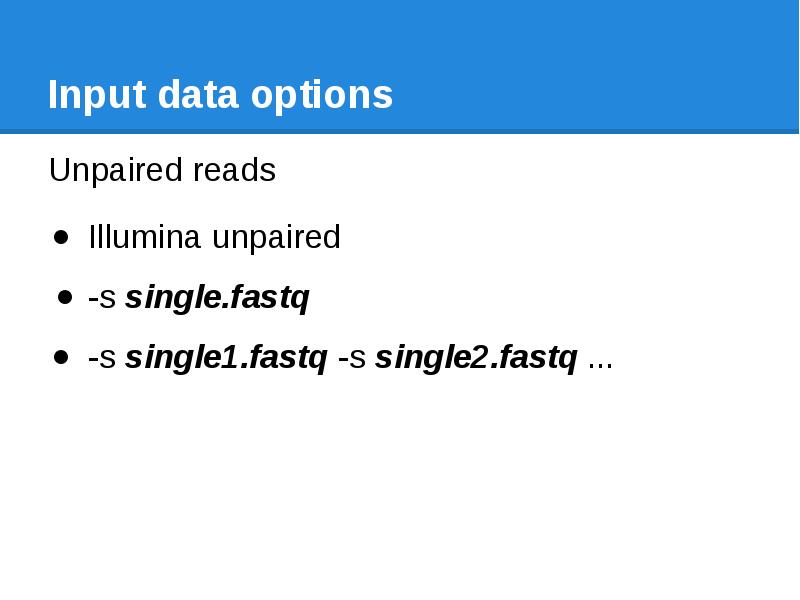
- 22. Input data options Unpaired reads Illumina unpaired -s single.fastq -s single1.fastq
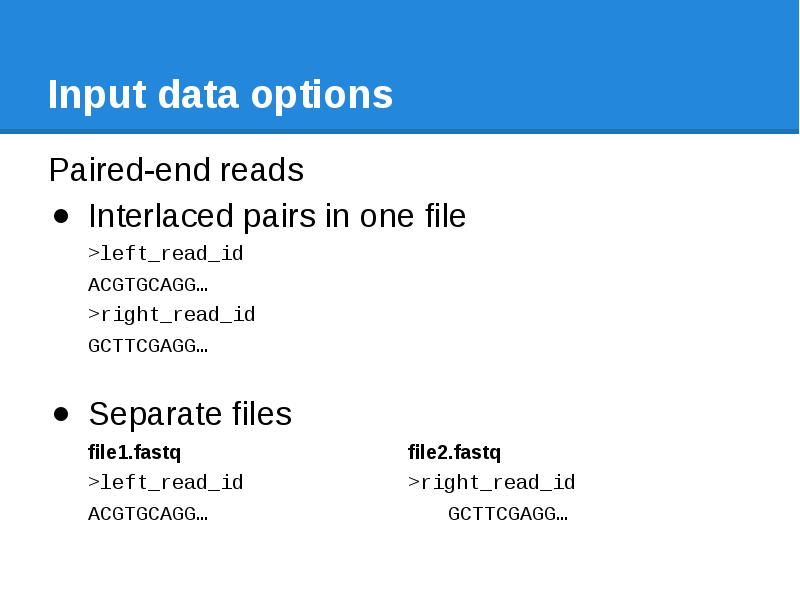
- 23. Input data options Paired-end reads Interlaced pairs in one file >left_read_id
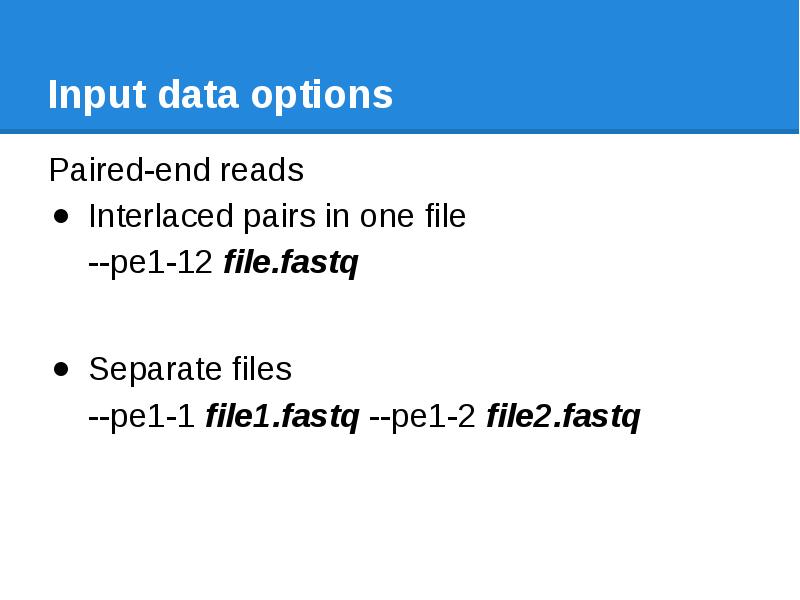
- 24. Input data options Paired-end reads Interlaced pairs in one file --pe1-12
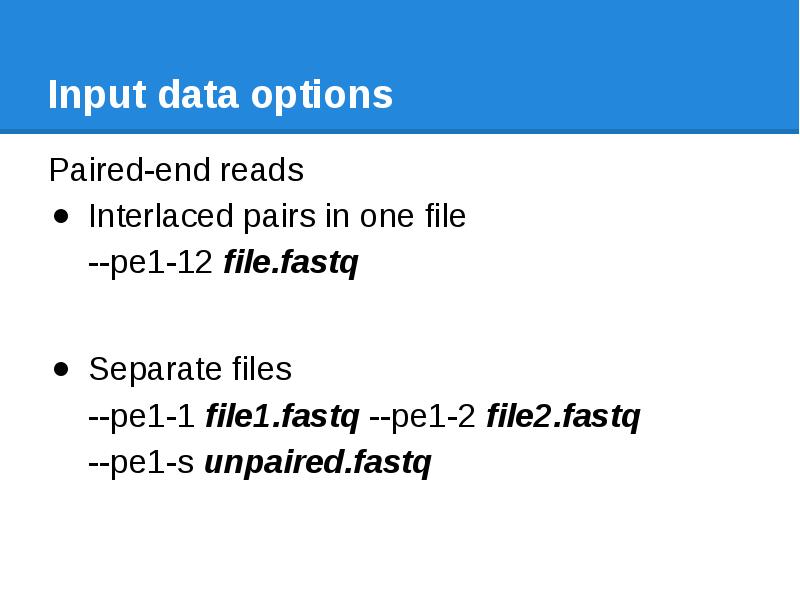
- 25. Input data options Paired-end reads Interlaced pairs in one file --pe1-12
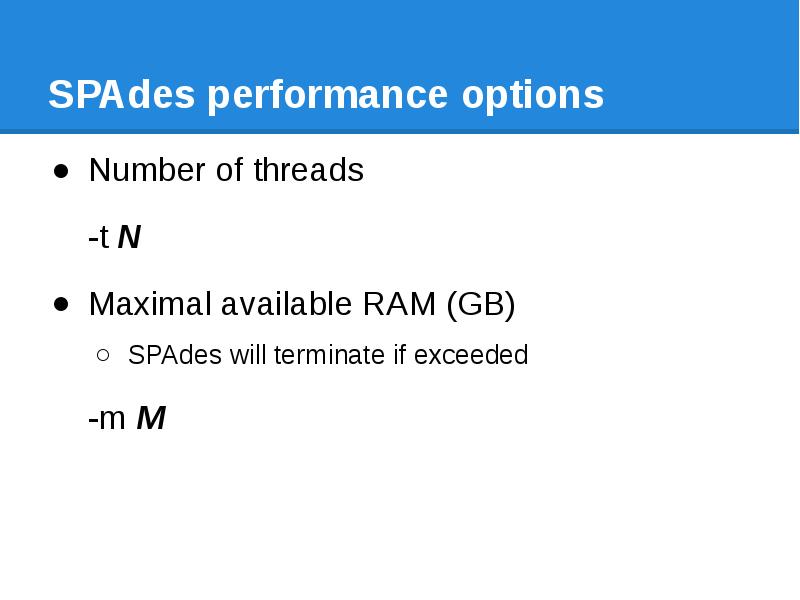
- 26. SPAdes performance options Number of threads -t N Maximal available RAM
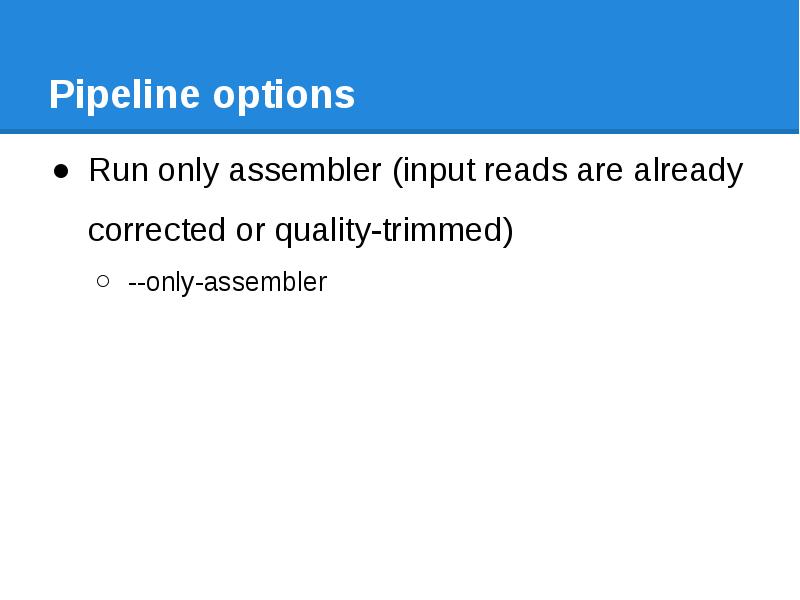
- 27. Pipeline options Run only assembler (input reads are already corrected or
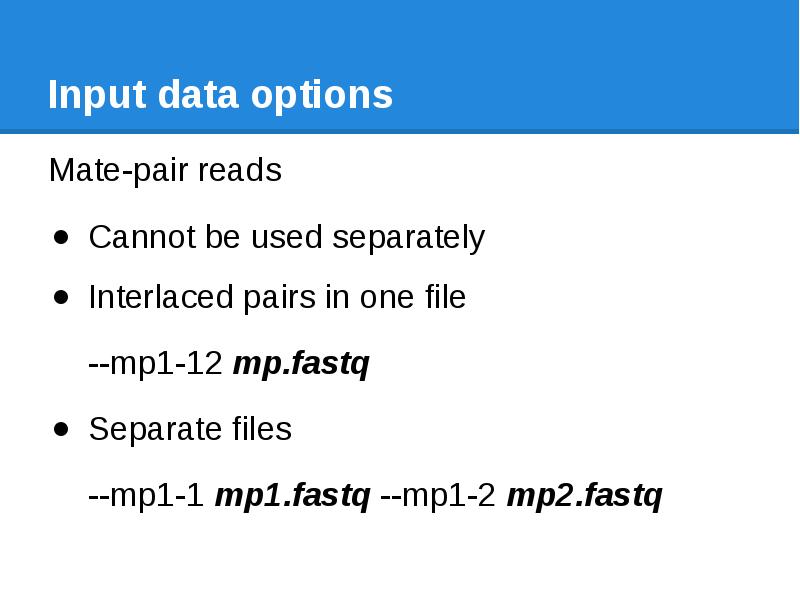
- 28. Input data options Mate-pair reads Cannot be used separately Interlaced
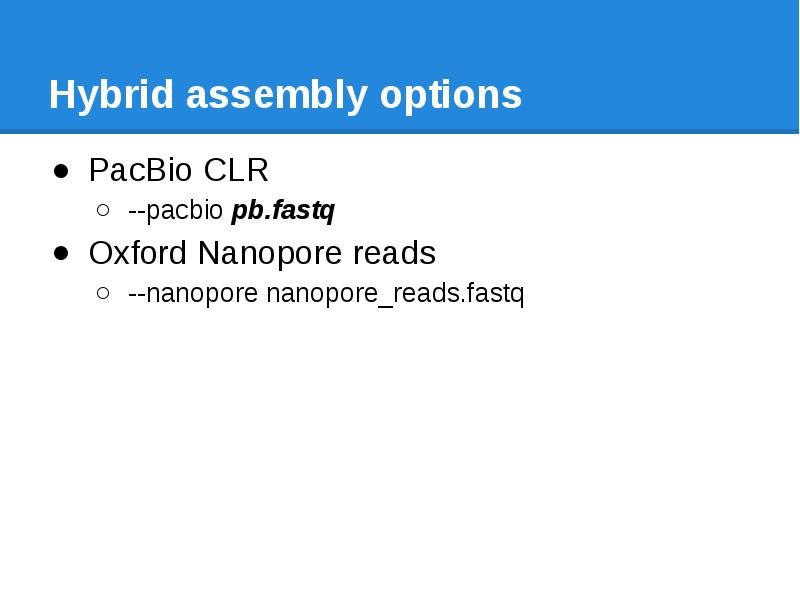
- 29. Hybrid assembly options PacBio CLR --pacbio pb.fastq Oxford Nanopore reads
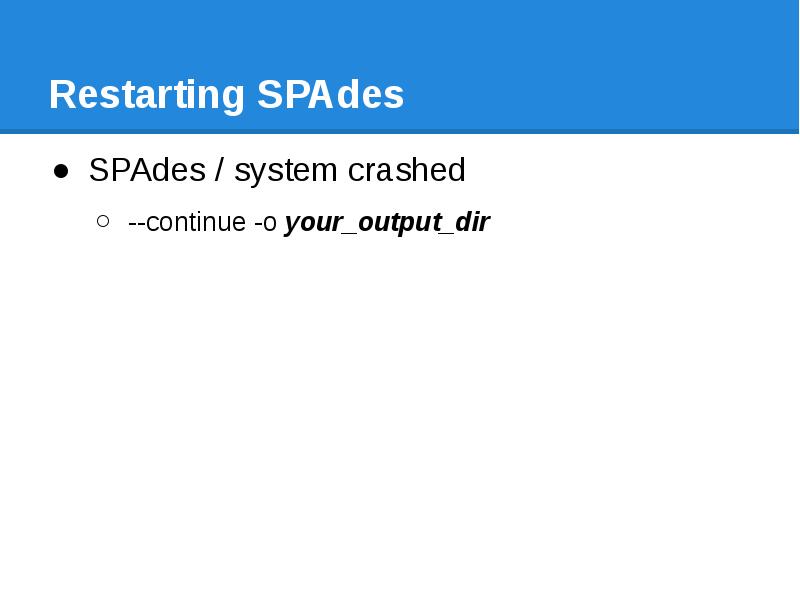
- 30. Restarting SPAdes SPAdes / system crashed --continue -o your_output_dir
- 31. Genome assembly evaluation with QUAST Center for Algorithmic Biotechnology SPbU
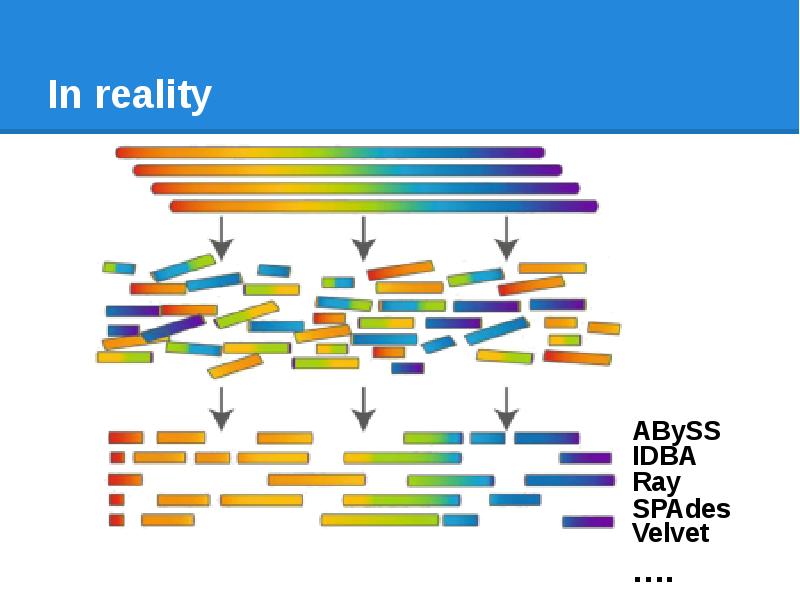
- 32. In reality
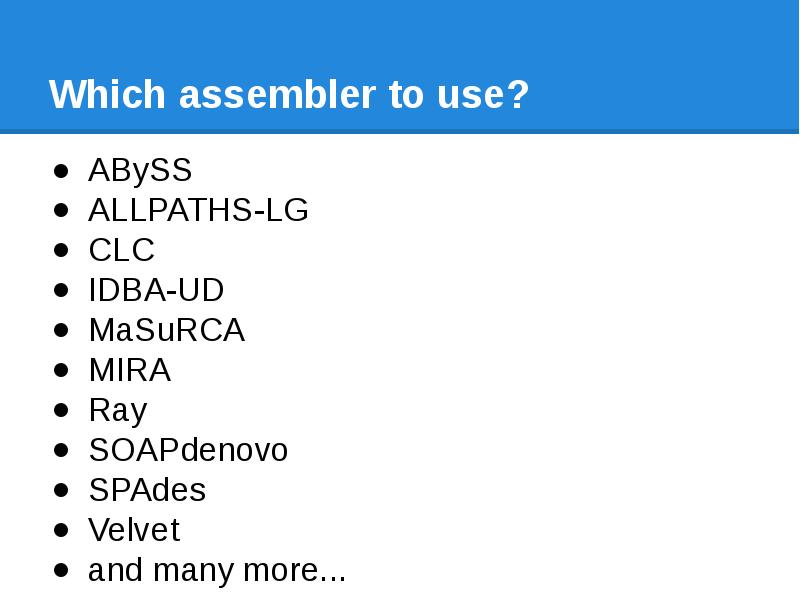
- 33. Which assembler to use? ABySS ALLPATHS-LG CLC IDBA-UD MaSuRCA MIRA Ray
- 34. Which assembler to use? Different technologies (Illumina, 454, IonTorrent, ...) Genome
- 35. There is no best assembler
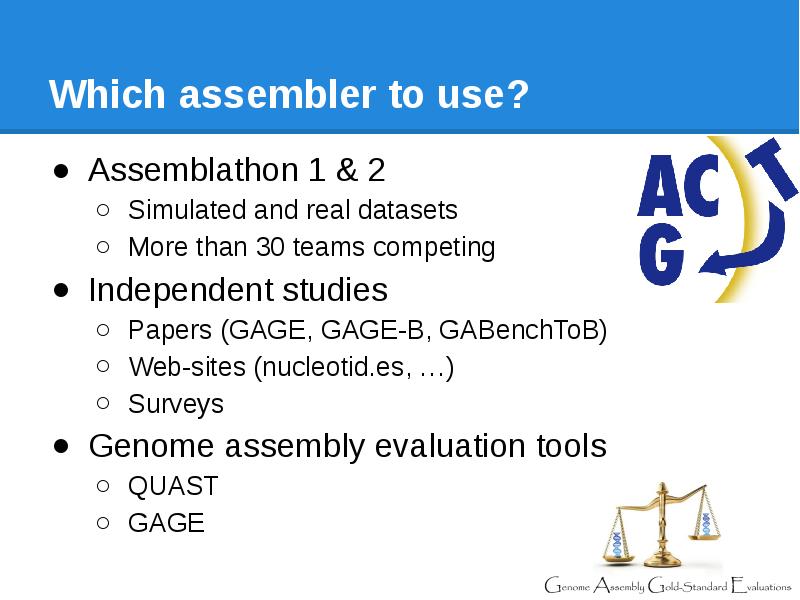
- 36. Which assembler to use? Assemblathon 1 & 2 Simulated and real
- 37. Assembly evaluation Basic evaluation No extra input Very quick Reference-based evaluation
- 38. Basic statistics
- 39. Contig sizes Number of contigs
- 40. Contig sizes Number of contigs Number of large contigs (i.e. >
- 41. Contig sizes Number of contigs Number of large contigs (i.e. >
- 42. Contig sizes Number of contigs Number of large contigs (i.e. >
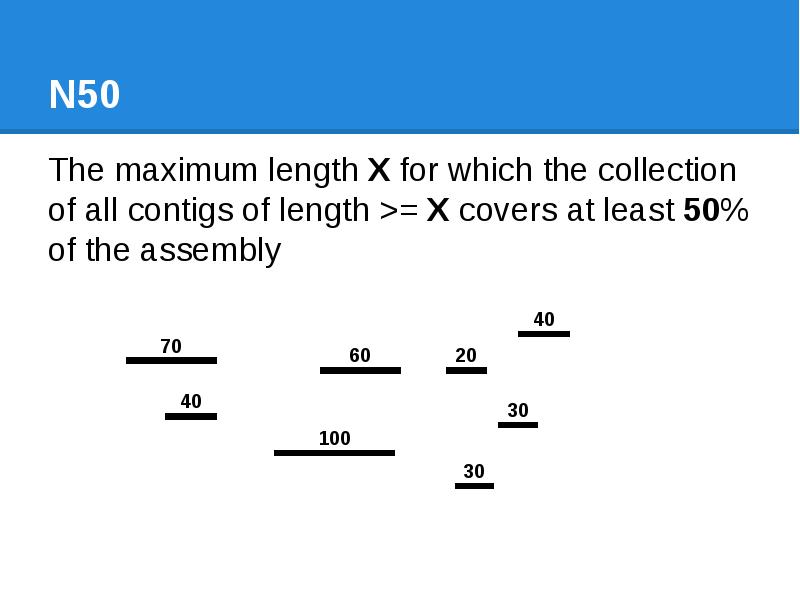
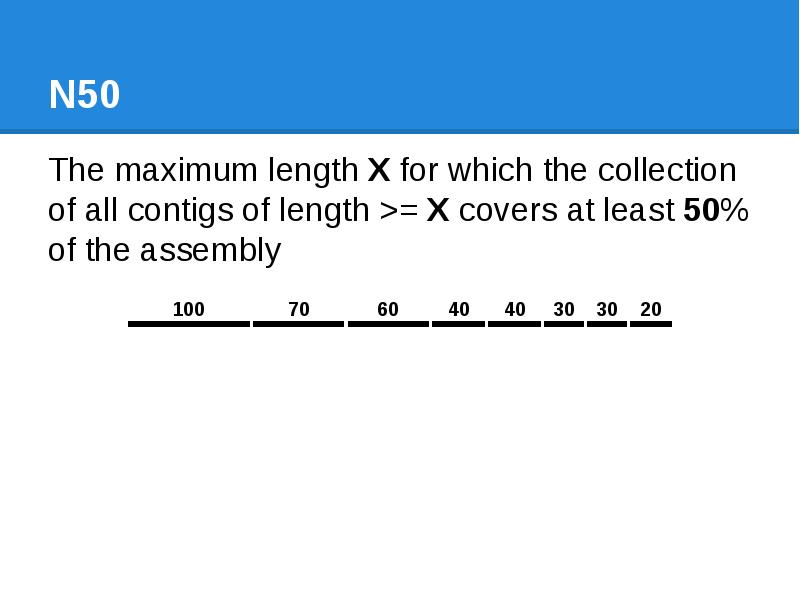
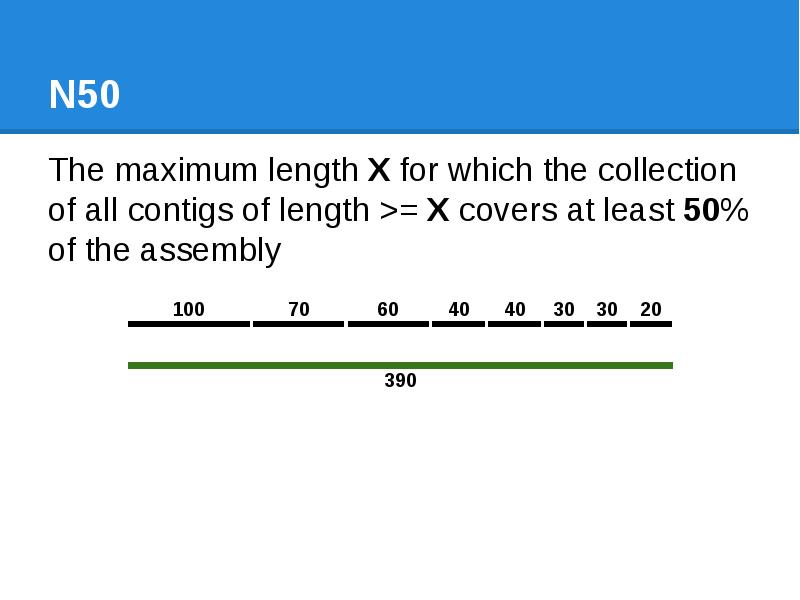
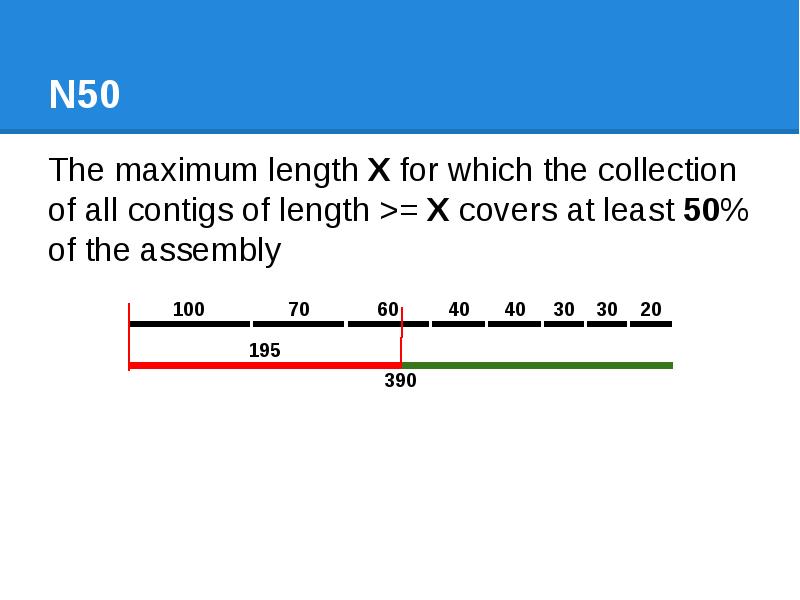
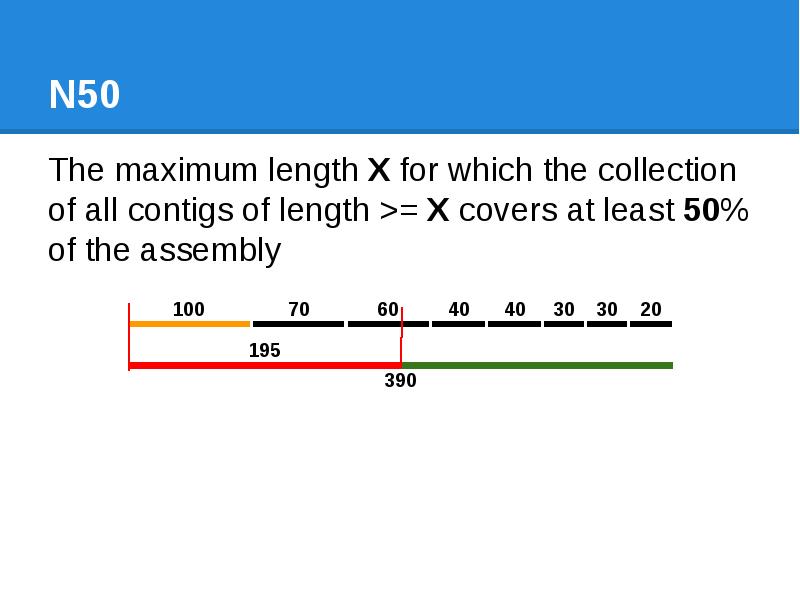
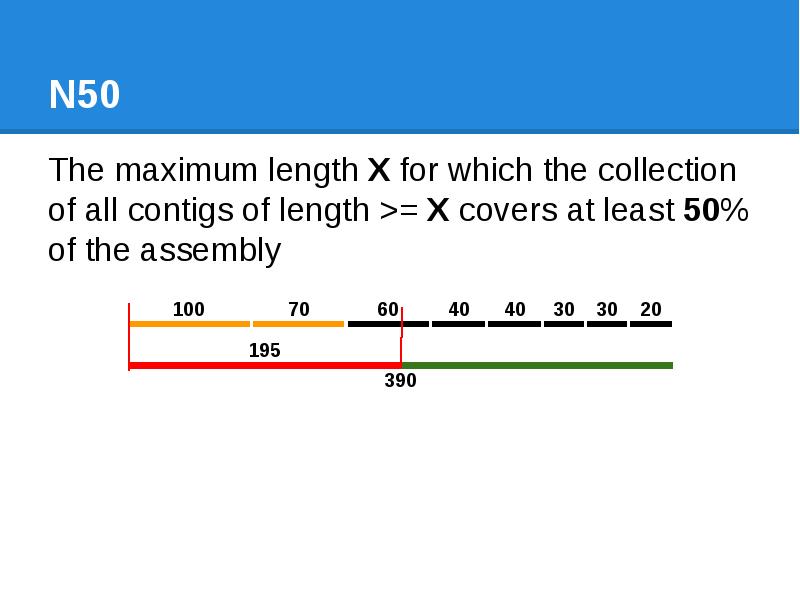
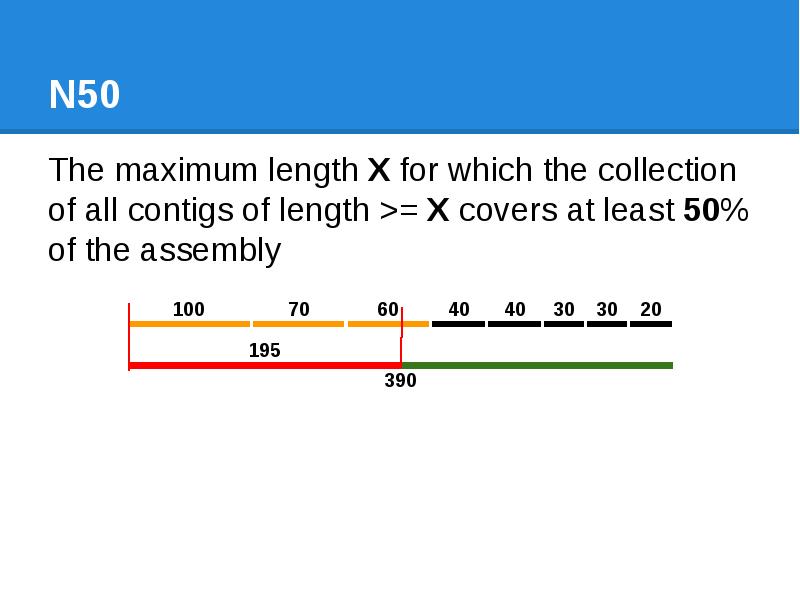
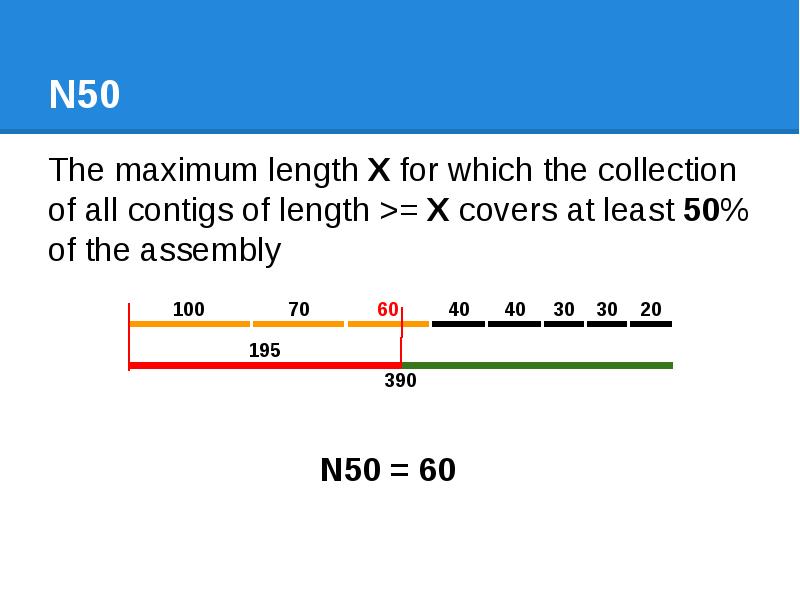
- 43. N50 The maximum length X for which the collection of all
- 44. N50 The maximum length X for which the collection of all
- 45. N50 The maximum length X for which the collection of all
- 46. N50 The maximum length X for which the collection of all
- 47. N50 The maximum length X for which the collection of all
- 48. N50 The maximum length X for which the collection of all
- 49. N50 The maximum length X for which the collection of all
- 50. N50 The maximum length X for which the collection of all
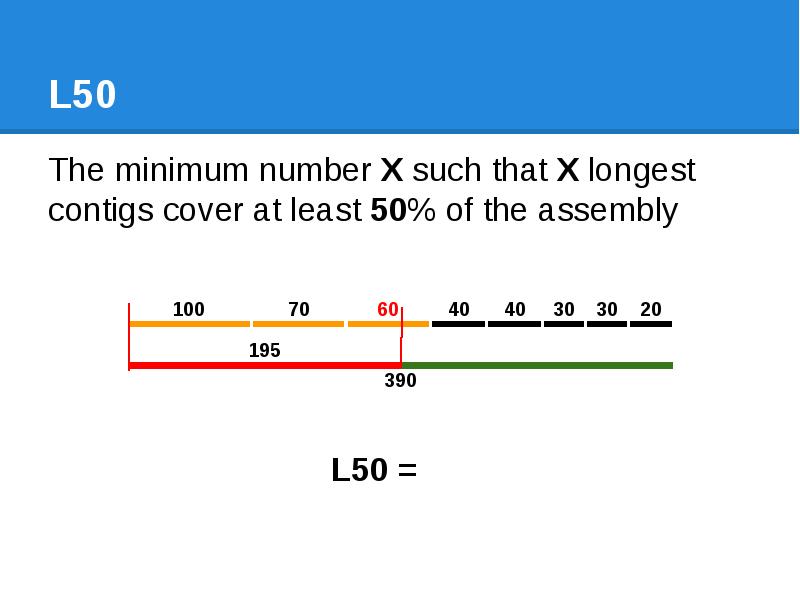
- 51. L50 The minimum number X such that X longest contigs cover
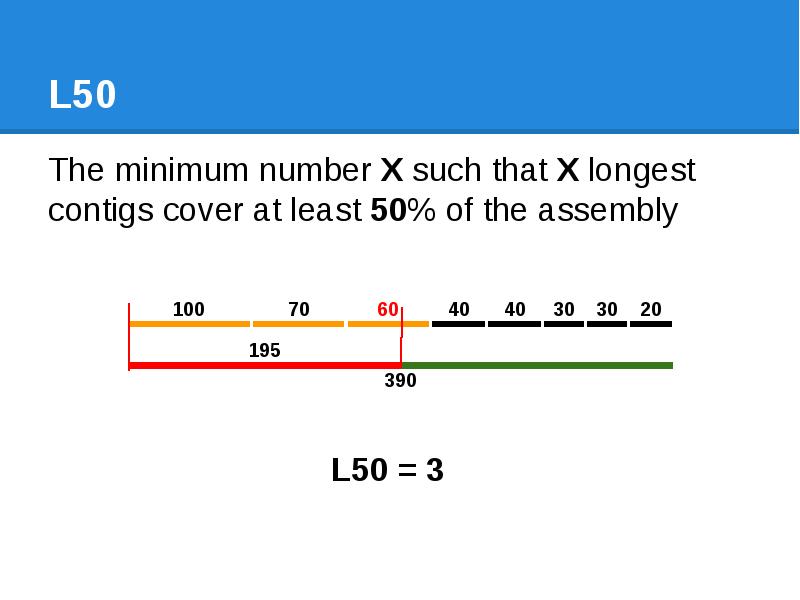
- 52. L50 The minimum number X such that X longest contigs cover
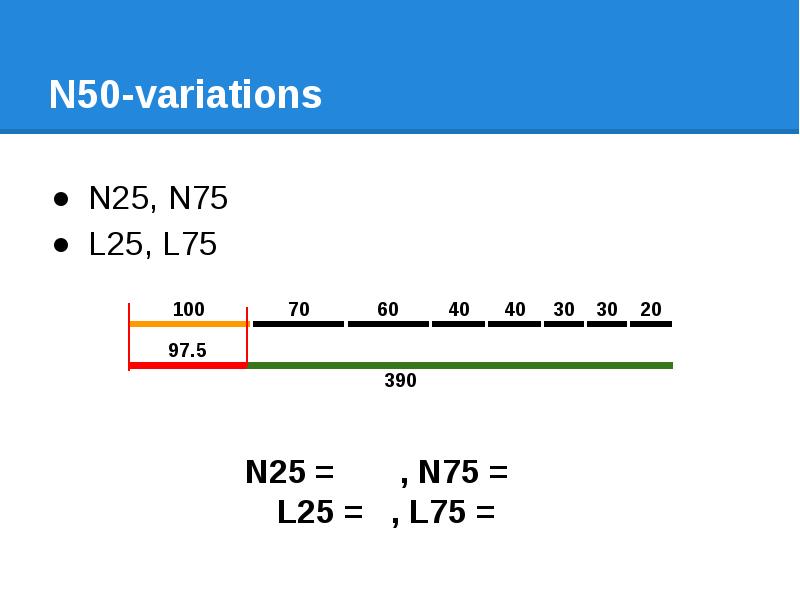
- 53. N50-variations N25, N75 L25, L75
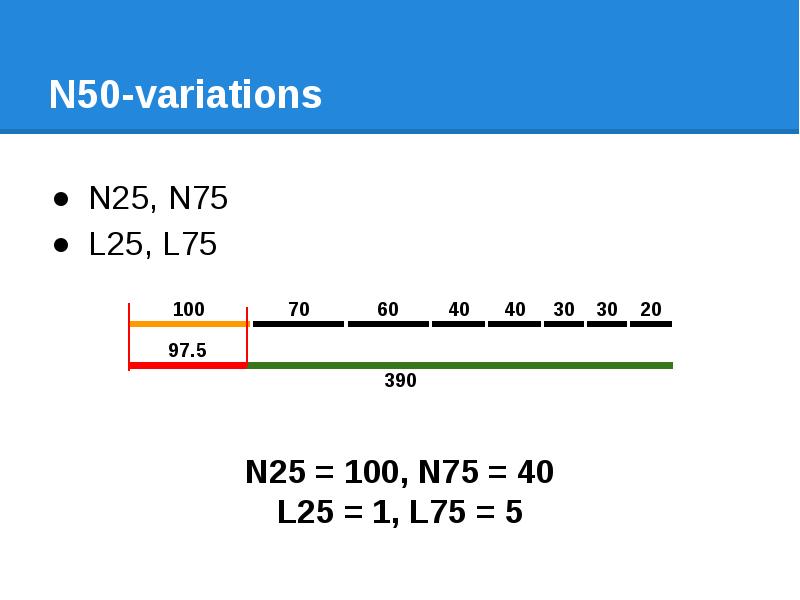
- 54. N50-variations N25, N75 L25, L75
- 55. N50-variations N25, N75 L25, L50, L75
- 56. N50-variations N25, N75 L25, L50, L75 Nx, Lx
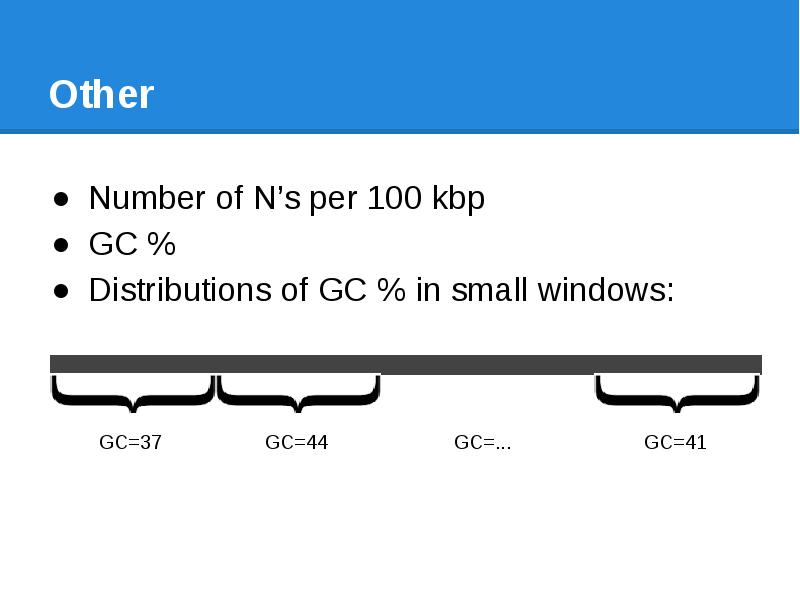
- 57. Other Number of N’s per 100 kbp
- 58. Other Number of N’s per 100 kbp GC %
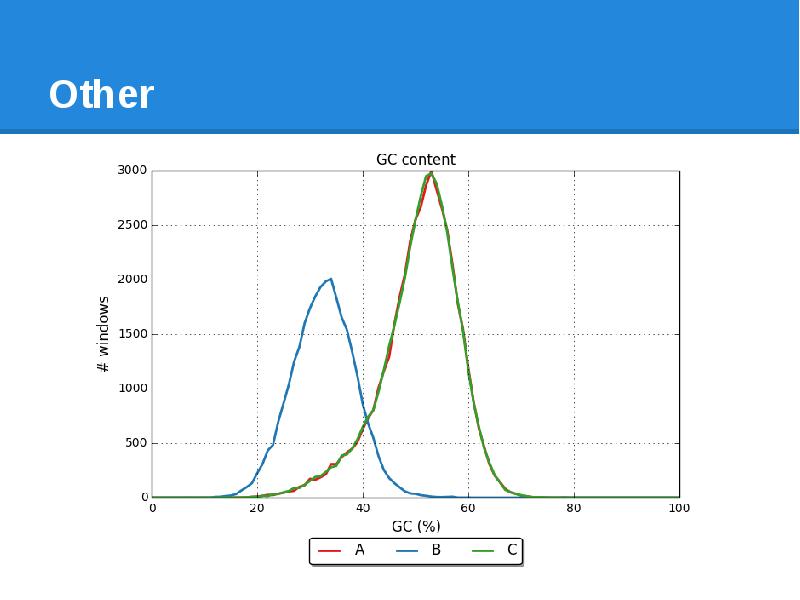
- 59. Other Number of N’s per 100 kbp GC % Distributions of
- 60. Other
- 61. Reference-based metrics
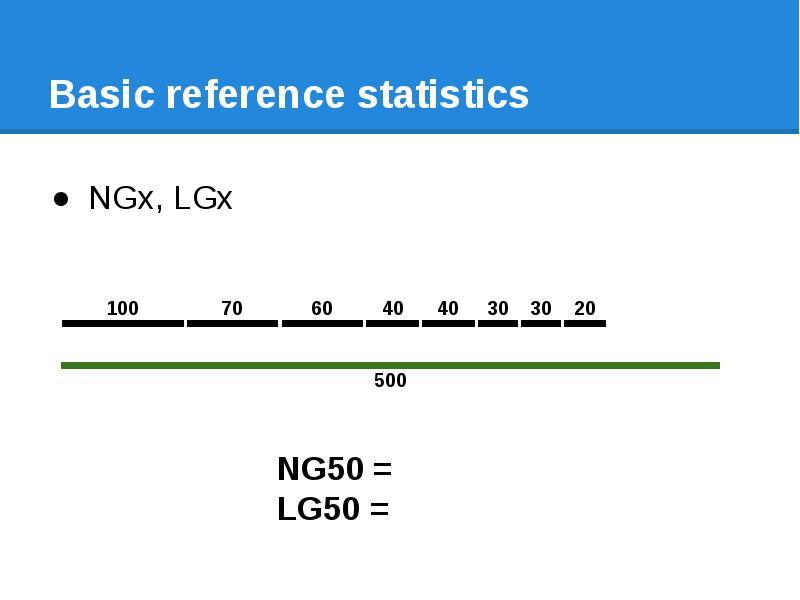
- 62. Basic reference statistics Reference length Reference GC % Number of chromosomes
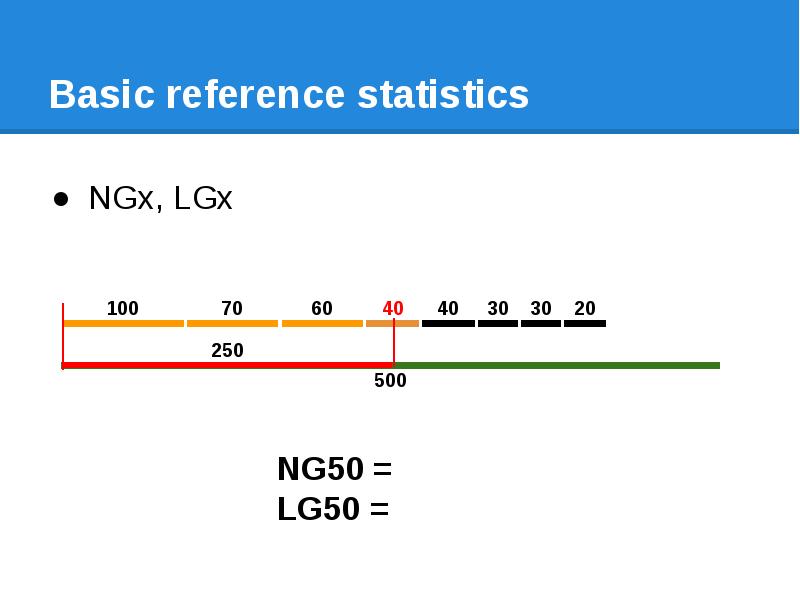
- 63. Basic reference statistics NGx, LGx
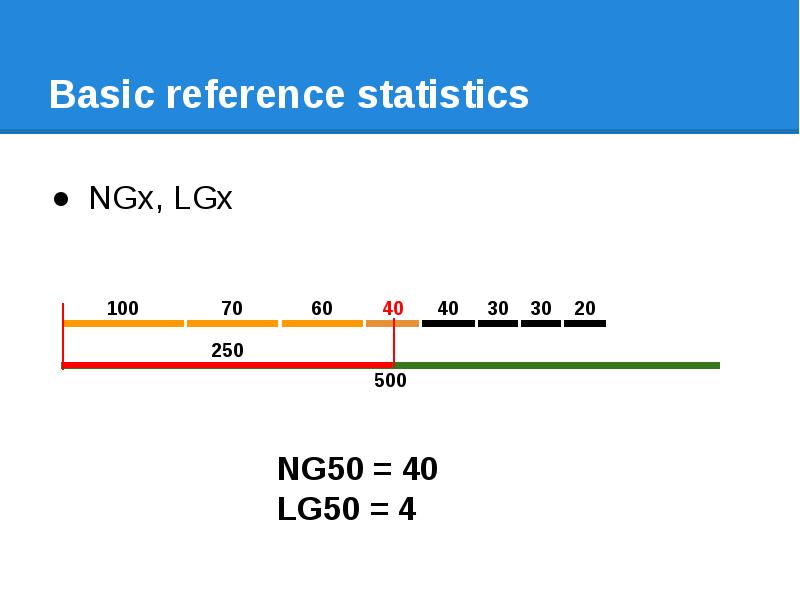
- 64. Basic reference statistics NGx, LGx
- 65. Basic reference statistics NGx, LGx
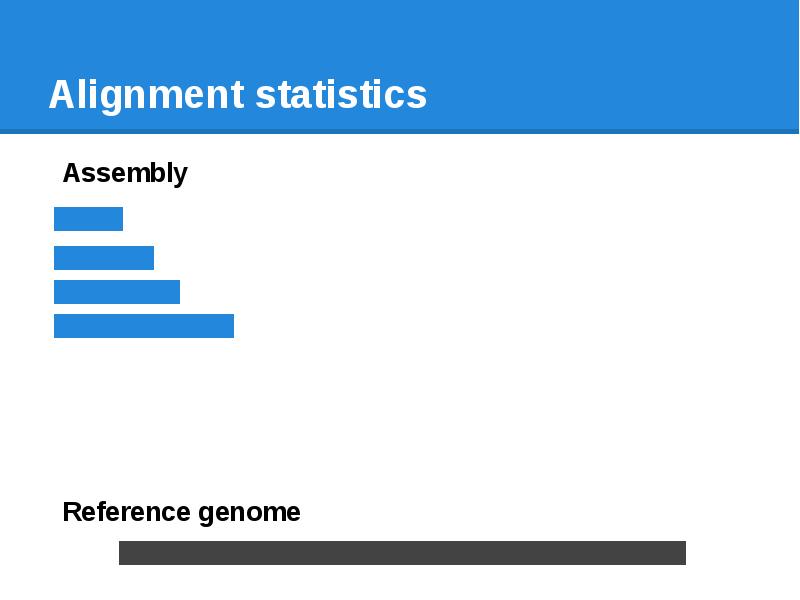
- 66. Alignment statistics
- 67. Alignment statistics
- 68. Alignment statistics Genome fraction %
- 69. Alignment statistics Genome fraction % Duplication ratio
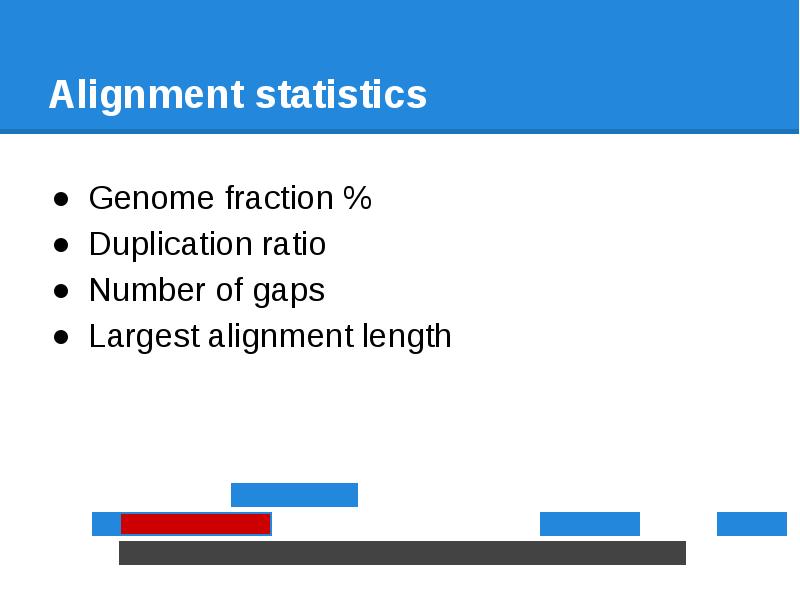
- 70. Alignment statistics Genome fraction % Duplication ratio Number of gaps
- 71. Alignment statistics Genome fraction % Duplication ratio Number of gaps Largest
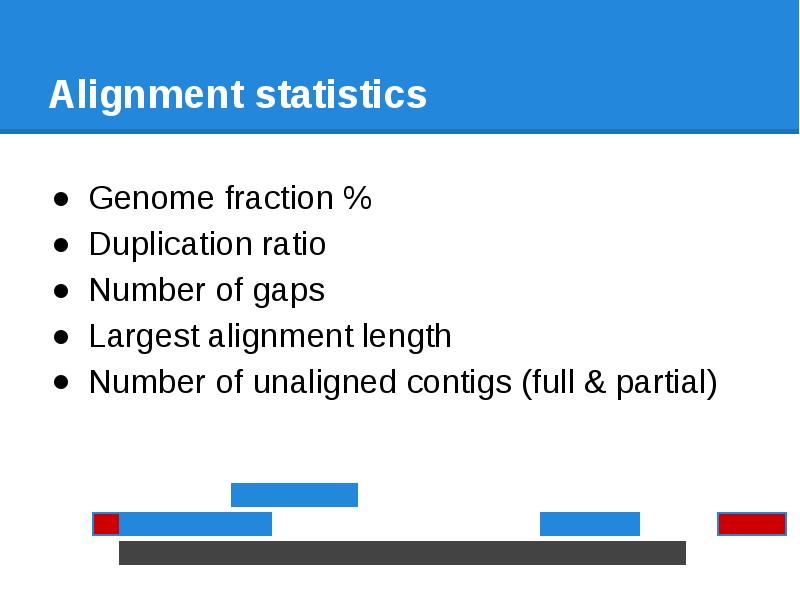
- 72. Alignment statistics Genome fraction % Duplication ratio Number of gaps Largest
- 73. Alignment statistics Genome fraction % Duplication ratio Number of gaps Largest
- 74. Alignment statistics Genome fraction % Duplication ratio Number of gaps Largest
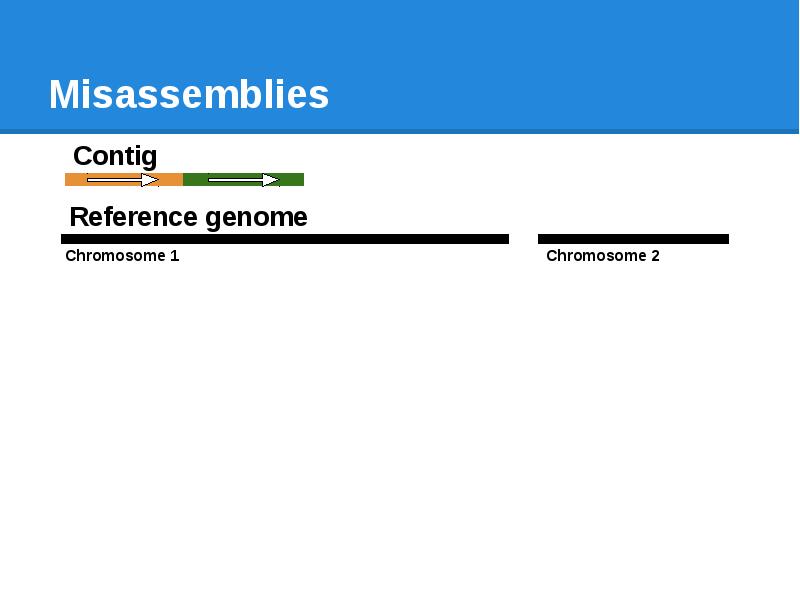
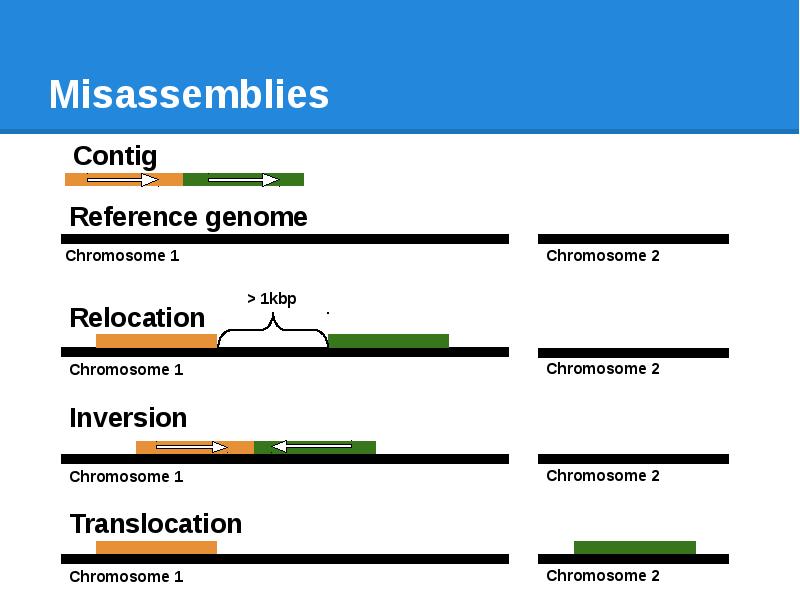
- 75. Misassemblies
- 76. Misassemblies
- 77. There is no best metric
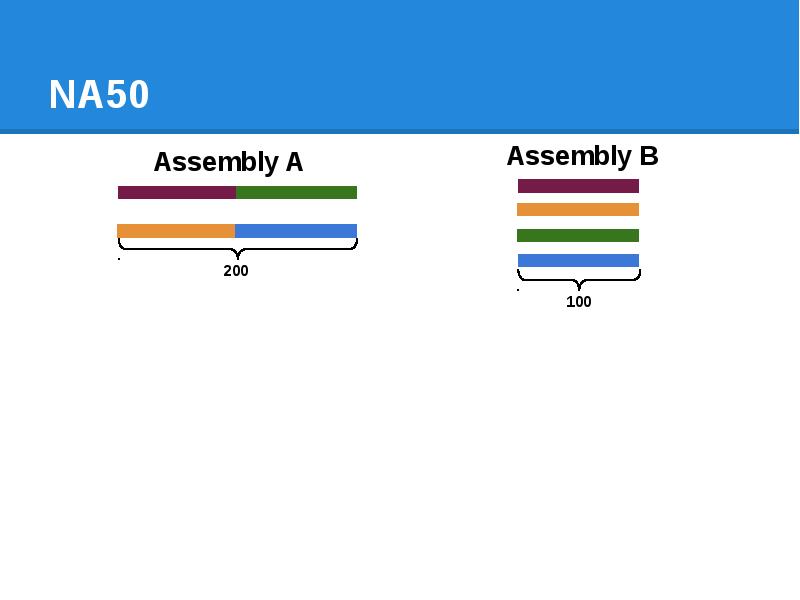
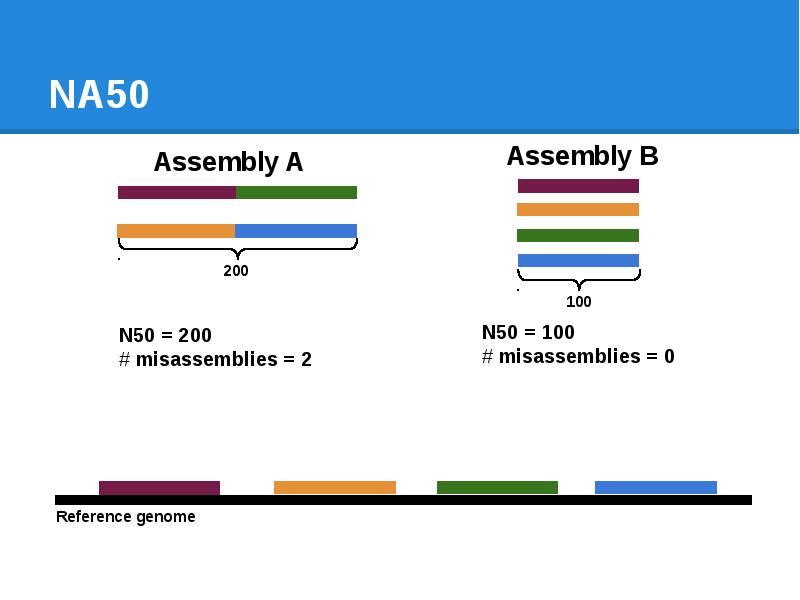
- 78. NA50
- 79. NA50
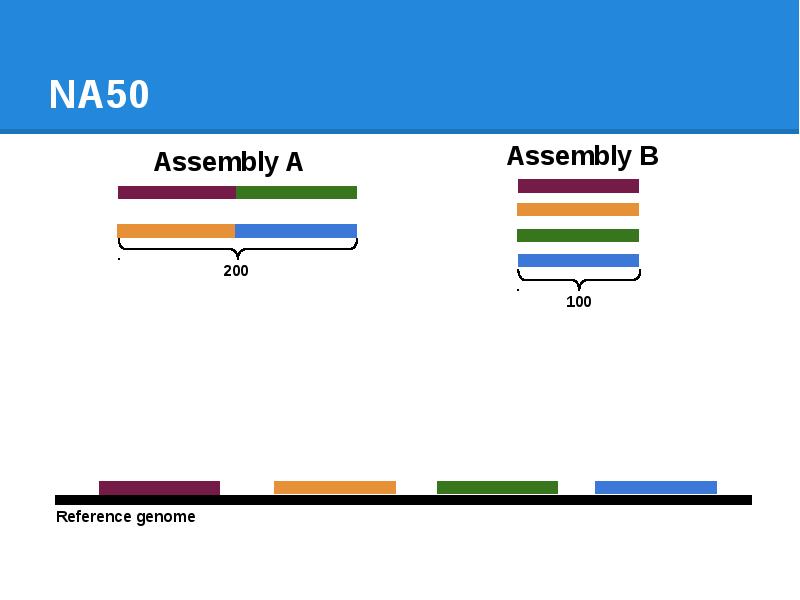
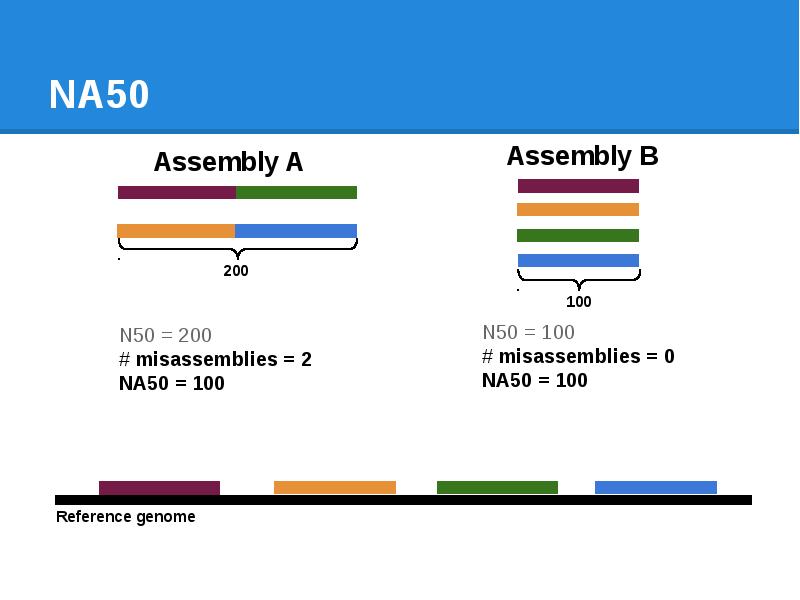
- 80. NA50
- 81. NA50
- 82. QUality ASsesment Tool for Genome Assemblies
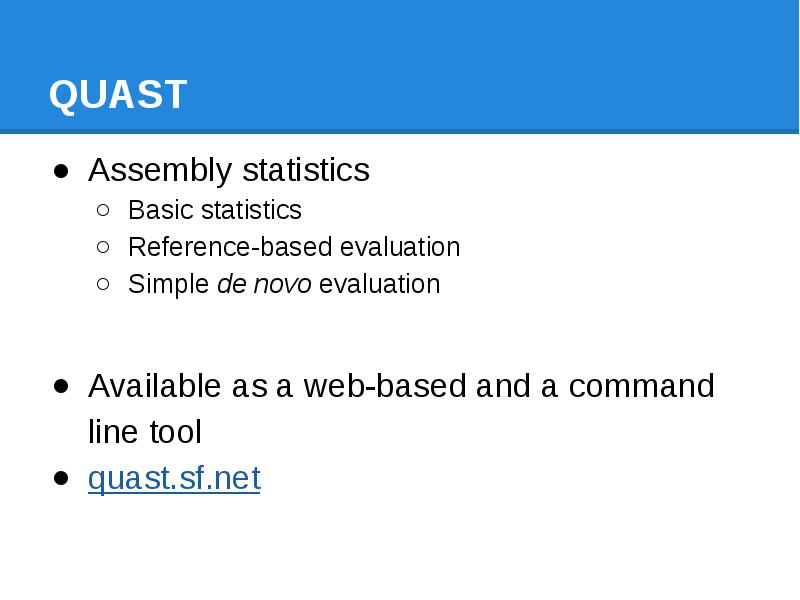
- 83. QUAST Assembly statistics Basic statistics Reference-based evaluation Simple de novo
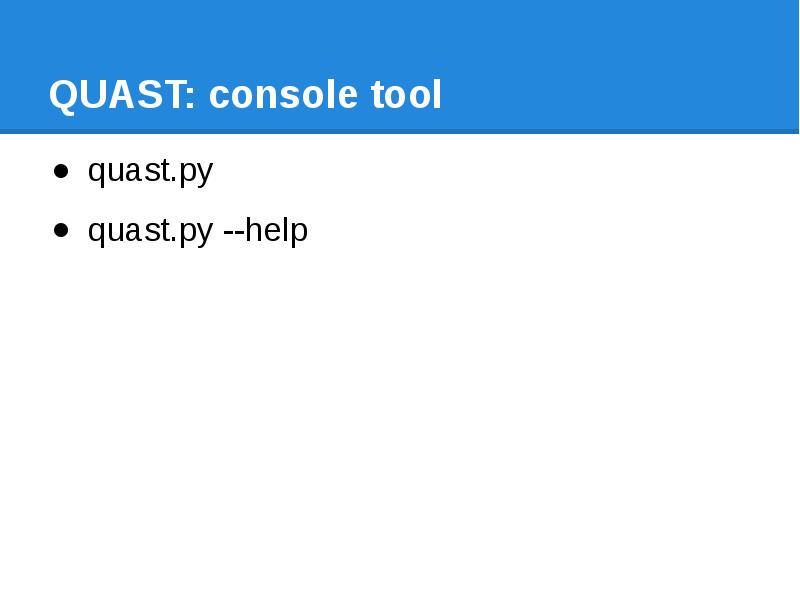
- 84. QUAST: console tool quast.py quast.py --help
- 85. QUAST basics quast.py quast.py --help quast.py contigs.fasta quast.py [options] contigs.fasta quast.py
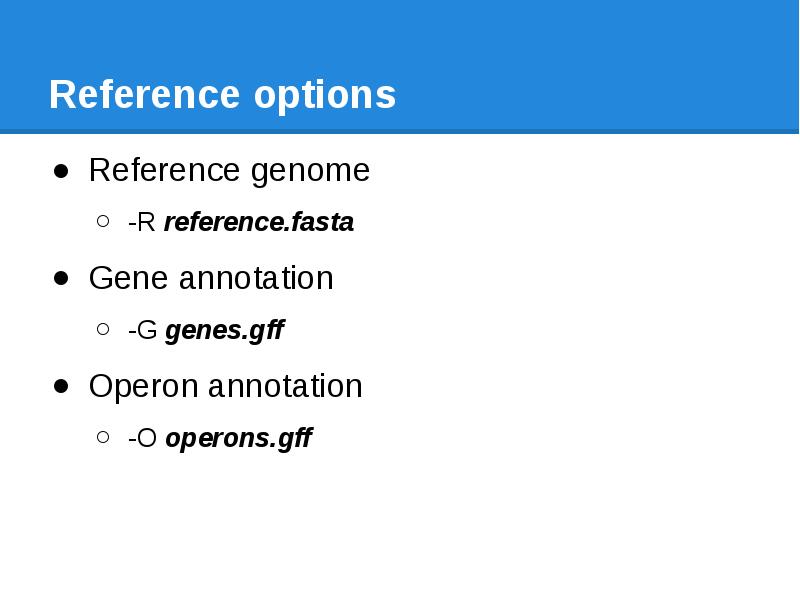
- 86. Reference options Reference genome -R reference.fasta Gene annotation -G genes.gff
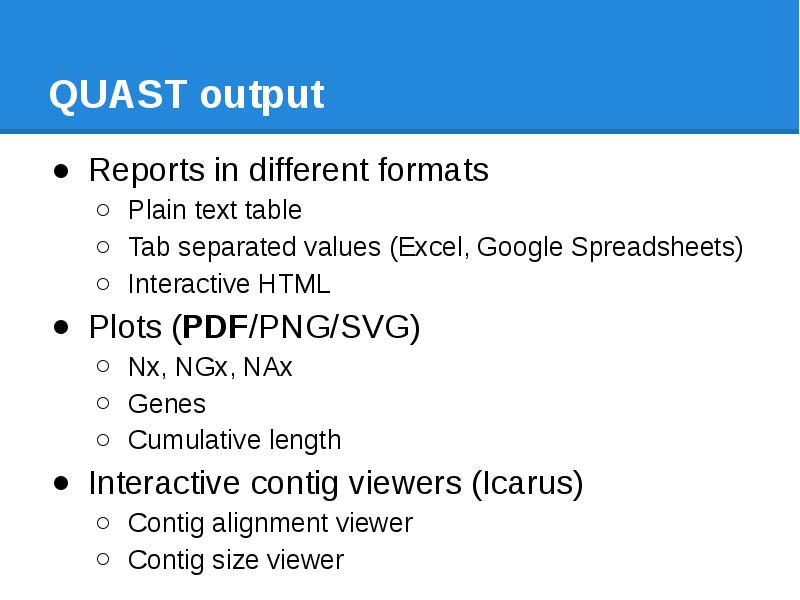
- 87. QUAST output Reports in different formats Plain text table Tab separated
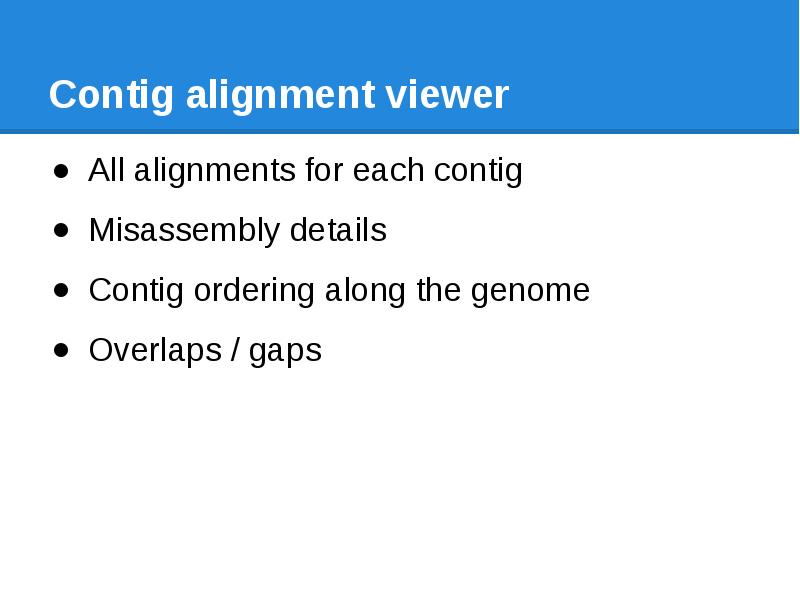
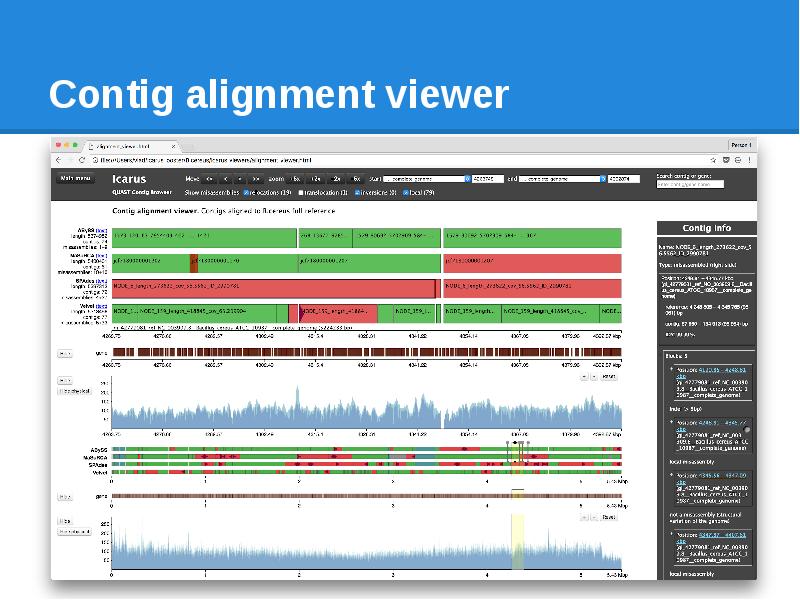
- 88. Contig alignment viewer All alignments for each contig Misassembly details
- 89. Contig alignment viewer
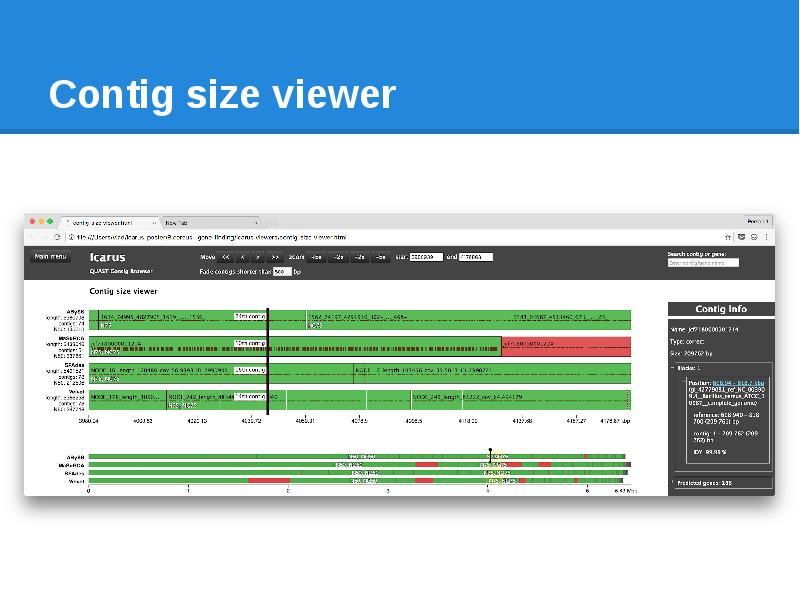
- 90. Contig size viewer Contigs ordered from longest to shortest N50, N75
- 91. Contig size viewer
- 92. De novo evaluation
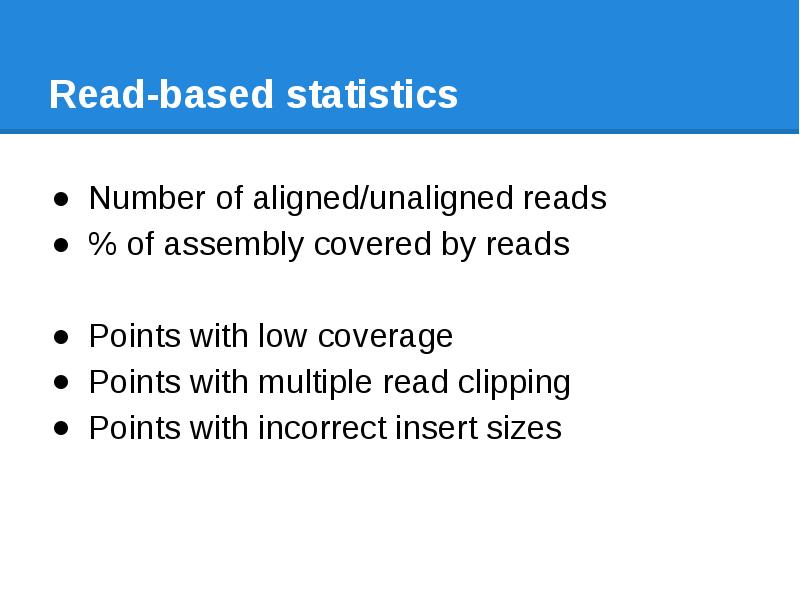
- 93. Read-based statistics Number of aligned/unaligned reads % of assembly covered
- 94. Read-based statistics Number of aligned/unaligned reads % of assembly covered
- 95. Annotation-based statistics Number of ORFs
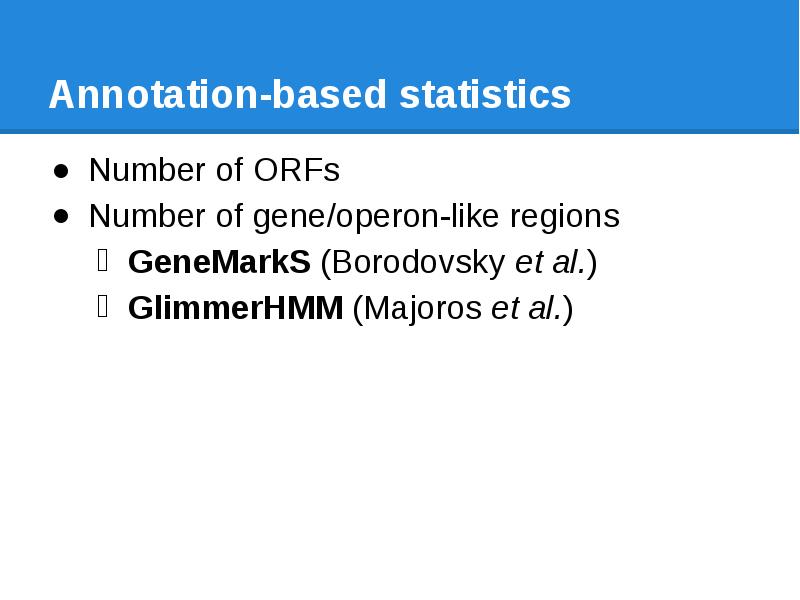
- 96. Annotation-based statistics Number of ORFs Number of gene/operon-like regions GeneMarkS (Borodovsky
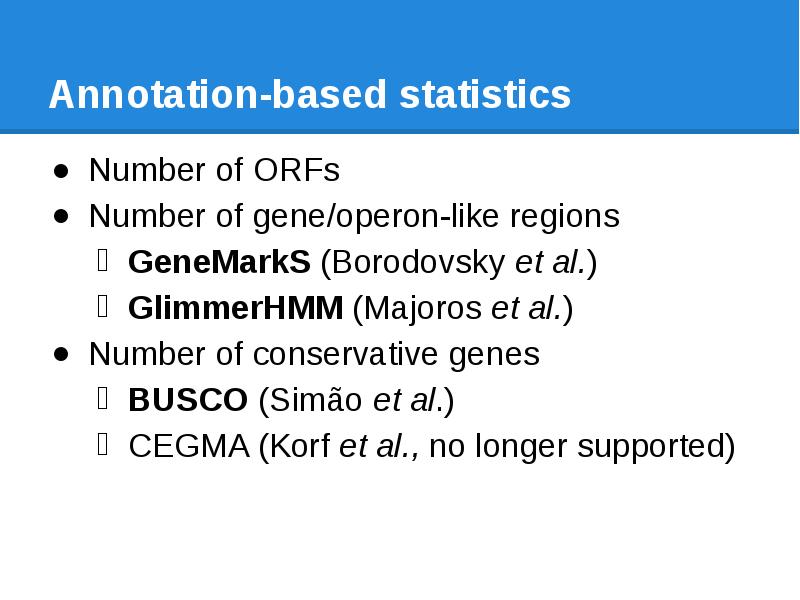
- 97. Annotation-based statistics Number of ORFs Number of gene/operon-like regions GeneMarkS (Borodovsky
- 98. Thank you! Questions?
- 99. Скачать презентацию





![QUAST basics
quast.py
quast.py --help
quast.py contigs.fasta
quast.py [options] contigs.fasta
quast.py](/documents_7/2cc7b8b3ef43e20c22698c8879960ccf/img84.jpg "QUAST basics
quast.py
quast.py --help
quast.py contigs.fasta
quast.py [options] contigs.fasta
quast.py")


Слайды и текст этой презентации
Слайд 1
Описание слайда:
Genome assembly with SPAdes
Center for Algorithmic Biotechnology
SPbU
Слайд 2
Описание слайда:
Introduction
Слайд 3
Описание слайда:
Why to assemble?
Слайд 4
Описание слайда:
Why to assemble?
Sequencing data
Billions of short reads
Sequencing errors
Contaminants
Слайд 5
Описание слайда:
Why to assemble?
Sequencing data
Billions of short reads
Sequencing errors
Contaminants
Assembly
Corrects sequencing errors
Much longer sequences
Each genomic region is presented only once
May introduce errors
Слайд 6
Описание слайда:
Assembly basics
Слайд 7
Описание слайда:
Assembly in a perfect world
Слайд 8
Описание слайда:
Assembly in real world
Слайд 9
Описание слайда:
De novo whole genome assembly
Слайд 10
Описание слайда:
De novo whole genome assembly
Слайд 11
Описание слайда:
Genomic repeats
TATTCTTCCACGTAGGGCCTTCCACGCTTCG
Слайд 12
Описание слайда:
Genomic repeats
TATTCTTC
CTTCCACG
CACGTAGG
GGCCTTCC
CTTCCACG
CACGCTTCG
TATTCTTCCACGTAGGGCCTTCCACGCTTCG
Слайд 13
Описание слайда:
Genomic repeats
TATTCTTC
CTTCCACG
CACGTAGG
GGCCTTCC
CTTCCACG
CACGCTTCG
Слайд 14
Описание слайда:
Genomic repeats
TATTCTTCCACGTAGG
GGCCTTCCACGCTTCG
TATTCTTCCACGCTTCG
GGCCTTCCACGTAGG
Слайд 15
Описание слайда:
Genomic repeats
TATTCTTCCACGTAGG
ACGTAGGGCCTT
GCCTTCCACGCTTCG
TATTCTTCCACGTAGGGCCTTCCACGCTTCG
Слайд 16
Описание слайда:
Genomic repeats
TATTCTTCCACGTAGG
ACGTAGGGCCTT
GCCTTCCACGCTTCG
Слайд 17
Описание слайда:
SPAdes assembler
Слайд 18
Описание слайда:
SPAdes first steps
spades.py
Слайд 19
Описание слайда:
SPAdes first steps
spades.py
spades.py --help
spades.py --test
Слайд 20
Описание слайда:
SPAdes first steps
spades.py
spades.py --help
spades.py --test
-o <output_dir>
Слайд 21
Описание слайда:
Input data formats
FASTA: .fasta / .fa
FASTQ: .fastq / .fq
Gzipped: .gz
Слайд 22
Описание слайда:
Input data options
Unpaired reads
Illumina unpaired
-s single.fastq
-s single1.fastq -s single2.fastq ...
Слайд 23
Описание слайда:
Input data options
Paired-end reads
Interlaced pairs in one file
>left_read_id
ACGTGCAGG…
>right_read_id
GCTTCGAGG…
Separate files
file1.fastq file2.fastq
>left_read_id >right_read_id
ACGTGCAGG… GCTTCGAGG…
Слайд 24
Описание слайда:
Input data options
Paired-end reads
Interlaced pairs in one file
--pe1-12 file.fastq
Separate files
--pe1-1 file1.fastq --pe1-2 file2.fastq
Слайд 25
Описание слайда:
Input data options
Paired-end reads
Interlaced pairs in one file
--pe1-12 file.fastq
Separate files
--pe1-1 file1.fastq --pe1-2 file2.fastq
--pe1-s unpaired.fastq
Слайд 26
Описание слайда:
SPAdes performance options
Number of threads
-t N
Maximal available RAM (GB)
SPAdes will terminate if exceeded
-m M
Слайд 27
Описание слайда:
Pipeline options
Run only assembler (input reads are already corrected or quality-trimmed)
--only-assembler
Слайд 28
Описание слайда:
Input data options
Mate-pair reads
Cannot be used separately
Interlaced pairs in one file
--mp1-12 mp.fastq
Separate files
--mp1-1 mp1.fastq --mp1-2 mp2.fastq
Слайд 29
Описание слайда:
Hybrid assembly options
PacBio CLR
--pacbio pb.fastq
Oxford Nanopore reads
--nanopore nanopore_reads.fastq
Слайд 30
Описание слайда:
Restarting SPAdes
SPAdes / system crashed
--continue -o your_output_dir
Слайд 31
Описание слайда:
Genome assembly evaluation with QUAST
Center for Algorithmic Biotechnology
SPbU
Слайд 32
Описание слайда:
In reality
Слайд 33
Описание слайда:
Which assembler to use?
ABySS
ALLPATHS-LG
CLC
IDBA-UD
MaSuRCA
MIRA
Ray
SOAPdenovo
SPAdes
Velvet
and many more...
Слайд 34
Описание слайда:
Which assembler to use?
Different technologies (Illumina, 454, IonTorrent, ...)
Genome type and size (bacteria, insects, mammals, plants, ...)
Type of prepared libraries (single reads, paired-end, mate-pairs, combinations)
Type of data (multicell, metagenomic, single-cell)
Слайд 35
Описание слайда:
There is no best assembler
Слайд 36
Описание слайда:
Which assembler to use?
Assemblathon 1 & 2
Simulated and real datasets
More than 30 teams competing
Independent studies
Papers (GAGE, GAGE-B, GABenchToB)
Web-sites (nucleotid.es, …)
Surveys
Genome assembly evaluation tools
QUAST
GAGE
Слайд 37
Описание слайда:
Assembly evaluation
Basic evaluation
No extra input
Very quick
Reference-based evaluation
A lot of metrics
Very accurate
De novo evaluation
Advanced analysis of de novo assemblies
Слайд 38
Описание слайда:
Basic statistics
Слайд 39
Описание слайда:
Contig sizes
Number of contigs
Слайд 40
Описание слайда:
Contig sizes
Number of contigs
Number of large contigs (i.e. > 1000 bp)
Слайд 41
Описание слайда:
Contig sizes
Number of contigs
Number of large contigs (i.e. > 1000 bp)
Largest contig length
Слайд 42
Описание слайда:
Contig sizes
Number of contigs
Number of large contigs (i.e. > 1000 bp)
Largest contig length
Total assembly length
Слайд 43
Описание слайда:
N50
The maximum length X for which the collection of all contigs of length >= X covers at least 50% of the assembly
Слайд 44
Описание слайда:
N50
The maximum length X for which the collection of all contigs of length >= X covers at least 50% of the assembly
Слайд 45
Описание слайда:
N50
The maximum length X for which the collection of all contigs of length >= X covers at least 50% of the assembly
Слайд 46
Описание слайда:
N50
The maximum length X for which the collection of all contigs of length >= X covers at least 50% of the assembly
Слайд 47
Описание слайда:
N50
The maximum length X for which the collection of all contigs of length >= X covers at least 50% of the assembly
Слайд 48
Описание слайда:
N50
The maximum length X for which the collection of all contigs of length >= X covers at least 50% of the assembly
Слайд 49
Описание слайда:
N50
The maximum length X for which the collection of all contigs of length >= X covers at least 50% of the assembly
Слайд 50
Описание слайда:
N50
The maximum length X for which the collection of all contigs of length >= X covers at least 50% of the assembly
Слайд 51
Описание слайда:
L50
The minimum number X such that X longest contigs cover at least 50% of the assembly
Слайд 52
Описание слайда:
L50
The minimum number X such that X longest contigs cover at least 50% of the assembly
Слайд 53
Описание слайда:
N50-variations
N25, N75
L25, L75
Слайд 54
Описание слайда:
N50-variations
N25, N75
L25, L75
Слайд 55
Описание слайда:
N50-variations
N25, N75
L25, L50, L75
Слайд 56
Описание слайда:
N50-variations
N25, N75
L25, L50, L75
Nx, Lx
Слайд 57
Описание слайда:
Other
Number of N’s per 100 kbp
Слайд 58
Описание слайда:
Other
Number of N’s per 100 kbp
GC %
Слайд 59
Описание слайда:
Other
Number of N’s per 100 kbp
GC %
Distributions of GC % in small windows:
Слайд 60
Описание слайда:
Other
Слайд 61
Описание слайда:
Reference-based metrics
Слайд 62
Описание слайда:
Basic reference statistics
Reference length
Reference GC %
Number of chromosomes
Слайд 63
Описание слайда:
Basic reference statistics
NGx, LGx
Слайд 64
Описание слайда:
Basic reference statistics
NGx, LGx
Слайд 65
Описание слайда:
Basic reference statistics
NGx, LGx
Слайд 66
Описание слайда:
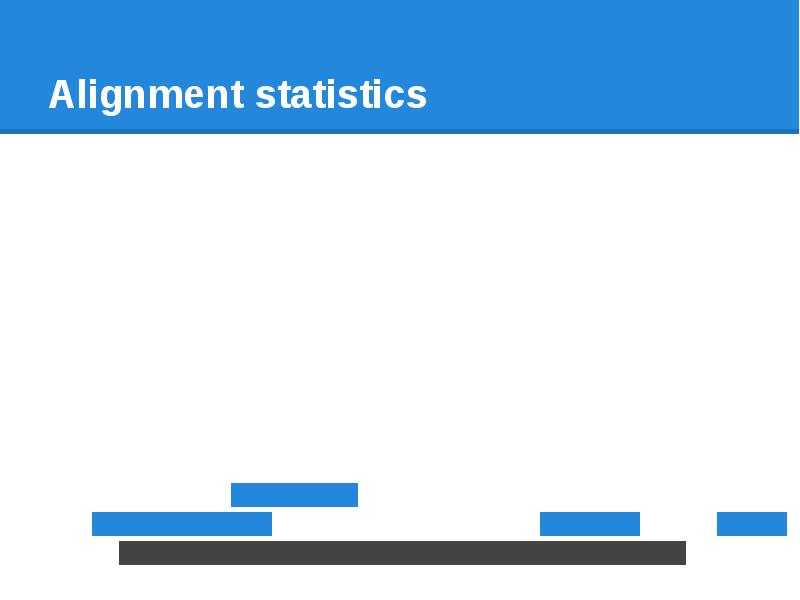
Alignment statistics
Слайд 67
Описание слайда:
Alignment statistics
Слайд 68
Описание слайда:
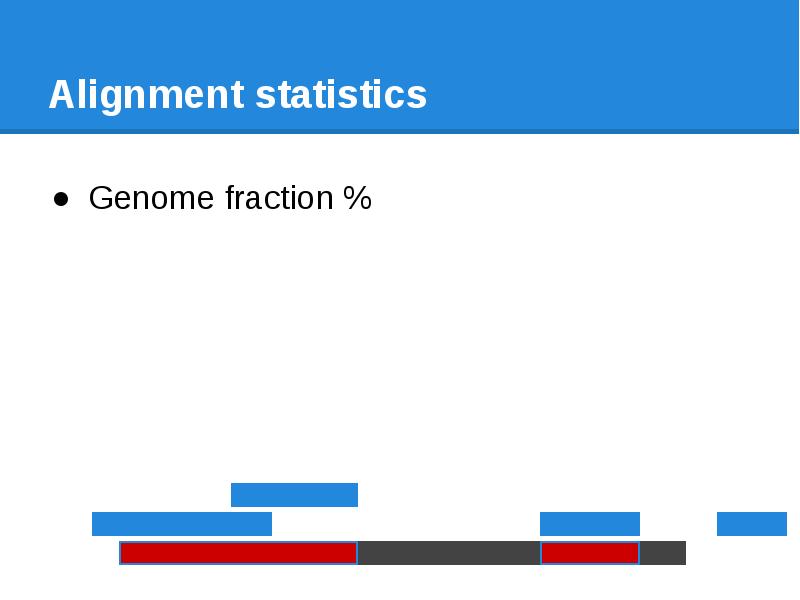
Alignment statistics
Genome fraction %
Слайд 69
Описание слайда:
Alignment statistics
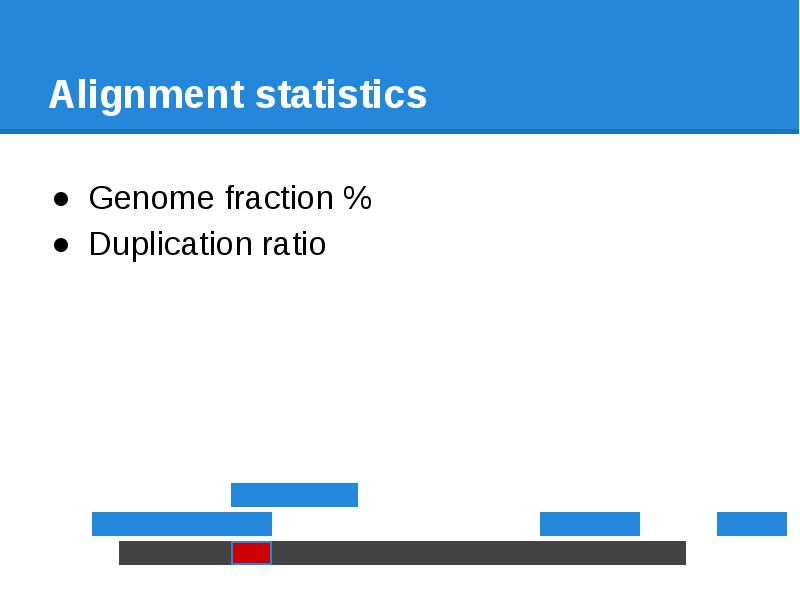
Genome fraction %
Duplication ratio
Слайд 70
Описание слайда:
Alignment statistics
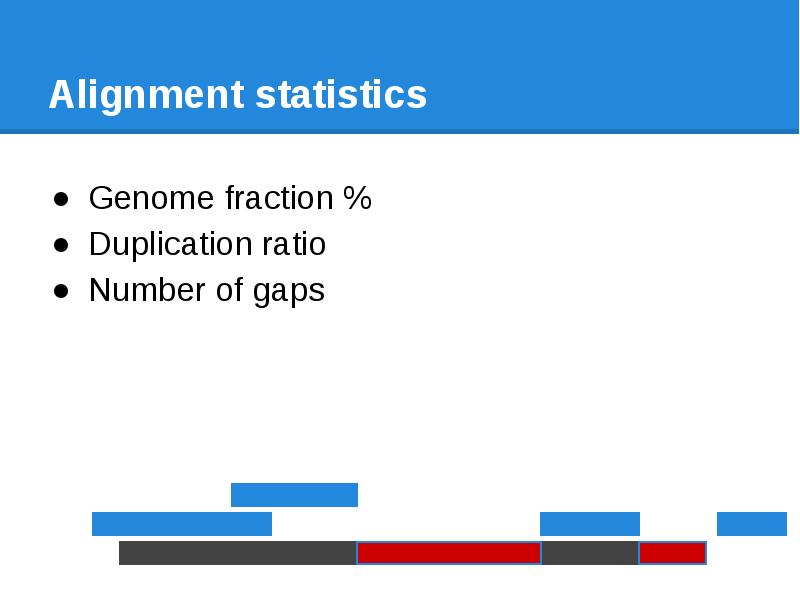
Genome fraction %
Duplication ratio
Number of gaps
Слайд 71
Описание слайда:
Alignment statistics
Genome fraction %
Duplication ratio
Number of gaps
Largest alignment length
Слайд 72
Описание слайда:
Alignment statistics
Genome fraction %
Duplication ratio
Number of gaps
Largest alignment length
Number of unaligned contigs (full & partial)
Слайд 73
Описание слайда:
Alignment statistics
Genome fraction %
Duplication ratio
Number of gaps
Largest alignment length
Number of unaligned contigs (full & partial)
Number of mismatches/indels per 100 kbp
Слайд 74
Описание слайда:
Alignment statistics
Genome fraction %
Duplication ratio
Number of gaps
Largest alignment length
Number of unaligned contigs (full & partial)
Number of mismatches/indels per 100 kbp
Number of genes/operons (full & partial)
Слайд 75
Описание слайда:
Misassemblies
Слайд 76
Описание слайда:
Misassemblies
Слайд 77
Описание слайда:
There is no best metric
Слайд 78
Описание слайда:
NA50
Слайд 79
Описание слайда:
NA50
Слайд 80
Описание слайда:
NA50
Слайд 81
Описание слайда:
NA50
Слайд 82
Описание слайда:
QUality ASsesment Tool
for Genome Assemblies
Слайд 83
Описание слайда:
QUAST
Assembly statistics
Basic statistics
Reference-based evaluation
Simple de novo evaluation
Available as a web-based and a command line tool
quast.sf.net
Слайд 84
Описание слайда:
QUAST: console tool
quast.py
quast.py --help
Слайд 85
Описание слайда:
QUAST basics
quast.py
quast.py --help
quast.py contigs.fasta
quast.py [options] contigs.fasta
quast.py -o out_dir contigs.fasta
Слайд 86
Описание слайда:
Reference options
Reference genome
-R reference.fasta
Gene annotation
-G genes.gff
Operon annotation
-O operons.gff
Слайд 87
Описание слайда:
QUAST output
Reports in different formats
Plain text table
Tab separated values (Excel, Google Spreadsheets)
Interactive HTML
Plots (PDF/PNG/SVG)
Nx, NGx, NAx
Genes
Cumulative length
Interactive contig viewers (Icarus)
Contig alignment viewer
Contig size viewer
Слайд 88
Описание слайда:
Contig alignment viewer
All alignments for each contig
Misassembly details
Contig ordering along the genome
Overlaps / gaps
Слайд 89
Описание слайда:
Contig alignment viewer
Слайд 90
Описание слайда:
Contig size viewer
Contigs ordered from longest to shortest
N50, N75 (NG50, NG75)
Filtration by contig size
Gene prediction results
Available without a reference
Слайд 91
Описание слайда:
Contig size viewer
Слайд 92
Описание слайда:
De novo evaluation
Слайд 93
Описание слайда:
Read-based statistics
Number of aligned/unaligned reads
% of assembly covered by reads
Слайд 94
Описание слайда:
Read-based statistics
Number of aligned/unaligned reads
% of assembly covered by reads
Points with low coverage
Points with multiple read clipping
Points with incorrect insert sizes
Слайд 95
Описание слайда:
Annotation-based statistics
Number of ORFs
Слайд 96
Описание слайда:
Annotation-based statistics
Number of ORFs
Number of gene/operon-like regions
GeneMarkS (Borodovsky et al.)
GlimmerHMM (Majoros et al.)
Слайд 97
Описание слайда:
Annotation-based statistics
Number of ORFs
Number of gene/operon-like regions
GeneMarkS (Borodovsky et al.)
GlimmerHMM (Majoros et al.)
Number of conservative genes
BUSCO (Simão et al.)
CEGMA (Korf et al., no longer supported)
Слайд 98
Описание слайда:
Thank you!
Questions?
Скачать презентацию на тему Genome assembly with SPAdes можно ниже: