Gerund and Infinitive презентация
Содержание
- 2. Gerunds A gerund is a non-finite form of the verb made
- 3. Gerunds USE 1. Gerund is often used as a subject
- 4. Gerunds USE 2. Gerund is used as an object
- 5. Gerunds A great variety of verbs + preposition / adverb combinations
- 6. Gerunds Gerunds are used after such prepositions as after, on,
- 7. Gerunds The negative form of Gerunds can be made by adding
- 8. Gerunds The gerund is often used after certain verbs: avoid, feel
- 9. Gerunds Gerund is used after certain expressions such as can’t stand,
- 10. Infinitives Infinitive is a non-finite and the first form of the
- 11. Infinitives The infinitive is often used after certain verbs: arrange, forget,
- 12. Infinitives The infinitive is used: After certain verbs, adjectives and nouns.
- 13. Infinitives The infinitive is used: 2) To express a purpose I
- 14. Gerunds and Infinitives Some verbs (e.g. like, love, hate, start, prefer)
- 15. Gerunds and Infinitives BE CAREFUL! A few verbs such as stop,
- 16. Gerunds and Infinitives Examples: He remembered putting his keys on
- 17. Gerunds and Infinitives BE CAREFUL! ‘To’ can be part of the
- 18. Gerunds and Infinitives Put the verbs in brackets into the gerund
- 19. Gerunds and Infinitives Put the verbs in brackets into the gerund
- 20. Скачать презентацию

Слайды и текст этой презентации
Слайд 1
Описание слайда:
Gerund and Infinitive
Слайд 2
Описание слайда:
Gerunds
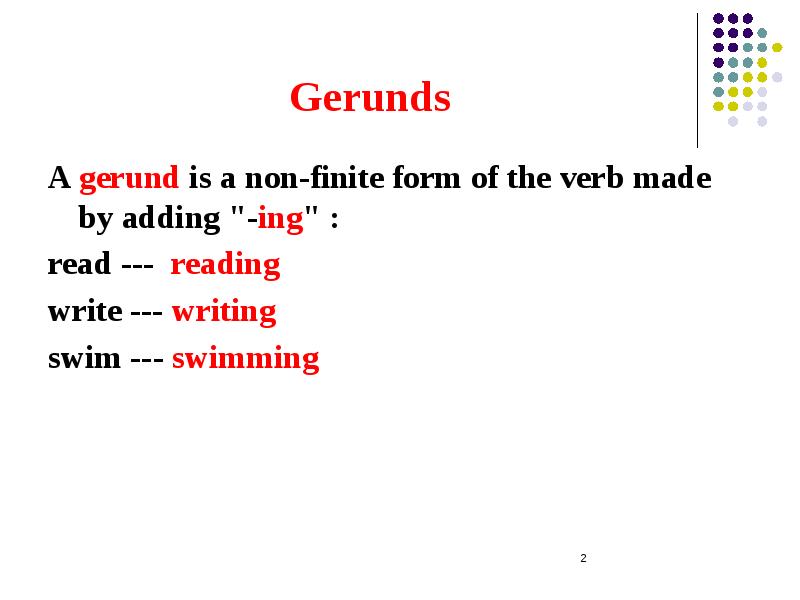
A gerund is a non-finite form of the verb made by adding "-ing" :
read --- reading
write --- writing
swim --- swimming
Слайд 3
Описание слайда:
Gerunds
USE
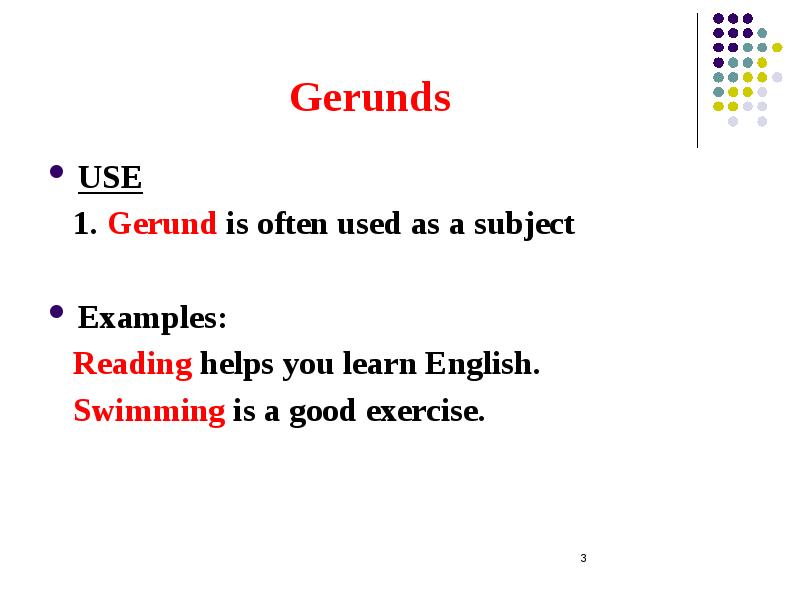
1. Gerund is often used as a subject
Examples:
Reading helps you learn English.
Swimming is a good exercise.
Слайд 4
Описание слайда:
Gerunds
USE
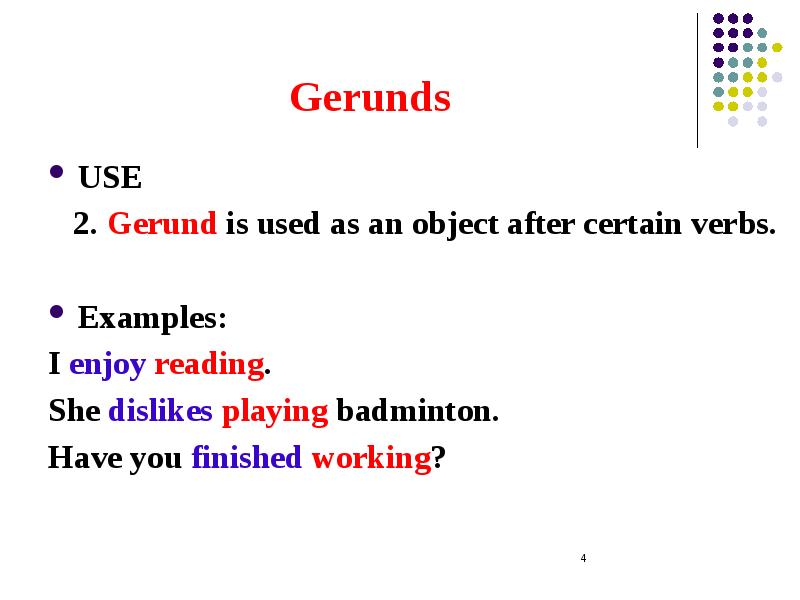
2. Gerund is used as an object after certain verbs.
Examples:
I enjoy reading.
She dislikes playing badminton.
Have you finished working?
Слайд 5
Описание слайда:
Gerunds
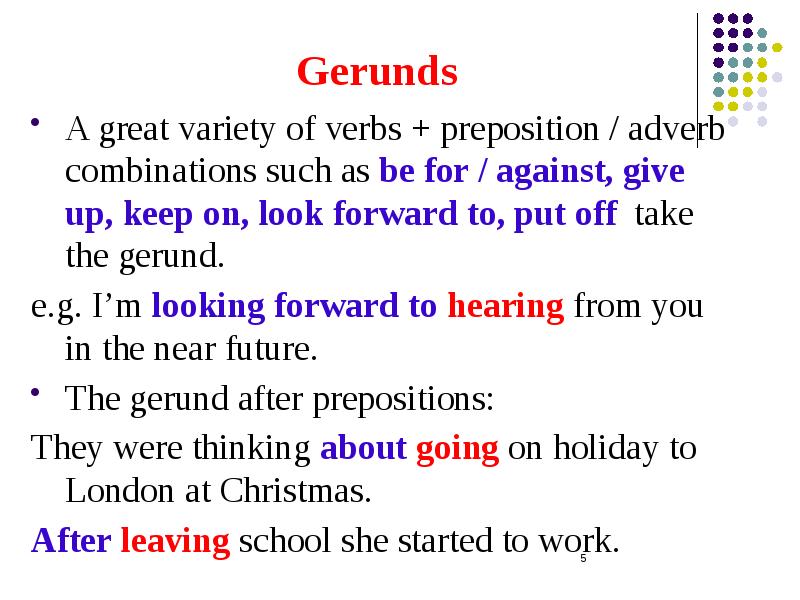
A great variety of verbs + preposition / adverb combinations such as be for / against, give up, keep on, look forward to, put off take the gerund.
e.g. I’m looking forward to hearing from you in the near future.
The gerund after prepositions:
They were thinking about going on holiday to London at Christmas.
After leaving school she started to work.
Слайд 6
Описание слайда:
Gerunds
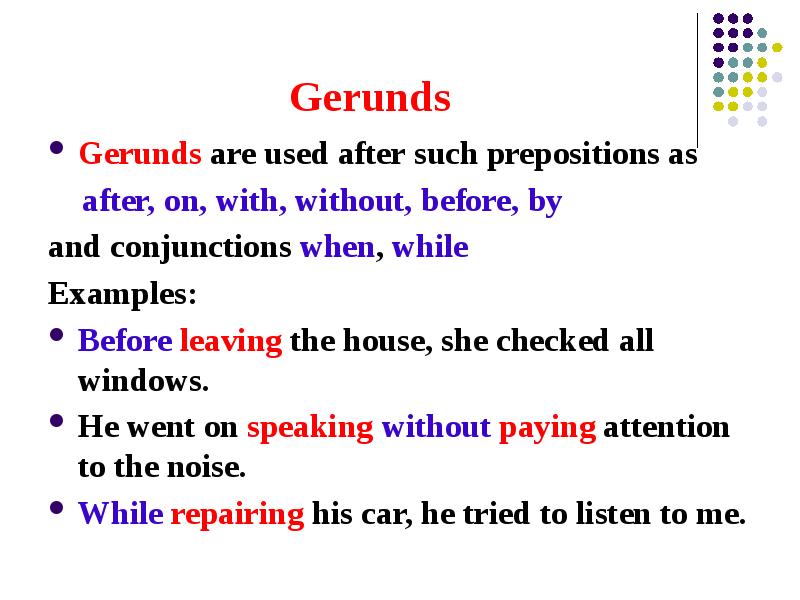
Gerunds are used after such prepositions as
after, on, with, without, before, by
and conjunctions when, while
Examples:
Before leaving the house, she checked all windows.
He went on speaking without paying attention to the noise.
While repairing his car, he tried to listen to me.
Слайд 7
Описание слайда:
Gerunds
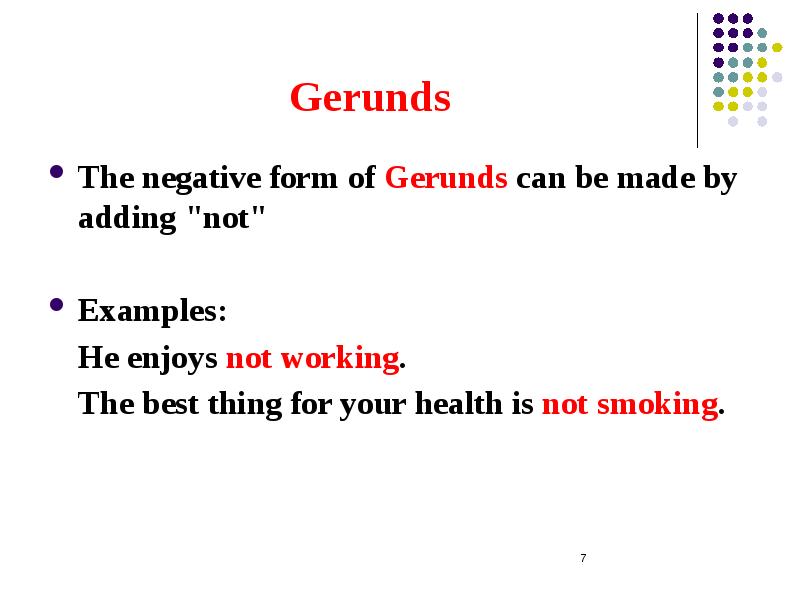
The negative form of Gerunds can be made by adding "not"
Examples:
He enjoys not working.
The best thing for your health is not smoking.
Слайд 8
Описание слайда:
Gerunds
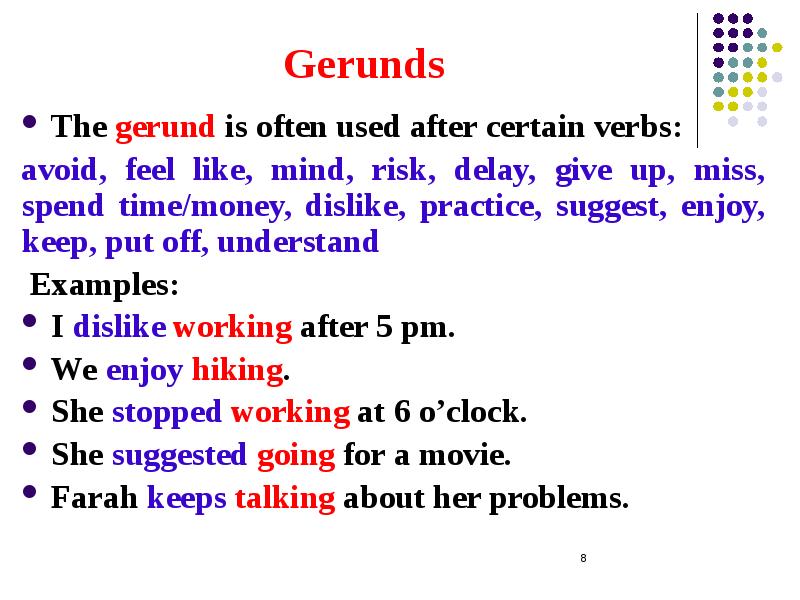
The gerund is often used after certain verbs:
avoid, feel like, mind, risk, delay, give up, miss, spend time/money, dislike, practice, suggest, enjoy, keep, put off, understand
Examples:
I dislike working after 5 pm.
We enjoy hiking.
She stopped working at 6 o’clock.
She suggested going for a movie.
Farah keeps talking about her problems.
Слайд 9
Описание слайда:
Gerunds
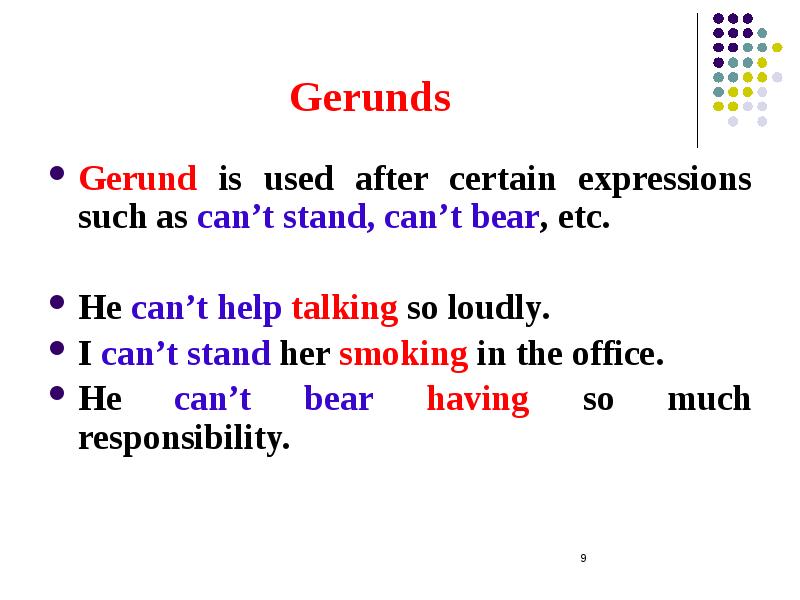
Gerund is used after certain expressions such as can’t stand, can’t bear, etc.
He can’t help talking so loudly.
I can’t stand her smoking in the office.
He can’t bear having so much responsibility.
Слайд 10
Описание слайда:
Infinitives
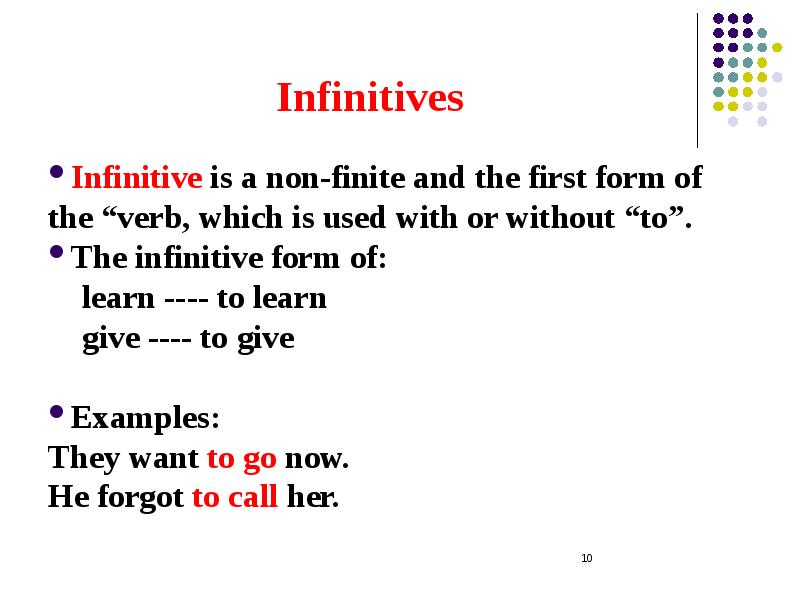
Infinitive is a non-finite and the first form of the “verb, which is used with or without “to”.
The infinitive form of:
learn ---- to learn
give ---- to give
Examples:
They want to go now.
He forgot to call her.
Слайд 11
Описание слайда:
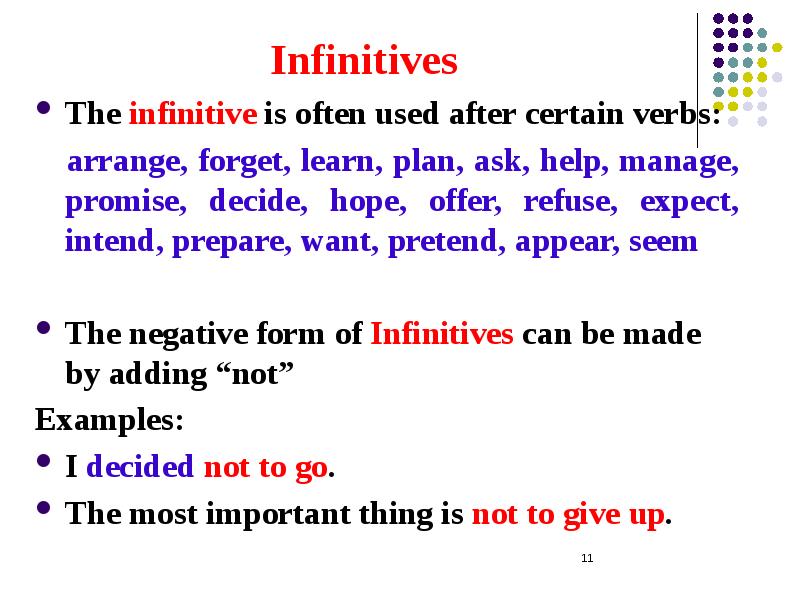
Infinitives
The infinitive is often used after certain verbs:
arrange, forget, learn, plan, ask, help, manage, promise, decide, hope, offer, refuse, expect, intend, prepare, want, pretend, appear, seem
The negative form of Infinitives can be made by adding “not”
Examples:
I decided not to go.
The most important thing is not to give up.
Слайд 12
Описание слайда:
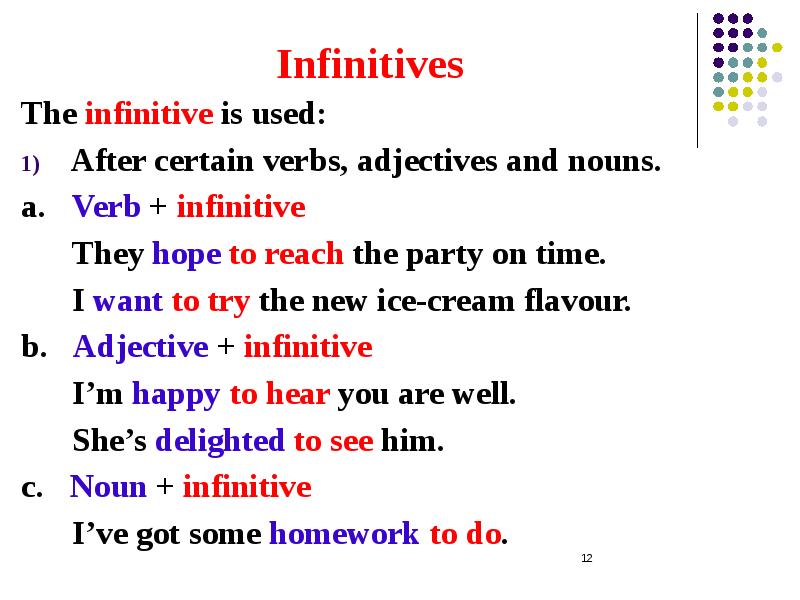
Infinitives
The infinitive is used:
After certain verbs, adjectives and nouns.
a. Verb + infinitive
They hope to reach the party on time.
I want to try the new ice-cream flavour.
b. Adjective + infinitive
I’m happy to hear you are well.
She’s delighted to see him.
c. Noun + infinitive
I’ve got some homework to do.
Слайд 13
Описание слайда:
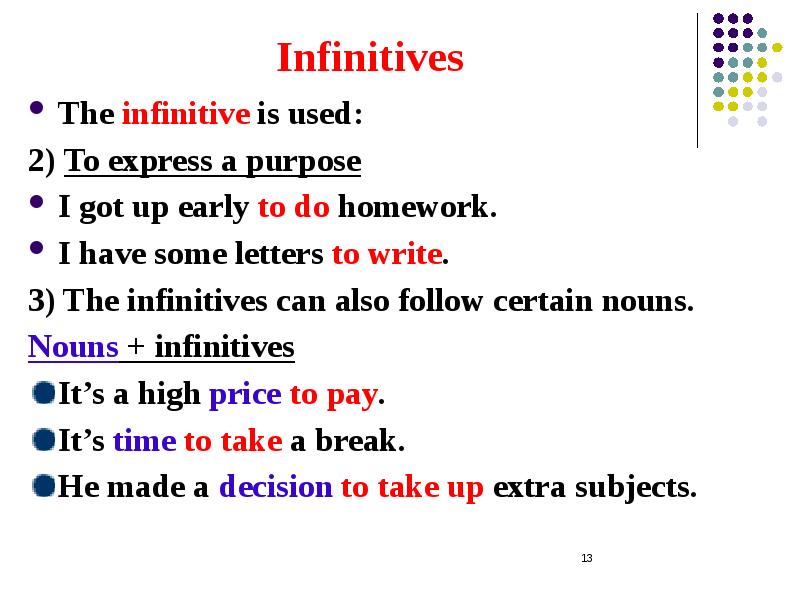
Infinitives
The infinitive is used:
2) To express a purpose
I got up early to do homework.
I have some letters to write.
3) The infinitives can also follow certain nouns.
Nouns + infinitives
It’s a high price to pay.
It’s time to take a break.
He made a decision to take up extra subjects.
Слайд 14
Описание слайда:
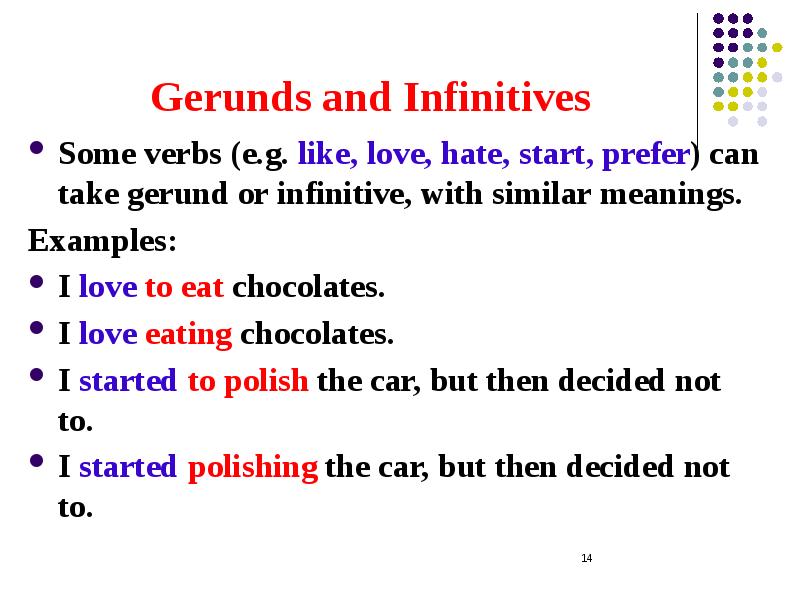
Gerunds and Infinitives
Some verbs (e.g. like, love, hate, start, prefer) can take gerund or infinitive, with similar meanings.
Examples:
I love to eat chocolates.
I love eating chocolates.
I started to polish the car, but then decided not to.
I started polishing the car, but then decided not to.
Слайд 15
Описание слайда:
Gerunds and Infinitives
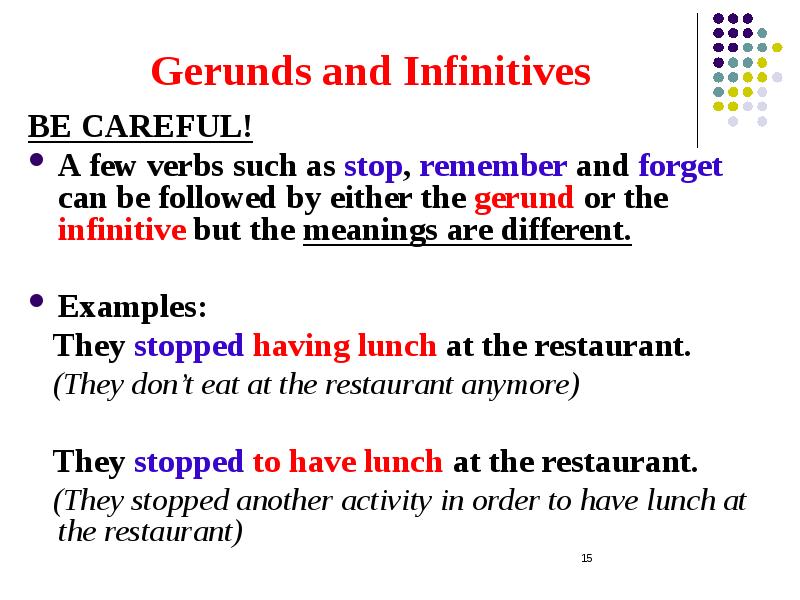
BE CAREFUL!
A few verbs such as stop, remember and forget can be followed by either the gerund or the infinitive but the meanings are different.
Examples:
They stopped having lunch at the restaurant.
(They don’t eat at the restaurant anymore)
They stopped to have lunch at the restaurant.
(They stopped another activity in order to have lunch at the restaurant)
Слайд 16
Описание слайда:
Gerunds and Infinitives
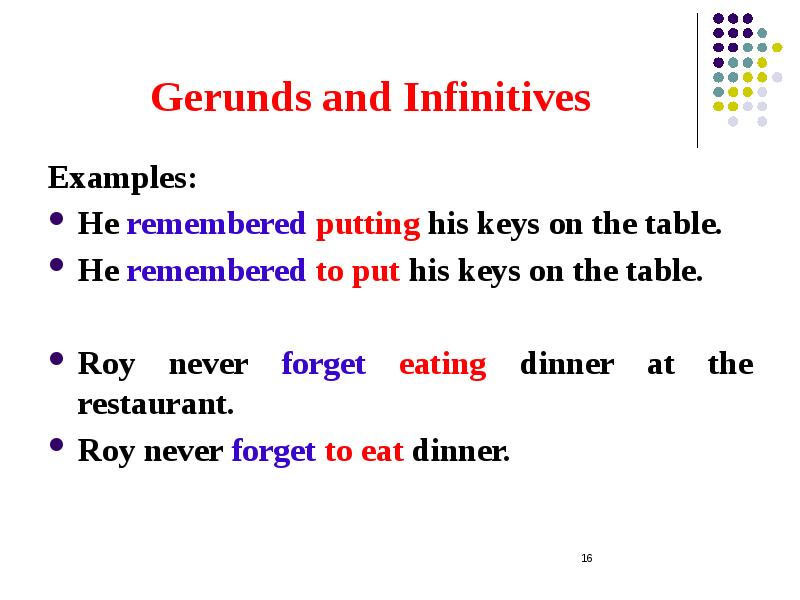
Examples:
He remembered putting his keys on the table.
He remembered to put his keys on the table.
Roy never forget eating dinner at the restaurant.
Roy never forget to eat dinner.
Слайд 17
Описание слайда:
Gerunds and Infinitives
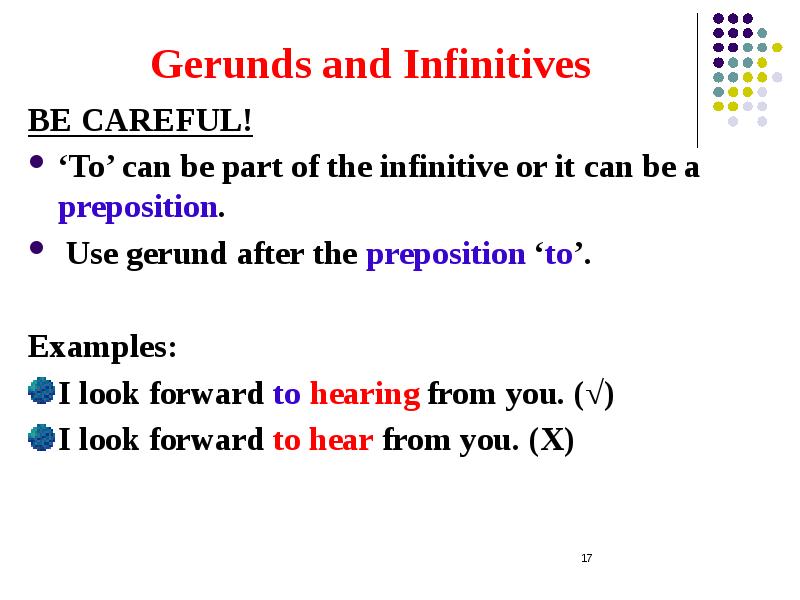
BE CAREFUL!
‘To’ can be part of the infinitive or it can be a preposition.
Use gerund after the preposition ‘to’.
Examples:
I look forward to hearing from you. (√)
I look forward to hear from you. (X)
Слайд 18
Описание слайда:
Gerunds and Infinitives
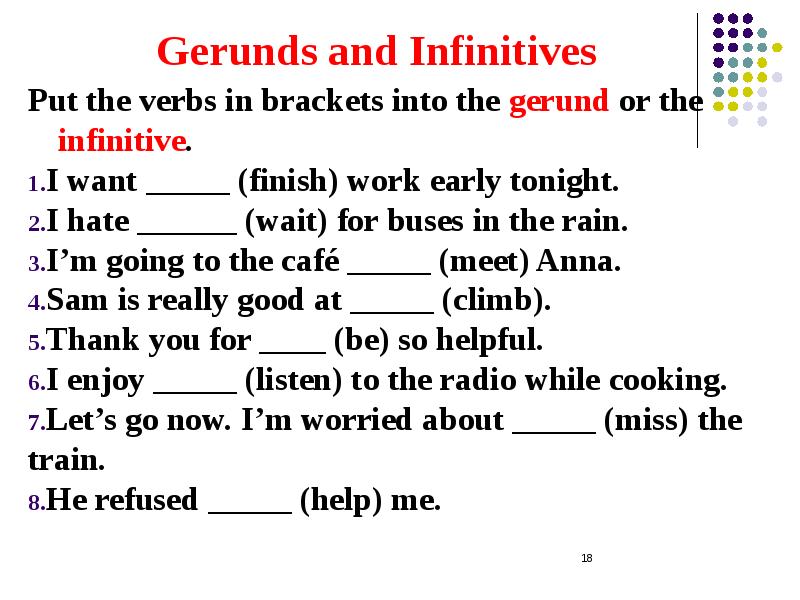
Put the verbs in brackets into the gerund or the infinitive.
I want _____ (finish) work early tonight.
I hate ______ (wait) for buses in the rain.
I’m going to the café _____ (meet) Anna.
Sam is really good at _____ (climb).
Thank you for ____ (be) so helpful.
I enjoy _____ (listen) to the radio while cooking.
Let’s go now. I’m worried about _____ (miss) the train.
He refused _____ (help) me.
Слайд 19
Описание слайда:
Gerunds and Infinitives
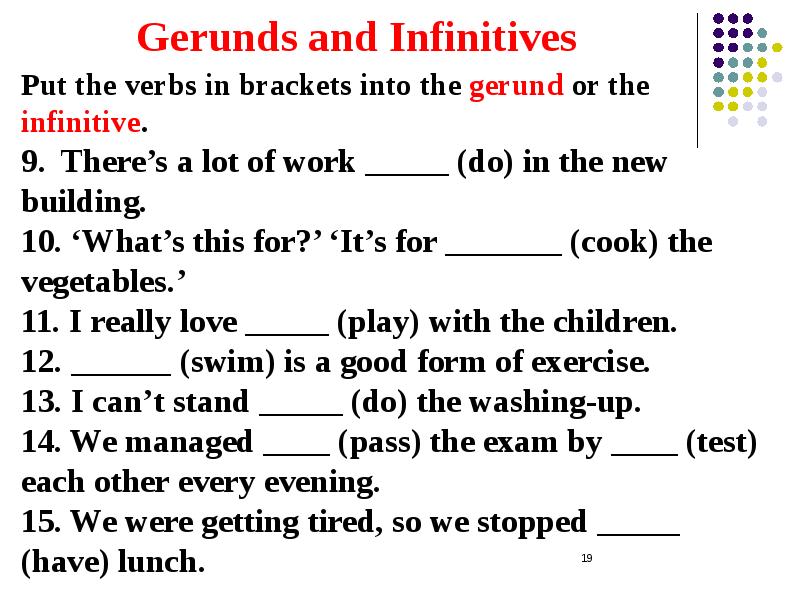
Put the verbs in brackets into the gerund or the infinitive.
9. There’s a lot of work _____ (do) in the new building.
10. ‘What’s this for?’ ‘It’s for _______ (cook) the vegetables.’
11. I really love _____ (play) with the children.
12. ______ (swim) is a good form of exercise.
13. I can’t stand _____ (do) the washing-up.
14. We managed ____ (pass) the exam by ____ (test) each other every evening.
15. We were getting tired, so we stopped _____ (have) lunch.
Скачать презентацию на тему Gerund and Infinitive можно ниже: