PROMOTING A LOW FREQUENCY RADIO OBSERVATORY IN THE LUNAR SPACE презентация
Содержание
- 2. CHANG’E-4 Lunar Mission The Chang’E 4 explorer is a mission to
- 4. Low Frequency Spectrometer on lunar far-side lander of CE-4 After ~10
- 7. Solar Burst Solar radio burst may cover whole radio spectrum,
- 8. Lunar Ionosphere Lunar plasma environment above the surface has been still
- 17. 4-Way Link in Chang’E-4 Mission
- 21. Скачать презентацию
Слайды и текст этой презентации
Слайд 1
Описание слайда:
PROMOTING A LOW FREQUENCY RADIO OBSERVATORY IN THE LUNAR SPACE
J. S. Ping1, Y. C. Ji2, M. H. Huang1, Y. H. Yan1, G. Y. Fang2, M. Zhang1, M. Y. Wang1, L. J. Chen1, H. B. Zhang1, C. L. Li1, & X. L. Chen1
1National Astronomical Observatories of CAS, Beijing, China, [email protected],
2Electronic Institute of CAS, Beijing, China.
Слайд 2
Описание слайда:
CHANG’E-4 Lunar Mission
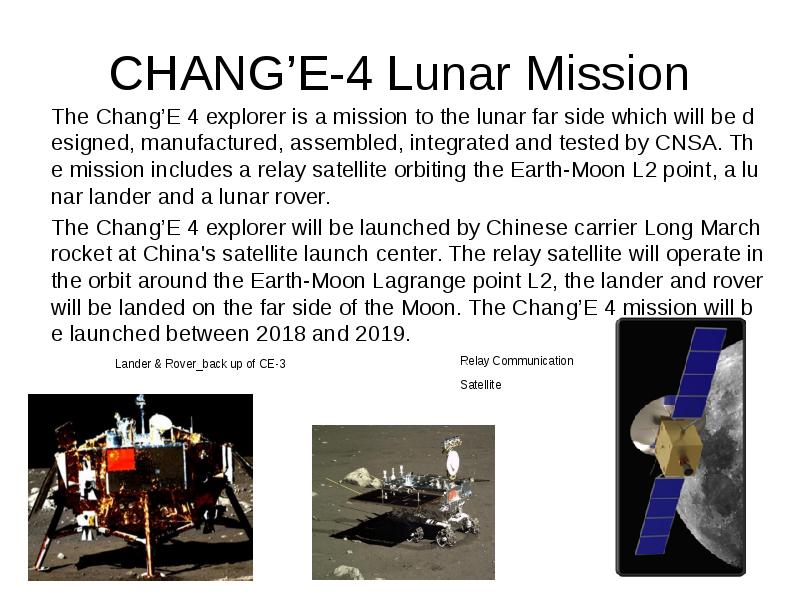
The Chang’E 4 explorer is a mission to the lunar far side which will be designed, manufactured, assembled, integrated and tested by CNSA. The mission includes a relay satellite orbiting the Earth-Moon L2 point, a lunar lander and a lunar rover.
The Chang’E 4 explorer will be launched by Chinese carrier Long March rocket at China's satellite launch center. The relay satellite will operate in the orbit around the Earth-Moon Lagrange point L2, the lander and rover will be landed on the far side of the Moon. The Chang’E 4 mission will be launched between 2018 and 2019.
Слайд 3
Описание слайда:
Слайд 4
Описание слайда:
Low Frequency Spectrometer on lunar far-side lander of CE-4
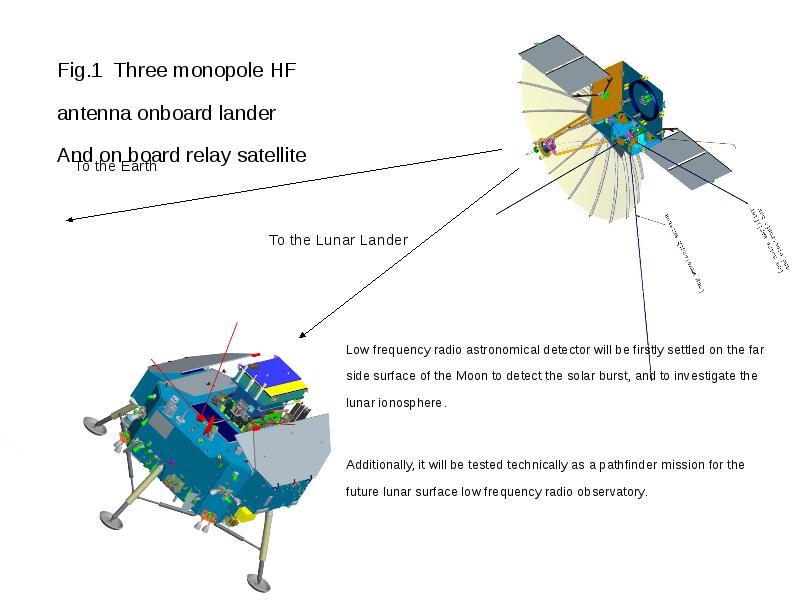
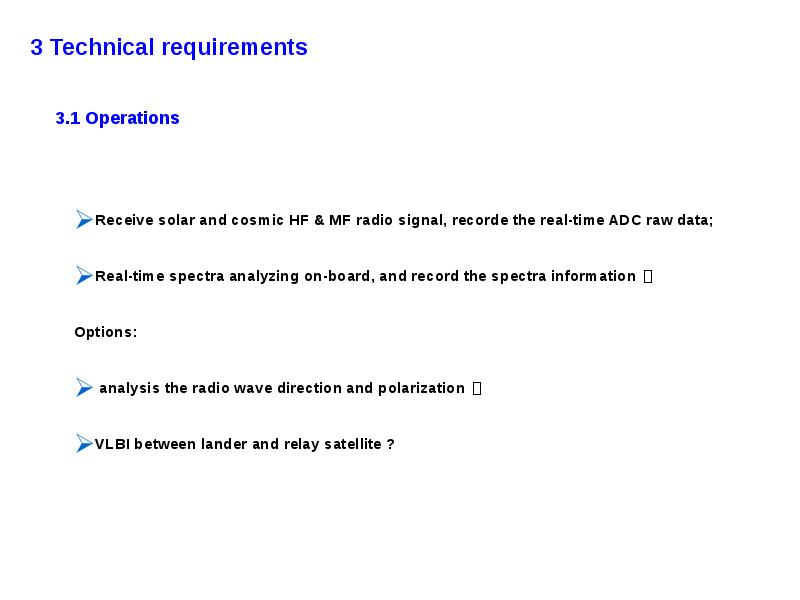
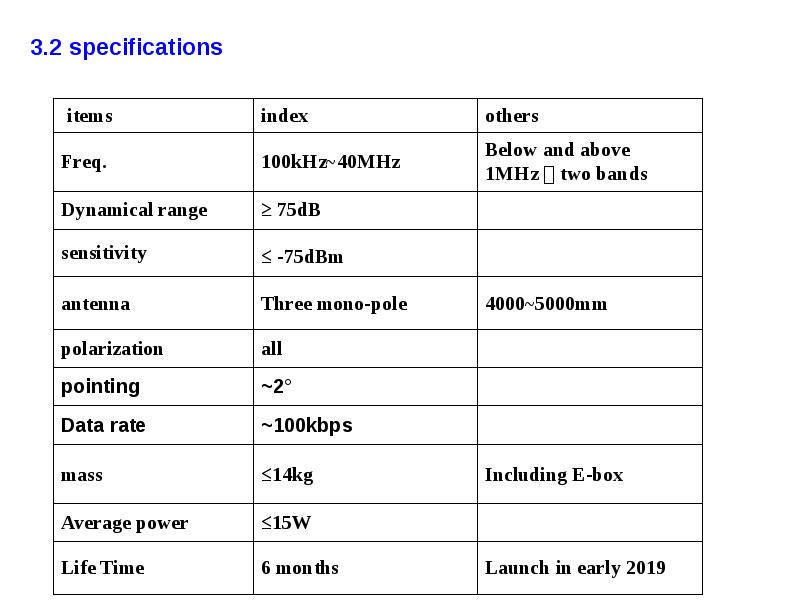
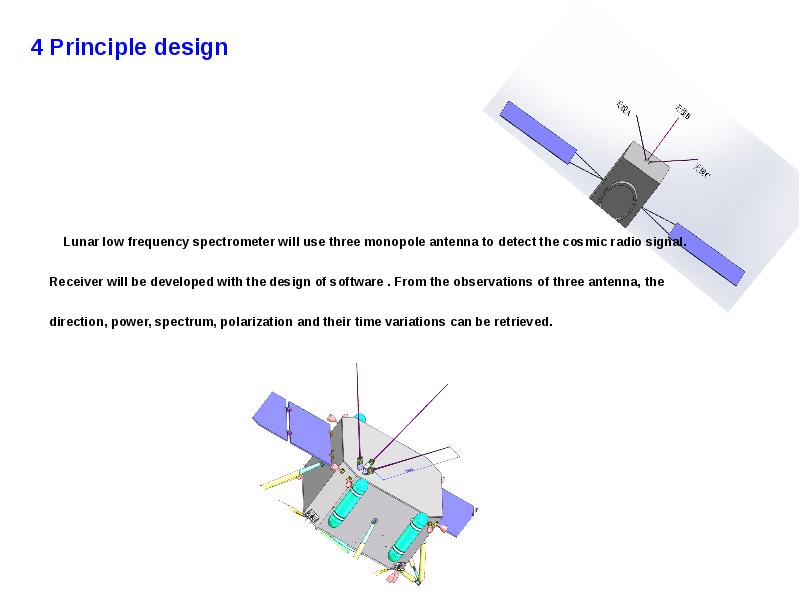
After ~10 years preparation of a radio astronomical team from National Astronomical Observatory of Chinese Academy of Science, a very low frequency radio astronomical detector will be settled on the far side surface of the Moon[1], in Chinese Chang’E-4 lunar lander mission. The 3 monopole detector of 5 meter long each will mainly investigate the type II and type III solar burst, and will also to investigate the possible lunar ionosphere above the landing site[2], by means of taking the advantage of radio quiet environment of lunar far side. Figure 1 shows the concept of the lander with radio astronomical payload.
Similar antenna will be set on board the relay satellite.
Слайд 5
Описание слайда:
Слайд 6
Описание слайда:
Слайд 7
Описание слайда:
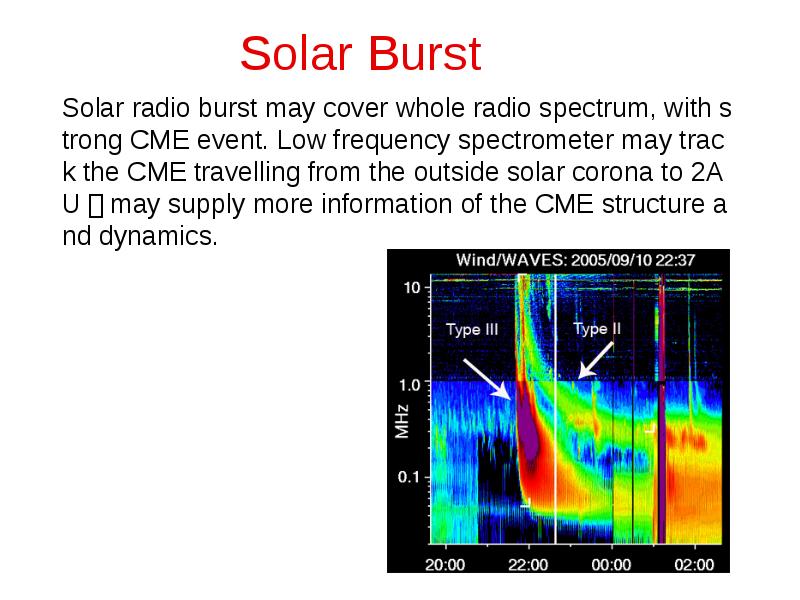
Solar Burst
Solar radio burst may cover whole radio spectrum, with strong CME event. Low frequency spectrometer may track the CME travelling from the outside solar corona to 2AU,may supply more information of the CME structure and dynamics.
Слайд 8
Описание слайда:
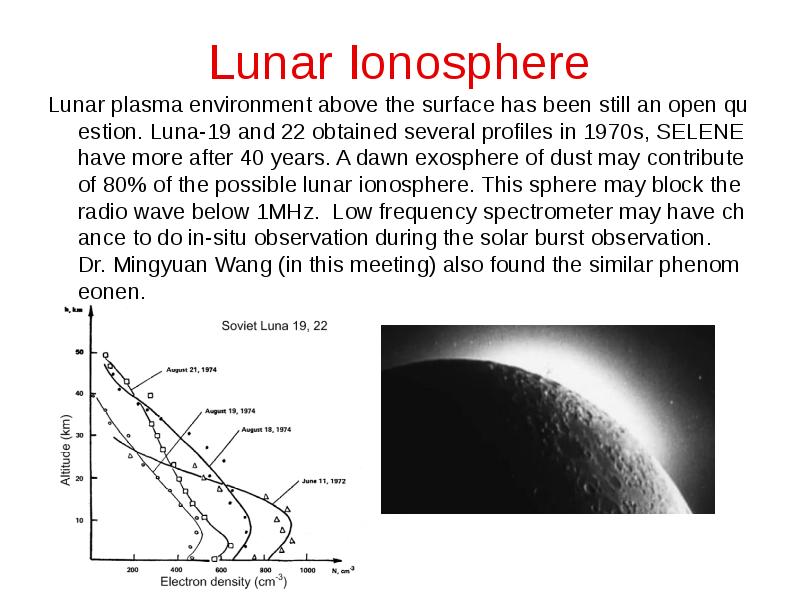
Lunar Ionosphere
Lunar plasma environment above the surface has been still an open question. Luna-19 and 22 obtained several profiles in 1970s, SELENE have more after 40 years. A dawn exosphere of dust may contribute of 80% of the possible lunar ionosphere. This sphere may block the radio wave below 1MHz. Low frequency spectrometer may have chance to do in-situ observation during the solar burst observation. Dr. Mingyuan Wang (in this meeting) also found the similar phenomeonen.
Слайд 9
Описание слайда:
Слайд 10
Описание слайда:
Слайд 11
Описание слайда:
Слайд 12
Описание слайда:
Слайд 13
Описание слайда:
Слайд 14
Описание слайда:
Слайд 15
Описание слайда:
Слайд 16
Описание слайда:
Слайд 17
Описание слайда:
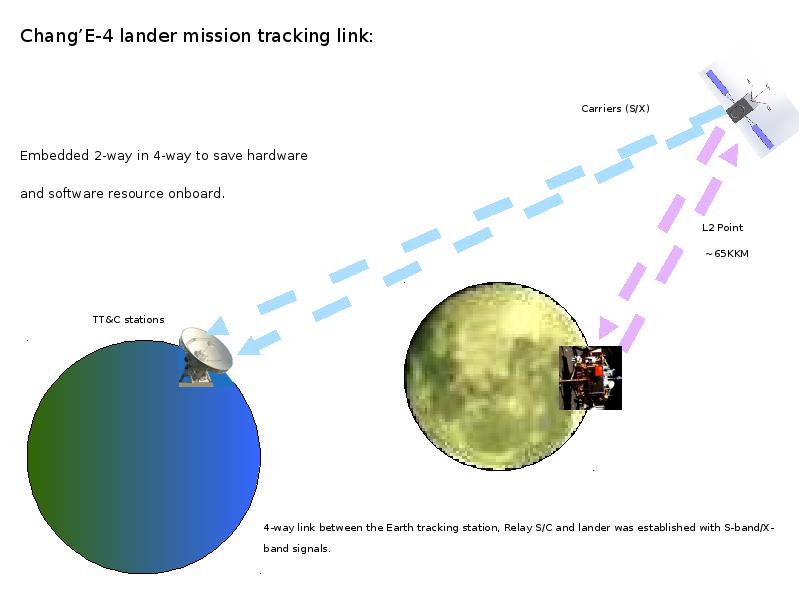
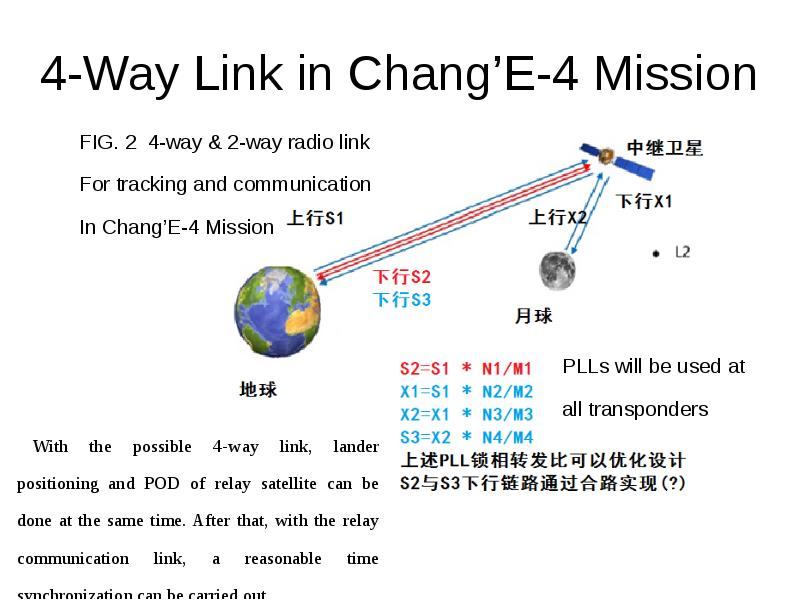
4-Way Link in Chang’E-4 Mission
Слайд 18
Описание слайда:
Слайд 19
Описание слайда:
Слайд 20
Описание слайда:
Скачать презентацию на тему PROMOTING A LOW FREQUENCY RADIO OBSERVATORY IN THE LUNAR SPACE можно ниже: