Principles of Topical Treatments in Dermatology презентация
Содержание
- 2. The skin has a surface area of 1.6-2 m2 This area
- 3. What are the parameters that should be considered for cutaneous drug
- 4. What are dermatologic vehicles? Powder Paste Shake lotion Ointment Hydrophilic ointment,
- 5. When do we use topical treatment? If a patient has a
- 6. Choice of vehicles Three main determinants to choose the right vehicle
- 7. Choice of vehicles Skin type: About 50% of individuals have oily
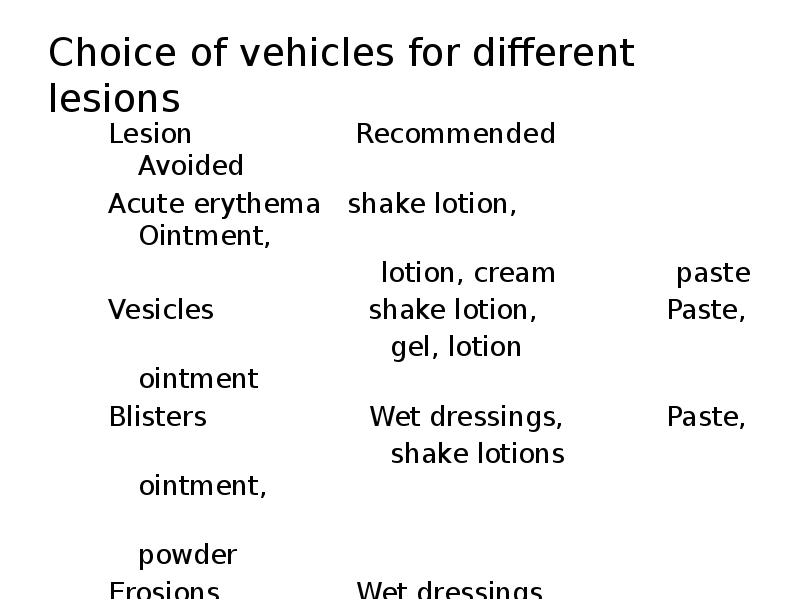
- 8. Choice of vehicles for different lesions Lesion
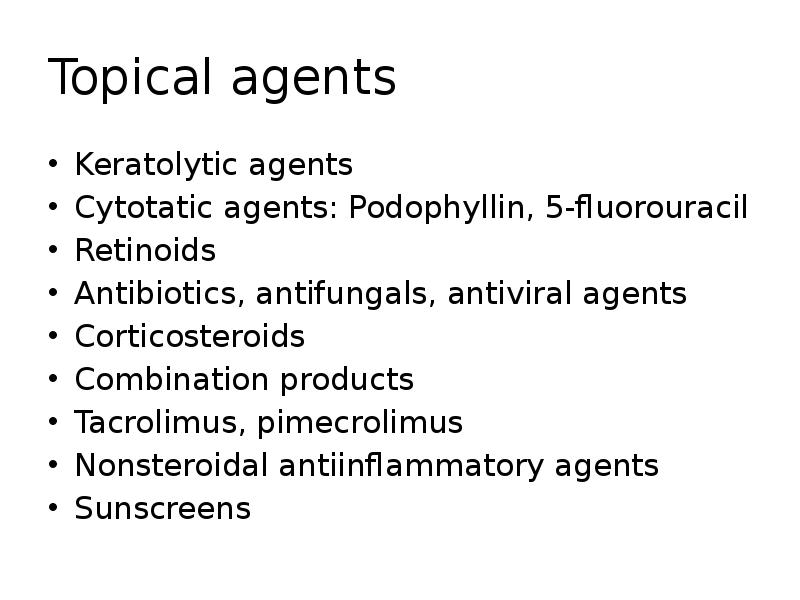
- 9. Topical agents Keratolytic agents Cytotatic agents: Podophyllin, 5-fluorouracil Retinoids Antibiotics,
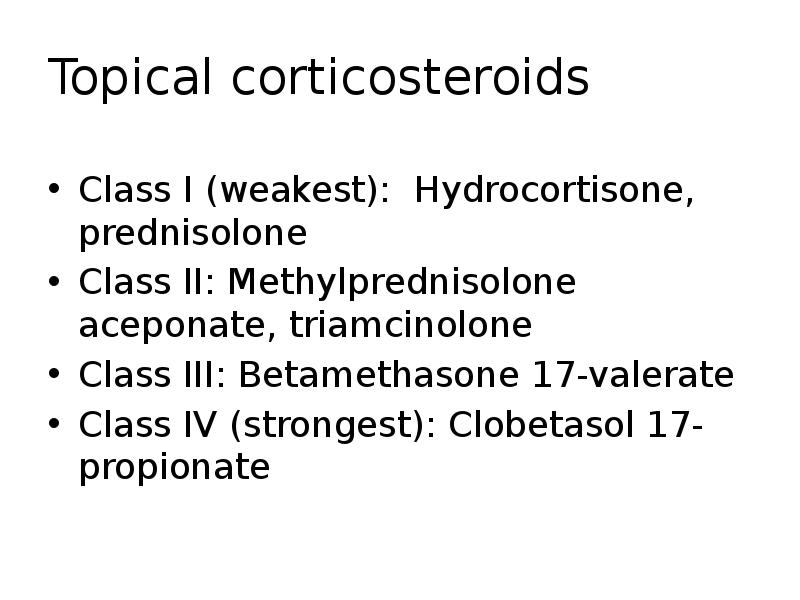
- 10. Topical corticosteroids Class I (weakest): Hydrocortisone, prednisolone Class II: Methylprednisolone aceponate,
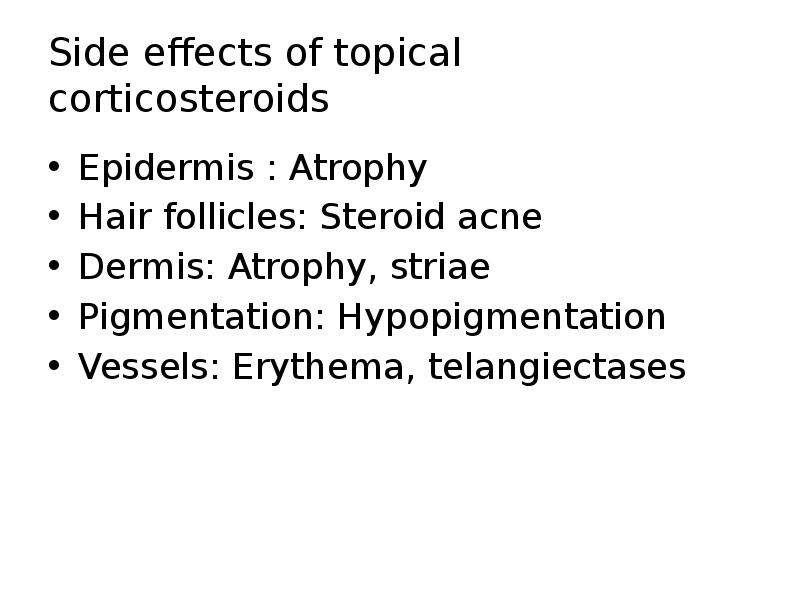
- 11. Side effects of topical corticosteroids Epidermis : Atrophy Hair follicles: Steroid
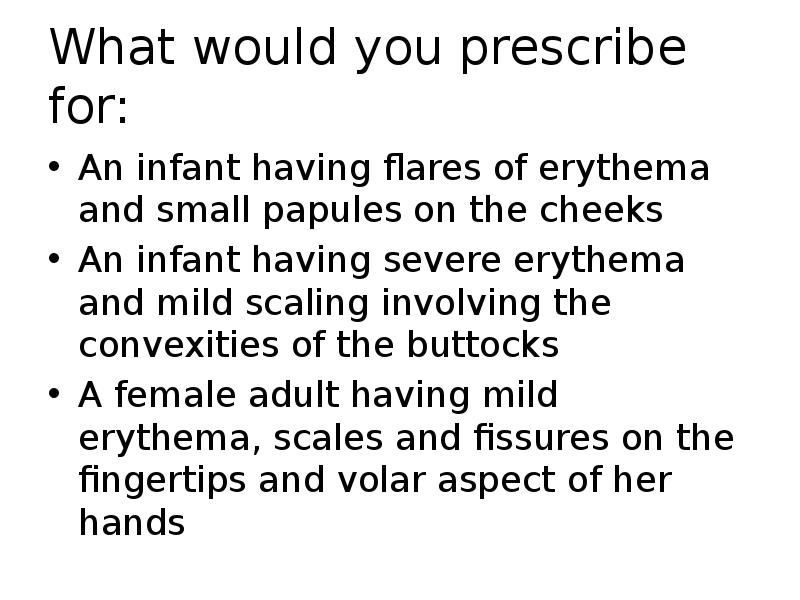
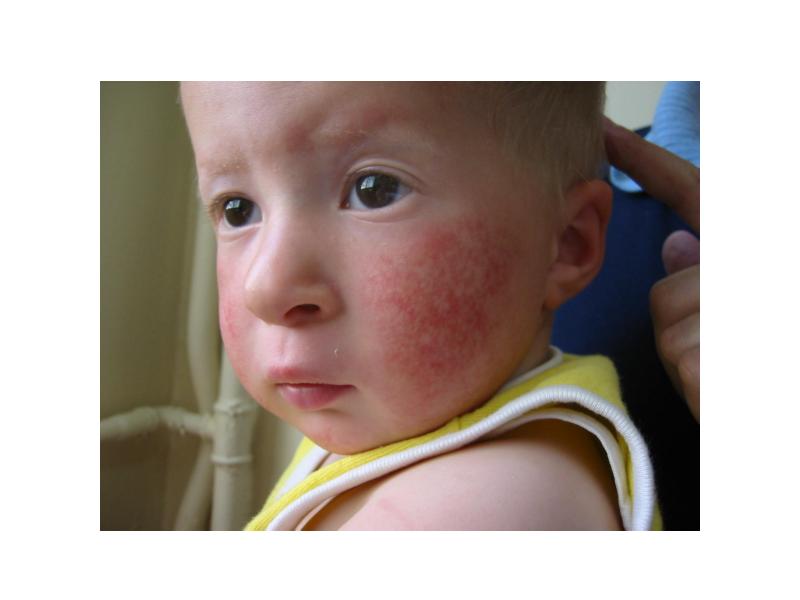
- 12. What would you prescribe for: An infant having flares of erythema
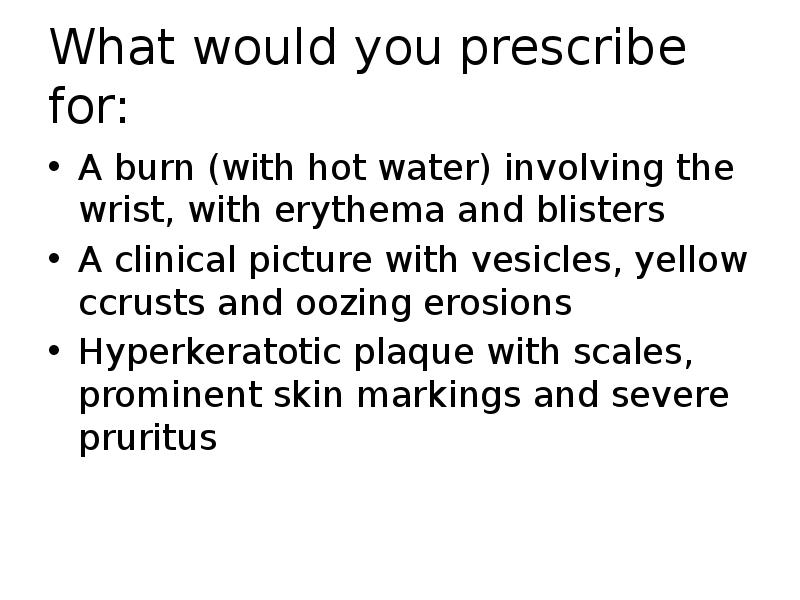
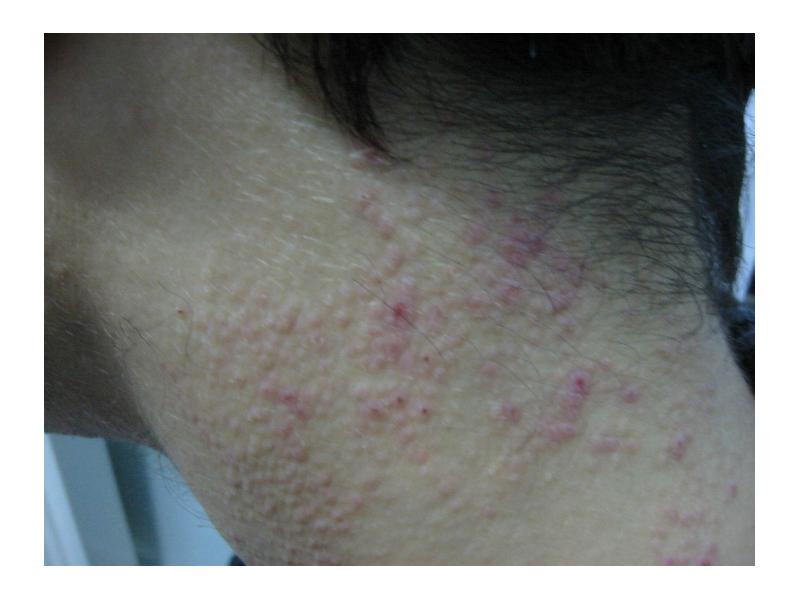
- 13. What would you prescribe for: A burn (with hot water) involving
- 19. Скачать презентацию
Слайды и текст этой презентации
Слайд 1
Описание слайда:
Principles of Topical Treatments in Dermatology
Doç. Dr.Burhan Engin
Слайд 2
Описание слайда:
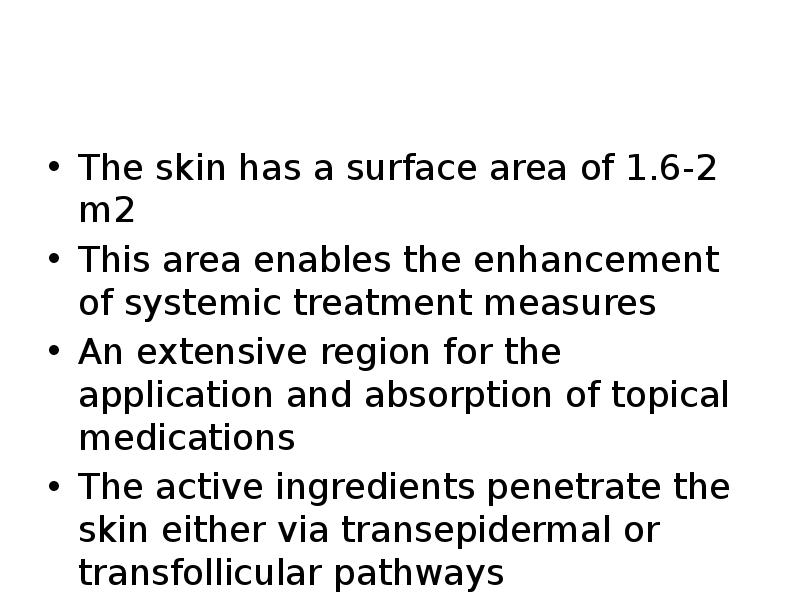
The skin has a surface area of 1.6-2 m2
This area enables the enhancement of systemic treatment measures
An extensive region for the application and absorption of topical medications
The active ingredients penetrate the skin either via transepidermal or transfollicular pathways
Слайд 3
Описание слайда:
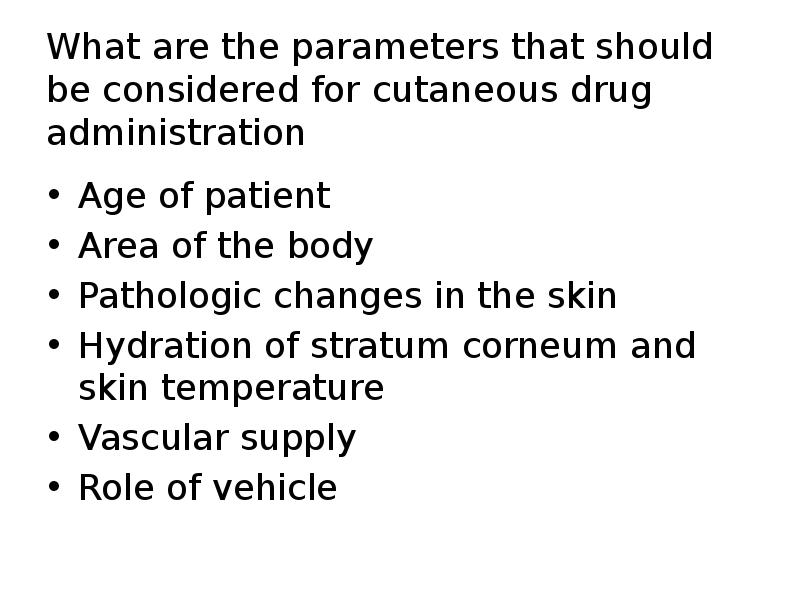
What are the parameters that should be considered for cutaneous drug administration
Age of patient
Area of the body
Pathologic changes in the skin
Hydration of stratum corneum and skin temperature
Vascular supply
Role of vehicle
Слайд 4
Описание слайда:
What are dermatologic vehicles?
Powder
Paste
Shake lotion
Ointment
Hydrophilic ointment, cream or lotion
Water
Слайд 5
Описание слайда:
When do we use topical treatment?
If a patient has a skin disorder covering < 30% of body, the topical medication may be considered.
Слайд 6
Описание слайда:
Choice of vehicles
Three main determinants to choose the right vehicle are:
Patient’s skin type
Degree of acuity of the disease
Nature of the lesions
Слайд 7
Описание слайда:
Choice of vehicles
Skin type: About 50% of individuals have oily skin or seborrhea. They do better with creams, lotions, or shake lotions while the ones with dry skin do better with ointments or pastes.
Degree of acuity: Acute inflammatory processes are best treted with creams or lotions. If the lesions are weeping, shake lotions are fine.
Слайд 8
Описание слайда:
Choice of vehicles for different lesions
Lesion Recommended Avoided
Acute erythema shake lotion, Ointment,
lotion, cream paste
Vesicles shake lotion, Paste,
gel, lotion ointment
Blisters Wet dressings, Paste,
shake lotions ointment,
powder
Erosions Wet dressings, powder,
ointment shake lotion
Crusts Ointment, wet dr. Powder, gel
Ch. inflammation Ointment
Слайд 9
Описание слайда:
Topical agents
Keratolytic agents
Cytotatic agents: Podophyllin, 5-fluorouracil
Retinoids
Antibiotics, antifungals, antiviral agents
Corticosteroids
Combination products
Tacrolimus, pimecrolimus
Nonsteroidal antiinflammatory agents
Sunscreens
Слайд 10
Описание слайда:
Topical corticosteroids
Class I (weakest): Hydrocortisone, prednisolone
Class II: Methylprednisolone aceponate, triamcinolone
Class III: Betamethasone 17-valerate
Class IV (strongest): Clobetasol 17-propionate
Слайд 11
Описание слайда:
Side effects of topical corticosteroids
Epidermis : Atrophy
Hair follicles: Steroid acne
Dermis: Atrophy, striae
Pigmentation: Hypopigmentation
Vessels: Erythema, telangiectases
Слайд 12
Описание слайда:
What would you prescribe for:
An infant having flares of erythema and small papules on the cheeks
An infant having severe erythema and mild scaling involving the convexities of the buttocks
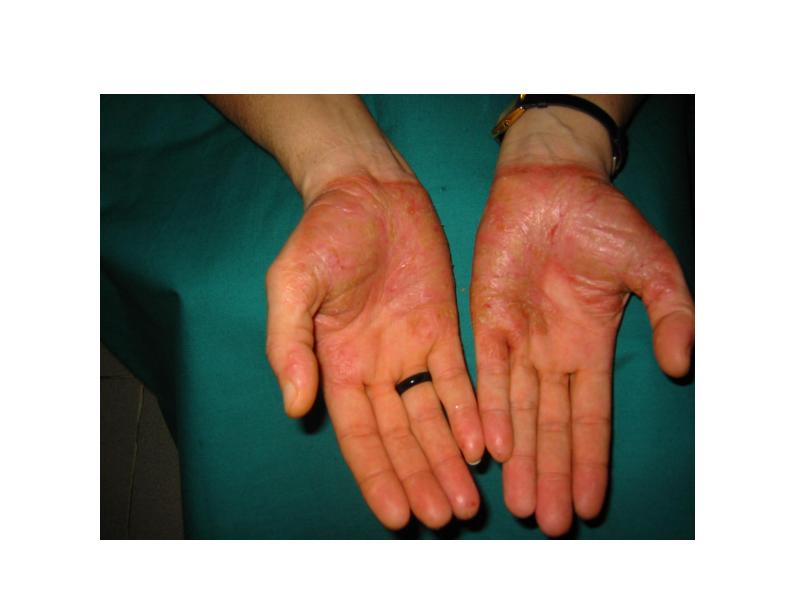
A female adult having mild erythema, scales and fissures on the fingertips and volar aspect of her hands
Слайд 13
Описание слайда:
What would you prescribe for:
A burn (with hot water) involving the wrist, with erythema and blisters
A clinical picture with vesicles, yellow ccrusts and oozing erosions
Hyperkeratotic plaque with scales, prominent skin markings and severe pruritus
Слайд 14
Описание слайда:
Слайд 15
Описание слайда:
Слайд 16
Описание слайда:
Слайд 17
Описание слайда:
Слайд 18
Описание слайда:
Скачать презентацию на тему Principles of Topical Treatments in Dermatology можно ниже: