Problems of social inequality, social stratification and political elites презентация
Содержание
- 2. Understanding Inequality Inequality is the unequal access to scarce goods or
- 3. Understanding Social Stratification Social stratification is the division of society into
- 4. Social Stratification Every society has some form of social stratification, but
- 5. Systems of Stratification (Cont’d) Social class refers to a system of
- 6. Social Classes in the United States The upper class (capitalist class):
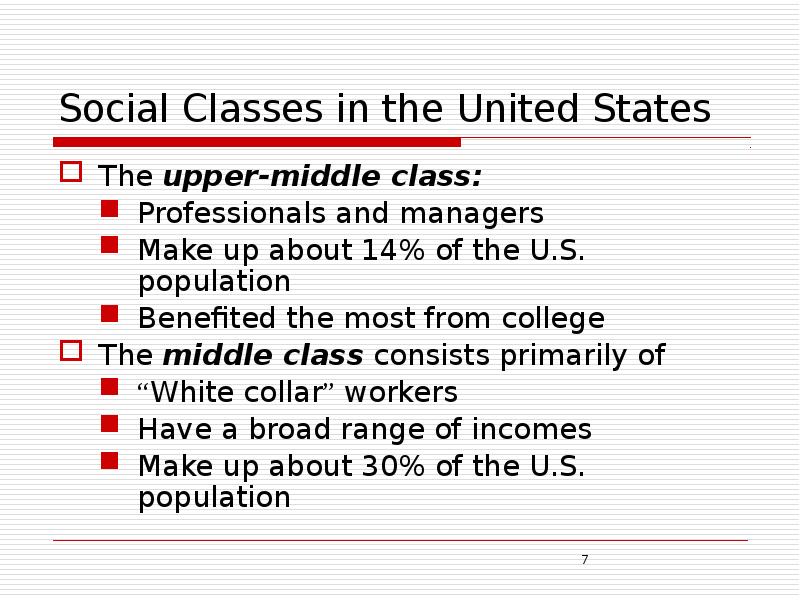
- 7. Social Classes in the United States The upper-middle class: Professionals and
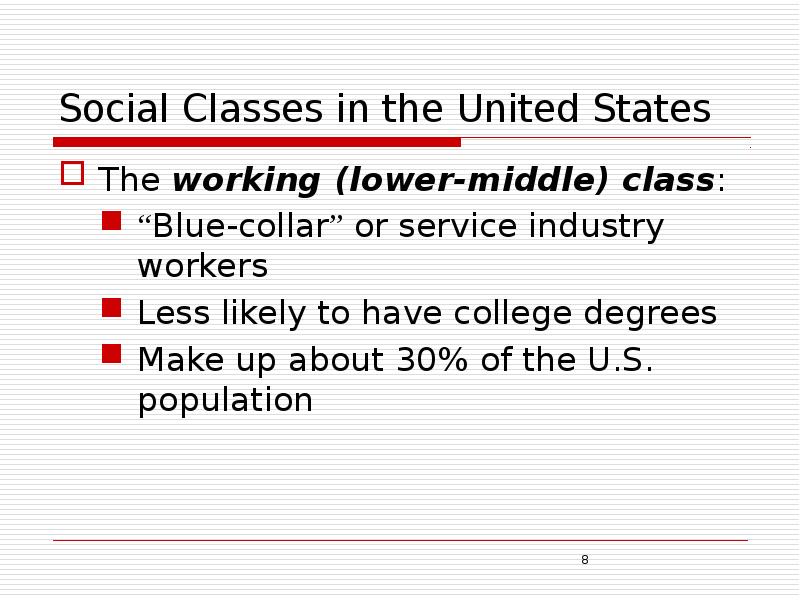
- 8. Social Classes in the United States The working (lower-middle) class: “Blue-collar”
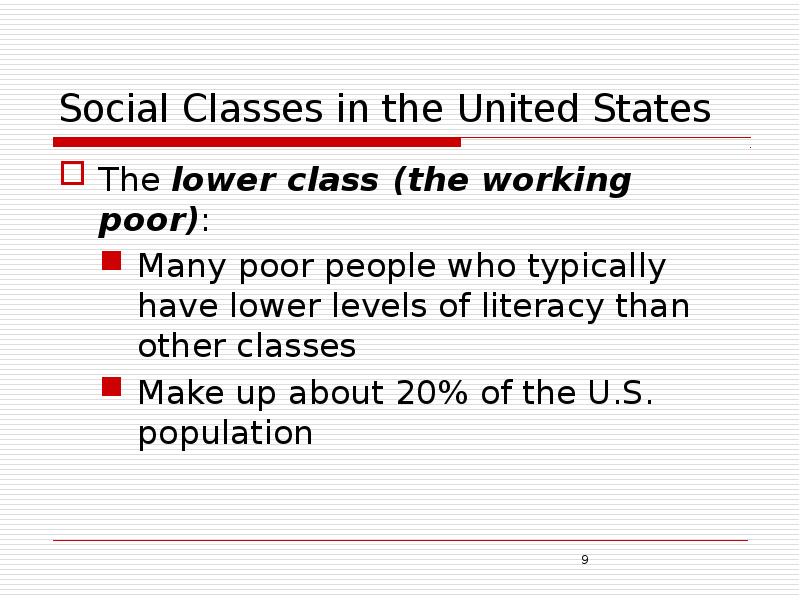
- 9. Social Classes in the United States The lower class (the working
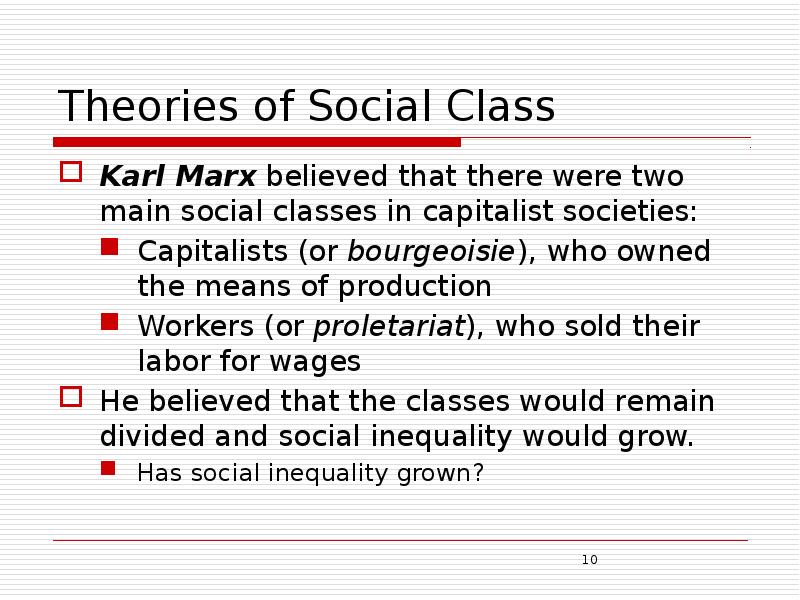
- 10. Theories of Social Class Karl Marx believed that there were two
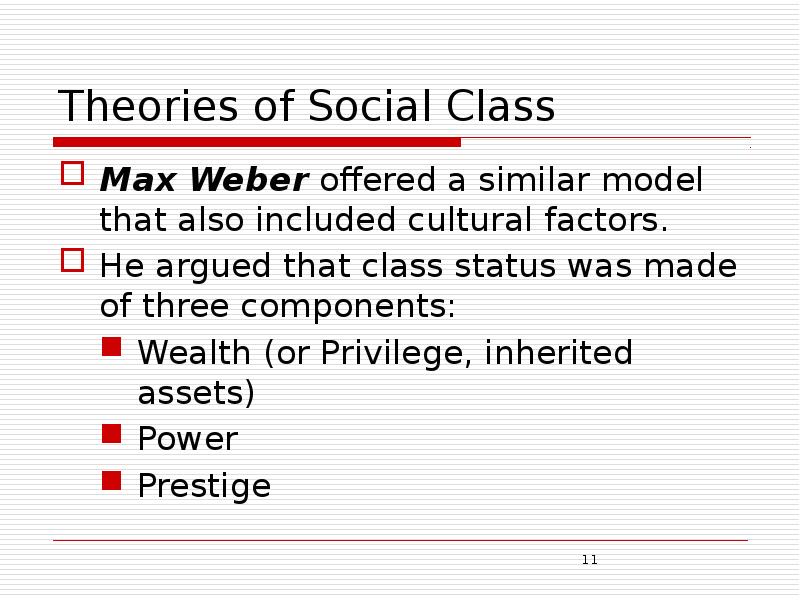
- 11. Theories of Social Class Max Weber offered a similar model that
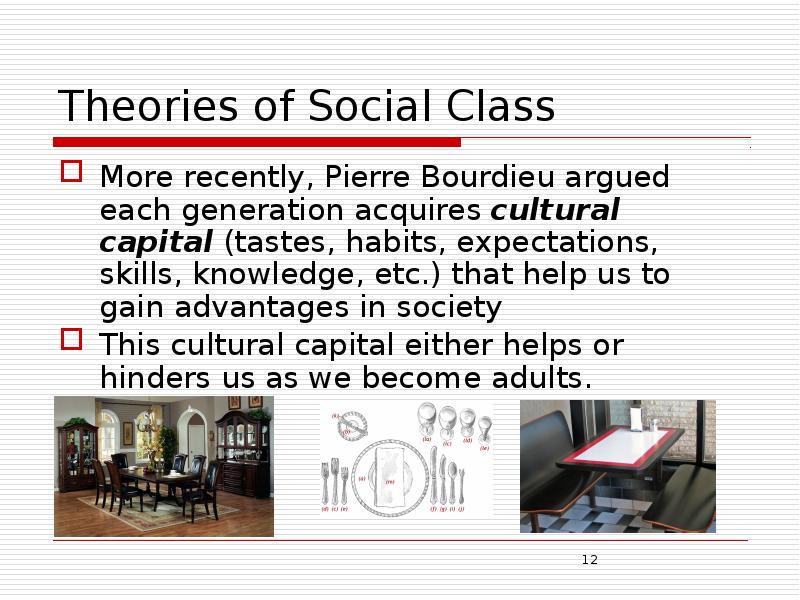
- 12. Theories of Social Class More recently, Pierre Bourdieu argued each generation
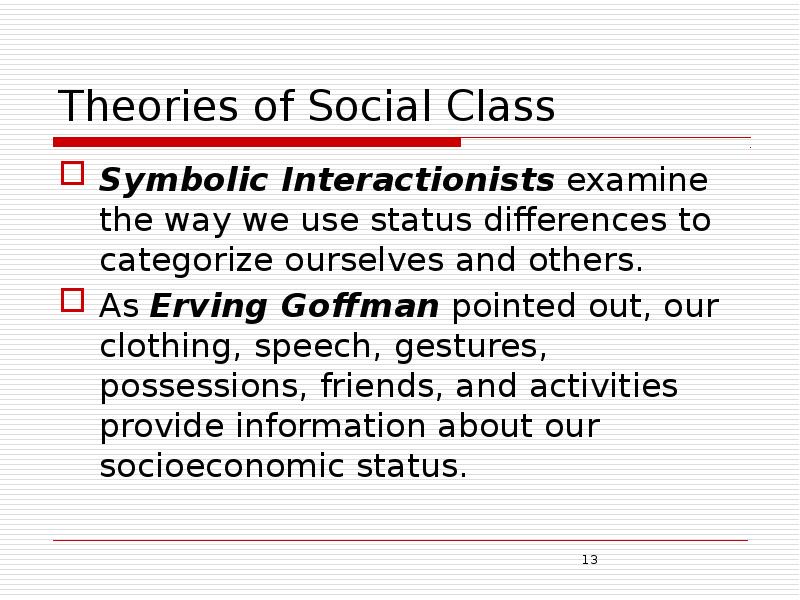
- 13. Theories of Social Class Symbolic Interactionists examine the way we use
- 15. Socioeconomic Status and Life Chances Belonging to a certain social class
- 16. Social Mobility Social mobility is the movement of individuals or groups
- 17. Poverty The culture of poverty refers to learned attitudes that can
- 18. Political elite In every society there is a class of people
- 19. Characteristics of political elites Small in number Organised Monopoly over political
- 20. Elitist Theorists “pluralists” or “functionalists” Mosca, Parsons Mosca's enduring
- 21. Lesson Quiz True or False: 1. Every society has some
- 22. Lesson Quiz 2. The tendency of social classes to remain relatively
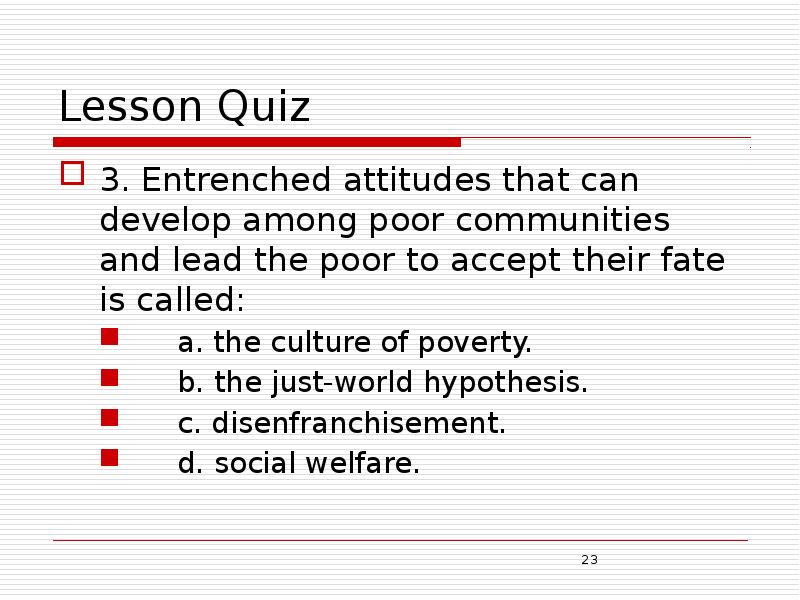
- 23. Lesson Quiz 3. Entrenched attitudes that can develop among poor communities
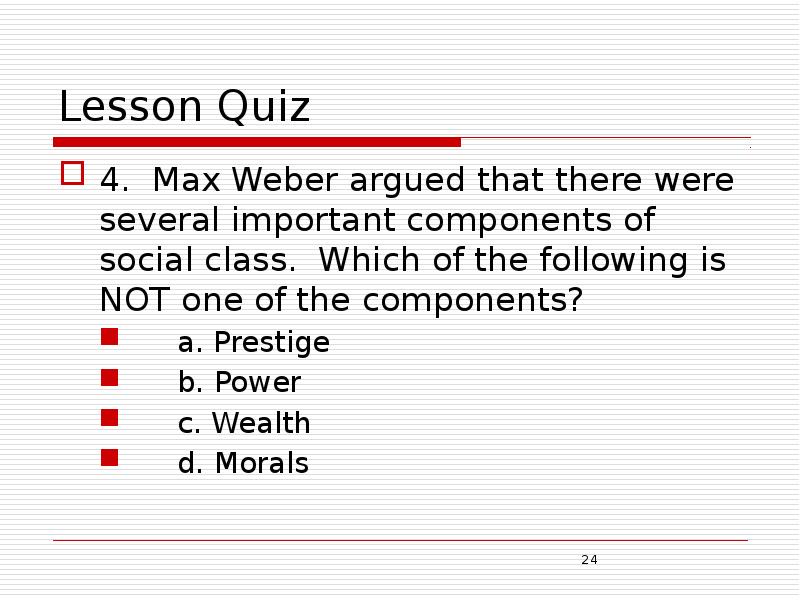
- 24. Lesson Quiz 4. Max Weber argued that there were several important
- 25. Скачать презентацию
Слайды и текст этой презентации
Слайд 1
Описание слайда:
Problems of social inequality, social stratification and political elites
Слайд 2
Описание слайда:
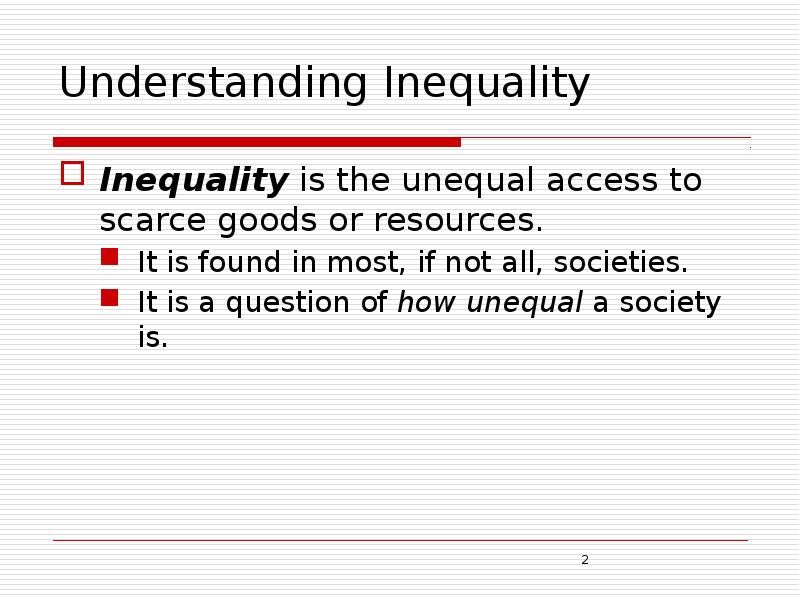
Understanding Inequality
Inequality is the unequal access to scarce goods or resources.
It is found in most, if not all, societies.
It is a question of how unequal a society is.
Слайд 3
Описание слайда:
Understanding Social Stratification
Social stratification is the division of society into groups arranged in a social hierarchy based on access to wealth, power and prestige. Ex: slavery, caste and social class
Where people rank in stratification system influences every part of their lives in profound ways.
What food they eat, where they shop, clothes they wear, schools they attend, income they earn, how long (and quality of life) they live, occupation.
Слайд 4
Описание слайда:
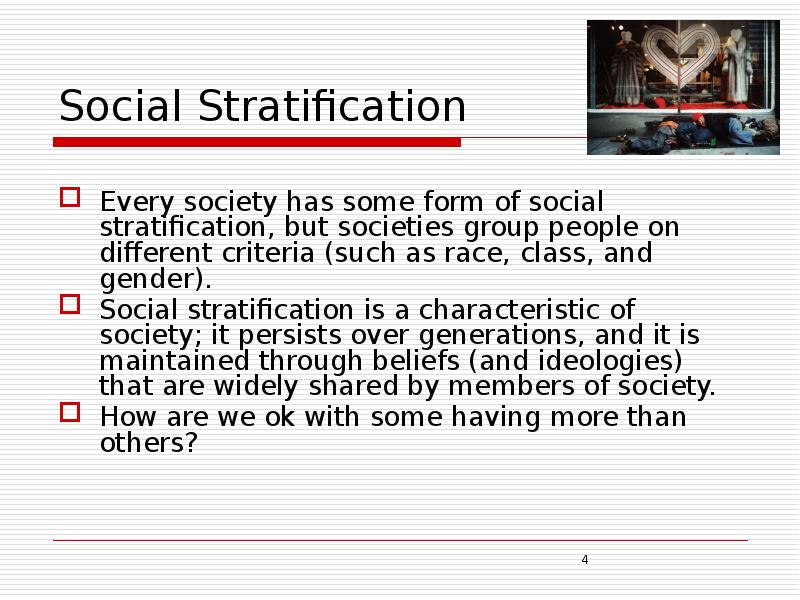
Social Stratification
Every society has some form of social stratification, but societies group people on different criteria (such as race, class, and gender).
Social stratification is a characteristic of society; it persists over generations, and it is maintained through beliefs (and ideologies) that are widely shared by members of society.
How are we ok with some having more than others?
Слайд 5
Описание слайда:
Systems of Stratification (Cont’d)
Social class refers to a system of stratification based on access to resources such as wealth, property, power, education and prestige.
Sociologists often refer to it as socioeconomic status (or SES).
By the way, what’s the difference between income and wealth?
Слайд 6
Описание слайда:
Social Classes in the United States
The upper class (capitalist class):
Wealthiest people in a class system
Make up about 1% of the U.S. population
Possess most of the wealth of the country
Слайд 7
Описание слайда:
Social Classes in the United States
The upper-middle class:
Professionals and managers
Make up about 14% of the U.S. population
Benefited the most from college
The middle class consists primarily of
“White collar” workers
Have a broad range of incomes
Make up about 30% of the U.S. population
Слайд 8
Описание слайда:
Social Classes in the United States
The working (lower-middle) class:
“Blue-collar” or service industry workers
Less likely to have college degrees
Make up about 30% of the U.S. population
Слайд 9
Описание слайда:
Social Classes in the United States
The lower class (the working poor):
Many poor people who typically have lower levels of literacy than other classes
Make up about 20% of the U.S. population
Слайд 10
Описание слайда:
Theories of Social Class
Karl Marx believed that there were two main social classes in capitalist societies:
Capitalists (or bourgeoisie), who owned the means of production
Workers (or proletariat), who sold their labor for wages
He believed that the classes would remain divided and social inequality would grow.
Has social inequality grown?
Слайд 11
Описание слайда:
Theories of Social Class
Max Weber offered a similar model that also included cultural factors.
He argued that class status was made of three components:
Wealth (or Privilege, inherited assets)
Power
Prestige
Слайд 12
Описание слайда:
Theories of Social Class
More recently, Pierre Bourdieu argued each generation acquires cultural capital (tastes, habits, expectations, skills, knowledge, etc.) that help us to gain advantages in society
This cultural capital either helps or hinders us as we become adults.
Слайд 13
Описание слайда:
Theories of Social Class
Symbolic Interactionists examine the way we use status differences to categorize ourselves and others.
As Erving Goffman pointed out, our clothing, speech, gestures, possessions, friends, and activities provide information about our socioeconomic status.
Слайд 14
Описание слайда:
Слайд 15
Описание слайда:
Socioeconomic Status and Life Chances
Belonging to a certain social class has profound consequences for individuals in all areas of life including:
Education
Employment
medical care
Слайд 16
Описание слайда:
Social Mobility
Social mobility is the movement of individuals or groups within the hierarchal system of social classes.
America technically has an open system (it is legal and permissible for people to move between classes) but there are structural patterns where people tend to stay very close to the class they were raised in.
If we have an open system, why do we see a lack of opportunities to move between classes?
Слайд 17
Описание слайда:
Poverty
The culture of poverty refers to learned attitudes that can develop among poor communities and lead the poor to accept their fate rather than attempt to improve their situation.
What is missing from this theory?
Слайд 18
Описание слайда:
Political elite
In every society there is a class of people which is though small in number but has more control over political power. The power belonging to this class occupy command offices and provide leadership in ruling affairs of the society and this class of the people is known as elite
Слайд 19
Описание слайда:
Characteristics of political elites
Small in number
Organised
Monopoly over political power
Open competition among different elite groups
Conscious of their interests
Слайд 20
Описание слайда:
Elitist Theorists
“pluralists”
or “functionalists”
Mosca, Parsons
Mosca's enduring contribution to political science is the observation that all but the most primitive societies are ruled in fact, if not in theory, by a numerical minority. He named this minority the political class
Слайд 21
Описание слайда:
Lesson Quiz
True or False:
1. Every society has some form of stratification.
a. True
b. False
Слайд 22
Описание слайда:
Lesson Quiz
2. The tendency of social classes to remain relatively stable as social class status is passed down from one generation to the next is called:
a. cultural capital.
b. social prestige.
c. social reproduction.
d. class consciousness.
Слайд 23
Описание слайда:
Lesson Quiz
3. Entrenched attitudes that can develop among poor communities and lead the poor to accept their fate is called:
a. the culture of poverty.
b. the just-world hypothesis.
c. disenfranchisement.
d. social welfare.
Слайд 24
Описание слайда:
Lesson Quiz
4. Max Weber argued that there were several important components of social class. Which of the following is NOT one of the components?
a. Prestige
b. Power
c. Wealth
d. Morals
Скачать презентацию на тему Problems of social inequality, social stratification and political elites можно ниже: