USSR in the 1930s: презентация
Содержание
- 2. Totalitarianism The totalitarian is "universal, comprehensive." «Everything in the state,
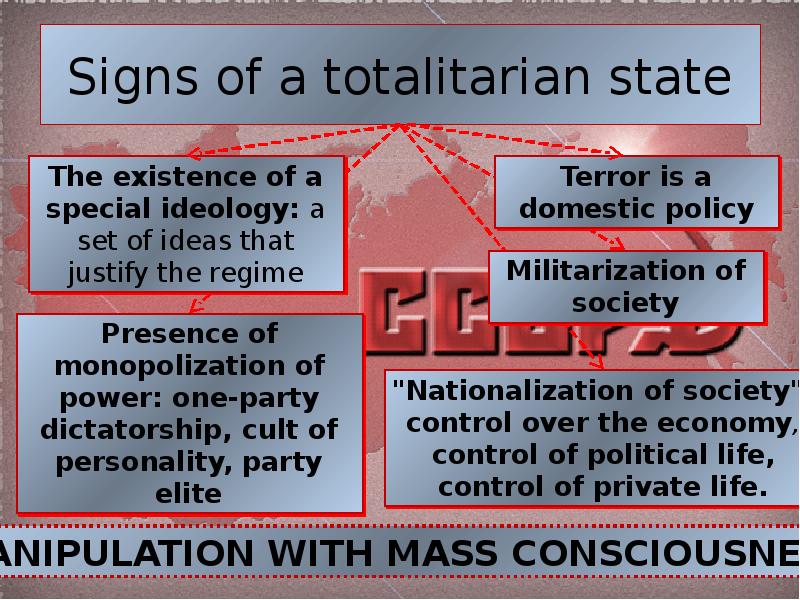
- 3. Signs of a totalitarian state
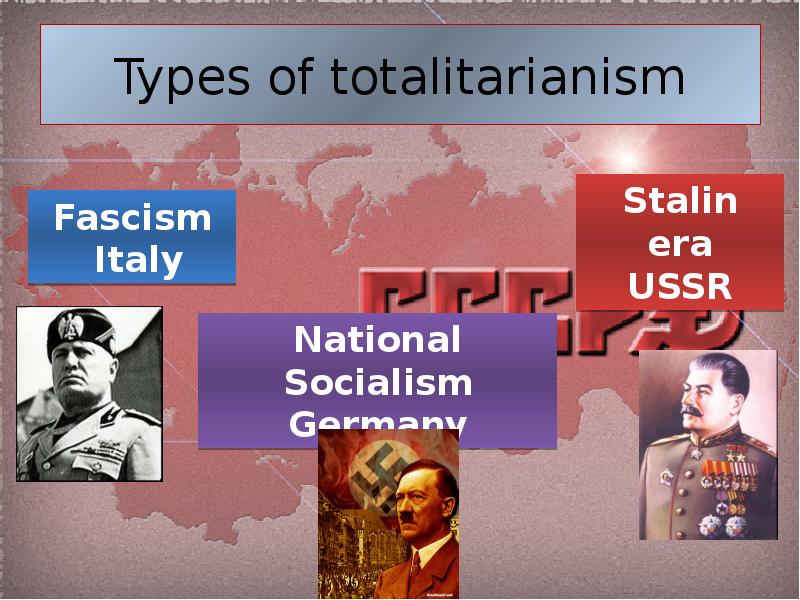
- 4. Types of totalitarianism
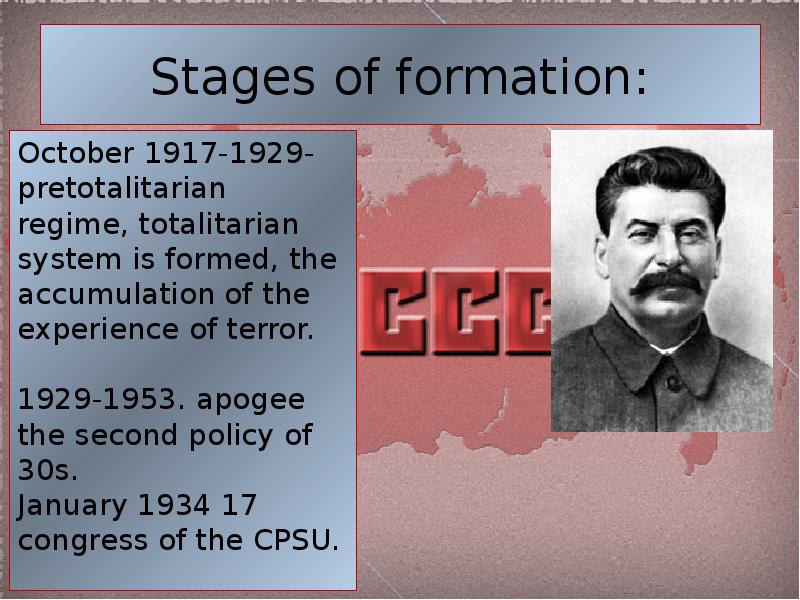
- 5. Stages of formation:
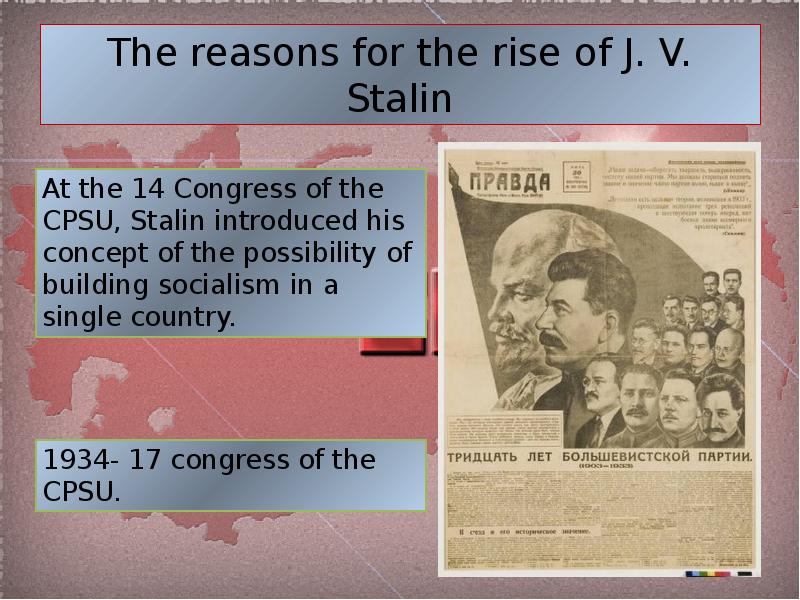
- 6. The reasons for the rise of J. V. Stalin
- 7. Cult of personality The expression "Stalin's cult of personality" was widely
- 8. Cult of personality J. Stalin - "the great leader and teacher.“
- 9. Mass repressions Reasons The method of functioning of the "subsystem of
- 10. Tougher of legislation 1934 – the introduction of the "highest measure"
- 11. Political repression of the 1930s.
- 12. Security controls of USSR Cheka Joint State Political Directorate(OGPU) NKVD -
- 14. December 5, 1936. - Constitution of the USSR - "The Constitution
- 15. The Cultural Revolution The Cultural Revolution is a complex of measures
- 16. Campaign against illitera A great deal was the elimination of illiteracy.
- 17. Art Literature and art introduced the method of "socialist realism", the
- 18. Thank you for your attention
- 19. Скачать презентацию
Слайды и текст этой презентации
Слайд 1
Описание слайда:
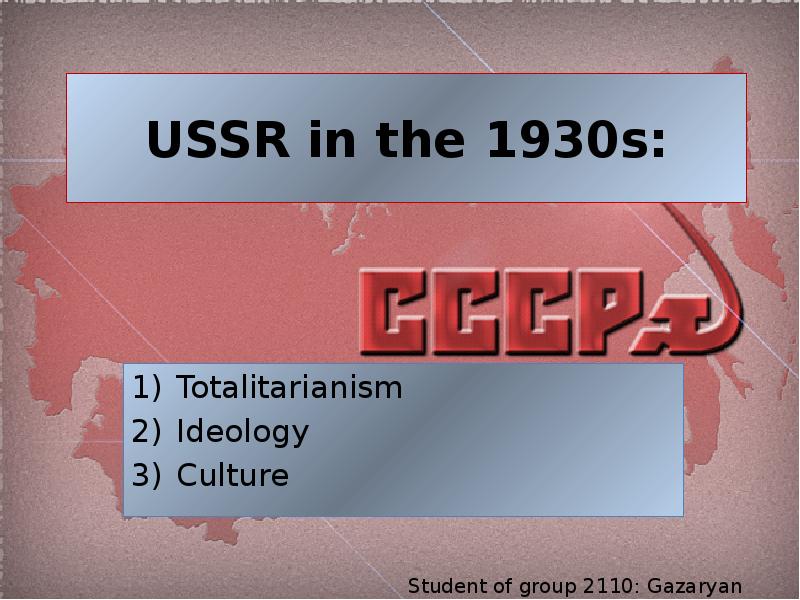
USSR in the 1930s:
Totalitarianism
Ideology
Culture
Слайд 2
Описание слайда:
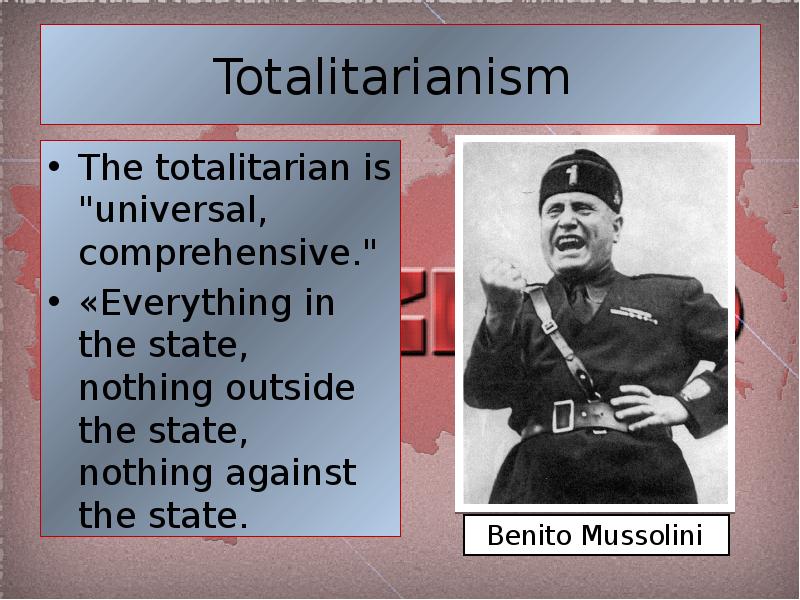
Totalitarianism
The totalitarian is "universal, comprehensive."
«Everything in the state, nothing outside the state, nothing against the state.
Слайд 3
Описание слайда:
Signs of a totalitarian state
Слайд 4
Описание слайда:
Types of totalitarianism
Слайд 5
Описание слайда:
Stages of formation:
Слайд 6
Описание слайда:
The reasons for the rise of J. V. Stalin
Слайд 7
Описание слайда:
Cult of personality
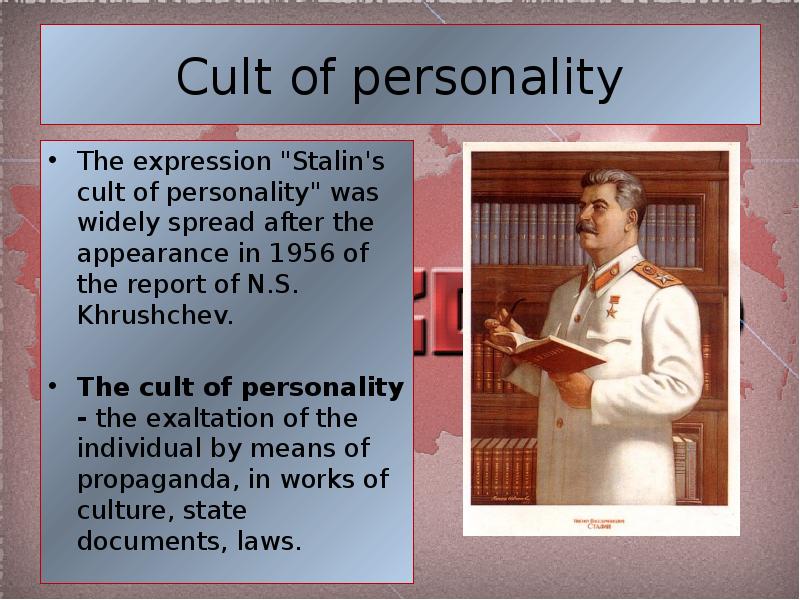
The expression "Stalin's cult of personality" was widely spread after the appearance in 1956 of the report of N.S. Khrushchev.
The cult of personality - the exaltation of the individual by means of propaganda, in works of culture, state documents, laws.
Слайд 8
Описание слайда:
Cult of personality
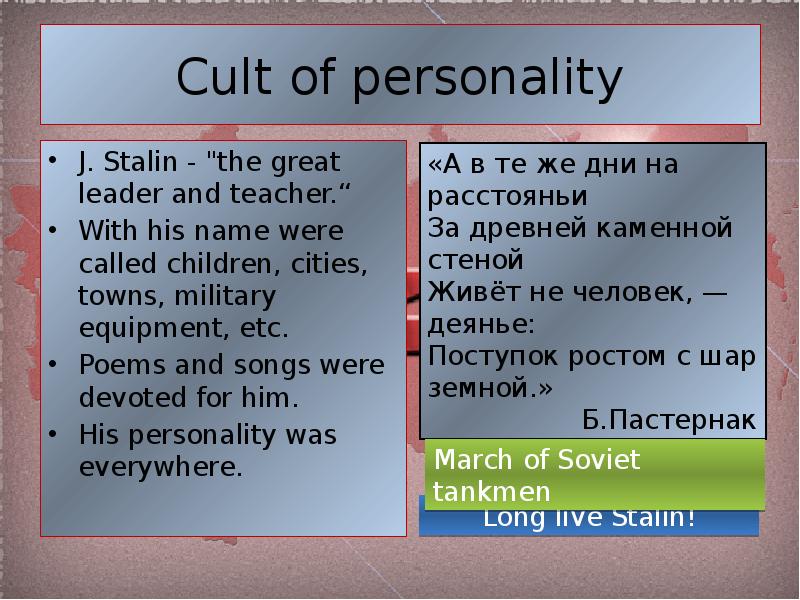
J. Stalin - "the great leader and teacher.“
With his name were called children, cities, towns, military equipment, etc.
Poems and songs were devoted for him.
His personality was everywhere.
Слайд 9
Описание слайда:
Mass repressions
Reasons
The method of functioning of the "subsystem of fear".
Provision of a system of non-economic coercion.
Explaining the problems and failures of industrialization with "intrigues of the enemies of the people".
Слайд 10
Описание слайда:
Tougher of legislation
1934 – the introduction of the "highest measure" for treason.
1934 – creation of Special Meetings.
1934 1 December – murder of S.M. Kirov.
1934 1 December – Resolution of the CEC on the review of cases of terrorist organizations and terrorist acts against workers of Soviet power.
1935 – criminal responsibility has been established up to the death penalty for children, starting from the age of 12.
1937 – Decree of 1 December 1934. It is common for cases of sabotage.
1937 – the resolution of the Central Committee of the CPSU on the application in the practice of the NKVD of methods of influence against the enemies of the people.
Слайд 11
Описание слайда:
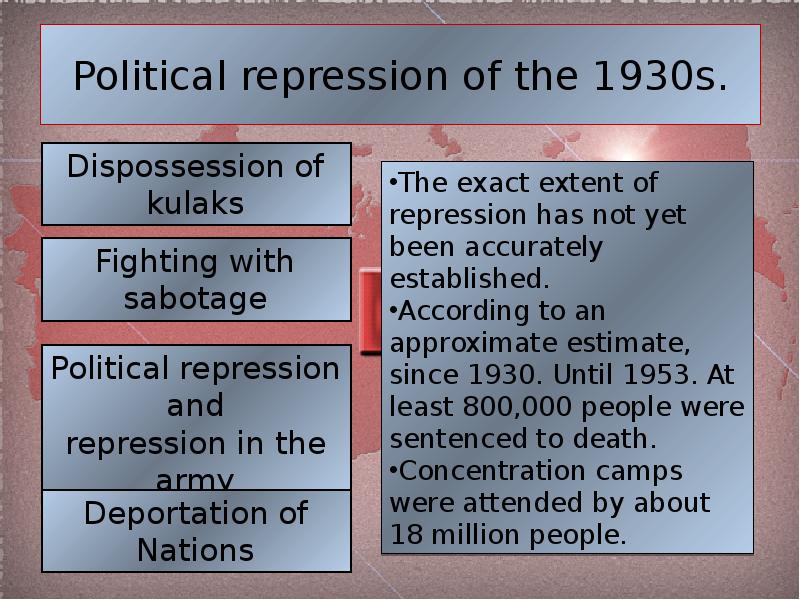
Political repression of the 1930s.
Слайд 12
Описание слайда:
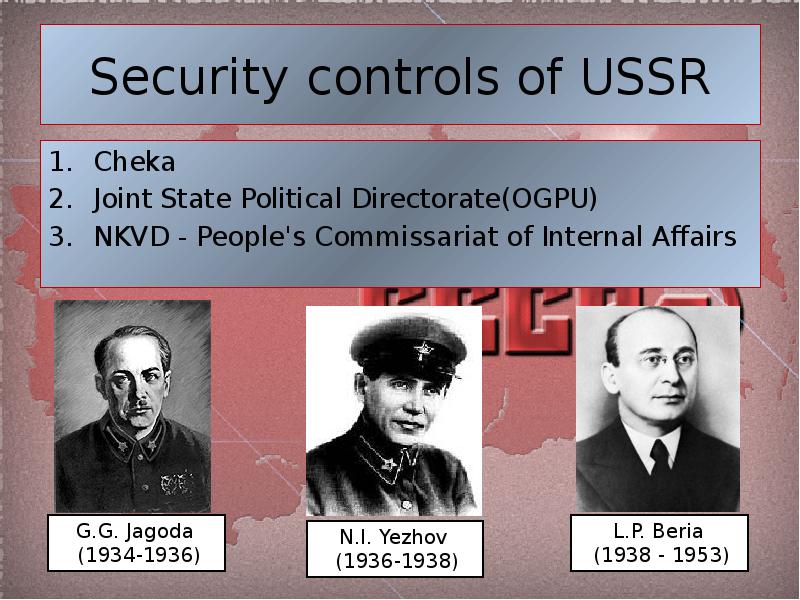
Security controls of USSR
Cheka
Joint State Political Directorate(OGPU)
NKVD - People's Commissariat of Internal Affairs
Слайд 13
Описание слайда:
Слайд 14
Описание слайда:
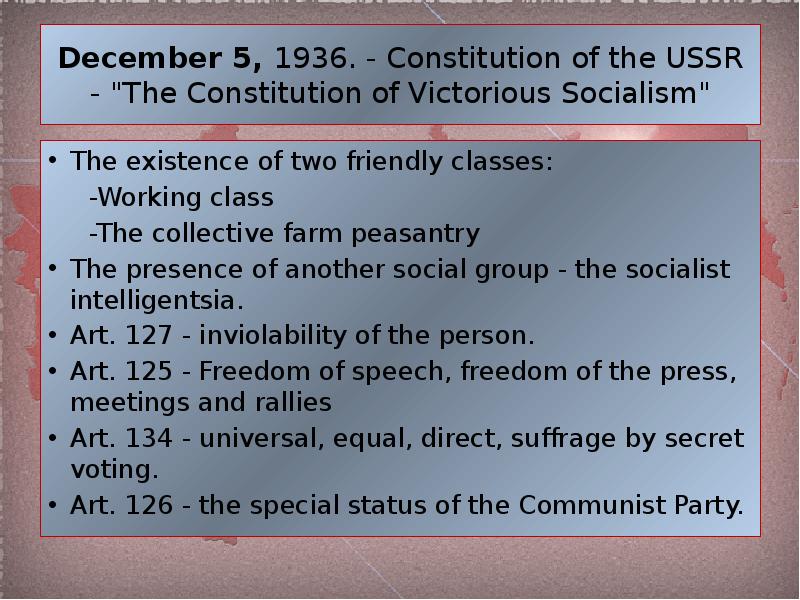
December 5, 1936. - Constitution of the USSR - "The Constitution of Victorious Socialism"
The existence of two friendly classes:
-Working class
-The collective farm peasantry
The presence of another social group - the socialist intelligentsia.
Art. 127 - inviolability of the person.
Art. 125 - Freedom of speech, freedom of the press, meetings and rallies
Art. 134 - universal, equal, direct, suffrage by secret voting.
Art. 126 - the special status of the Communist Party.
Слайд 15
Описание слайда:
The Cultural Revolution
The Cultural Revolution is a complex of measures implemented in Soviet Russia and the USSR aimed at radical restructuring of the cultural and ideological life of society.
Слайд 16
Описание слайда:
Campaign against illitera
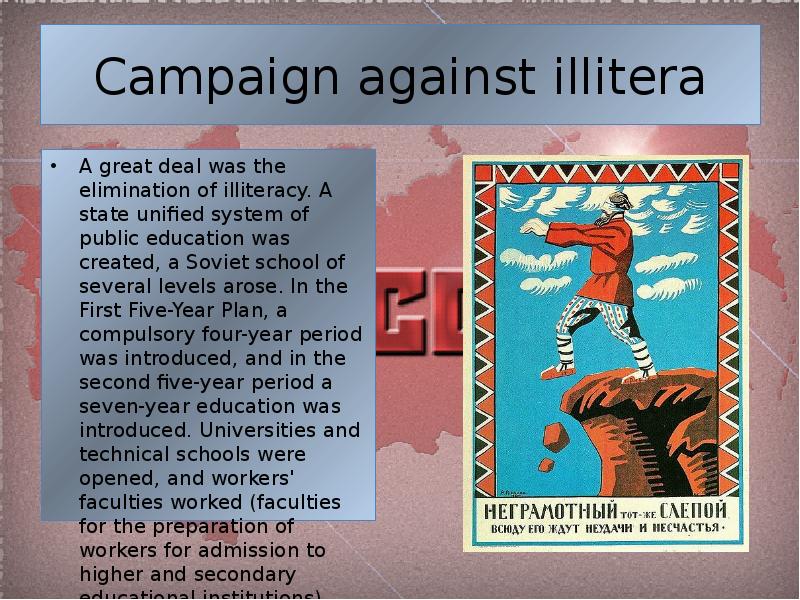
A great deal was the elimination of illiteracy. A state unified system of public education was created, a Soviet school of several levels arose. In the First Five-Year Plan, a compulsory four-year period was introduced, and in the second five-year period a seven-year education was introduced. Universities and technical schools were opened, and workers' faculties worked (faculties for the preparation of workers for admission to higher and secondary educational institutions).
Слайд 17
Описание слайда:
Art
Literature and art introduced the method of "socialist realism", the glorification of the party, its leaders, the heroics of the revolution. Among the writers were nominated A.N. Tolstoy, M.A. Sholokhov, A.T. Tvardovsky. The largest phenomena in the musical life were the works of S.S. Prokofiev (music for the film "Alexander Nevsky"), A.I. Khachaturyan (music for the film "Masquerade"),
A significant step in its development was made by cinematography: the films "Chapayev" by S. and G. Vasiliev, "Alexander Nevsky"
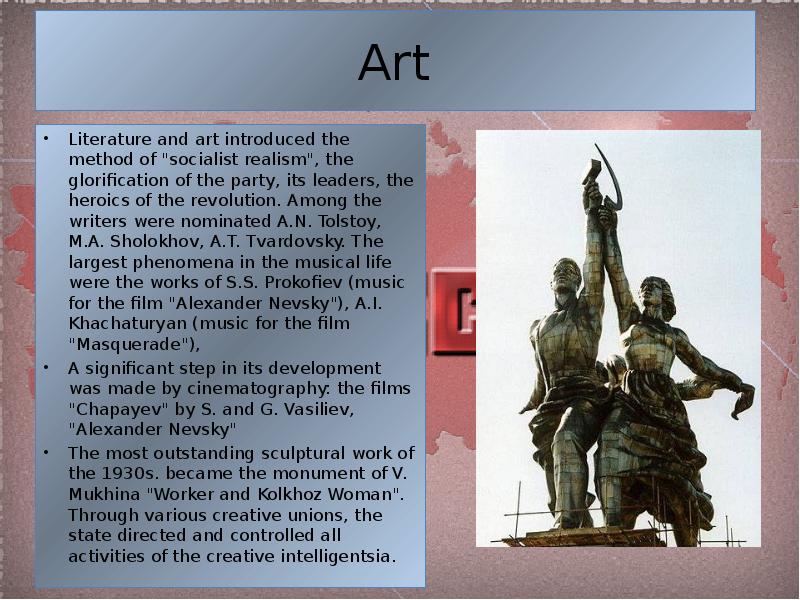
The most outstanding sculptural work of the 1930s. became the monument of V. Mukhina "Worker and Kolkhoz Woman". Through various creative unions, the state directed and controlled all activities of the creative intelligentsia.
Слайд 18
Описание слайда:
Thank you
for
your attention
Скачать презентацию на тему USSR in the 1930s: можно ниже: