International economic organizations. (Topic 3) презентация
Содержание
- 2. IEO definition An IEO can be defined as a form of
- 3. International organizations 19th century - international organizations began to appear in
- 4. Classification of IOs: Governmental/non-governmental Regional/cross-regional Specialized/universal Open/closed Developed/developing member-states
- 5. United Nations Organization
- 6. UN purposes To keep peace throughout the world; To develop
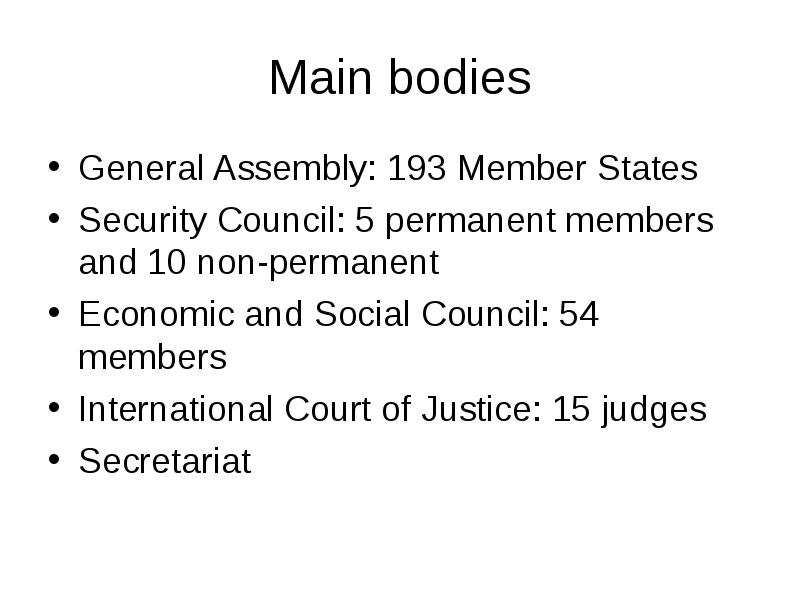
- 7. Main bodies General Assembly: 193 Member States Security Council: 5
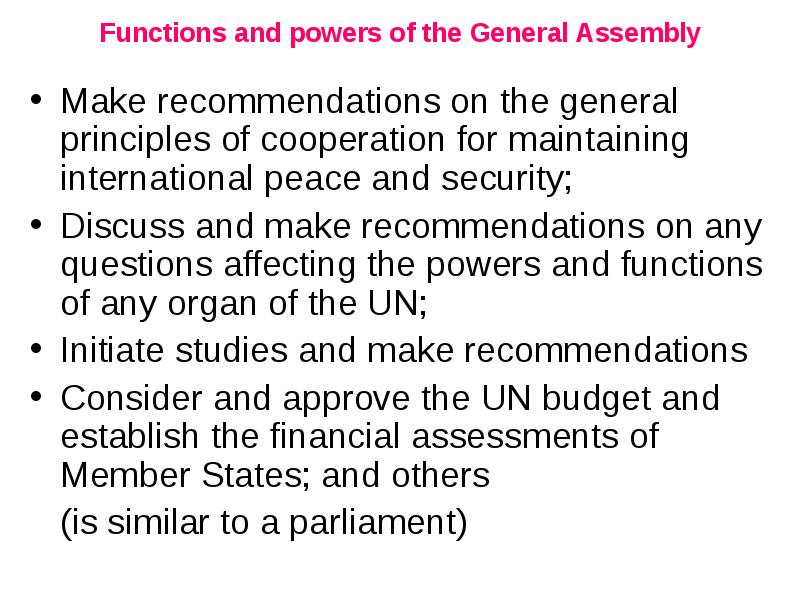
- 8. Functions and powers of the General Assembly Make recommendations on
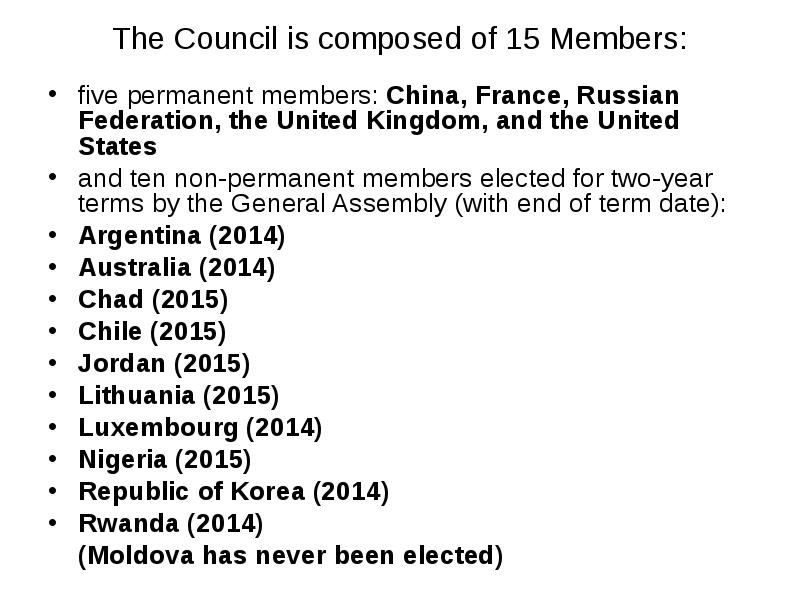
- 9. The Council is composed of 15 Members: five permanent members:
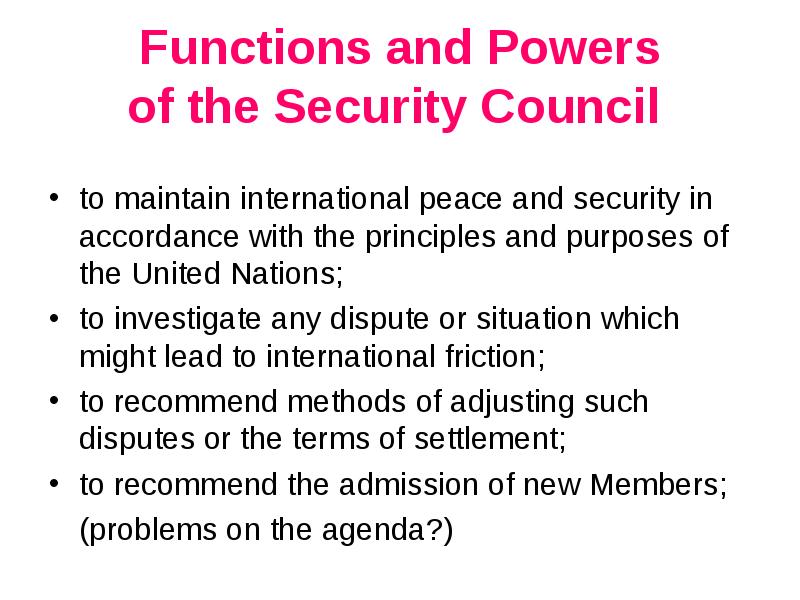
- 10. Functions and Powers of the Security Council to maintain international
- 11. The Economic and Social Council (ECOSOC) serves as the central forum
- 12. ECOSOC membership The Council's 54 member Governments are elected by the
- 13. Bodies reporting directly to ECOSOC. Regional Commissions Economic Commission for
- 14. International Court of Justice Located at the Hague in the
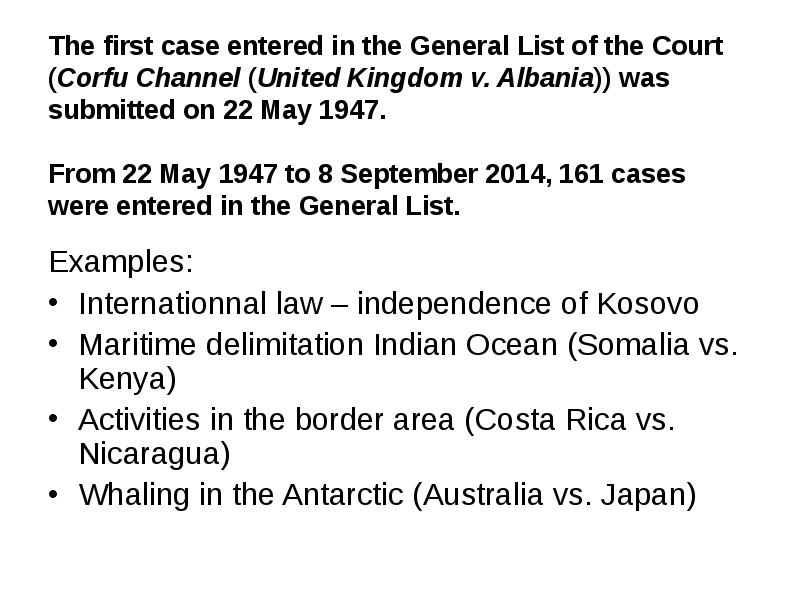
- 15. The first case entered in the General List of the Court
- 16. Trusteeship Council established in 1945 by the UN Charter
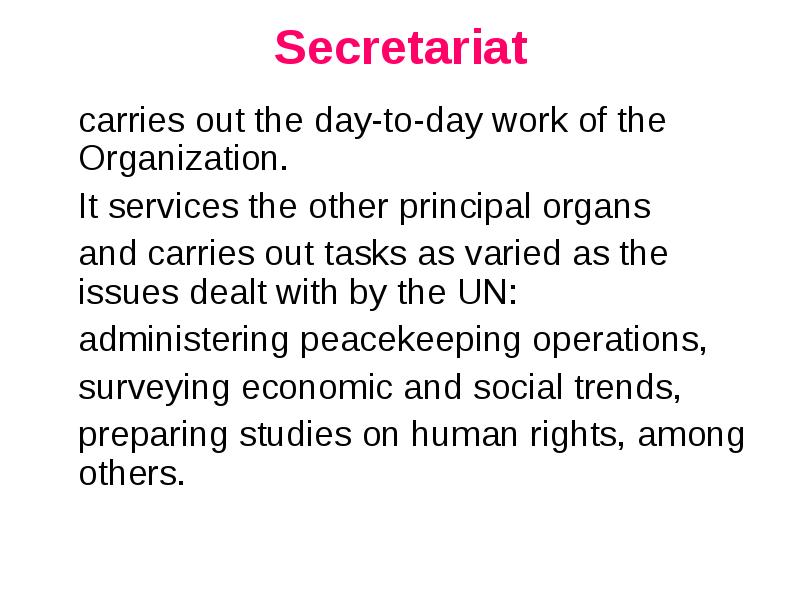
- 17. Secretariat carries out the day-to-day work of the Organization.
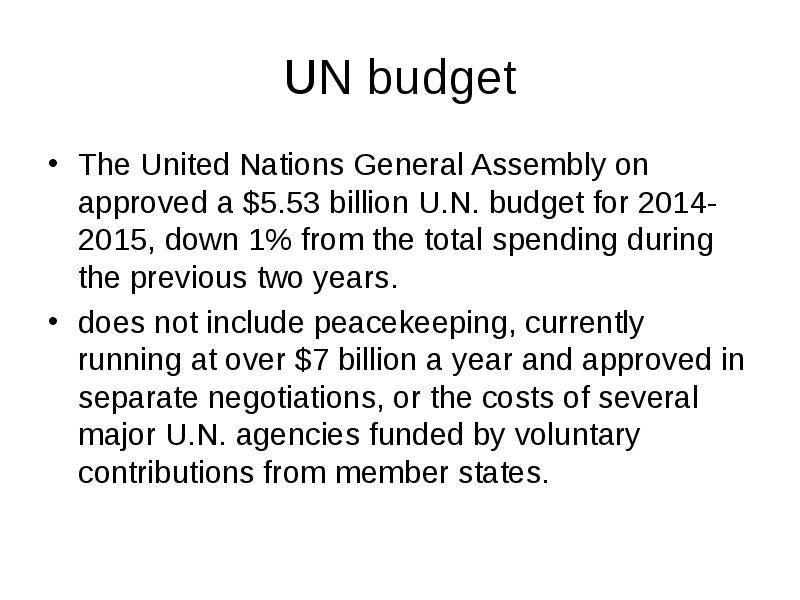
- 18. UN budget The United Nations General Assembly on approved a $5.53
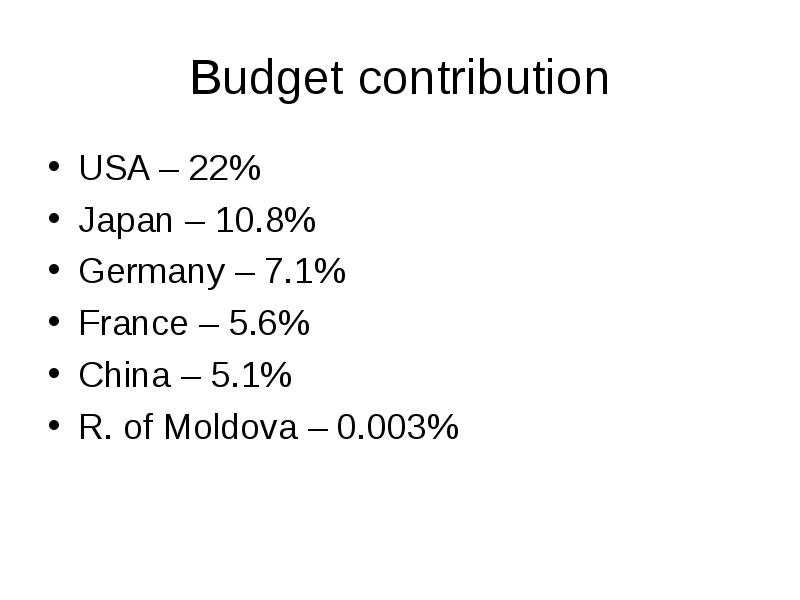
- 19. Budget contribution USA – 22% Japan – 10.8% Germany – 7.1%
- 20. United Nations’ Millennium development goals
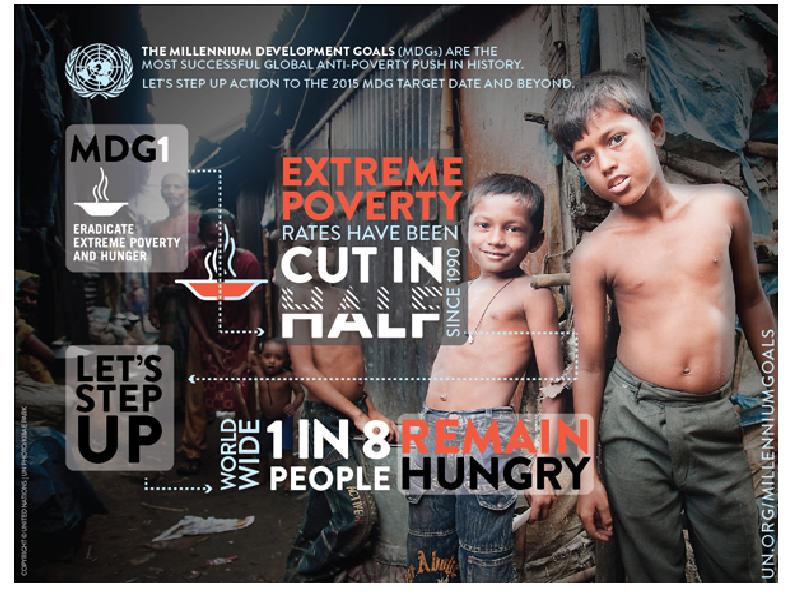
- 21. Goal 1 Eradicate Extreme Poverty and Hunger by 2015 Halve,
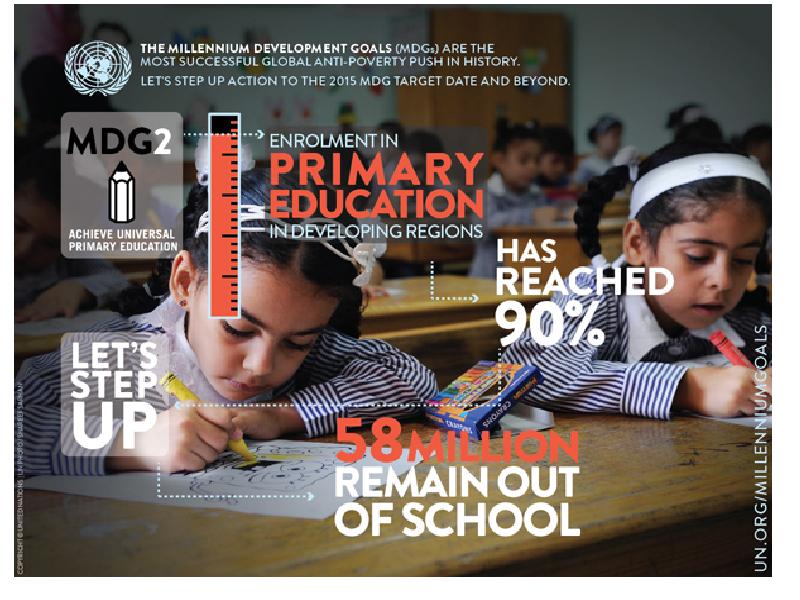
- 23. Goal 2 Achieve Universal Primary Education by 2015 Ensure that,
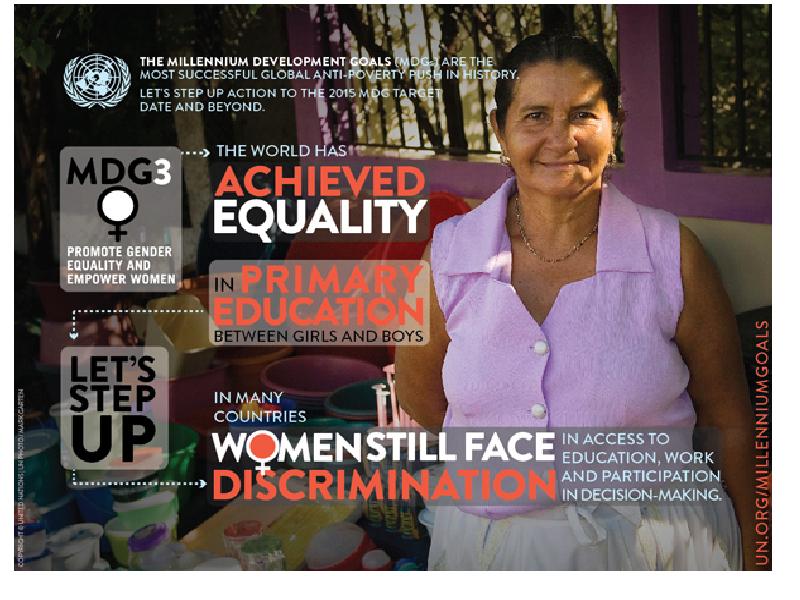
- 25. Goal 3 Promote Gender Equality and Empower Women by 2015
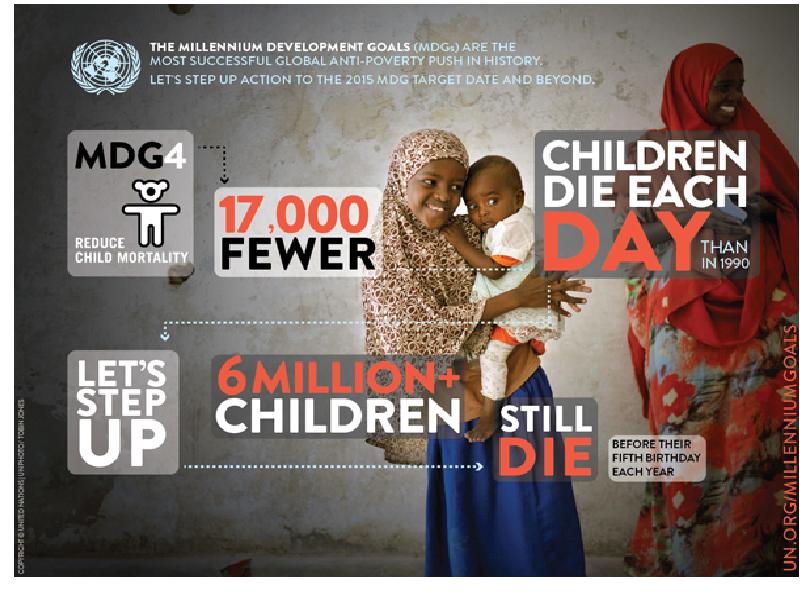
- 27. Goal 4 Reduce Child Mortality by 2015 Reduce by two
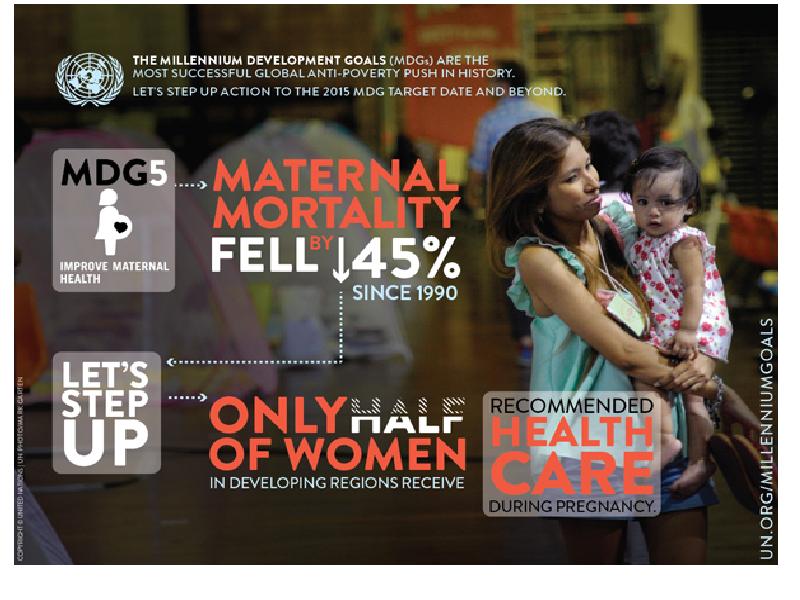
- 29. Goal 5 Improve Maternal Health by 2015 Reduce by three
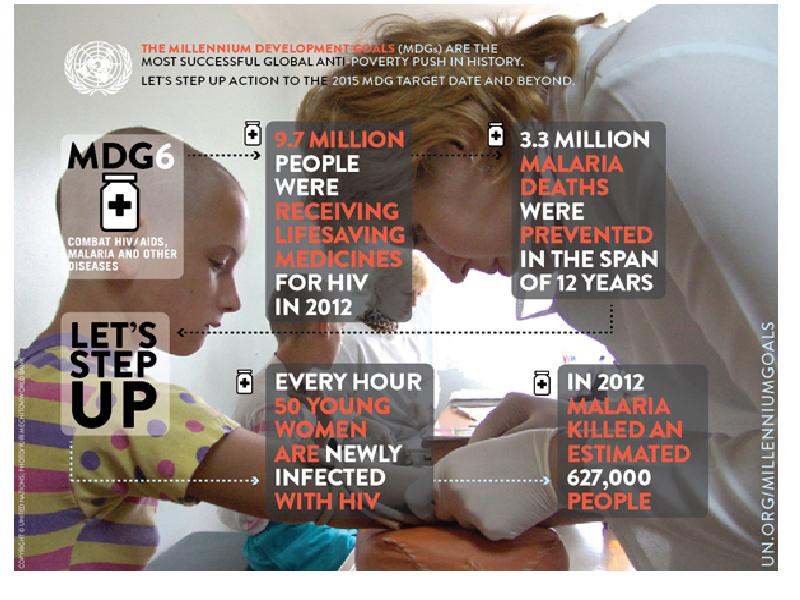
- 31. Goal 6 Combat HIV/AIDS, Malaria, and Other Diseases by 2015
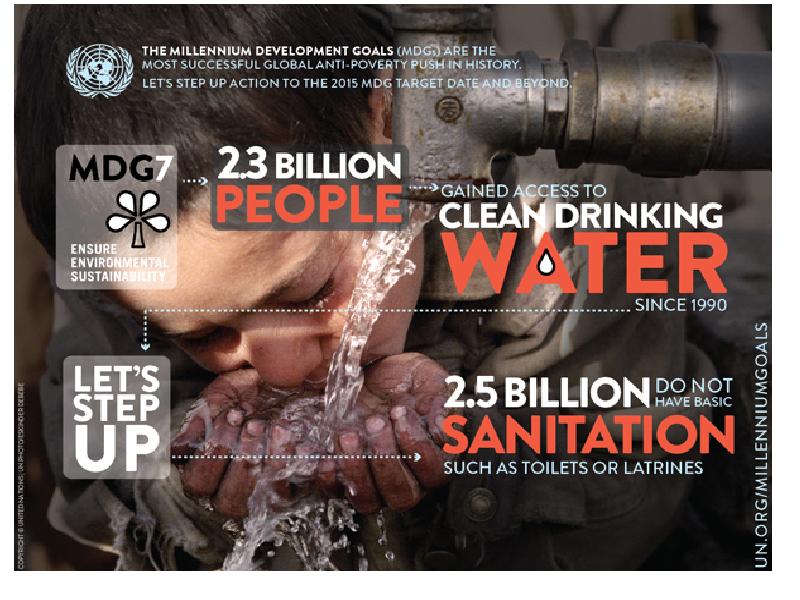
- 33. Goal 7 Ensure Environmental Sustainability by 2015 Integrate the principles
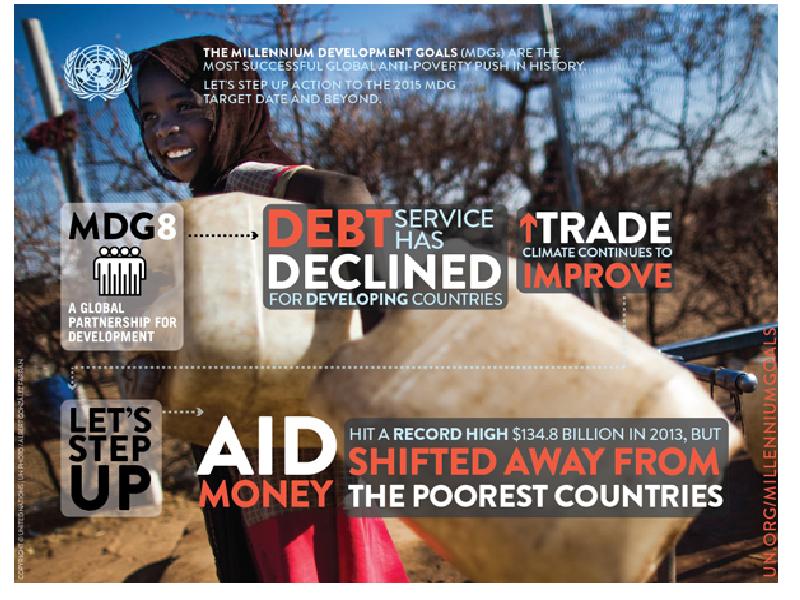
- 35. Goal 8 Develop a Global Partnership for Development by 2015
- 36. Goal 8 Develop a Global Partnership for Development by 2015
- 38. Specialized Agencies of the UN Food and Agriculture Organization of the
- 39. World Bank Group International Bank for Reconstruction and Development (IBRD) International
- 40. IBRD (188) The International Bank for Reconstruction and Development (IBRD) lends
- 41. IBRD purpose The International Bank for Reconstruction and Development (IBRD) aims
- 42. IBRD funds IBRD raises most of its funds on the world's
- 43. IBRD funds Investors see IBRD bonds as a safe and profitable
- 44. IBRD clients IBRD clients are middle-income and credit-worthy lower income countries.
- 45. IDA The International Development Association (IDA) provides interest-free loans—called credits— and
- 46. IDA clients Eligibility for IDA support depends on a country’s
- 47. IDA focus IDA-financed operations address primary education, basic health
- 48. About one-fifth of IDA funding is provided as grants; the rest
- 49. IDA 2000-2010: IDA provided more than 47 million people with
- 50. International Finance Corporation The largest global development institution focused exclusively on
- 51. Multilateral Investment Guarantee Agency promotes foreign direct investment into developing countries
- 52. International Centre for Settlement of Investment Disputes (158) provides international facilities
- 53. WBG role Collectively, the World Bank Group is: The world’s largest
- 54. International Monetary Fund an organization of 188 countries foster global monetary
- 55. Surveillance The IMF promotes economic stability and global growth by
- 56. Technical assistance and training IMF offers technical assistance and training
- 57. Lending IMF provides finance to help member countries correct balance of
- 58. Research and data The 3 activities are supported by the IMF’s
- 59. IMF resources money that countries pay as their capital subscription
- 60. IMF vs WB promotes international monetary cooperation and provides policy advice
- 61. IMF vs WB loans are short and medium term and funded
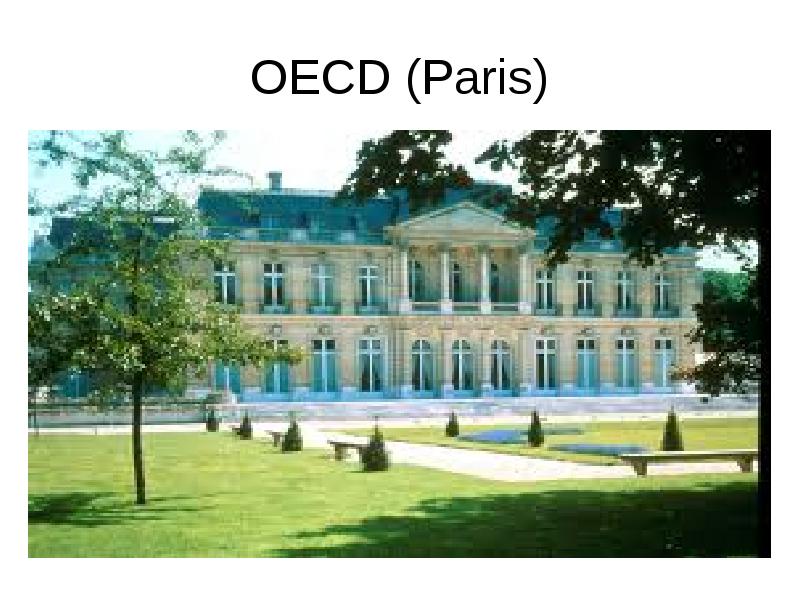
- 62. OECD (Paris)
- 63. Organisation for Economic Co-operation and Development (OECD) Organisation for European
- 64. OECD – mission www.oecd.org The mission of OECD is to
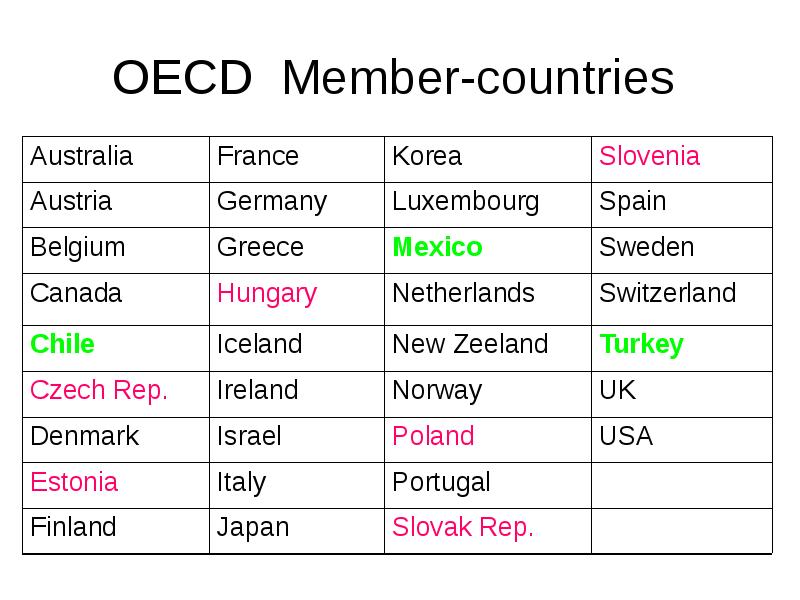
- 65. OECD Member-countries
- 66. Organisation for Economic Co-operation and Development (OECD) 34 OECD members Russia
- 67. OECD - forum measure productivity and global flows of trade and
- 68. Forum 2015 was organized around five themes: Investment Inclusive growth
- 69. The OECD budget for 2014 is EUR 357 million. OECD
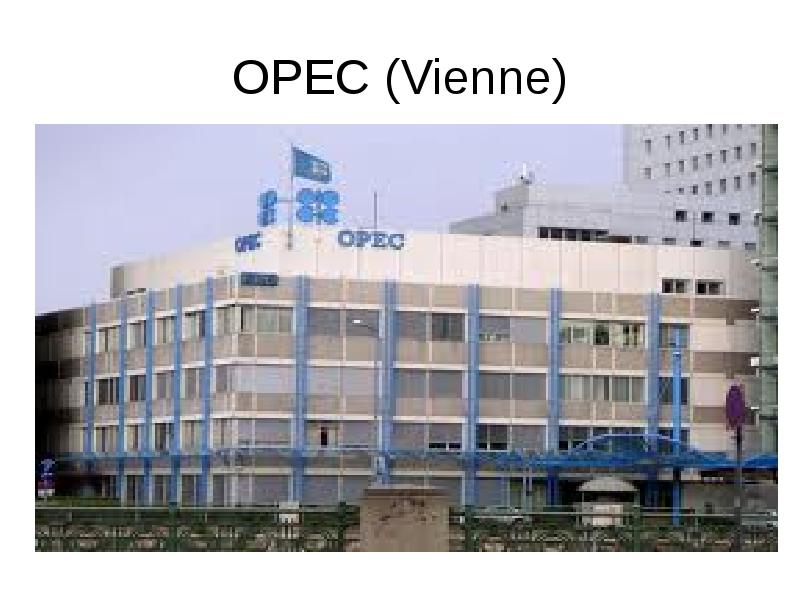
- 70. OPEC (Vienne)
- 71. Organization of the Petroleum Exporting Countries (OPEC) 1960 OPEC objective
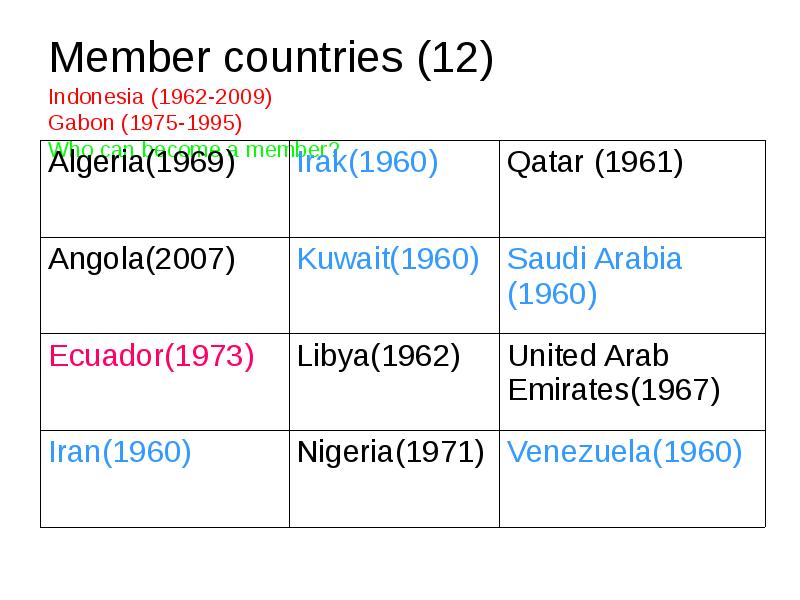
- 72. Member countries (12) Indonesia (1962-2009) Gabon (1975-1995) Who can become a
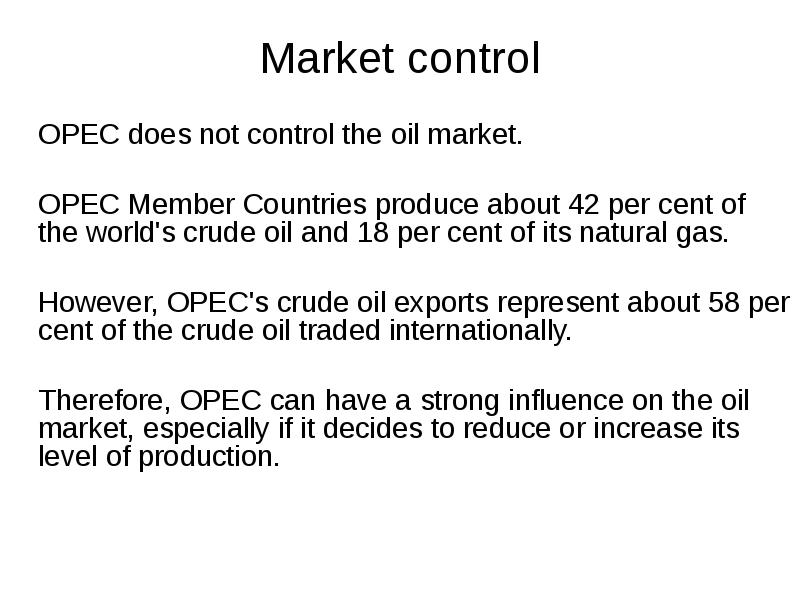
- 73. Market control OPEC does not control the oil market.
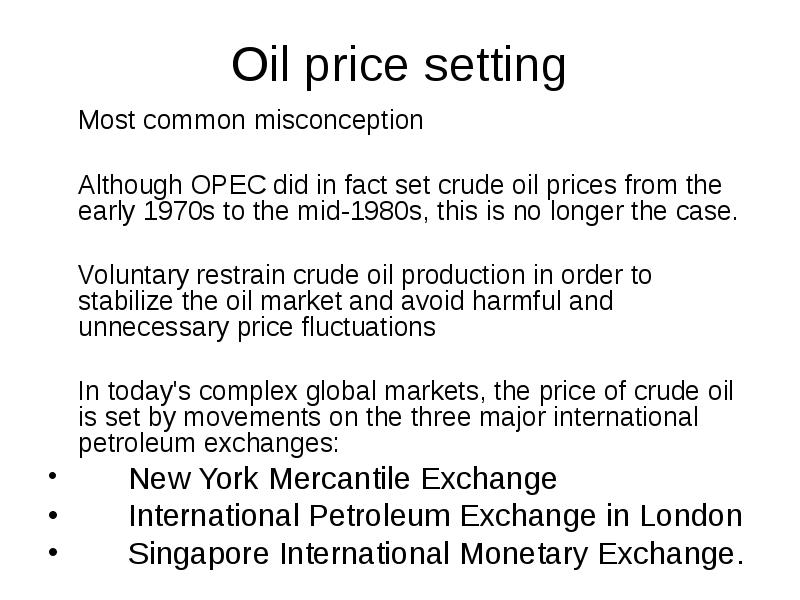
- 74. Oil price setting Most common misconception Although OPEC did in fact
- 75. ISO (Geneva)
- 76. International Organization for Standardization ISO (International Organization for Standardization) is the
- 77. Standards benefits ISO standards provide technological, economic and societal benefits.
- 78. The scope of ISO's work ISO has more than 19 500 International
- 79. Council of Europe The Council of Europe is the continent’s leading
- 80. No country has ever joined the European Union (EU - 28
- 81. Don’t get confused Council of Europe European Council European
- 82. Скачать презентацию

Слайды и текст этой презентации
Слайд 1
Описание слайда:
Topic 3:
International economic organizations
Слайд 2
Описание слайда:
IEO definition
An IEO can be defined as a form of economic collaboration among states in a certain domain,
based on a multilateral agreement that sets the goals,
formulates the principles,
settles the structure and mechanisms of the organization,
taking into account the fundamental principles of human rights.
Слайд 3
Описание слайда:
International organizations
19th century - international organizations began to appear in significant numbers.
Though the advent of states as sovereign political units was an important step, preconditions for the creation of IOs were not met during the 17th and 18th centuries:
- there was insufficient contact between states
- there was little recognition of problems arising from interdependence among states
- there was no perceived need for institutionalized mechanisms to manage international relations
Слайд 4
Описание слайда:
Classification of IOs:
Governmental/non-governmental
Regional/cross-regional
Specialized/universal
Open/closed
Developed/developing member-states
Слайд 5
Описание слайда:
United Nations Organization
Слайд 6
Описание слайда:
UN purposes
To keep peace throughout the world;
To develop friendly relations among nations;
To help nations work together to improve the lives of poor people, to conquer hunger, disease and illiteracy, and to encourage respect for each other’s rights and freedoms;
To be a centre for harmonizing the actions of nations to achieve these goals.
Слайд 7
Описание слайда:
Main bodies
General Assembly: 193 Member States
Security Council: 5 permanent members and 10 non-permanent
Economic and Social Council: 54 members
International Court of Justice: 15 judges
Secretariat
Слайд 8
Описание слайда:
Functions and powers of the General Assembly
Make recommendations on the general principles of cooperation for maintaining international peace and security;
Discuss and make recommendations on any questions affecting the powers and functions of any organ of the UN;
Initiate studies and make recommendations
Consider and approve the UN budget and establish the financial assessments of Member States; and others
(is similar to a parliament)
Слайд 9
Описание слайда:
The Council is composed of 15 Members:
five permanent members: China, France, Russian Federation, the United Kingdom, and the United States
and ten non-permanent members elected for two-year terms by the General Assembly (with end of term date):
Argentina (2014)
Australia (2014)
Chad (2015)
Chile (2015)
Jordan (2015)
Lithuania (2015)
Luxembourg (2014)
Nigeria (2015)
Republic of Korea (2014)
Rwanda (2014)
(Moldova has never been elected)
Слайд 10
Описание слайда:
Functions and Powers
of the Security Council
to maintain international peace and security in accordance with the principles and purposes of the United Nations;
to investigate any dispute or situation which might lead to international friction;
to recommend methods of adjusting such disputes or the terms of settlement;
to recommend the admission of new Members;
(problems on the agenda?)
Слайд 11
Описание слайда:
The Economic and Social Council (ECOSOC)
serves as the central forum for discussing international economic and social issues, and for formulating policy recommendations addressed to Member States and the United Nations system.
Responsibilities:
promoting higher standards of living, full employment, and economic and social progress;
identifying solutions to international economic, social and health problems;
facilitating international cultural and educational cooperation;
encouraging universal respect for human rights and fundamental freedoms.
Слайд 12
Описание слайда:
ECOSOC membership
The Council's 54 member Governments are elected by the General Assembly for 3-year terms.
Seats on the Council are allotted based on geographical representation:
14 - African States,
11 - Asian States,
6 - Eastern European States,
10 - Latin American and Caribbean States, 13 - Western European and other States.
Слайд 13
Описание слайда:
Bodies reporting directly to ECOSOC.
Regional Commissions
Economic Commission for Africa (ECA)
Economic Commission for Europe (ECE)
Economic Commission for Latin America and the Caribbean (ECLAC)
Economic and Social Commission for Asia and the Pacific (ESCAP)
Economic and Social Commission for Western Asia (ESCWA)
(Why on regional basis?)
Слайд 14
Описание слайда:
International Court of Justice
Located at the Hague in the Netherlands,
is the principal judicial organ of the United Nations.
- It settles legal disputes between states
- gives advisory opinions to the UN and its specialized agencies.
Слайд 15
Описание слайда:
The first case entered in the General List of the Court (Corfu Channel (United Kingdom v. Albania)) was submitted on 22 May 1947.
From 22 May 1947 to 8 September 2014, 161 cases were entered in the General List.
Examples:
Internationnal law – independence of Kosovo
Maritime delimitation Indian Ocean (Somalia vs. Kenya)
Activities in the border area (Costa Rica vs. Nicaragua)
Whaling in the Antarctic (Australia vs. Japan)
Слайд 16
Описание слайда:
Trusteeship Council
established in 1945 by the UN Charter
to provide international supervision for 11 Trust Territories placed under the administration of 7 Member States,
and ensure that adequate steps were taken to prepare the Territories for self-government and independence.
By 1994, all Trust Territories had attained self-government or independence.
Its work completed, the Council has amended its rules of procedure to meet as and where occasion may require.
Слайд 17
Описание слайда:
Secretariat
carries out the day-to-day work of the Organization.
It services the other principal organs
and carries out tasks as varied as the issues dealt with by the UN:
administering peacekeeping operations,
surveying economic and social trends,
preparing studies on human rights, among others.
Слайд 18
Описание слайда:
UN budget
The United Nations General Assembly on approved a $5.53 billion U.N. budget for 2014-2015, down 1% from the total spending during the previous two years.
does not include peacekeeping, currently running at over $7 billion a year and approved in separate negotiations, or the costs of several major U.N. agencies funded by voluntary contributions from member states.
Слайд 19
Описание слайда:
Budget contribution
USA – 22%
Japan – 10.8%
Germany – 7.1%
France – 5.6%
China – 5.1%
R. of Moldova – 0.003%
Слайд 20
Описание слайда:
United Nations’
Millennium development goals
Слайд 21
Описание слайда:
Goal 1
Eradicate Extreme Poverty and Hunger by 2015
Halve, between 1990 and 2015, the proportion of people whose income is less than $1.25 a day
Achieve full and productive employment and decent work for all, including women and young people
Halve, between 1990 and 2015, the proportion of people who suffer from hunger
Слайд 22
Описание слайда:
Слайд 23
Описание слайда:
Goal 2
Achieve Universal Primary Education by 2015
Ensure that, by 2015, children everywhere, boys and girls alike, will be able to complete a full course of primary schooling
Слайд 24
Описание слайда:
Слайд 25
Описание слайда:
Goal 3
Promote Gender Equality and Empower Women by 2015
Eliminate gender disparity in primary and secondary education, preferably by 2005, and in all levels of education no later than 2015
Слайд 26
Описание слайда:
Слайд 27
Описание слайда:
Goal 4
Reduce Child Mortality by 2015
Reduce by two thirds, between 1990 and 2015, the under-five mortality rate
Слайд 28
Описание слайда:
Слайд 29
Описание слайда:
Goal 5
Improve Maternal Health by 2015
Reduce by three quarters, between 1990 and 2015, the maternal mortality ratio
Achieve, by 2015, universal access to reproductive health
Слайд 30
Описание слайда:
Слайд 31
Описание слайда:
Goal 6
Combat HIV/AIDS, Malaria, and Other Diseases by 2015
Have halted by 2015 and begun to reverse the spread of HIV/AIDS
Achieve, by 2010, universal access to treatment for HIV/AIDS for all those who need it
Have halted by 2015 and begun to reverse the incidence of malaria and other major diseases
Слайд 32
Описание слайда:
Слайд 33
Описание слайда:
Goal 7
Ensure Environmental Sustainability by 2015
Integrate the principles of sustainable development into country policies and programmes and reverse the loss of environmental resources
Reduce biodiversity loss, achieving, by 2010, a significant reduction in the rate of loss
Halve, by 2015, the proportion of the population without sustainable access to safe drinking water and basic sanitation
Achieve, by 2020, a significant improvement in the lives of at least 100 million slum dwellers (locuitori din cartiere sarace)
Слайд 34
Описание слайда:
Слайд 35
Описание слайда:
Goal 8
Develop a Global Partnership for Development by 2015
Develop further an open, rule-based, predictable, non-discriminatory trading and financial system
Address the special needs of least developed countries
Address the special needs of landlocked developing countries and small island developing States
Слайд 36
Описание слайда:
Goal 8
Develop a Global Partnership for Development by 2015
Deal comprehensively with the debt problems of developing countries
In cooperation with pharmaceutical companies, provide access to affordable essential drugs in developing countries
In cooperation with the private sector, make available benefits of new technologies, especially information and communications
Слайд 37
Описание слайда:
Слайд 38
Описание слайда:
Specialized Agencies of the UN
Food and Agriculture Organization of the United Nations (FAO)
International Civil Aviation Organization (ICAO)
International Fund for Agricultural Development (IFAD)
International Labour Organization (ILO)
International Maritime Organization (IMO)
International Monetary Fund (IMF)
International Telecommunication Union (ITU)
United Nations Educational, Scientific and Cultural Organization (UNESCO)
United Nations Industrial Development Organization (UNIDO)
Universal Postal Union (UPU)
World Bank Group
World Health Organization (WHO)
World Intellectual Property Organization (WIPO)
World Meteorological Organization (WMO)
World Tourism Organization (UNWTO)
Слайд 39
Описание слайда:
World Bank Group
International Bank for Reconstruction and Development (IBRD)
International Development Association (IDA)
International Finance Corporation (IFC)
Multilateral Investment Guarantee Agency (MIGA)
International Centre for Settlement of Investment Disputes (ICSID)
Слайд 40
Описание слайда:
IBRD (188)
The International Bank for Reconstruction and Development (IBRD) lends to governments of middle-income and creditworthy low-income countries.
Established in 1944 as the original institution of the World Bank Group, IBRD is structured like a cooperative that is owned and operated for the benefit of its 188 member countries.
Слайд 41
Описание слайда:
IBRD purpose
The International Bank for Reconstruction and Development (IBRD) aims to reduce poverty in middle-income countries and creditworthy poorer countries by promoting sustainable development through
loans,
guarantees,
risk management products,
analytical and advisory services.
Слайд 42
Описание слайда:
IBRD funds
IBRD raises most of its funds on the world's financial markets and has become one of the most established borrowers since issuing its first bond in 1947.
The income that IBRD has generated over the years has allowed it:
to fund development activities
to ensure its financial strength
which enables it to borrow at low cost and offer clients good borrowing terms.
Слайд 43
Описание слайда:
IBRD funds
Investors see IBRD bonds as a safe and profitable place to put their money and their cash finances projects in middle-income countries.
Annual funding volumes vary from year to year, and are currently around $10-15 billion.
Слайд 44
Описание слайда:
IBRD clients
IBRD clients are middle-income and credit-worthy lower income countries.
The Bank classifies a country according to the wealth of its population.
Middle-income countries are defined as having a per capita income of between US$1,000 and US$10,000.
Low-income countries with a per capita income of less than $1,000 usually do not qualify for IBRD loans unless they are creditworthy.
However, low-income countries are eligible to receive low or no interest loans and grants from IDA.
India, Indonesia and Pakistan are examples of creditworthy low-income countries which are eligible for a blend of financial assistance from both IBRD and IDA.
Слайд 45
Описание слайда:
IDA
The International Development Association (IDA) provides interest-free loans—called credits— and grants to governments of the poorest countries.
Слайд 46
Описание слайда:
IDA clients
Eligibility for IDA support depends on a country’s relative poverty, defined as GNI per capita below an established threshold and updated annually.
82 countries are eligible to receive IDA resources.
Together, these countries are home to 2.5 billion people, half of the total population of the developing world.
An estimated 1.8 billion people there survive on incomes of $2 or less per day.
Слайд 47
Описание слайда:
IDA focus
IDA-financed operations address
primary education,
basic health services,
clean water and sanitation,
environmental safeguards,
business climate improvements,
infrastructure
institutional reforms.
These projects pave the way toward economic growth, job creation, higher incomes and better living conditions.
Слайд 48
Описание слайда:
About one-fifth of IDA funding is provided as grants; the rest is in the form of interest-free, long-term credits.
About one-fifth of IDA funding is provided as grants; the rest is in the form of interest-free, long-term credits.
IDA is replenished every three years by both developed and developing country donors, as well as two other World Bank organizations—the IBRD and IFC.
Former IDA recipients like China, Egypt, Korea and Turkey are now IDA donors.
As one of the world’s largest external funders of health, education, infrastructure, and disaster reconstruction and recovery, IDA is critical to achievement of 2015 Millennium Development Goals.
IDA helps maximize scarce(insuficient) aid resources. Every $1 of IDA aid leverages, on average, another $2.
IDA is an investment in global growth, creating jobs and new opportunities in developed and developing countries.
Слайд 49
Описание слайда:
IDA 2000-2010:
IDA provided more than 47 million people with access to a basic package of health, nutrition or population services; immunized more than 310 million children; and provided antenatal care for more than 2.5 million pregnant women.
IDA financing helped provide over 113 million people with access to an improved water source.
IDA trained more than 3 million teachers and provided more than 105 million children with new or rehabilitated classrooms. IDA financing has supported one of the largest schooling expansions in history, including greatly improved girls’ enrollment.
Слайд 50
Описание слайда:
International Finance Corporation
The largest global development institution focused exclusively on the private sector.
Helps developing countries achieve sustainable growth by:
financing investment,
mobilizing capital in international financial markets,
providing advisory services to businesses and governments.
Слайд 51
Описание слайда:
Multilateral Investment Guarantee Agency
promotes foreign direct investment into developing countries to support economic growth, reduce poverty, and improve people’s lives.
MIGA fulfills this mandate by offering political risk insurance (guarantees) to investors and lenders.
Слайд 52
Описание слайда:
International Centre for Settlement of Investment Disputes (158)
provides international facilities for conciliation and arbitration of investment disputes.
Слайд 53
Описание слайда:
WBG role
Collectively, the World Bank Group is:
The world’s largest funder of education
The world’s largest external funder of the fight against HIV/AIDS
A leader in the fight against corruption worldwide
A strong supporter of debt relief
The largest international financier of biodiversity projects
The largest international financier of water supply and sanitation projects
Слайд 54
Описание слайда:
International Monetary Fund
an organization of 188 countries
foster global monetary cooperation
secure financial stability
facilitate international trade
promote high employment and sustainable economic growth
reduce poverty around the world.
Слайд 55
Описание слайда:
Surveillance
The IMF promotes economic stability and global growth by encouraging countries to adopt sound economic and financial policies:
regularly monitors global, regional, and national economic developments.
seeks to assess the impact of the policies of individual countries on other economies.
Слайд 56
Описание слайда:
Technical assistance and training
IMF offers technical assistance and training to help member countries strengthen their capacity to design and implement effective policies:
monetary and financial policies (monetary policy instruments, banking system supervision and restructuring, structural development of central banks);
fiscal policy and management (tax and customs policies and administration, budget formulation, expenditure management, management of domestic and foreign debt);
statistical data compilation, management, dissemination, and improvement;
economic and financial legislation.
Слайд 57
Описание слайда:
Lending
IMF provides finance to help member countries correct balance of payments problems.
A policy program supported by financing is designed by the national authorities in close cooperation with the IMF.
Continued financial support is conditional on the effective implementation of this program.
Слайд 58
Описание слайда:
Research and data
The 3 activities are supported by the IMF’s economic and financial research and statistics.
IMF has applied both its surveillance and technical assistance work
to the development of standards and codes of good practice in its areas of responsibility,
to the strengthening of financial sectors.
These are part of the IMF’s continuing efforts to strengthen national and global financial systems and improve its ability to prevent and resolve crises.
Слайд 59
Описание слайда:
IMF resources
money that countries pay as their capital subscription when they become
members.
Each member country's quota broadly reflects the size of its economy:
in terms of output and trade.
For example, the world's biggest economy, the United States, has the largest quota in the IMF.
Слайд 60
Описание слайда:
IMF vs WB
promotes international monetary cooperation and provides policy advice and technical assistance to help countries build and maintain strong economies.
makes loans and helps countries design policy programs to solve balance of payments problems when sufficient financing on affordable terms cannot be obtained to meet net international payments
promotes long-term economic development and poverty reduction by providing technical and financial support to help countries reform particular sectors or implement specific projects—for example, building schools and health centers, providing water and electricity, fighting disease, and protecting the environment.
Слайд 61
Описание слайда:
IMF vs WB
loans are short and medium term and funded mainly by the pool of quota contributions that its members provide.
assistance is generally long term and is funded both by member country contributions and through bond issuance.
staff are primarily economists with wide experience in macroeconomic and financial policies.
staff are often specialists in particular issues, sectors, or techniques.
Слайд 62
Описание слайда:
OECD (Paris)
Слайд 63
Описание слайда:
Organisation for Economic Co-operation and Development (OECD)
Organisation for European Economic Cooperation (OEEC) was established in 1947 (18 countries),
The OECD's origins date back to 1960, when 18 European countries plus the United States and Canada joined forces to create an organisation dedicated to economic development.
OECD also works closely with emerging economies like the People's Republic of China, India and Brazil and developing economies in Africa, Asia, Latin America and the Caribbean.
Слайд 64
Описание слайда:
OECD – mission
www.oecd.org
The mission of OECD is to promote policies that will improve the economic and social well-being of people around the world.
Слайд 65
Описание слайда:
OECD Member-countries
Слайд 66
Описание слайда:
Organisation for Economic Co-operation and Development (OECD)
34 OECD members
Russia is negotiating to become a member of the OECD
close relations with Brazil, China, India, Indonesia and South Africa
40 countries that account for 80% of world trade and investment
Слайд 67
Описание слайда:
OECD - forum
measure productivity and global flows of trade and investments.
analyse and compare data to forecast future trends.
set international standards on a wide range of things
Слайд 68
Описание слайда:
Forum 2015 was organized around five themes:
Investment
Inclusive growth
Innovation
Climate, Carbon, COP21
Sustainable Development Goals
Слайд 69
Описание слайда:
The OECD budget for 2014 is EUR 357 million.
OECD is funded by its member countries. National contributions are based on a formula which takes account of the size of each member's economy.
Member Countries % Contribution
United States 21.20
Japan 12.86
Germany 7.61
France 5.73
United Kingdom 5.24
Unlike the World Bank or the International Monetary Fund, OECD does not offer grants or make loans.
Слайд 70
Описание слайда:
OPEC (Vienne)
Слайд 71
Описание слайда:
Organization of the Petroleum Exporting Countries (OPEC) 1960
OPEC objective is to co-ordinate and unify petroleum policies among Member Countries, in order to secure :
fair and stable prices for petroleum producers;
an efficient, economic and regular supply of petroleum to consuming nations;
a fair return on capital to those investing in the industry.
Слайд 72
Описание слайда:
Member countries (12)
Indonesia (1962-2009)
Gabon (1975-1995)
Who can become a member?
Слайд 73
Описание слайда:
Market control
OPEC does not control the oil market.
OPEC Member Countries produce about 42 per cent of the world's crude oil and 18 per cent of its natural gas.
However, OPEC's crude oil exports represent about 58 per cent of the crude oil traded internationally.
Therefore, OPEC can have a strong influence on the oil market, especially if it decides to reduce or increase its level of production.
Слайд 74
Описание слайда:
Oil price setting
Most common misconception
Although OPEC did in fact set crude oil prices from the early 1970s to the mid-1980s, this is no longer the case.
Voluntary restrain crude oil production in order to stabilize the oil market and avoid harmful and unnecessary price fluctuations
In today's complex global markets, the price of crude oil is set by movements on the three major international petroleum exchanges:
New York Mercantile Exchange
International Petroleum Exchange in London
Singapore International Monetary Exchange.
Слайд 75
Описание слайда:
ISO (Geneva)
Слайд 76
Описание слайда:
International Organization for Standardization
ISO (International Organization for Standardization) is the world's largest developer and publisher of International Standards.
ISO is a network of the national standards institutes of 161 countries
ISO is a non-governmental organization that forms a bridge between the public and private sectors. On the one hand, many of its member institutes are part of the governmental structure of their countries, or are mandated by their government. On the other hand, other members have their roots uniquely in the private sector, having been set up by national partnerships of industry associations.
Therefore, ISO enables a consensus to be reached on solutions that meet both the requirements of business and the broader needs of society.
Слайд 77
Описание слайда:
Standards benefits
ISO standards provide technological, economic and societal benefits.
For businesses
For innovators of new technologies
For customers
For governments
For trade officials
For developing countries
For consumers
For everyone
For the planet
Слайд 78
Описание слайда:
The scope of ISO's work
ISO has more than 19 500 International Standards and other types of normative documents in its current portfolio.
Diversity of ISO's work programme:
agriculture and construction
mechanical engineering,
manufacturing and distribution,
transport,
medical devices,
information and communication technologies,
good management practice
services.
Слайд 79
Описание слайда:
Council of Europe
The Council of Europe is the continent’s leading human rights organisation.
47 member states (28 - EU).
All Council of Europe member states have signed up to the European Convention on Human Rights, a treaty designed to protect human rights, democracy and the rule of law.
Слайд 80
Описание слайда:
No country has ever joined the European Union (EU - 28 member states) without first belonging to the Council of Europe.
No country has ever joined the European Union (EU - 28 member states) without first belonging to the Council of Europe.
The Council of Europe has created more than 200 treaties to promote human rights, democracy and the rule of law.
The Council of Europe has succeeded in making Europe the only death penalty-free region in the world.
Слайд 81
Описание слайда:
Don’t get confused
Council of Europe
European Council
European Court of Human Rights
International Court of Justice
Court of Justice of the European Union
Скачать презентацию на тему International economic organizations. (Topic 3) можно ниже: