School of Business. Organisation Structure презентация
Содержание
- 2. Lecture’s topics What is organisation structure? What are the basic elements
- 3. Organisation Structure Organisation structure describes the way work is divided,
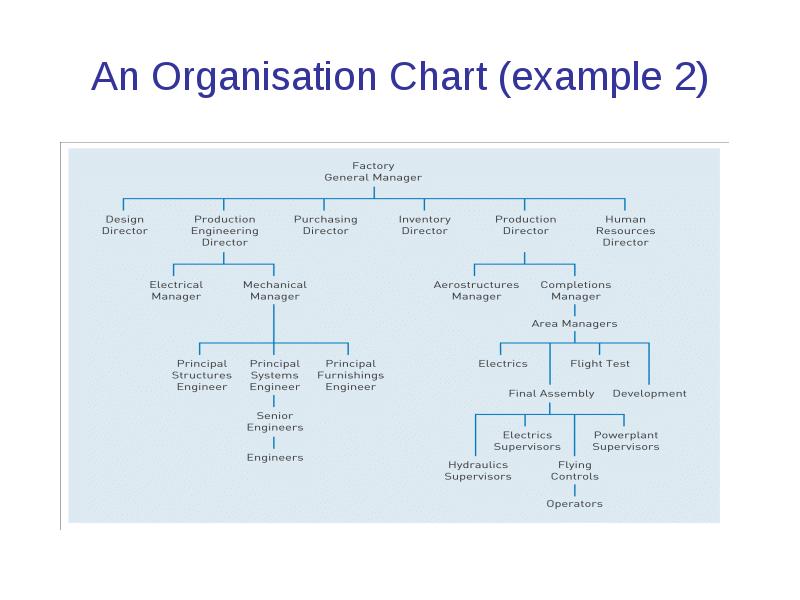
- 4. Organisation Charts Organisation structure is often represented by an organisation
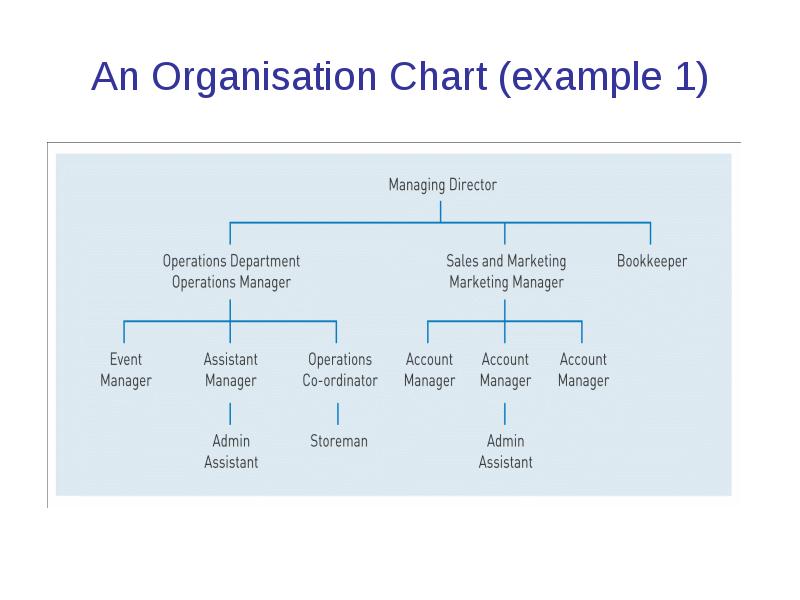
- 5. An Organisation Chart (example 1)
- 6. An Organisation Chart (example 2)
- 7. Types of structure Formal structure: The official structure of the organisation.
- 8. Types of structure Informal structure: The unofficial, but often critical, working
- 9. The Basic Elements of Structure 1. Work specialisation 2. Chain of
- 10. Work Specialisation a job is broken down into a number of
- 11. Negative results of work specialisation
- 12. Chain of Command The continuous chain of authority that extends
- 13. Chain of Command Early management writers believed that each employee
- 14. Chain of Command Some concepts closely related to chain of command:
- 15. Authority The right that a person in a specified role has
- 16. Responsibility An employee’s duty to perform assigned activities and to
- 17. Accountability Employees with formal authority over an area are required
- 18. Delegation Managers giving people who are below them in the
- 19. Authority vs Power Authority Power
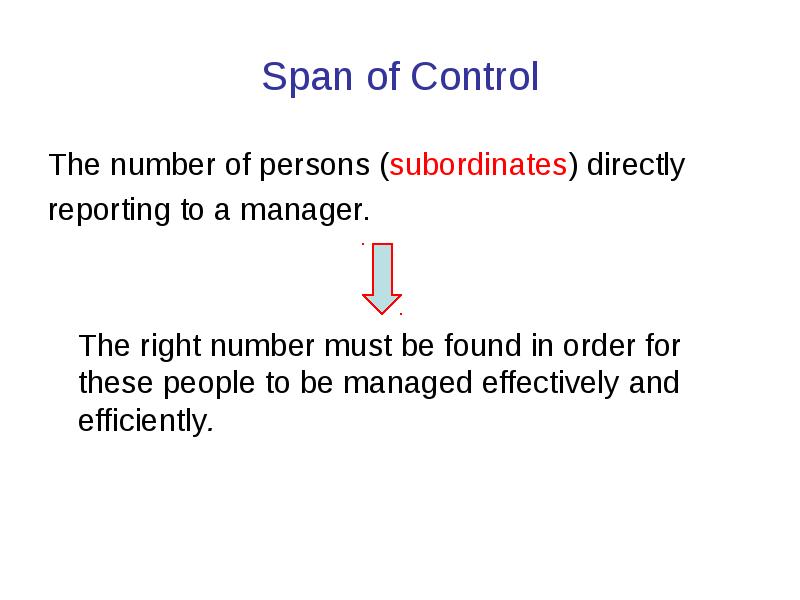
- 20. Span of Control The number of persons (subordinates) directly reporting
- 21. Span of Control The level of direct supervision an employee needs
- 22. Span of Control
- 23. Centralisation vs Decentralisation Centralised organisations: decisions are made by a
- 24. Departmentalisation refers to how the various activities of the organisation are
- 25. e.g. Functional Departmentalisation
- 26. Types of Structure Mechanistic structure Organic structure (Burns & Stalker, 1961)
- 27. Mechanistic Structure High in specialisation. High in centralisation. High in formalisation
- 28. Organic Structure Knowledge is widely spread. There are few prescriptive job
- 29. Types of structure One of the these two types of structure
- 30. Types of structure Mechanistic structure: Rigid and stable. Organic structure: Flexible
- 31. Types of structure Mechanistic structure: Best at simple and repetitive tasks.
- 32. Types of structure Mechanistic structures are most effective in stable
- 33. Types of structure Organisations could use a combination of the
- 34. Group Work Produce an organisation chart that, to the best
- 35. Скачать презентацию
Слайды и текст этой презентации
Слайд 1
Описание слайда:
Organisation Structure
Harry Kogetsidis
School of Business
Слайд 2
Описание слайда:
Lecture’s topics
What is organisation structure?
What are the basic elements of organisation structure?
What are the basic types of organisation structure?
Слайд 3
Описание слайда:
Organisation Structure
Organisation structure describes the way work is
divided, supervised and coordinated.
Слайд 4
Описание слайда:
Organisation Charts
Organisation structure is often represented by an
organisation chart – i.e. a chart showing the main
departments and work positions in the organisation
and the reporting relations between them.
Слайд 5
Описание слайда:
An Organisation Chart (example 1)
Слайд 6
Описание слайда:
An Organisation Chart (example 2)
Слайд 7
Описание слайда:
Types of structure
Formal structure:
The official structure of the organisation.
The official guidelines, documents or procedures setting out how the organisation’s activities are divided, supervised and coordinated.
Слайд 8
Описание слайда:
Types of structure
Informal structure:
The unofficial, but often critical, working relationships between organisational members.
If this could be drawn, it would show who talks to and interacts regularly with whom regardless of their formal titles and relationships.
Слайд 9
Описание слайда:
The Basic Elements of Structure
1. Work specialisation
2. Chain of command
3. Span of control
4. Centralisation vs Decentralisation
5. Departmentalisation
Слайд 10
Описание слайда:
Work Specialisation
a job is broken down into a number of steps and each step is completed by a separate individual
different employees have different skills
need to make efficient use of the diversity of skills that employees have
Слайд 11
Описание слайда:
Negative results of work specialisation
Слайд 12
Описание слайда:
Chain of Command
The continuous chain of authority that extends
from the highest levels in an organisation to the
lowest levels and clarifies who reports to whom.
Слайд 13
Описание слайда:
Chain of Command
Early management writers believed that each
employee should report to only one manager –
a term called unity of command.
Слайд 14
Описание слайда:
Chain of Command
Some concepts closely related to chain of command:
Authority
Responsibility
Accountability
Delegation
Слайд 15
Описание слайда:
Authority
The right that a person in a specified role has to make
decisions, allocate resources or give instructions.
If managers attempt to give instructions beyond their
area of formal authority, they are likely to meet
resistance.
Слайд 16
Описание слайда:
Responsibility
An employee’s duty to perform assigned activities
and to meet the expectations associated with a
task.
Слайд 17
Описание слайда:
Accountability
Employees with formal authority over an area are
required to report on their work to those above
them in the chain of command.
Слайд 18
Описание слайда:
Delegation
Managers giving people who are below them in
the chain of command the authority to undertake
specific activities or decisions.
Слайд 19
Описание слайда:
Authority vs Power
Authority
Power
Слайд 20
Описание слайда:
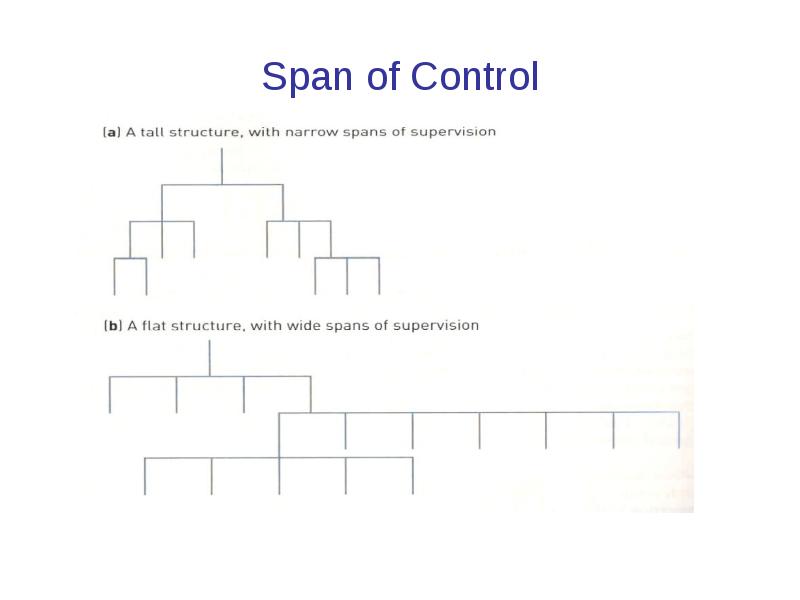
Span of Control
The number of persons (subordinates) directly
reporting to a manager.
The right number must be found in order for these people to be managed effectively and efficiently.
Слайд 21
Описание слайда:
Span of Control
The level of direct supervision an employee needs
decreases with the level of experience they have and
training they receive.
Слайд 22
Описание слайда:
Span of Control
Слайд 23
Описание слайда:
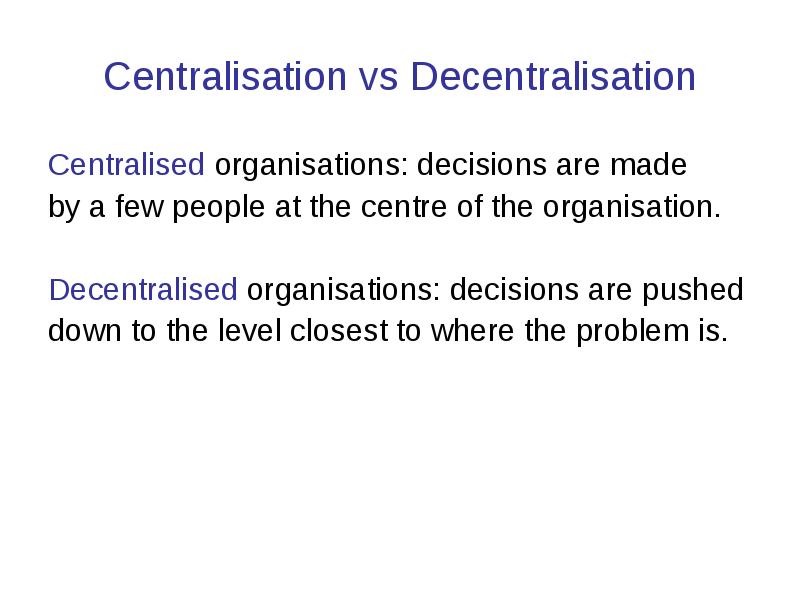
Centralisation vs Decentralisation
Centralised organisations: decisions are made
by a few people at the centre of the organisation.
Decentralised organisations: decisions are pushed
down to the level closest to where the problem is.
Слайд 24
Описание слайда:
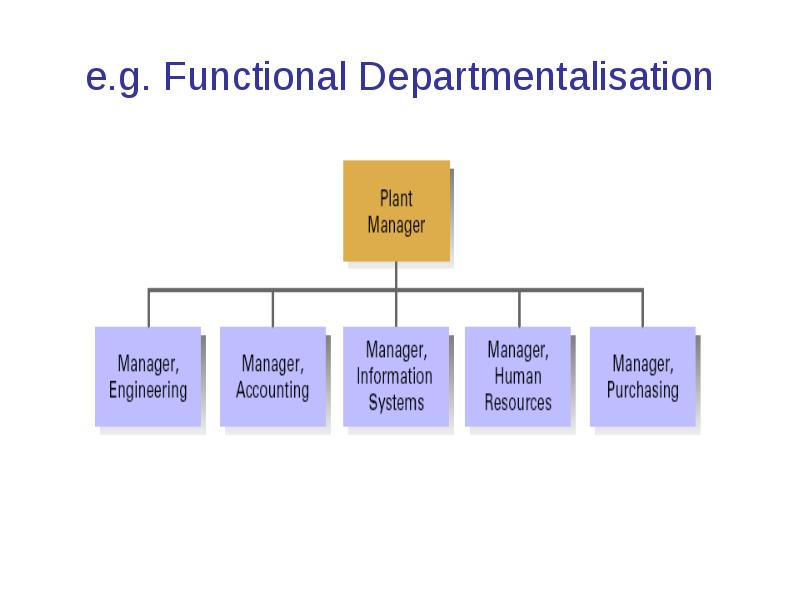
Departmentalisation
refers to how the various activities of the organisation are grouped together into units
a manager is in charge of each unit
Слайд 25
Описание слайда:
e.g. Functional Departmentalisation
Слайд 26
Описание слайда:
Types of Structure
Mechanistic structure
Organic structure
(Burns & Stalker, 1961)
Слайд 27
Описание слайда:
Mechanistic Structure
High in specialisation.
High in centralisation.
High in formalisation (i.e. the practice of using written documents to direct and control employees).
Communication is vertical.
Слайд 28
Описание слайда:
Organic Structure
Knowledge is widely spread.
There are few prescriptive job descriptions and rules and regulations are kept to a minimum.
Cross-functional team work is encouraged.
Communication is horizontal.
Слайд 29
Описание слайда:
Types of structure
One of the these two types of structure is frequently
called a ‘bureaucracy’. Which one is it?
Слайд 30
Описание слайда:
Types of structure
Mechanistic structure:
Rigid and stable.
Organic structure:
Flexible and highly adaptive.
Слайд 31
Описание слайда:
Types of structure
Mechanistic structure:
Best at simple and repetitive tasks.
Organic structure:
More effective at complex and unique tasks.
Слайд 32
Описание слайда:
Types of structure
Mechanistic structures are most effective in stable
environments.
Organic structures are most effective in dynamic
and uncertain environments.
Слайд 33
Описание слайда:
Types of structure
Organisations could use a combination of the
two types.
e.g. finance department – mechanistic
advertising department – organic
Слайд 34
Описание слайда:
Group Work
Produce an organisation chart that, to the best of your
knowledge, represents the structure of the University of
Nicosia. Use an exclamation mark for departments or
units that you know with certainty that they exist (such
as academic affairs or finance). Use a question mark for
those that you think might be part of this organisation.
You should produce separate charts for the academic
and administrative structures of the institution.
Скачать презентацию на тему School of Business. Organisation Structure можно ниже: