JavaScript - dynamic computer programming language презентация
Содержание
- 2. Agenda Basic Information Including JS Code into HTML Comments Variables Data
- 3. Basic Information
- 4. Basic information JavaScript - dynamic computer programming language. It is most
- 5. Basic information JS take many names and naming conventions from Java,
- 6. Including JS Code into HTML
- 7. Including of JavaScript Exist three ways to include script into HTML
- 8. Inline including Unfortunately, this is the worst solution. Holistic code
- 9. Inside tag <script> Sometimes it makes sense. But in the
- 10. In separate file This is the best way. Code is
- 11. Comments
- 12. Comments Comments - part of the program text which will be
- 13. Variables
- 14. Variables Variable – symbolic name associated with a value and whose
- 15. Declaration and initialization var – special keyword for declaration of variables
- 16. Global and local JavaScript has two types of variables: global -
- 17. Data Types
- 18. Data types JavaScript have 6 base data types: Number –
- 19. Number, Boolean and String
- 20. Null and Undefined And Object type… but it will be reviewed
- 21. Type Casting
- 22. Type casting
- 23. Type casting Exist two types of casting:
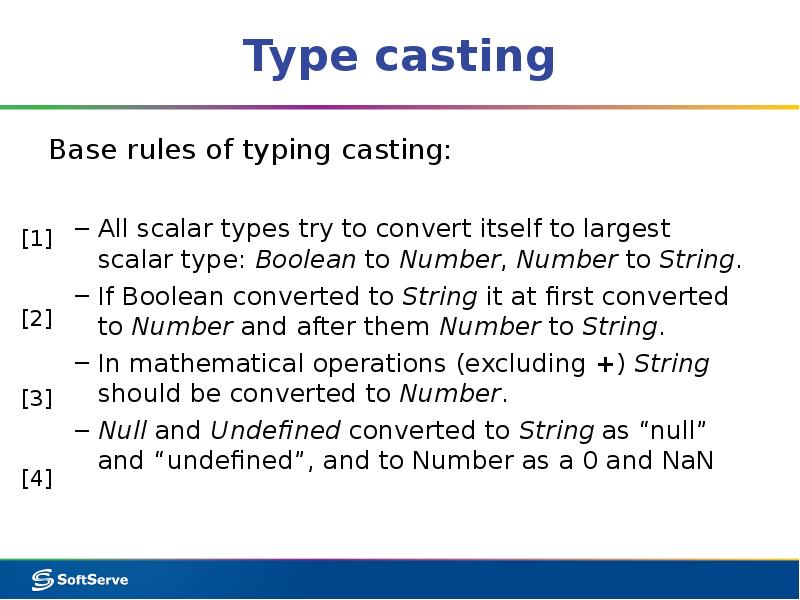
- 24. Type casting Base rules of typing casting: All scalar types try
- 26. Скачать презентацию


Слайды и текст этой презентации
Слайд 1
Описание слайда:
Слайд 2
Описание слайда:
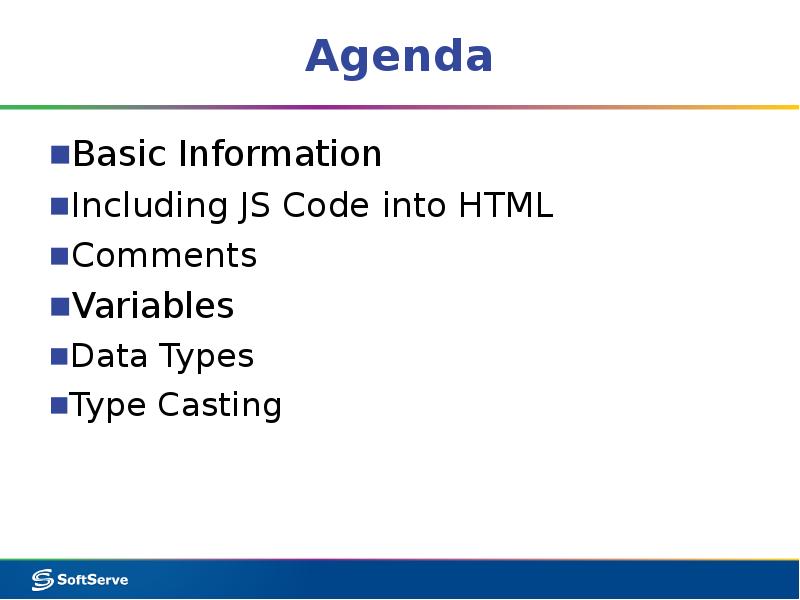
Agenda
Basic Information
Including JS Code into HTML
Comments
Variables
Data Types
Type Casting
Слайд 3
Описание слайда:
Basic Information
Слайд 4
Описание слайда:
Basic information
JavaScript - dynamic computer programming language.
It is most commonly used as part of web browsers, whose implementations allow client-side to interact with the user, control the browser and asynchronously communicate with server-side.
JavaScript syntax was influenced by C.
Слайд 5
Описание слайда:
Basic information
JS take many names and naming conventions from Java, but the two languages are otherwise unrelated and have very different semantics.
JavaScript is a prototype-based scripting language with dynamic typing.
JS supported object-oriented, imperative and functional programming styles.
Слайд 6
Описание слайда:
Including JS Code into HTML
Слайд 7
Описание слайда:
Including of JavaScript
Exist three ways to include script into HTML page:
Inline in HTML
Inside tag <script>
In separate file
Слайд 8
Описание слайда:
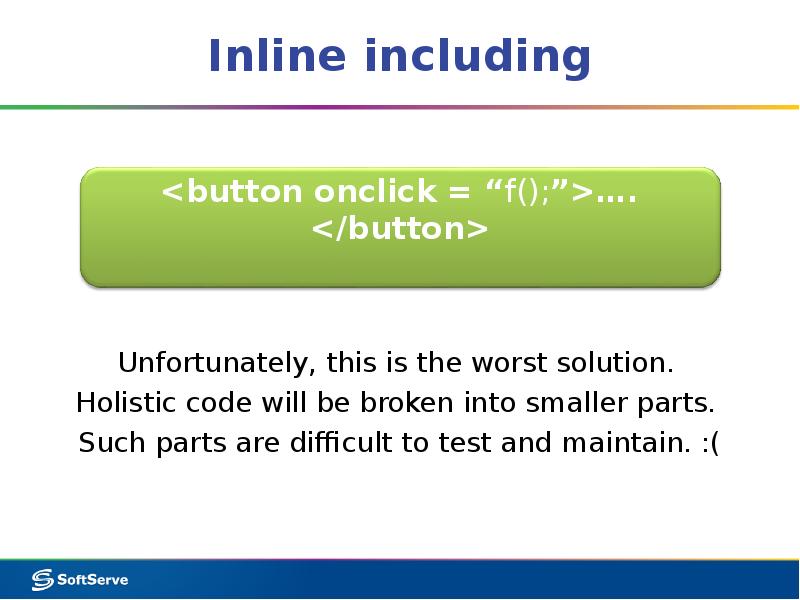
Inline including
Unfortunately, this is the worst solution.
Holistic code will be broken into smaller parts.
Such parts are difficult to test and maintain. :(
Слайд 9
Описание слайда:
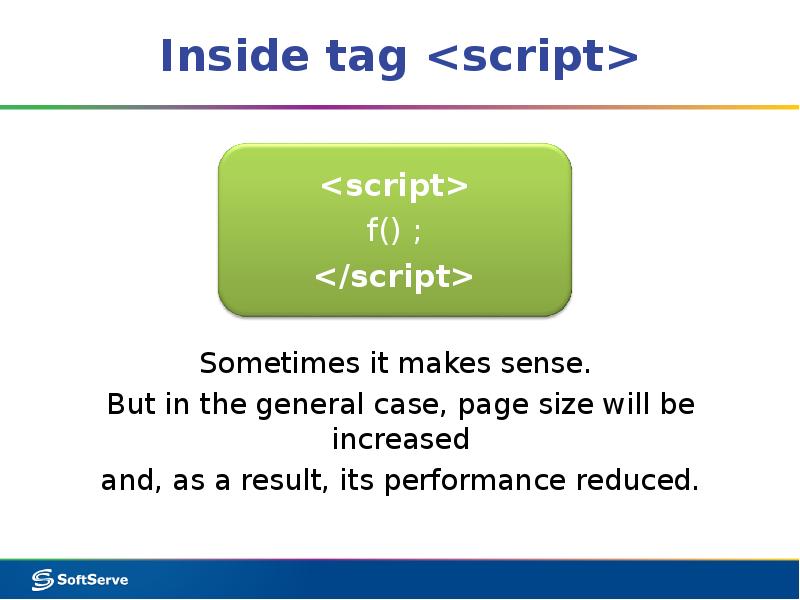
Inside tag <script>
Sometimes it makes sense.
But in the general case, page size will be increased
and, as a result, its performance reduced.
Слайд 10
Описание слайда:
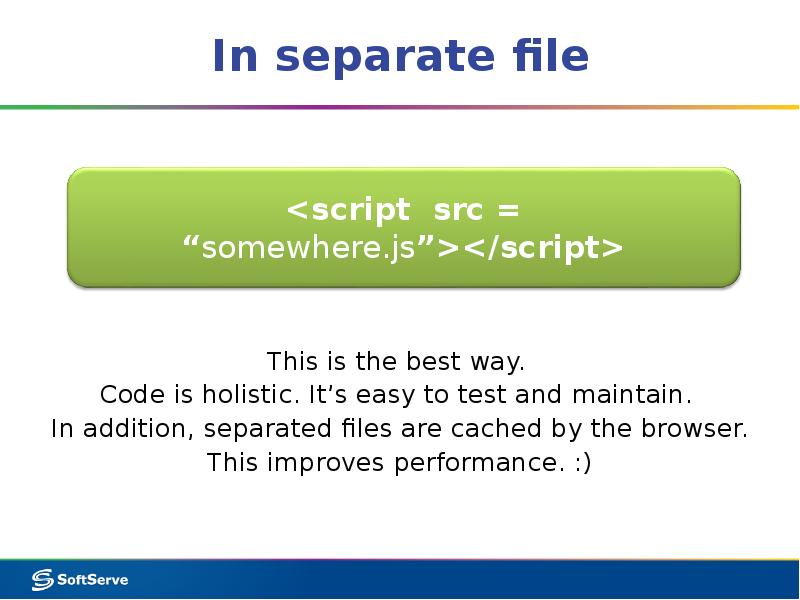
In separate file
This is the best way.
Code is holistic. It’s easy to test and maintain.
In addition, separated files are cached by the browser.
This improves performance. :)
Слайд 11
Описание слайда:
Comments
Слайд 12
Описание слайда:
Comments
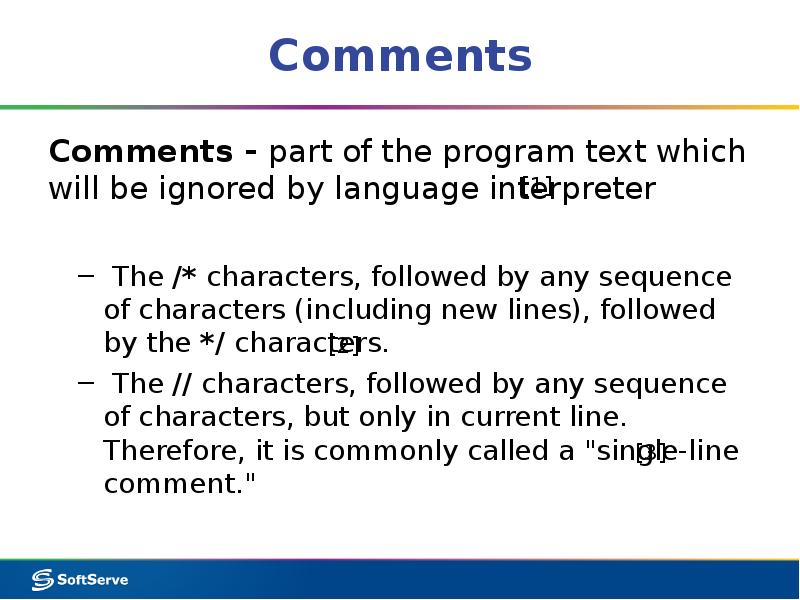
Comments - part of the program text which will be ignored by language interpreter
The /* characters, followed by any sequence of characters (including new lines), followed by the */ characters.
The // characters, followed by any sequence of characters, but only in current line. Therefore, it is commonly called a "single-line comment."
Слайд 13
Описание слайда:
Variables
Слайд 14
Описание слайда:
Variables
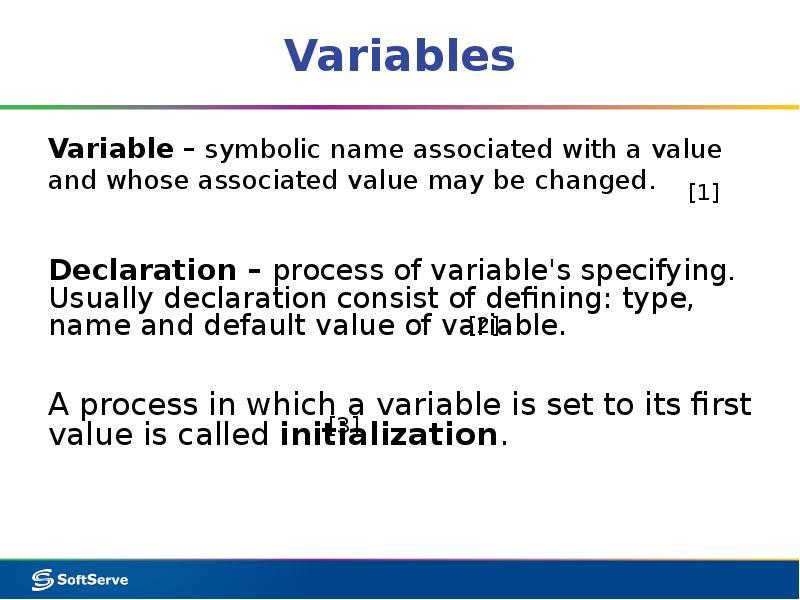
Variable – symbolic name associated with a value and whose associated value may be changed.
Слайд 15
Описание слайда:
Declaration and initialization
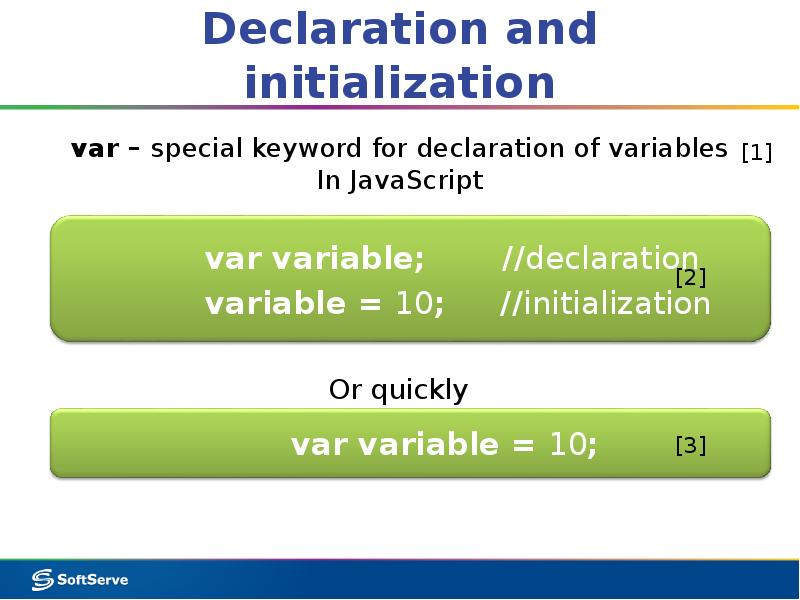
var – special keyword for declaration of variables
In JavaScript
Слайд 16
Описание слайда:
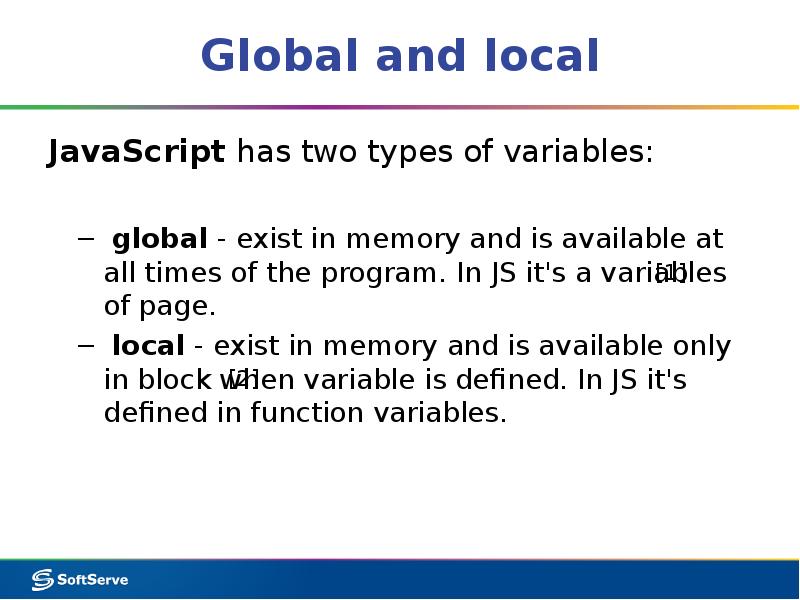
Global and local
JavaScript has two types of variables:
global - exist in memory and is available at all times of the program. In JS it's a variables of page.
local - exist in memory and is available only in block when variable is defined. In JS it's defined in function variables.
Слайд 17
Описание слайда:
Data Types
Слайд 18
Описание слайда:
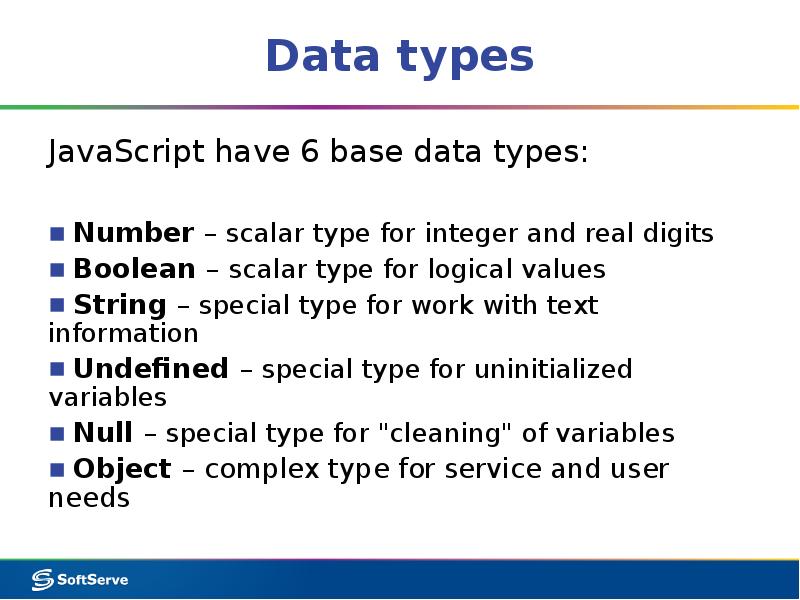
Data types
JavaScript have 6 base data types:
Number – scalar type for integer and real digits
Boolean – scalar type for logical values
String – special type for work with text information
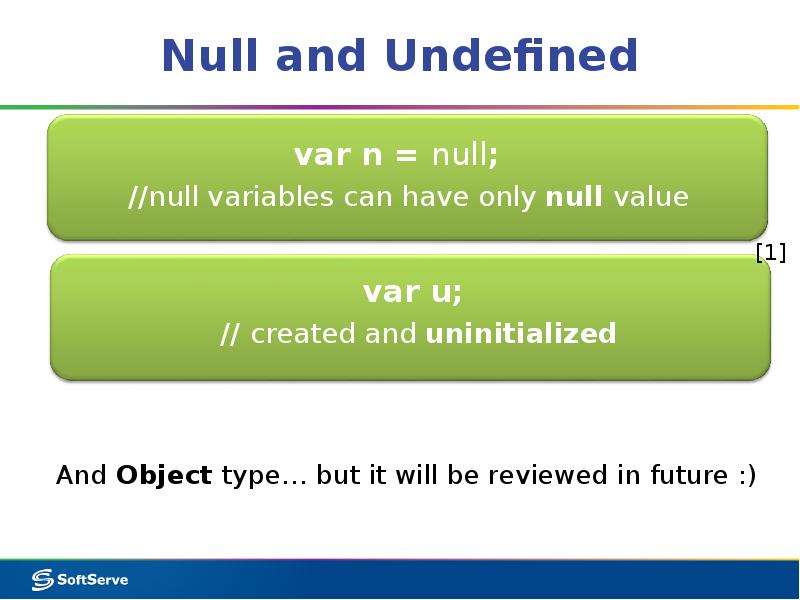
Undefined – special type for uninitialized variables
Null – special type for "cleaning" of variables
Object – complex type for service and user needs
Слайд 19
Описание слайда:
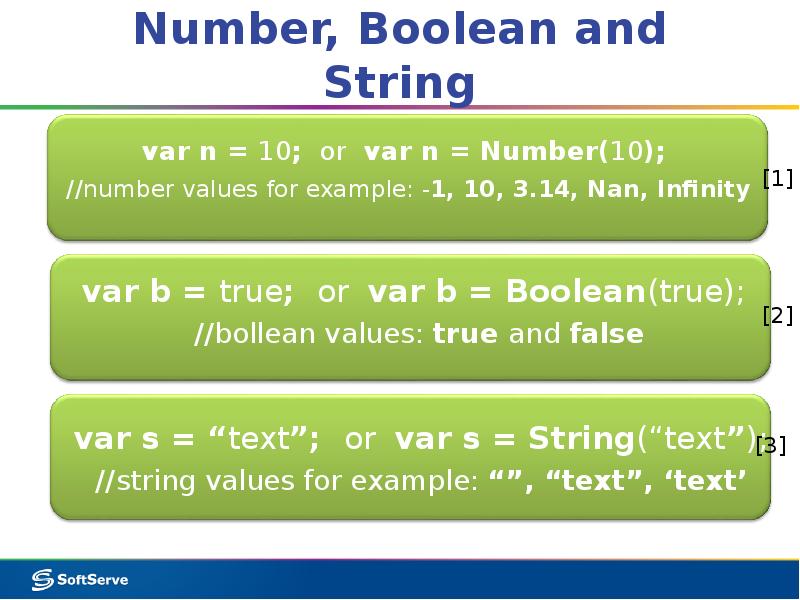
Number, Boolean and String
Слайд 20
Описание слайда:
Null and Undefined
And Object type… but it will be reviewed in future :)
Слайд 21
Описание слайда:
Type Casting
Слайд 22
Описание слайда:
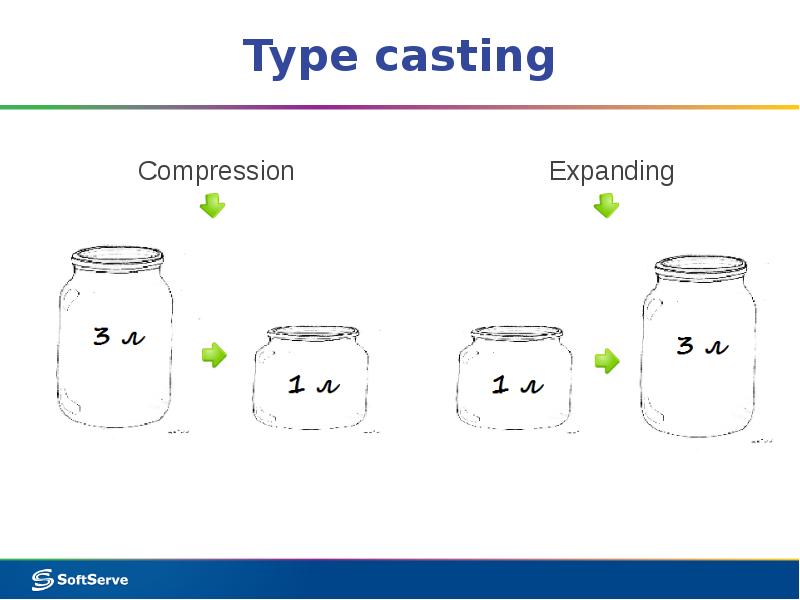
Type casting
Слайд 23
Описание слайда:
Type casting
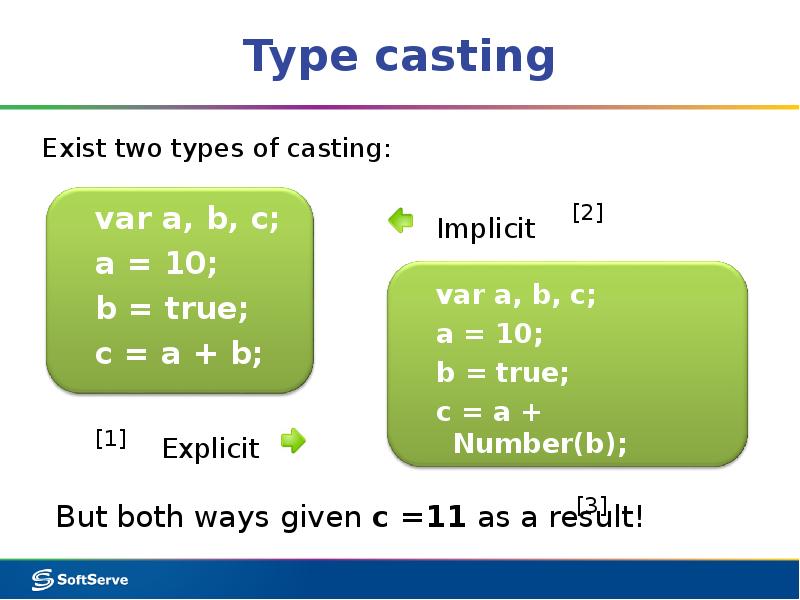
Exist two types of casting:
Слайд 24
Описание слайда:
Type casting
Base rules of typing casting:
All scalar types try to convert itself to largest scalar type: Boolean to Number, Number to String.
If Boolean converted to String it at first converted to Number and after them Number to String.
In mathematical operations (excluding +) String should be converted to Number.
Null and Undefined converted to String as “null” and “undefined”, and to Number as a 0 and NaN
Слайд 25
Описание слайда:
Скачать презентацию на тему JavaScript - dynamic computer programming language можно ниже: